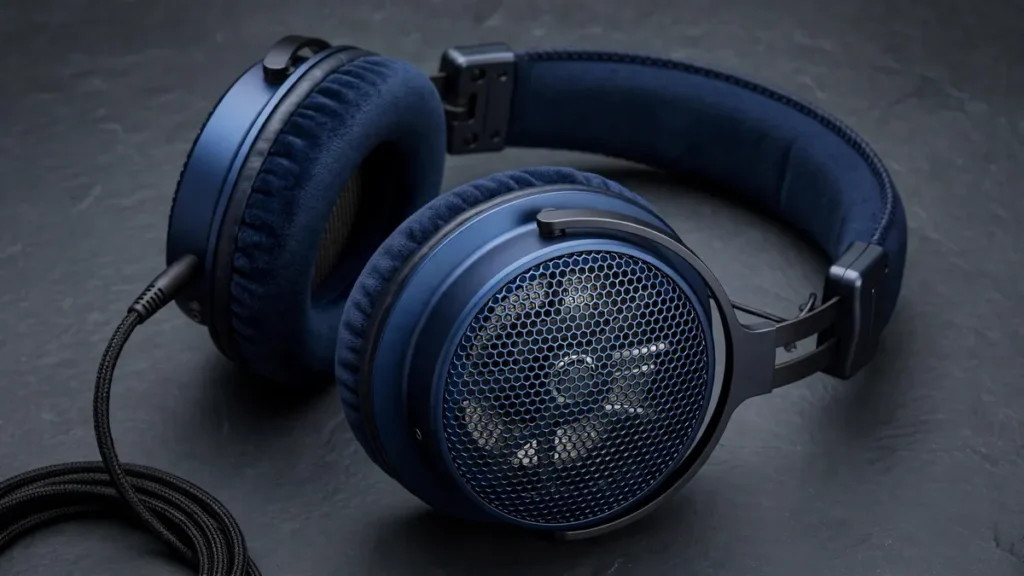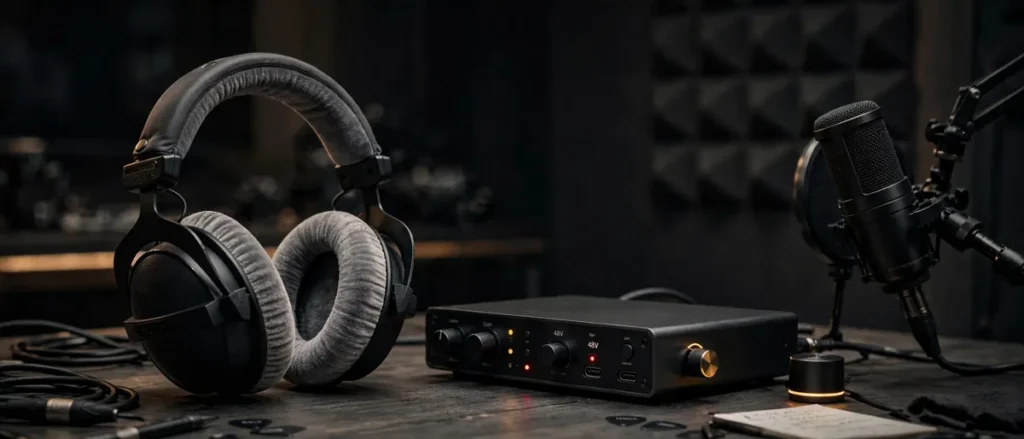
Some headphones become famous. The Beyerdynamic DT 770 Pro became infrastructure. For decades it has been the closed-back headphone studios buy in multiples — for vocal booths, drum rooms, editing suites, and mixing desks — because it isolates well, survives abuse, stays comfortable through long sessions, and tells you the truth about bass and treble. Our verdict up front: the DT 770 Pro remains one of the safest buys in studio audio, but only if you choose the right version. It comes in 32, 80, and 250 ohm variants that look identical and behave differently, and picking the wrong one for your gear is the one real mistake you can make here. SoundMavericks breaks down all three below, honestly — including where this classic falls short in 2026.

| Sound Quality | 8.8 |
| Comfort & Fit | 9.2 |
| Build & Durability | 9.0 |
| Isolation | 8.6 |
| Value | 9.0 |
Beyerdynamic DT 770 Pro specs
One clarification before we go further, because listings blur it constantly: this review covers the classic DT 770 Pro. It is not the newer DT 770 Pro X — a different, more recent model with a different driver, a single 48-ohm impedance, and a detachable cable. If a listing mentions 48 ohms or a detachable mini-XLR cable, you’re looking at the Pro X, not the headphone reviewed here.
DT 770 Pro 32 vs 80 vs 250 ohm: which version should you buy?
This is the decision that defines DT 770 Pro ownership, and it’s simpler than the forum wars suggest. All three versions share the same closed-back design, the same basic driver platform, and the same house sound. They differ in how much power they need, the cable and pads they ship with, and — subtly — in tuning emphasis. Impedance is not a quality ladder: the 250 ohm is not “better” than the 80, it’s just built for stronger sources. If impedance is new to you, our primer on what impedance means and whether you need an amp explains the underlying rule in plain language.
| Version | Cable & pads | Drives happily from | Who it’s for |
|---|---|---|---|
| 32 ohm | 1.6 m straight, leatherette pads | Phones, laptops, controllers, portable players | Portable and everyday use; studio sound on mobile gear |
| 80 ohm | 3 m straight, velour pads | Almost anything — phones at healthy volume, interfaces, mixers | The all-rounder: recording and tracking in home and project studios |
| 250 ohm | 3 m coiled, velour pads | Audio interfaces, mixer headphone outs, dedicated headphone amps | Studio mixing and critical listening on proper studio gear |
The 32 ohm version exists for low-power sources. Phones, laptops, game controllers, and portable recorders drive it to full volume without help, and the shorter 1.6 m cable suits desks and travel. Its leatherette pads isolate a touch more but breathe less than velour. Choose it if the DT 770 Pro will live a double life as your everyday headphone — just know the shorter cable is a limitation at a studio desk.
The 80 ohm version is the one SoundMavericks recommends to most buyers, and the one pictured and linked as the main pick in this review. Beyerdynamic positions it for studio recording use, it has a slightly fuller low end than the 250, and it runs well from virtually everything: an interface, a mixer, a laptop, even a phone at a healthy volume setting. The 3 m straight cable and velour pads are the classic studio combination. If you record vocals, track instruments, edit podcasts, or simply want one DT 770 that works everywhere, this is it.
The 250 ohm version is the studio-mixing variant, intended for interfaces, mixing desks, and headphone amplifiers with real output behind them. Its presentation is a fraction leaner and more even than the 80’s, which long-time studio users value for mix decisions, and the coiled 3 m cable stays out of the way at a desk while stretching when you lean back. The honest warning, repeated in owner feedback for years: plugged into a phone or a weak laptop output, the 250 can sound quiet and underpowered. That’s not a defect — it’s a mismatch. On proper studio power it’s superb; on portable power, buy the 32 or 80 instead. If you do go 250 and your interface’s headphone output is weak, our guide to the best headphone amps covers sensible pairings.

How does the DT 770 Pro sound?
The DT 770 Pro’s signature is a gentle V: deep, authoritative bass, a clear but slightly recessed midrange, and a bright, detailed treble with a well-known lift in the upper treble region. That shape is precisely why studios standardized on it. The extended low end — genuinely reaching down toward its 5 Hz rating in a way most closed-backs don’t — lets you hear sub-bass content that smaller monitors and headphones hide, which matters when you’re cleaning up a mix or checking a kick drum. The treble detail exposes sibilance, clicks, and edit points that a duller headphone would let slip into a finished recording.
For enjoyment listening, the same tuning is exciting: bass has real physical weight without swamping the mix, and the top end gives cymbals and acoustic instruments sparkle and air. Two honest caveats from the critical consensus — SoundGuys’ measured review of the 80 ohm version reaches the same conclusions our analysis does. First, that treble lift can sound sharp or fatiguing on already-bright recordings if you’re treble-sensitive; there’s no EQ or DSP here to tame it, because this is a wired studio tool. Second, the midrange sits a step back, so vocals feel slightly less intimate than on mid-forward headphones. Neither is a flaw in context — this is a monitoring signature, built to reveal problems — but buyers expecting a warm, relaxed listen should know what they’re getting.
For a closed-back design, the sense of space is better than you’d expect: instruments separate cleanly and stereo placement is easy to judge, which is part of why the DT 770 Pro keeps showing up for editing and gaming-adjacent work as well as music. It won’t match a good open-back’s stage width, but it never feels boxed-in.
Is the DT 770 Pro good for recording vocals?
It’s one of the classic answers to this exact question, and the reason is bleed control. The closed-back shells and roughly 18 dBA of passive attenuation keep your backing track and click inside the headphones instead of leaking into a sensitive vocal microphone — the problem that rules open-back headphones out of the vocal booth entirely. Our explainer on how noise cancelling headphones work covers why passive sealing, not electronics, is what a tracking headphone actually needs.
Comfort seals the deal for tracking: singers can wear the velour-padded 80 or 250 ohm versions through long sessions without the heat and pressure that end takes early, and the firm headband keeps the seal stable when you move. The single-sided cable exits one cup and stays out of the way of guitar straps and microphone stands. If your main job is vocal tracking, the 80 ohm is the version we’d put in the booth — it pairs with any interface’s headphone output and leaves one less thing to think about mid-take.
Comfort and build quality
At 270 grams without the cable, the DT 770 Pro is light for a full-size studio headphone, and its comfort is legendary for good reason: large circumaural cups that fully surround the ear, soft velour pads on the studio versions, and a padded spring-steel headband with a firm but fair clamp. The clamp is intentional — it’s what maintains the seal that tracking depends on — and it relaxes somewhat with use.
Build follows the old professional logic: robust plastic ear cups, a metal-reinforced headband, and — crucially — serviceability. Ear pads, headband padding, and most wearing parts are replaceable through Beyerdynamic’s spare-parts ecosystem, and the headphone is made in Germany. Studios keep DT 770 Pros in service for a decade or more this way. The one genuine weak point, and we’ll be direct about it: the cable is fixed, not detachable. A damaged cable means a repair rather than a swap, and it’s the most common criticism in long-term owner feedback. Treat the cable with basic respect — no chair wheels, no yanking by the cord — and it’s a non-issue for years; if detachable cabling is a must-have, that’s the newer Pro X’s territory, not this classic’s.
DT 770 Pro pros and cons
Pros:
- Proven studio sound: deep extended bass, detailed treble, honest monitoring signature
- Excellent closed-back isolation for tracking — keeps headphone bleed out of vocal mics
- Outstanding long-session comfort, especially the velour-padded 80 and 250 ohm versions
- Three impedance versions genuinely matched to portable, all-round, and studio-amp use
- Rugged, serviceable German build with replaceable pads and parts
- Works for mixing checks, editing, and enjoyable listening — not a one-job tool
Cons:
- Fixed, non-detachable cable — the design’s one real dated feature
- Bright treble emphasis can fatigue treble-sensitive listeners on harsh recordings
- 250 ohm version underwhelms on phones and weak outputs — version choice matters
- No microphone, Bluetooth, or ANC — it’s a wired studio headphone, full stop; for travel noise cancelling, see our best noise cancelling headphones roundup
- Doesn’t fold — bulky in a bag compared with modern portable designs
Who should buy the Beyerdynamic DT 770 Pro?
Buy it if you: record vocals or instruments and need bleed-free tracking headphones; run a home or project studio and want one closed-back reference that every engineer already knows; edit podcasts or video and need detail that exposes clicks and sibilance; or want an enjoyable, durable wired headphone with real bass for desk listening. Choose the 80 ohm unless you have a specific reason not to — portable-first buyers should take the 32, and amp-owning studio mixers the 250.
Skip it if you: need wireless freedom or active noise cancellation for commuting and travel; want a microphone for calls or gaming chat built in; strongly prefer a warm, laid-back treble; or need something that folds into a small everyday bag. And if you specifically want this sound with a detachable cable and one no-fuss impedance, be aware the newer DT 770 Pro X exists for exactly that brief — it’s a different model at a different position in the range, not a replacement that makes the classic pointless: the classic’s three-version system still serves studios better.
Frequently asked questions
What is the difference between the DT 770 Pro 32, 80, and 250 ohm versions?
Drive requirements, accessories, and subtle tuning emphasis. The 32 ohm (1.6 m straight cable, leatherette pads) is built for phones and portable gear. The 80 ohm (3 m straight cable, velour pads) is the all-rounder for recording, with a slightly fuller low end, and runs from almost any source. The 250 ohm (3 m coiled cable, velour pads) is the studio-mixing version for interfaces and headphone amps, with a slightly leaner, more even presentation. Higher impedance is not higher quality — match the version to your source.
Do you need an amp for the DT 770 Pro?
Only possibly for the 250 ohm version, and only if your source is weak. The 32 and 80 ohm versions reach comfortable levels from phones, laptops, and interfaces with no amp. The 250 ohm version is designed for interface, mixer, and headphone-amp outputs; on a phone it may sound too quiet, in which case an amp helps — or the lower-impedance versions are simply the right buy.
Is the DT 770 Pro good for mixing?
Yes, with the closed-back caveat. Its extended bass and revealing treble make it a trusted mix-check headphone, and the 250 ohm version is the traditional mixing choice on studio gear. Like every headphone, it shouldn’t be your only reference — check mixes on monitors too — and its slight midrange recession is worth remembering when placing vocals.
Is the DT 770 Pro the same as the DT 770 Pro X?
No. The DT 770 Pro X is a newer, different model with a different driver, a single 48-ohm impedance, and a detachable cable. The classic DT 770 Pro reviewed here has the three impedance versions (32/80/250 ohm) and a fixed cable. Listings sometimes blur the names — check the impedance and cable type to know which you’re buying.
Does the DT 770 Pro have a microphone or Bluetooth?
No. It is a wired-only studio headphone with passive isolation only — no microphone, no Bluetooth, and no active noise cancellation. For calls or gaming chat you’ll need a separate microphone.
How long do the DT 770 Pro ear pads last?
Velour pads are a wear item on any heavily used headphone; expect to replace them periodically with heavy daily use. Beyerdynamic sells official replacements, and swapping pads also restores the seal — and with it, the bass response and isolation — on an older pair.
Final verdict
The Beyerdynamic DT 770 Pro earns its reputation the unglamorous way: it does the studio jobs properly, for years, at a fair position in the market. The sound — deep bass, revealing treble, a monitor’s honesty — is why it became a standard, the comfort is why people keep it on all day, and the three-version system is a genuinely thoughtful answer to different sources, provided you choose correctly. Its fixed cable and bright top end are real, disclosed compromises, and the newer Pro X addresses one of them — but for tracking, editing, and mix-checking in 2026, the classic DT 770 Pro remains an easy recommendation at 8.8/10. Most buyers: take the 80 ohm, plug it into anything, and get to work.

I am the founder of Sound Mavericks, where I provide the polite truth about audio equipment. I started this site because consumer electronics reviews are often too technical. Instead of using a silent lab, I test headphones, earbuds, and Bluetooth speakers in the real world – like on a noisy subway or in a busy coffee shop.
To stay independent, I buy my own review units (mostly from the United States) rather than accepting free gifts from brands. Once I finish testing a product, I sell it locally to our community. My goal is to help you understand sound quality, active noise cancellation (ANC), and battery life without the marketing hype.