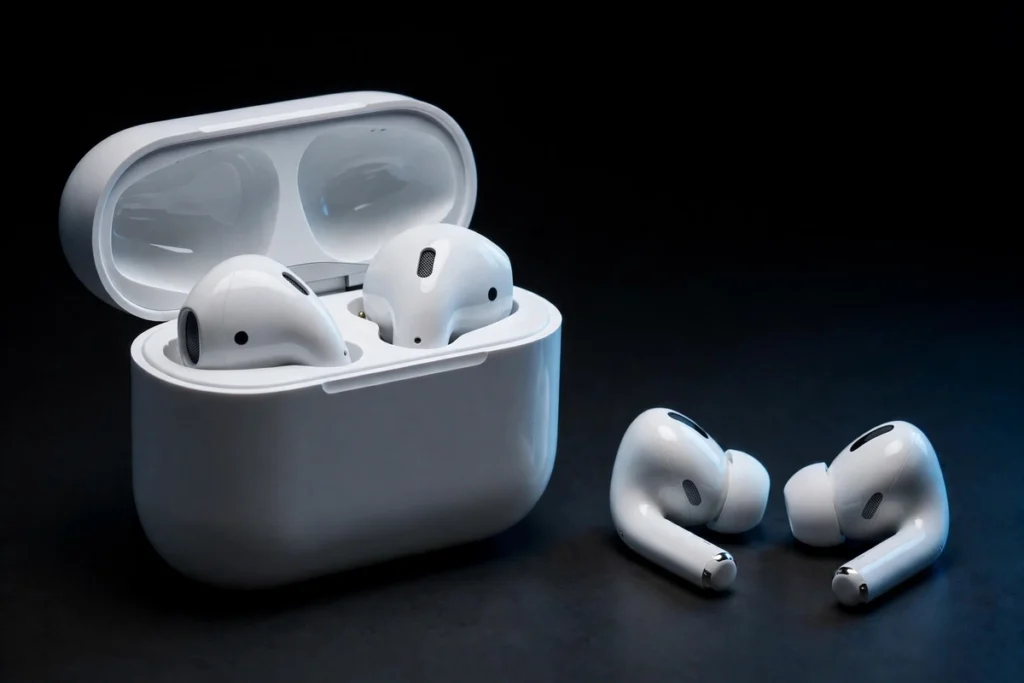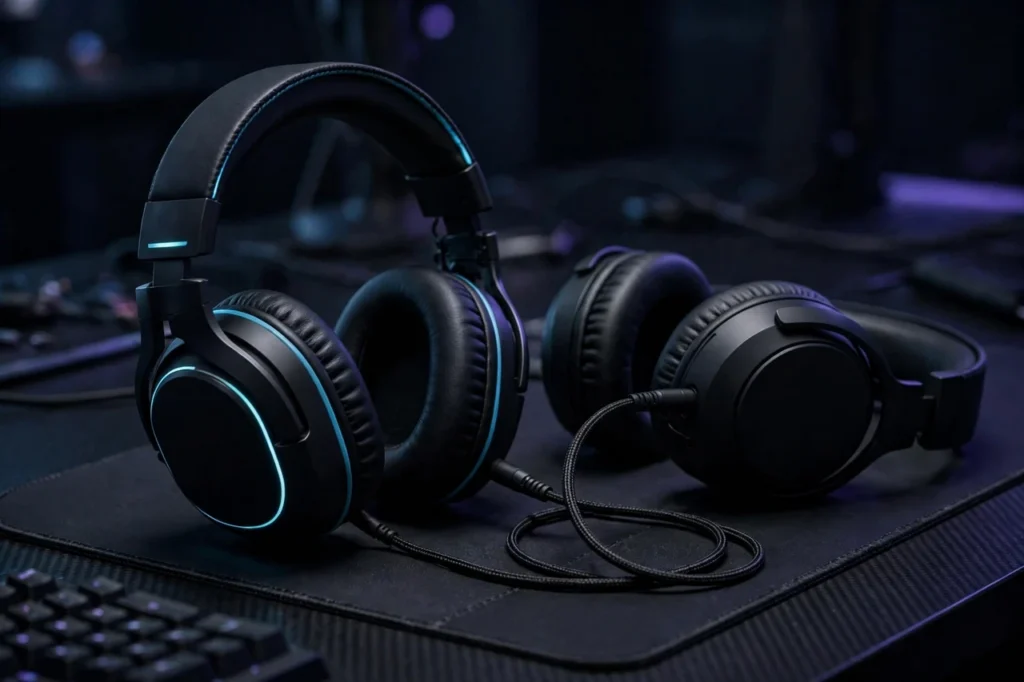
Wired vs wireless gaming headset is one of those debates where both sides are right — for different players. The short answer: wired wins on latency, simplicity, and value per dollar; wireless wins on freedom and convenience. But “wireless” covers two very different technologies — 2.4GHz dongle wireless (built for gaming, nearly as fast as wired) and Bluetooth (fine for music, too laggy for serious play) — and confusing the two is where most buying mistakes happen. This guide breaks down latency, sound, battery, mic quality, and value so you can pick the right connection for how you actually play.
Near-zero latency, zero interference, no battery to die mid-match. Still the tournament standard for ranked FPS play.
Full freedom of movement with latency close enough to wired that you won’t feel it. The sweet spot for most gamers in 2026.
Wired vs Wireless Gaming Headset: The Numbers That Matter
| Factor | Wired (3.5mm / USB) | 2.4GHz Wireless | Bluetooth |
|---|---|---|---|
| Typical latency | Under 10 ms | 10–30 ms | 100–250 ms |
| Sound quality | Excellent, uncompressed path | Excellent, near-wired | Good (compressed) |
| Battery | None needed | 20–80+ hrs per charge | 10–40 hrs per charge |
| Setup | Plug and play | USB dongle required | Pair in device settings |
| Interference risk | None | Very low (dedicated band) | Higher (crowded 2.4 GHz) |
| Weight | Lighter (no battery) | Slightly heavier | Slightly heavier |
| Value per dollar | Best — more audio for the money | Good | Good |
| Best for | Competitive FPS, tournaments | All-around gaming | Casual, mobile, media |
Latency: The Real Difference-Maker
Latency is the delay between an on-screen event and the sound reaching your ears — and in competitive gaming, it directly affects reaction time. Competitive players generally aim for under 20 ms; above that, timing in fast shooters starts to feel off.
Wired headsets sit under 10 ms — effectively zero for human perception. A 2.4GHz gaming wireless headset lands at 10–30 ms, which is close enough to imperceptible that most players never feel the difference, and it explains why 2.4GHz is the tournament-legal wireless option. Standard Bluetooth, at 100–250 ms of latency, visibly desyncs footsteps and gunshots from the action — fine for music and videos, bad for anything competitive. Low-latency Bluetooth codecs like aptX Low Latency (30–40 ms) and LC3 (20–30 ms) narrow the gap, but device support is inconsistent and still trails a dedicated 2.4GHz dongle.
SoundMavericks verdict: For ranked play, wired is the safest pick; for everything else, 2.4GHz wireless is close enough that latency stops being the deciding factor.
Sound Quality and Positional Audio
A wired connection delivers the cleanest signal path — no compression, no wireless artifacts, nothing between your game’s audio engine and the drivers. 2.4GHz wireless runs a close second; modern implementations transmit near-lossless audio and the difference is inaudible in blind comparisons for most listeners. Bluetooth compresses audio, which is why it sounds slightly flatter and less detailed — and why our Bluetooth codec guide matters if you game on a Bluetooth headset.
Positional audio — hearing footsteps and directional cues — depends far more on the headset’s drivers and virtual surround processing than on the connection type. A good wireless headset with 7.1/DTS processing images better than a cheap wired one, every time.
Battery Life and Convenience
This is wireless’s biggest trade-off and wired’s biggest selling point. A wired headset never dies mid-session, never needs a charging routine, and weighs less because there’s no battery inside. Wireless headsets have improved enormously — budget models now manage 20–40 hours per charge, and flagships push 80+ hours, meaning a charge roughly once a week. At that level, battery anxiety is mostly a memory from older generations, but the failure mode still exists: forget to charge, and you’re gaming on speakers or a backup cable.
On pure convenience, wireless wins outright. No cable drag during intense moments, no tangles, no yanking the headset off when you stand up. For couch gaming, it’s not even close.
Microphone Quality: Wired or Wireless?
Here’s a common misconception to clear up: mic quality depends on the headset, not the connection. Wired and wireless models can both sound excellent or terrible. What actually matters is mic type — detachable boom microphones consistently outperform inline cable mics and built-in mics, regardless of how the headset connects. If team comms matter to you, shop by mic design first and connection type second.
Value: What Your Money Buys
Wired headsets cost less at every tier because they skip wireless transmitters, batteries, and charging hardware. The practical result: at any given budget, a wired headset usually sounds better than its wireless equivalent. Wireless asks you to pay a premium for freedom of movement — a premium most casual and console gamers find worth it, and most budget-conscious competitive players don’t.
Which Should You Choose?
Choose a wired gaming headset if you…
- Play competitive FPS or ranked shooters
- Want maximum audio quality per dollar
- Game at a fixed desk setup
- Hate charging things or worry about mid-match battery death
- Prefer lighter headsets for long sessions
Choose a 2.4GHz wireless gaming headset if you…
- Game on the couch or move around your setup
- Want freedom from cable drag and tangles
- Play single-player, casual, or console games where sub-20 ms latency is plenty
- Value a clean, clutter-free desk
Choose Bluetooth if you…
- Mainly game casually on mobile or handheld devices
- Want one headset for gaming, music, and calls
- Accept that latency makes it wrong for competitive play
Ready to shop by category? See our best gaming headsets roundup, our best IEMs for gaming for in-ear options, and our headset vs headphones explainer if you’re still deciding on the form factor.
Final Verdict
SoundMavericks’ take: buy for your actual play style, not for the technology. Competitive and esports-focused players should stay wired — zero latency, zero interference, zero battery risk, and better sound per dollar. Everyone else is better served by a 2.4GHz wireless headset, which delivers near-wired latency with none of the cable hassle. Bluetooth-only headsets are a compromise pick: great for media and casual mobile gaming, wrong for anything where timing matters. And whatever you choose, judge the microphone on its design — not on the cable.
Frequently Asked Questions
Is a wired or wireless gaming headset better?
Neither is universally better. Wired headsets win on latency (under 10 ms), reliability, and value — they’re the standard for competitive and esports play. 2.4GHz wireless headsets win on convenience and freedom of movement, with latency (10–30 ms) close enough to wired for most players. Bluetooth-only headsets lag at 100–250 ms and are best reserved for casual gaming.
Is Bluetooth too slow for gaming?
Standard Bluetooth (100–250 ms latency) is too slow for competitive gaming — footsteps and gunshots desync from the visuals. Low-latency codecs like aptX Low Latency and LC3 improve things, but a 2.4GHz wireless gaming headset or a wired connection is the safer choice for anything timing-sensitive.
Does wireless affect microphone quality?
Not inherently. Mic quality depends on the headset’s microphone design — detachable boom mics beat inline and built-in mics on both wired and wireless models. Shop by mic type first, connection type second.
How long do wireless gaming headsets last on a charge?
Budget wireless gaming headsets typically deliver 20–40 hours per charge, while flagship models reach 80+ hours. That’s roughly a week of heavy gaming between charges for most players.
Do pro gamers use wired or wireless headsets?
Most esports pros compete on wired headsets. Zero latency, no interference risk, and no battery concerns make wired the tournament standard, even as 2.4GHz wireless has closed the gap for everyday play.

I am the founder of Sound Mavericks, where I provide the polite truth about audio equipment. I started this site because consumer electronics reviews are often too technical. Instead of using a silent lab, I test headphones, earbuds, and Bluetooth speakers in the real world – like on a noisy subway or in a busy coffee shop.
To stay independent, I buy my own review units (mostly from the United States) rather than accepting free gifts from brands. Once I finish testing a product, I sell it locally to our community. My goal is to help you understand sound quality, active noise cancellation (ANC), and battery life without the marketing hype.