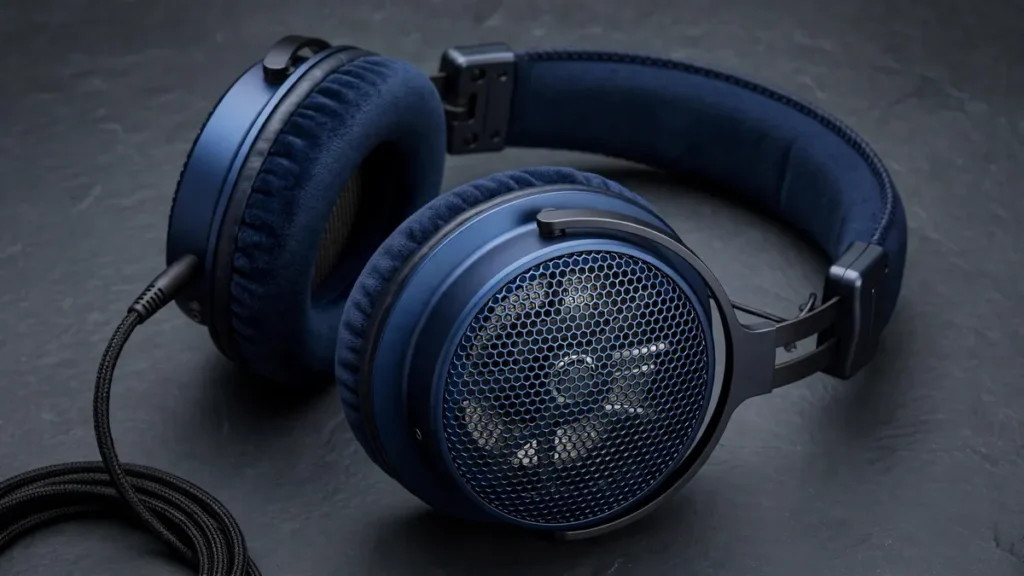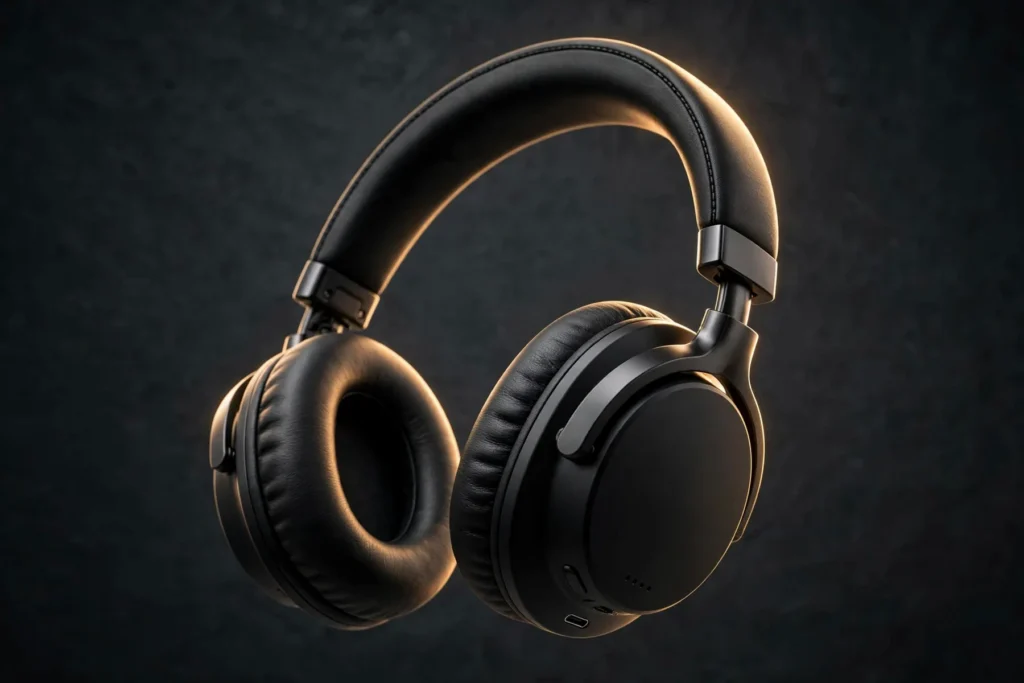
The Sony MDR-1000X is the headphone that started it all — the original 2016 flagship that launched Sony’s legendary 1000X line and went on to become the WH-1000XM2, XM3, XM4, and XM5. Looking back at our own testing lineage and the product’s place in noise-cancelling history, the MDR-1000X remains a fascinating piece of audio heritage: the first headphone to pair Sony’s digital noise cancelling with LDAC Hi-Res wireless audio, and the direct ancestor of today’s best-selling WH-1000XM4.
Here’s the honest verdict up front: the MDR-1000X is a discontinued legacy product. You won’t find it new on store shelves anymore — availability in 2026 is limited to renewed units and third-party sellers. If you’re shopping for a daily driver, the modern successor is the better buy. But if you’re a collector, an audio-history enthusiast, or hunting a renewed bargain, this guide covers every spec, feature, and buying consideration.
| Sound Quality | 9.0 |
| Noise Cancelling | 8.6 |
| Comfort & Design | 8.5 |
| Features | 8.4 |
| Battery Life | 8.0 |
| Availability & Value | 7.0 |
Key Specifications at a Glance
The MDR-1000X was cutting-edge when it launched at IFA 2016, and several of its specs — LDAC support, a 40mm liquid-crystal-polymer driver, full Hi-Res certification — still look respectable today. Here’s the spec sheet distilled into the details that actually matter to a buyer.
| Specification | MDR-1000X |
|---|---|
| Driver | 40mm dynamic, aluminum-coated LCP diaphragm |
| Frequency response | 4 Hz – 40,000 Hz (Hi-Res Audio certified) |
| Impedance | 46 ohms (powered on), easy to drive wired |
| Sensitivity | 103 dB/mW |
| Bluetooth | Version 4.1 with NFC one-touch pairing |
| Codecs | SBC, AAC, aptX, and LDAC |
| Audio processing | S-Master HX amp + DSEE HX upscaling |
| Noise cancelling | Digital NC with Personal NC Optimizer, Sense Engine |
| Battery life | Approx. 20 hours wireless with NC on |
| Charge time | Approx. 4 hours (micro-USB) |
| Weight | 275 g |
| Colors | Black, Grey Beige |
| Microphone | Yes — hands-free calling supported |
| Design | Fold-flat over-ear with touch gesture controls |
| Launch | 2016 — discontinued, renewed units only |
Specs verified against Sony’s original product documentation and retail listings. No prices are listed because renewed pricing changes constantly.
The Headphone That Started the 1000X Dynasty
Context matters with the MDR-1000X. When Sony unveiled it in 2016, Bose’s QuietComfort line owned the noise-cancelling conversation. The MDR-1000X changed that: it was the first Sony headphone to combine industry-leading digital noise cancelling with true Hi-Res wireless audio via LDAC, and reviewers at the time judged it a genuine rival to — and in sound quality, often better than — the Bose QC35.
That lineage is exactly why it earns a review here rather than a footnote. The MDR-1000X established the formula every successor refined: 40mm drivers, touch controls, Sense Engine processing, and battery life in the 20-hour range. Our review of the Sony WH-1000XM4C and the three-generation 1000X comparison show how far that formula has evolved — but the DNA is unmistakably from this model.
Design, Comfort & Touch Controls
The MDR-1000X is a closed-back over-ear headphone with a clean, minimal design: smooth oval earcups, plush synthetic-leather earpads, and arms that collapse inward so the whole thing folds flat for travel. At 275 grams it sits in the comfortable middle of the flagship range — light enough for long sessions, with enough clamping force to keep the earpads sealed.
The signature trick is the right earcup: a flat, touch-sensitive panel that replaces nearly all buttons. Swipe up or down for volume, forward or back to skip tracks, tap to play or pause, and cover the whole cup with your hand to trigger Quick Attention mode — the music drops to a whisper instantly so you can hear someone speak, then returns the moment you lift your hand. It was genuinely novel in 2016, and the gesture system survived into every WH-1000X model after it.

Noise Cancelling: Still Impressive, Generations Old
Sony’s 2016-era digital noise cancelling used feedforward and feedback microphones on each earcup to sample ambient sound and generate mirror-image waves to cancel it. In practice, it was excellent for its era: it muted the drone of airplane engines, hushed cafe chatter and background music, and lowered overall noise floors dramatically — reviewers found it frequently superior to the Bose QC35 in real-world environments like cafes and terminals, though Bose kept a slight edge at killing jet-engine drone specifically.
Three intelligent features rode on top of the core NC:
- Personal NC Optimizer — plays calibration tones to analyze your ears, glasses, and hair, then tunes the cancelling to your fit. Running it properly made a noticeable difference.
- Quick Attention mode — cup your hand over the right earcup to instantly drop the music and hear your surroundings.
- Ambient Sound modes — Normal and Voice modes pipe in filtered outside sound, so you can stay aware of announcements and conversations without removing the headphones. Voice mode works best in quieter settings; in very loud environments it can sound artificial.
Important context for 2026 buyers: noise-cancelling technology has advanced substantially since 2016. Today’s flagships cancel noticeably more across a wider range of frequencies and adapt continuously rather than by manual optimization. The MDR-1000X’s NC was elite in its day — against modern midrange options, it holds up reasonably, but it won’t match current Sony flagships.
Sound Quality & Wireless Codecs
Where the MDR-1000X still shines is sound. The 40mm aluminum-coated liquid-crystal-polymer driver delivers warm, detailed audio with a rich low end and clear mids and highs — the classic Sony Hi-Res tuning that made the 1000X line famous. Reviewers consistently preferred its musicality to the thinner voicing of the Bose QC35.
The codec support was ahead of its time and remains fully usable today:
- LDAC — Sony’s high-resolution codec, up to 990 kbps at 24-bit/96kHz, needs an LDAC-capable source (most Android phones qualify).
- aptX and AAC — broad compatibility across phones, tablets, and laptops.
- DSEE HX upscaling — enhances compressed MP3 and streaming audio, a nice touch for lower-quality sources.
- S-Master HX amplifier — Sony’s digital amp designed for Hi-Res playback.
One quirk to know: like its successor, the MDR-1000X sounds noticeably better powered on than off. Wired with the power off, the sound is dull and two-dimensional — a passive mode limitation of the design. Keep the headphones powered up (even with NC disabled) for the full sound signature.
Battery, Connectivity & Calls
Battery life is rated at roughly 20 hours of wireless playback with noise cancelling on — respectable for 2016, modest by today’s 30-to-40-hour flagship standards, and aged batteries in renewed units may hold less. Charging is via micro-USB and takes around four hours from empty, so plan around that; there’s no fast-charging generation leap here.
Bluetooth 4.1 is the spec on paper. In real use it pairs reliably, and NFC makes one-touch pairing easy with compatible phones. The 2016-era Bluetooth means no multipoint switching and no modern power-efficiency gains — worth knowing if you juggle a phone and a laptop. Call quality is functional but average: hands-free calls work fine, and noise reduction keeps your voice reasonably clear, though it’s not a standout by any measure.
Buying Guide: Where to Find the MDR-1000X in 2026
Let’s be direct: Sony discontinued the MDR-1000X years ago. There is no brand-new retail stock. Your options today are:
- Renewed/refurbished units on Amazon — currently the most reliable channel, with listings from third-party renewed sellers.
- Used marketplaces — eBay and similar sites frequently carry the MDR-1000X at collector-friendly prices.
- Successors — the modern route. The WH-1000XM4 is the sweet spot for value, while the XM5 and XM6 are the current flagships; our XM4 vs XM5 vs XM6 comparison breaks down the generations.
What to check before buying renewed: confirm the return policy and warranty terms, ask whether the battery was replaced or tested, verify the earpads are in good condition (pads are the first thing to wear), and make sure the included cable and carrying case are part of the listing. Our recommendation: the MDR-1000X is worth buying today only at a renewed price that reflects its age — as a modern daily driver purchase at near-retail money, the WH-1000XM4 is the objectively smarter pick.
Frequently Asked Questions
Is the Sony MDR-1000X discontinued?
Yes. Sony discontinued the MDR-1000X years ago, replacing it with the WH-1000XM2 in 2017 and continuing the line through the XM6. It is not sold new at retail anymore — available stock today is renewed or second-hand.
Can I still buy the MDR-1000X in 2026?
You can, but only renewed or used. Amazon carries renewed listings from third-party sellers, and used units appear regularly on marketplaces like eBay. Stock is inconsistent, so listings come and go.
What’s the difference between the MDR-1000X and the WH-1000XM4?
The WH-1000XM4 is the third successor in the same lineage (MDR-1000X → WH-1000XM2 → WH-1000XM3 → WH-1000XM4). The XM4 adds Bluetooth 5.0, multipoint connection, much better battery life, upgraded noise cancelling with the QN1 chip, and Speak-to-Chat. Our full WH-1000XM4 review covers it in detail.
Does the MDR-1000X support LDAC?
Yes. The MDR-1000X was one of the first Sony headphones to support LDAC, enabling up to 990 kbps Hi-Res wireless audio when paired with a compatible source like most Android phones. It also supports aptX, AAC, and SBC.
Is the Sony MDR-1000X worth buying today?
As a renewed bargain for collectors or Sony-history fans, it can be worthwhile — the sound quality still holds up well. As a primary daily-driver purchase at anything close to original retail money, no: modern successors like the WH-1000XM4 deliver better noise cancelling, battery life, Bluetooth, and call quality.
Does the MDR-1000X work with the Sony Sound Connect app?
The original companion app (Sony Connect / Headphones Connect at launch) supported the MDR-1000X for firmware updates and the NC Optimizer. Sony has since phased out support for this legacy model, so app functionality on current app versions is not guaranteed.
The SoundMavericks Verdict
The Sony MDR-1000X earned its place in headphone history. It dethroned Bose’s noise-cancelling monopoly narrative, established the template every WH-1000X flagship since has followed, and proved that wireless audio could be genuinely Hi-Res. That legacy deserves respect — and our scoring reflects the product on its own legacy terms, not against 2026 flagships.
For most buyers in 2026, the honest recommendation is the Sony WH-1000XM4: the same soul, a decade of refinement, and readily available new with a warranty. But if you find a renewed MDR-1000X in good condition at the right price — or you’re building a collection of the classics — this is the one where the dynasty began, and it still sounds like a proper flagship when powered up. For shoppers weighing options across the noise-cancelling market, our best noise cancelling headphones under 100 roundup covers the value end, and our travel headphones guide covers road-ready picks.

I am the founder of Sound Mavericks, where I provide the polite truth about audio equipment. I started this site because consumer electronics reviews are often too technical. Instead of using a silent lab, I test headphones, earbuds, and Bluetooth speakers in the real world – like on a noisy subway or in a busy coffee shop.
To stay independent, I buy my own review units (mostly from the United States) rather than accepting free gifts from brands. Once I finish testing a product, I sell it locally to our community. My goal is to help you understand sound quality, active noise cancellation (ANC), and battery life without the marketing hype.