

This Nothing Ear (3a) review covers the second generation of Nothing’s lower-priced ‘a’ earbuds, and the pair is listed on Amazon US. The outline sounds familiar: transparent stems, a 12mm driver, noise cancelling rated at up to 45 dB and LDAC hi-res audio. Then the spec sheet takes a turn. The Ear (3a) carries 32MB of onboard storage and can record voice notes, calls and meetings on the buds themselves, phone untouched. Nothing else in this tier does that.
This is a research review. We have not worn the Ear (3a) ourselves, so the verdict below is built from Nothing’s published specifications, the verified Amazon US listing and the findings in published reviews. The score is provisional.
Nothing Ear (3a) 8.3/10 provisional
Why you: you want a flagship-length feature list at an entry-level price: real noise cancelling, LDAC, dual-device pairing, an app with a proper 8-band equaliser, and a recording trick no rival in this tier offers.
Trade-off: the stock tuning pushes bass hard enough that many listeners will reach for that equaliser, and six hours of battery with ANC on is merely average now.
6 h buds (ANC on) · 25 h with case · Bluetooth 6.0 · LDAC · IP54 · No wireless charging
The score, explained: 8.3, carried by value
We score every earbud on the same six bars, and the Ear (3a) lands close to the Ear (a) it replaces, a pair that already sits in our Headphone Finder with a similar profile. The newer bud edges ahead on sound and calls: the driver is bigger, the bass hits harder, and the microphones handle wind better than most at this level. Value is the standout bar. LDAC, adaptive ANC, dual pairing and onboard recording rarely share a spec sheet in this tier. Battery holds the overall back. Six hours per charge with ANC on is workable, but rivals have stretched past it, and the case total of 25 hours in that mode is unremarkable.
Sound: a bigger driver with a loud bass shelf
The Ear (3a) moves to a 12mm dynamic driver with a PMI and TPU diaphragm, up from the 11mm unit in the Ear (a). Nothing rates the low end as up to 5 dB stronger than the older bud, and published reviews back the claim up: the stock tuning is bass-forward, with a low shelf that gives kick drums and bass lines real weight. SoundGuys measured the same thing and flagged the default tuning as the one thing to fix, noting the bass is easy to rein in. That fix lives in the Nothing X app, which carries an 8-band equaliser you can adjust band by band, a tool most rivals at this level simply do not offer.
With the bass trimmed, the mids stay clear and vocals sit where they should. LDAC support means Android phones can feed the buds a hi-res stream, and the pair carries a Hi-Res Audio certification to match. iPhone listeners get AAC, which sounds clean here too. A static spatial audio mode widens the stage for video, though it is a mild effect rather than a reason to buy.
Noise cancelling: 45 dB, aimed at voices
The hybrid ANC is rated at up to 45 dB across a wide band that reaches 5,000 Hz, and Nothing says the tuning pays extra attention to the human voice range, where it claims up to 6 dB more reduction than a flat approach. An adaptive mode adjusts the cancelling strength to your surroundings, and the system recalibrates constantly to hold the seal’s effect. In published testing, the fit and the cancelling together impressed Trusted Reviews enough to favour the Ear (3a) over Nothing’s own flagship Ear (3) on those two points.
Set expectations honestly: flagship buds from Sony and Bose cancel more, especially down low, and they cost several times more. For trains, offices and street noise, 45 dB behind a good seal covers the bulk of daily racket. The transparency mode sounds natural and keeps announcements and traffic audible without pulling a bud out.
The recording trick: storage in the buds
Here is the feature that separates the Ear (3a) from every rival in its tier. A 32MB flash chip inside the buds stores audio on the hardware itself. Audio Snapshot captures clips of up to 60 seconds when you want to grab a thought, a quote or a moment. The same storage records calls and meetings, and everything syncs to the Nothing X app when you are back at your phone, where transcription tools sort the spoken words into text.
For students, reporters and anyone whose work runs on meetings, that is a genuinely useful tool, and it works when your phone is in another room or out of battery. Two cautions come with it. Call recording is switched off or restricted in some regions because recording laws differ, so check the rules where you live, and tell people they are being recorded where the law or simple manners require it. The transcription tier also runs as an included trial; what it costs once the trial ends has not been announced.
Design, fit and controls
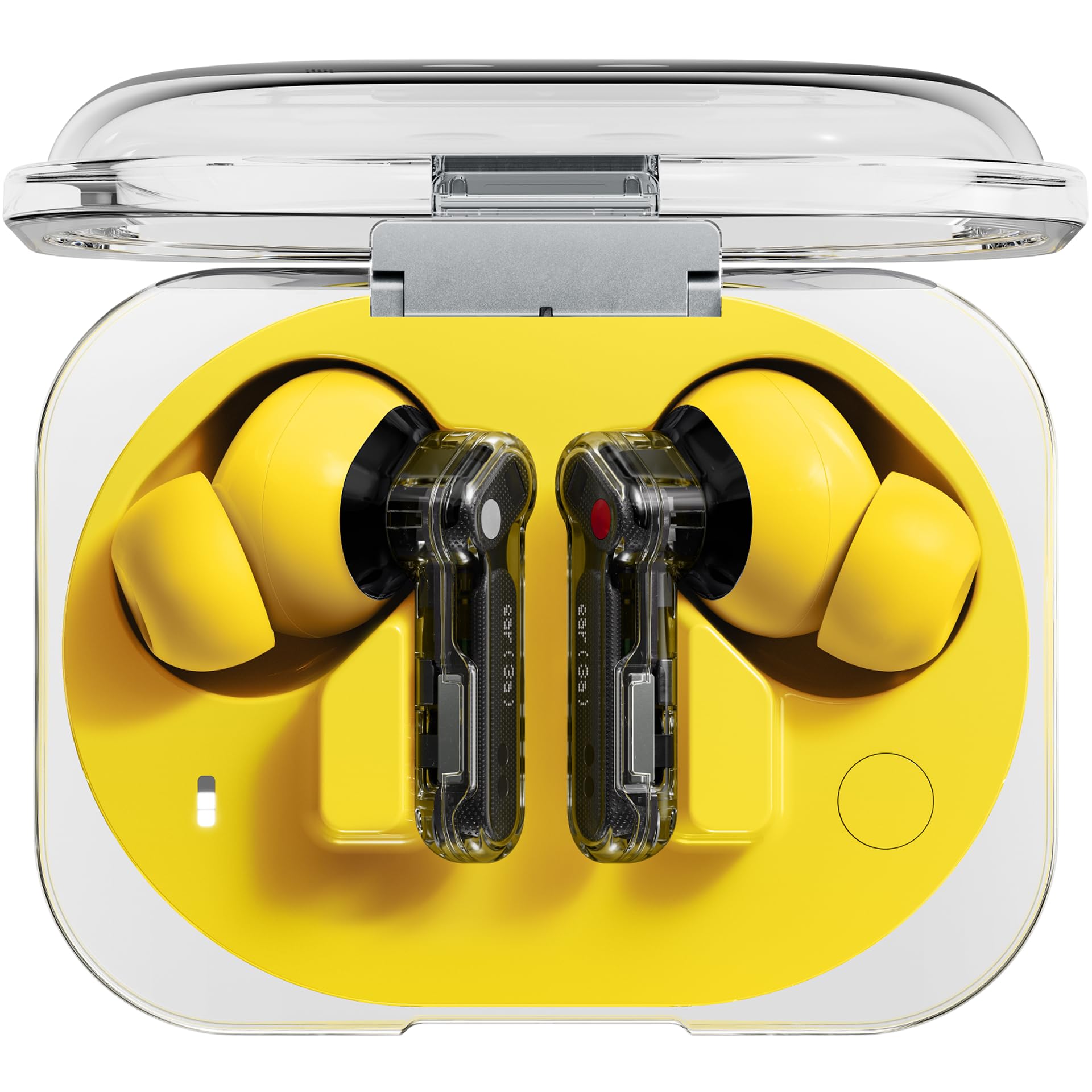
Nothing’s transparent look stays: clear stems that show the internals, a clear case lid, and red and white dots marking right and left. New this time is a pink finish alongside black, white and the signature yellow. Each bud weighs 4.53 g, light enough to forget over a long day, and the case adds just 40.92 g in a pocket. The fit gets a quiet upgrade too: the box now includes an extra-small tip size alongside the usual three, and small ears are exactly where budget buds usually fail.
Controls are pinch-based. A pinch plays or pauses, a double pinch skips, and a pinch and hold switches noise cancelling modes. There is no volume control on the buds themselves, which you will notice daily; volume lives on your phone or on a control you remap in the app. Buds and case are both rated IP54, so sweat and rain are fine, while swimming and showers are out. The design language matches the rest of the family, including the Nothing Headphone (a) over-ears.
Battery: the honest compromise
Battery life is where the Ear (3a) pays for its feature list. Expect up to 6 hours from the buds with ANC on and 25 hours in total with the case. Turn ANC off and those figures climb to 10 hours and 42 hours. The cells are 55 mAh per bud and 500 mAh in the case. A five-minute top-up returns about an hour of playback, which rescues most forgotten-charge mornings. Charging is USB-C only. There is no wireless charging pad support, a cut the ‘a’ line has always made, and one that still stings when a dead case meets a desk full of charging pads.
Calls and connectivity
Three microphones per bud, six in total, feed an AI noise reduction system, and the published verdicts are kind: SoundGuys picked the Ear (3a) out for microphones that handle wind better than most rivals at this level, which is where budget call quality usually falls apart. Voices stay intelligible on a street corner, and the recording feature means an important call can be kept, where local rules allow.
Bluetooth 6.0 runs the connection, with dual-device pairing for a phone and a laptop at once and Google Fast Pair for Android setup. A low-latency mode keeps game audio in step with the picture.
Nothing Ear (3a) specifications
| Product | Nothing Ear (3a) |
| Driver | 12mm dynamic driver, PMI+TPU diaphragm |
| Noise cancelling | Adaptive hybrid ANC, up to 45 dB; Transparency mode; spatial audio |
| Bluetooth | 6.0, dual-device connection, Google Fast Pair |
| Codecs | SBC, AAC, LDAC |
| Battery (buds) | 6 h (ANC on), 10 h (ANC off); 55 mAh per bud |
| Battery (with case) | 25 h (ANC on), 42 h (ANC off); 500 mAh case |
| Charging | USB-C; 5-minute charge gives about 1 h playback; no wireless charging |
| Water resistance | IP54 (buds and case) |
| Weight | 4.53 g per earbud; case 40.92 g |
| Microphones | 3 MEMS per earbud (6 total), AI noise reduction |
| Onboard storage | 32MB flash for Audio Snapshot clips and call/meeting recording |
| App | Nothing X with 8-band EQ and control remapping |
| Colours | Black, White, Yellow, Pink |
Ear (3a) vs Ear (a): what actually changed
| Nothing Ear (3a) | Nothing Ear (a) | |
| Driver | 12mm dynamic | 11mm dynamic |
| Noise cancelling | Up to 45 dB, adaptive | Up to 45 dB |
| Onboard recording | Yes, 32MB storage | No |
| Codecs | LDAC, AAC, SBC | LDAC, AAC |
| Total battery (ANC off) | 42 h with case | 42.5 h with case |
| Wireless charging | No | No |
The short version: the Ear (3a) is a refinement with one headline addition. Sound gets a bigger driver and a heavier bass hand, the tips fit smaller ears, and the recorder is entirely new. If your Ear (a) still holds a charge, the recorder is the only real reason to switch. Buying fresh, the (3a) is the one to get, and our best budget earbuds guide shows what else competes for the same money.
Who should buy the Nothing Ear (3a)
Buy the Ear (3a) if you use Android and want LDAC without flagship money, if your days run on calls and meetings you would like to keep, or if small ears have rejected every budget bud so far. Look elsewhere if wireless charging is non-negotiable, if you need the longest possible ANC-on battery for long flights, or if you dislike heavy bass out of the box and will never open an equaliser. iPhone owners can buy with confidence too; just know the hi-res codec stays dark on iOS, so the recorder and the cancelling do the heavy lifting there.
Frequently Asked Questions
Does the Nothing Ear (3a) support wireless charging?
No. The case charges over USB-C only. A five-minute charge returns about an hour of listening, but there is no charging-pad support.
Can the Ear (3a) really record calls?
Yes. The buds record calls and meetings to their own 32MB storage and sync the files to the Nothing X app. The feature is disabled or restricted in some regions because recording laws vary, so check your local rules first.
How long does the Ear (3a) battery last?
Up to 6 hours per charge with ANC on, and 25 hours in total with the case. With ANC off, the buds run up to 10 hours and the case stretches the total to 42 hours.
Does the Ear (3a) work with iPhone?
Yes. It pairs over Bluetooth, plays AAC on iOS, and the Nothing X app is available on iPhone for the equaliser and settings. LDAC hi-res playback is limited to Android phones that support it.
Can you wear the Ear (3a) in the rain or at the gym?
Yes. Buds and case are rated IP54, which covers sweat and rain. They are not rated for swimming or showering, so keep them out of the pool.
Final verdict
The Ear (3a) is the easiest budget recommendation Nothing has made. The sound is fun and fixable, the cancelling is honest, the calls are strong, and the recorder is a real tool rather than a gimmick, provided your local rules let you use it. Battery life and the missing wireless charging are the prices of admission, and both are visible before you buy. At this tier, that trade looks right, and it earns the Ear (3a) a place in any best wireless earbuds shortlist built on value.

I am the founder of Sound Mavericks, where I provide the polite truth about audio equipment. I started this site because consumer electronics reviews are often too technical. Instead of using a silent lab, I test headphones, earbuds, and Bluetooth speakers in the real world – like on a noisy subway or in a busy coffee shop.
To stay independent, I buy my own review units (mostly from the United States) rather than accepting free gifts from brands. Once I finish testing a product, I sell it locally to our community. My goal is to help you understand sound quality, active noise cancellation (ANC), and battery life without the marketing hype.
