Cheap earbuds usually fail on calls before they fail on music. The drivers are fine at this price now. The microphones are where the cuts land: fewer of them, weaker noise processing, and tuning that treats your voice as an afterthought. So this list ignores the usual budget order and ranks seven cheap wireless earbuds by one thing first, how clearly the other person hears you.
It is a research-based ranking, built from the published call tests that exist at this price, including the recorded microphone samples SoundGuys publishes, with every pick checked against its specs and live Amazon listing. One honest warning: controlled mic testing gets thin below the flagship tier. Some picks rest on solid recorded tests, others on a review or two plus microphone hardware, and we say which is which. For the wider budget picture ranked by sound and value, see our main guide to the best budget earbuds.
Our Verdict: The Cheap Earbuds to Buy for Calls
The CMF Buds 2 Plus takes the top spot. It is the rare budget model with recorded mic tests that hold up against earbuds costing far more, and it pairs those mics with strong noise cancelling and long battery life. If your calls happen in quiet rooms and you want to spend the least possible, the Soundcore P20i is the floor worth paying for. If you can stretch to the top of the cheap band, the EarFun Air Pro 4 has the best-tested microphones here.
Cheap Wireless Earbuds with Good Mic: The Picks at a Glance
| Pick | Best for | Microphones | ANC | Buy |
|---|---|---|---|---|
| CMF Buds 2 Plus | Best calls overall | 6 | Yes, adaptive | Check Price |
| EarFun Air Pro 4 | Best-tested mics, stretch pick | 6 | Yes | Check Price |
| CMF Buds Pro 2 | Calls plus features | 6 | Yes, hybrid | Check Price |
| EarFun Air Pro 3 | Call tuning on a chip built for it | 6, cVc 8.0 | Yes | Check Price |
| Soundcore P31i | Newest hardware, light testing | 6 | Yes, adaptive | Check Price |
| Sony WF-C510 | Quiet rooms, simple and reliable | 2 | No | Check Price |
| Soundcore P20i | Cheapest worth buying | 2 | No | Check Price |
The Picks, Ranked by Call Quality
1. CMF Buds 2 Plus: the budget mic that embarrasses pricier buds

CMF is Nothing’s budget line, and the Buds 2 Plus is the pick of this list because its microphones have actually been measured against the big names. In SoundGuys’ recorded mic samples and head-to-head data, it held its own against the AirPods 4 for call clarity while beating them on noise cancelling, sound and battery. That almost never happens at this end of the market, where most mic claims are marketing copy with no test behind them.
The hardware backs it up: six microphones with noise reduction on calls, adaptive ANC rated up to 50 dB for your own ears, LDAC hi-res audio from a 12 mm driver, and battery life that runs well past a work week of calls between case charges. The limits are the usual ones. Wind still roughens your voice outdoors, and the case is plain plastic. Neither changes the ranking: for cheap earbuds for calls, this is the pair to beat.
2. EarFun Air Pro 4: the best-tested microphones, at the top of cheap

The Air Pro 4 sits at the ceiling of what this list calls cheap, and it earns its place on call evidence. Its six-mic array with AI noise reduction has been through more published call tests than anything else here, and the pattern across them is consistent: clear voice pickup indoors, and better resistance to street noise than most buds at twice the price. If call quality is the whole point of the purchase and the budget can stretch once, stretch to this.
Around the mics you get hybrid ANC, LDAC and aptX Lossless, about 11 hours per charge and 52 hours with the case, plus in-ear detection the rest of this list mostly skips. It also anchors our guide to noise cancelling earbuds for phone calls, which is where to look if your calls happen in genuinely loud places and the budget can move up a tier.
3. CMF Buds Pro 2: nearly the same call quality, more toys

The Buds Pro 2 runs the same six-mic idea as its sibling above, with hybrid ANC rated to 50 dB and a dual-driver setup (11 mm for bass, 6 mm ceramic for treble) that makes it the better music pick of the two. Published call impressions are positive: stable voice pickup in offices and at home, with the usual drop-off once wind gets involved. It ranks third only because the Buds 2 Plus has the stronger recorded-test paper trail for calls specifically.
The Smart Dial on the case controls volume and playback with a twist, which sounds like a gimmick and turns out to be handy on calls when your phone is across the room. Battery runs to about 43 hours with the case. If you find it priced below the Buds 2 Plus on the day you buy, the order flips: take the cheaper of the two.
4. EarFun Air Pro 3: older, cheaper, built around a call chip

The Air Pro 3 is the veteran here. Its Qualcomm QCC3071 chip runs cVc 8.0, a call-noise technology with a long track record, across six microphones. Reviewers who tested it on Zoom and phone calls kept landing in the same place: voices stay intelligible in a busy house, and the processing does not chop the start off words the way cheap ENC often does. For work-from-home calls on a strict budget, it is the safe pair of hands on this list.
Age shows in the details. Bluetooth is 5.3, the ANC (rated to 43 dB) is a step behind the newer picks, and the design is plain. In return it usually sells for less than everything ranked above it, still offers aptX Adaptive, wireless charging and multipoint. If your calls are indoors and your meetings are long, the savings are real and the mic compromise is small.
5. Soundcore P31i: the new hardware bet, testing still thin
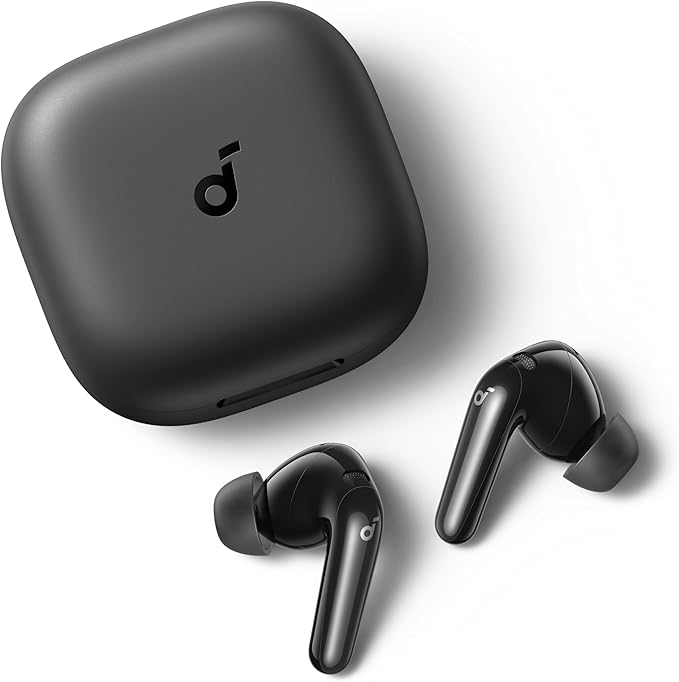
Full disclosure on this one: the P31i is recent enough that independent call testing is still thin, and its place here rests on hardware and early reviews rather than a deep test record. The hardware is promising. Six microphones with Soundcore’s AI call processing, real-time adaptive ANC a clear step up from the older P-series, LDAC support, and a live translation feature in the app that frequent travellers may actually use.
Early owner reports and first reviews describe clear indoor calls and competent noise handling on busy streets, which matches what the spec sheet suggests. We rank it fifth, behind picks with proven records, and we will move it up or down as proper mic tests appear. Buy it if you value the newest feature set; buy the CMF or EarFun picks above if you want evidence today.
6. Sony WF-C510: no ANC, no fuss, clear at home

Sony took a different route here: no noise cancelling at all, a tiny light shell, and money spent on the basics. The microphones (one per bud) will not match the six-mic picks for street calls, but Sony’s voice processing keeps calls natural and easy to understand in quiet rooms, and reviews consistently rate its call quality as good for a budget model with no ANC to hide behind. Multipoint pairing is present, which most of this list cannot say, so it hops between a laptop and a phone without a pairing dance.
Battery is about 11 hours from the buds and 22 in total with the case, the fit suits small ears, and there is an ambient mode for hearing your surroundings. Choose it if your calls happen at a desk or on the sofa and you value simple reliability over noise cancelling. Skip it if your calls happen on trains or busy pavements.
7. Soundcore P20i: the cheapest pair worth taking a call on

Every list needs a floor, and this is ours. The P20i is routinely one of the cheapest name-brand earbuds on Amazon, and its two microphones with AI call processing do a respectable job in quiet rooms: family calls, team check-ins from home, voice notes. Soundcore’s app adds EQ presets and a find-my-earbuds feature that models three times the price often lack.
Set expectations before you buy. With only two mics and no ANC, traffic noise and wind get into your calls, and your voice thins out fast outdoors. Treat it as an indoor caller and a music spare and it over-delivers for the money. Treat it as a commuter call tool and you will be the person everyone asks to repeat themselves. When the gap to the CMF Buds 2 Plus is small on the day, pay the gap.
Why Cheap Earbuds Sound Bad on Calls
Three things decide how you sound, and cheap models are short on all three by default. First, distance: an earbud mic sits by your ear, far from your mouth, so your voice arrives quiet and room noise arrives loud. Stem designs help a little by moving one mic lower. Second, processing: separating your voice from a kettle, a toddler or traffic takes real computing, and the noise-reduction chips in cheap buds are the first place brands save money. Third, wind: moving air across a tiny mic opening creates noise louder than your voice, and no budget earbud has a genuine fix for it. A mesh cover and good processing soften it. That is all.
Mic count is a rough guide, not a guarantee. Six microphones give the processing more to work with, which is why most of this list runs six. But tuning matters more than the count on the box, and two well-tuned mics from Sony beat six badly tuned ones from a no-name listing. That gap between spec sheet and tuning is exactly why this ranking leans on recorded tests wherever they exist.
How Much Call Testing Actually Exists at This Price
Less than you would hope, and you should know that before trusting any list like this one, ours included. SoundGuys records standardised mic samples for the models it reviews, and that archive is the best public evidence in the budget tier; it is a big reason the CMF Buds 2 Plus tops this page. A handful of budget specialists, Scarbir among them, test calls on cheap models as a matter of routine. Beyond that, coverage thins out fast. Many cheap earbuds with confident “AI call noise cancelling” claims have never been near a controlled mic test, and owner reviews skew positive because most people call from quiet rooms, where almost anything works.
Our rule for this ranking: a pick needed either at least one credible recorded call test behind it, or a microphone setup from a maker with a proven record in the picks above it. The P31i is the one judgement call, flagged in its section. As more tests land, the order here will change, and the two CMF models are the ones setting the standard the rest have to meet.
Before You Buy: Three Quick Checks
Match the pick to where you actually call. Quiet home or office: anything on this list works, including the P20i. Streets, stations and school runs: stay with the six-mic picks and keep your expectations at “clear enough”, not “studio”.
ANC and call clarity are different features. ANC silences the room for you. ENC and mic processing clean your voice for the other person. A bud can have strong ANC and a poor mic, or no ANC and a decent mic (the WF-C510 is the proof). Buy for the side of the call you care about.
Check the return window and use it. Call a friend from your noisiest regular spot within the first week and ask how you sound. Mic quality varies with fit and phone model in ways no review can predict for your ears. If the answer is bad, send them back and move one step up this list. Our guide to the best earbuds for talking on the phone covers the step-up tier across all budgets.
Frequently Asked Questions
Are cheap earbuds good enough for calls?
For calls from home or a quiet office, yes. The picks on this page all handle that job well, and the top three stay clear in moderate street noise too. Where cheap earbuds for calls still fall down is wind and heavy traffic: no budget model fixes that, so regular outdoor callers should budget for the top of this list or step up a tier.
How many microphones do earbuds need for clear calls?
More helps, up to a point. Two mics per bud (four total) is the point where noise processing gets enough information to work well, and most of our top picks run six in total. But tuning decides the result: a well-tuned two-mic Sony sounds better on calls than a badly tuned six-mic no-name model. Treat mic count as a first filter, then look for actual call tests.
Do cheap earbuds work for Zoom and Teams calls?
Yes. Any Bluetooth earbud here pairs with a laptop and works in Zoom, Teams and Meet. For long meeting days, pick a model with multipoint (the Sony WF-C510, or the EarFun Air Pro 3) so the buds stay connected to your laptop and phone at once. Keep the case nearby: laptop Bluetooth drains buds at the same rate as phone calls, and cheap cases top up fast.
Why do people say I sound muffled on my cheap earbuds?
Usually one of three causes: the mic openings are partly blocked by the fit, so try a different ear tip size and reseat the buds; the noise processing is cutting your voice along with the room, which happens when you speak quietly, so talk at normal volume; or the room itself is echoing, and no earbud fully fixes a bare-walled room. If all three check out, the mics themselves are the limit and it is time to move up this list.
Does noise cancelling make my voice clearer on calls?
No. ANC works on what you hear, not on what you send. Your voice is cleaned by a separate system, usually labelled ENC or AI call noise reduction, which uses the microphones to strip room noise from your speech. When shopping, look for the call-side claims and mic count, not the ANC depth figure. A model can advertise 50 dB of ANC and still send a poor voice to your caller.

I am the founder of Sound Mavericks, where I provide the polite truth about audio equipment. I started this site because consumer electronics reviews are often too technical. Instead of using a silent lab, I test headphones, earbuds, and Bluetooth speakers in the real world – like on a noisy subway or in a busy coffee shop.
To stay independent, I buy my own review units (mostly from the United States) rather than accepting free gifts from brands. Once I finish testing a product, I sell it locally to our community. My goal is to help you understand sound quality, active noise cancellation (ANC), and battery life without the marketing hype.