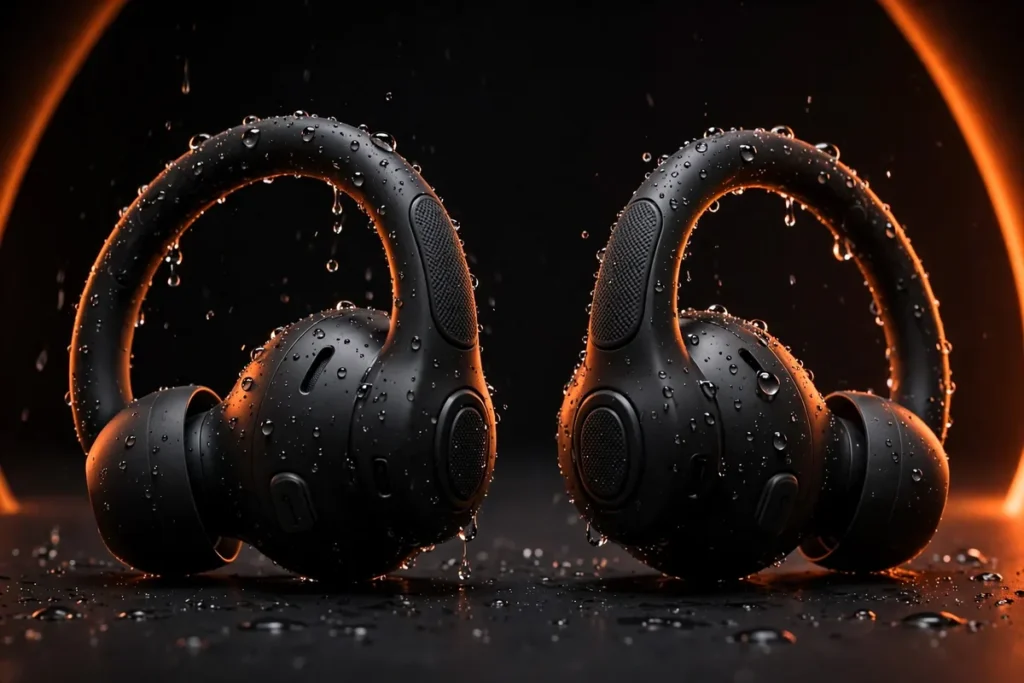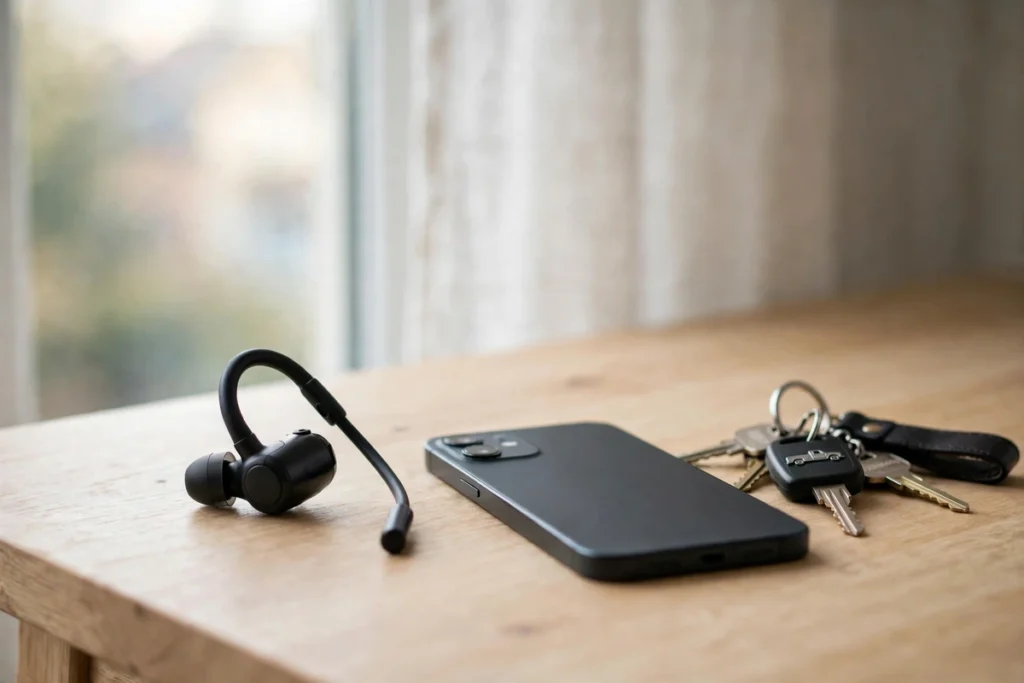
One earbud in, one ear open. That is the whole idea behind a single ear Bluetooth earbud: calls and audio in one ear, and the other ear left free for traffic, machinery, customers or a child in the next room. The products that do this well split into two groups, and the groups suit different days.
The first group is the true mono earpiece. One unit, worn on one ear, with a microphone built for voice first and music second. The second group is an ordinary stereo pair where either bud works on its own, usually called single earbud mode or mono mode. Earpieces win on calls, talk time and microphone placement. Stereo pairs win on music, and you get a spare bud when the first one runs flat. Every pick here is labelled as one or the other.
This is a research-based guide. We compared manufacturer specifications, rated talk times and published call tests, then ranked the six products we would buy for single ear use. Battery figures here are maker claims, so we treat them as ceilings.
Poly Voyager 5200
A true single earpiece with a four-microphone boom and the strongest wind handling here. If your calls happen outdoors or in a cab with the window cracked, this is the one. Seven hours of talk time, multipoint for two phones, and sensors that answer a call when you put it on.
The Six Picks at a Glance
| Pick | Type | Rated battery | Best for | Price |
|---|---|---|---|---|
| Poly Voyager 5200 | True single earpiece | 7 hours talk | Calls in wind and traffic | Check Price |
| BlueParrott M300-XT SE | True single earpiece | 14 hours talk | Trucks, warehouses, delivery | Check Price |
| New Bee Bluetooth Earpiece | True single earpiece | 24 hours rated talk | Budget buy, long rated talk time | Check Price |
| Jabra Talk 45 | True single earpiece | 6 hours talk | Lightest pick at 7.2 grams | Check Price |
| Soundcore P20i | Stereo pair, single earbud mode | 10 hours per bud | Music with one ear open | Check Price |
| TOZO T6 | Stereo pair, single earbud mode | 12 hours per bud | Long shifts, swapping buds | Check Price |
True Single Earpiece or Mono Mode: Which Type Fits Your Day
A true mono earpiece puts its microphone on a short boom, close to your mouth. Distance is what ruins call quality, so a boom beats the tiny microphones buried in a music earbud almost every time. Earpieces also quote battery life as talk time, which is the number that matters if you spend a shift on the phone. The trade is sound: most earpieces use a small voice-grade speaker, fine for calls and talk radio, thin for music.
A stereo pair in single earbud mode plays through one bud and leaves the other in the case. You keep the bigger drivers and the app equalisers, and when the working bud runs low you swap to the charged one. That swap trick gives stereo pairs the longest practical single ear runtime here. The weak point is the microphone, which sits up by your ear and picks up more of the room.
One safety note. Driving law on earbuds differs by state and country, and several places that ban two earbuds allow one. One open ear is the compromise most drivers settle on, but check your local rule instead of assuming. The same applies on warehouse floors, where some sites ban earbuds outright and others allow a single ear.
1. Poly Voyager 5200: Best for Calls

Type: true single earpiece. The Voyager 5200 has been the default recommendation for phone-heavy work for years, and the spec sheet explains why. Four microphones feed a noise-cancelling processor, and Poly’s WindSmart system adds six layers of wind protection, from the boom’s aerodynamic shape to an algorithm that adjusts as gusts change direction. Callers hear your voice instead of the weather. In published call tests it stays intelligible in conditions that reduce cheaper earpieces to static.
Talk time is 7 hours, with 9 days of standby. An optional charging case adds up to 14 more hours. Smart sensors answer a call when you lift the earpiece to your ear and pause music when you take it off. It announces the caller’s name and lets you say “answer” or “ignore” out loud. Multipoint keeps two phones connected at once, and range is up to 98 feet.
The honest downsides: it charges over micro-USB, it costs several times what the budget picks here cost, and the over-ear hook fit divides people. Drivers and field workers who live on calls will not care about any of that. If both of your ears are free and call quality is the whole job, our guide to the best earbuds for talking on the phone covers stereo pairs built for the same purpose.
Key specs: 4-mic boom with WindSmart, 7 hours talk time, multipoint (2 phones), up to 98 ft range, smart sensors, about 20 grams.
2. BlueParrott M300-XT SE: Best for Trucks and Warehouses

Type: true single earpiece. BlueParrott builds headsets for people who work in loud places, and the M300-XT SE is its compact mono model. Two noise-cancelling microphones cut about 80 percent of background noise from your side of the call, per BlueParrott’s own rating. That is the number that matters in a warehouse aisle or a delivery cab: the person you are calling hears you, not the forklift.
Talk time is 14 hours, double the Voyager 5200, and standby runs to 420 hours. The Class 1 Bluetooth radio reaches up to 300 feet, so you can leave your phone in the cab and walk a delivery to the door without dropping the call. It is IP54 rated against dust and water spray, weighs about 20 grams, and connects to two devices at once. The programmable BlueParrott Button can mute a call, speed-dial a contact or trigger push-to-talk in team apps. It charges over USB-C.
Music is the compromise. The speaker is tuned for voice, so podcasts and talk radio are fine and songs sound thin. For desk-based dispatch or office call work, a full headset is still the better tool; our best call center headset picks cover that side. On the road and on the floor, this is the work pick.
Key specs: 2 noise-cancelling mics (80% background noise reduction, maker rating), 14 hours talk time, up to 300 ft range, IP54, programmable button, USB-C.
3. New Bee Bluetooth Earpiece: Best Budget Earpiece

Type: true single earpiece. The New Bee earpiece is the listing drivers have been buying for years, and its pitch is simple: a rated 24 hours of talk or music time per charge and 60 days of standby, at a price low enough that losing one is an annoyance rather than a disaster. Treat the 24 hours as a maker claim measured in gentle conditions. Even if real talk time lands well under it, it still outlasts every branded earpiece in this guide.
It fits either ear, with an ear hook and gel tips in the box, and it can stay connected to two phones at once. What you do not get is processing power: the microphone is a simple single unit with no serious noise-cancelling system behind it. In a quiet cab or office it sounds perfectly clear. At highway speed with a window down, callers will hear the road competing with you, where the Voyager 5200 and the M300-XT SE earn their money.
Buy it as a first earpiece, a spare for the glovebox, or the one you hand to a new driver. If your calls are your income, step up to the two picks above it.
Key specs: rated 24 hours talk/music, 60 days standby, fits left or right ear, two-device connection, Bluetooth 5.0.
4. Jabra Talk 45: The Lightest Pick

Type: true single earpiece. The Jabra Talk 45 weighs 7.2 grams. That is roughly a third of the Voyager 5200, and it is the reason to buy it: people who pull an earpiece off after twenty minutes because it annoys them tend to keep this one on. It can be worn with or without the ear hook, on either ear, and the fit kit includes several sizes of ear gels.
Two microphones with noise cancelling and HD Voice keep calls clear, and it streams music, podcasts and GPS directions, so it doubles as a one-ear listening device on walks and errands. Talk time is up to 6 hours with 8 days of standby. That covers a day of intermittent calls. It does not cover a full shift of continuous talk, which is why it sits below the work picks.
The design dates from 2018 and it shows in two places: micro-USB charging and an older Bluetooth version. Neither affects how it sounds on a call. If your single ear use means short calls through the day rather than hours of continuous talk, the weight saving is worth more than the extra features above.
Key specs: 7.2 grams, 2-mic noise cancelling, HD Voice, 6 hours talk time, streams music and GPS, fits either ear.
5. Soundcore P20i: Best Stereo Pair with a Single Earbud Mode

Type: stereo pair with a proper mono mode. Soundcore builds the feature in by name: take one P20i bud out of the case and it enters Single Earbud Mode on its own. No menu digging, no pairing the second bud later. For anyone whose single ear listening is mostly music, podcasts and audiobooks with the occasional call, this is the sensible shape of product.
Each bud runs up to 10 hours, the case takes the total to 30 hours, and a 10-minute charge adds about 2 hours. The 10mm drivers are tuned with a lot of bass, and the Soundcore app carries 22 EQ presets if you want to pull it back. In mono the sound folds down so you hear the full track in one ear rather than half of a stereo mix. IPX5 covers sweat and rain.
Calls are the trade you make. The P20i has two microphones with AI call processing across the pair, and in mono you use the microphone in the bud you are wearing, up by your ear with no boom. Indoors and on quiet streets callers hear you well. In wind or traffic noise, the true earpieces here pull ahead, and it is not close. Buy the P20i for listening first and calls second.
Key specs: official Single Earbud Mode, 10 hours per bud, 30 hours with case, 10mm drivers, app EQ, IPX5, fast charge (10 minutes for 2 hours).
6. TOZO T6: Best for Long Shifts and Bud Swapping

Type: stereo pair with a proper mono mode. Either TOZO T6 bud works on its own, and the current version stretches the maths further than the P20i: up to 12 hours per charge on a bud and 50 hours in total with the case. Work one bud through the morning, swap at lunch while it charges, and a pair of these covers shifts that would flatten any single earpiece in this guide twice over.
The T6 is rated IPX8, the strongest water resistance here, and the case charges wirelessly as well as over USB-C. The TOZO app adds preset EQ modes, and the fit is a small, shallow in-ear shape that stays put without an ear hook, which suits anyone who wears glasses or a cap all day.
As with the P20i, the microphone is the compromise. It is a small in-ear unit, so on calls your voice shares space with the room around you. For podcasts, audiobooks and dispatch check-ins that trade is fine. For client calls in a loud building, take the M300-XT SE instead. Our wider best Bluetooth headset for calls guide covers the over-ear and boom options for that work.
Key specs: either bud works alone, 12 hours per bud, 50 hours with case, IPX8, wireless charging case, app EQ.
Side by Side
| Product | Type | Talk or play time | Microphone | Range | Price |
|---|---|---|---|---|---|
| Poly Voyager 5200 | True single | 7 hours talk | 4-mic boom, WindSmart | Up to 98 ft | Check Price |
| BlueParrott M300-XT SE | True single | 14 hours talk | 2-mic, 80% noise cut (maker rating) | Up to 300 ft | Check Price |
| New Bee Bluetooth Earpiece | True single | 24 hours rated talk | Single mic | Standard | Check Price |
| Jabra Talk 45 | True single | 6 hours talk | 2-mic noise cancelling | Up to 98 ft | Check Price |
| Soundcore P20i | Mono mode pair | 10 hours per bud | In-ear mics, AI call processing | Standard | Check Price |
| TOZO T6 | Mono mode pair | 12 hours per bud | In-ear mic | Standard | Check Price |
What to Check Before You Buy
Microphone placement beats microphone count. A boom puts the mic inches from your mouth. An in-ear mic sits up by your cheek and collects the room along with your voice. If most of your single ear time is calls in noise, start with the earpieces and treat the stereo pairs as listening tools.
Read battery ratings carefully. Talk time and music play time are different tests, and calls drain a battery faster. Ratings that combine the two, like the New Bee’s 24 hours, describe gentle use. Plan on roughly two thirds of any claim for a talk-heavy day.
Check which ears it fits. Most true earpieces here rotate or swap to fit either ear, but not all do, and it matters if you want to rest one ear on long shifts. With stereo pairs the question answers itself: wear the left, then the right.
Mono mode behaviour varies. A proper single earbud mode folds the stereo signal into mono and keeps full controls on the working bud. Some cheap pairs just play one channel, so half the song goes missing. Both stereo picks here do the job properly.
Multipoint is worth having. Two-device connection lets a driver keep a personal phone and a work phone live, or lets a warehouse worker stay paired to a phone and a tablet. The Voyager 5200, M300-XT SE and New Bee all offer it.
Frequently Asked Questions
What is the highest rated Bluetooth earpiece for calls?
The Poly Voyager 5200. Its four-microphone boom and WindSmart wind handling keep your voice clear in traffic, yards and bad weather where cheaper earpieces fall apart, and it adds caller announcement, voice answer and multipoint for two phones. The BlueParrott M300-XT SE runs it close in very loud workplaces and doubles its talk time, but for call quality alone the Voyager is the pick.
What is the difference between a mono earpiece and single earbud mode?
A mono earpiece is a single unit built for one ear, usually with a boom microphone and talk time quoted in hours. Single earbud mode is a feature of stereo earbuds: either bud works alone while the other stays in the case. Earpieces are better for calls. Stereo pairs sound better for music and give you a charged spare bud to swap to.
Can I listen to music on a single ear Bluetooth earpiece?
Yes, all four true earpieces here stream music, podcasts and GPS directions. Keep expectations in line with the hardware: the speakers are tuned for voice, so talk content sounds good and music sounds thin. If music is the main job, pick one of the stereo pairs and use its single earbud mode instead.
How much talk time do I need for a full shift?
More than the shift, because ratings are optimistic and batteries age. For continuous talk across an 8 to 10 hour day, the M300-XT SE at 14 rated hours is the safe earpiece, and the New Bee’s 24 hour rating gives budget buyers headroom. The other route is a stereo pair: the TOZO T6 gives you 12 hours per bud, and swapping buds at midday covers shifts no single unit here can match.
Can I wear a single ear earpiece in either ear?
Usually, yes. The Voyager 5200, New Bee and Talk 45 all fit either ear, and the M300-XT SE is worn on one ear with an adjustable fit. With stereo pairs it makes no difference at all, since each bud is a complete earbud. Check the listing if you have a strong preference, because a small number of earpieces are shaped for the right ear only.
Is it legal to drive with one earbud in?
It depends where you live. Some states and countries ban earbuds in both ears while driving but allow one, others restrict any earbud use, and rules change. One open ear is the common compromise and the reason this product category exists, but the only safe answer is to check the current law where you drive.

I am the founder of Sound Mavericks, where I provide the polite truth about audio equipment. I started this site because consumer electronics reviews are often too technical. Instead of using a silent lab, I test headphones, earbuds, and Bluetooth speakers in the real world – like on a noisy subway or in a busy coffee shop.
To stay independent, I buy my own review units (mostly from the United States) rather than accepting free gifts from brands. Once I finish testing a product, I sell it locally to our community. My goal is to help you understand sound quality, active noise cancellation (ANC), and battery life without the marketing hype.