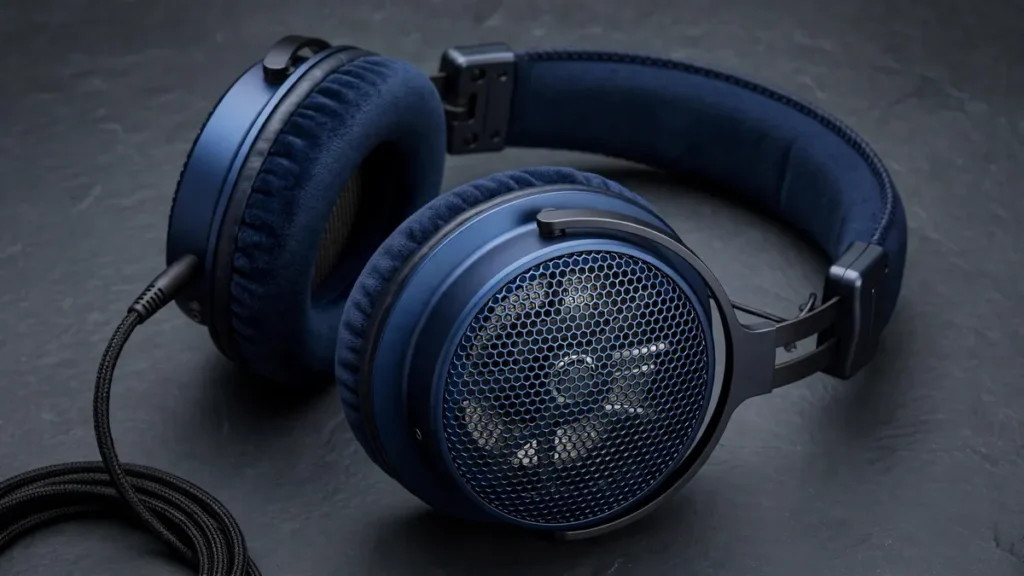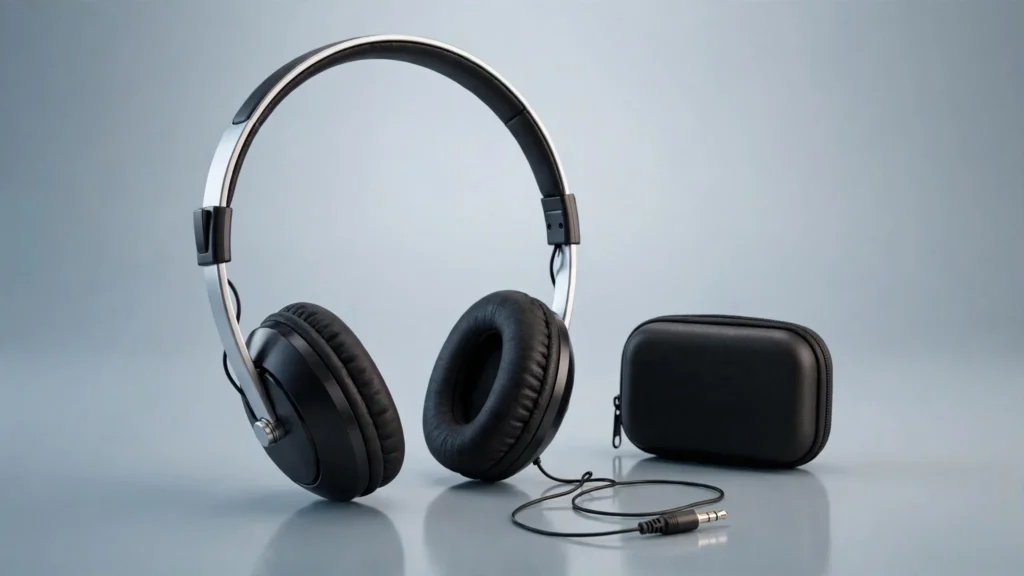
The Bose QuietComfort 3 was Bose’s first on-ear noise cancelling headphone — a compact, alloy-clad classic that launched in 2006 and stayed in Bose’s lineup for nearly a decade. Bose discontinued it in 2015, and you cannot buy it new today. But the QuietComfort 3 has a loyal second life on the used market, where it trades as a vintage curiosity, a collector’s piece, and — for some buyers — a genuinely usable travel headphone.
This is not a review of a current product. We have not hands-on tested a QC3 unit, and we’re not going to pretend otherwise. Instead, this is an honest retrospective and used-market buying guide: what the Bose QuietComfort 3 was, what its specs were, what to check before buying one used, and which modern headphones make more sense for most buyers in 2026.
| Sound Quality | 8.3 |
| Noise Cancelling | 8.6 |
| Comfort & Design | 8.4 |
| Battery & Convenience | 6.8 |
| Value (used market) | 8.9 |
| Parts & Repairability | 7.6 |
Editorial score: our assessment based on research across contemporary published reviews, spec archives, and the used market. We have not hands-on tested a QuietComfort 3 unit.
Bose QuietComfort 3 Specs
| Model | Bose QuietComfort 3 Acoustic Noise Cancelling Headphones |
| Years sold | 2006–2015 (discontinued) |
| Form factor | On-ear, closed-back — Bose’s first on-ear noise cancelling headphone |
| Noise cancelling | Active noise reduction with TriPort acoustic structure and active equalization |
| Connection | Wired, detachable 3.5mm cable with gold-plated stereo mini plug |
| Wireless | None — no Bluetooth, no app |
| Battery | Rechargeable lithium-ion (Bose claimed 25 hours; contemporary reviews cited around 20). Headphones do not operate without battery power. |
| Weight | 159 g (about 5.6 oz) |
| Design | Alloy-clad earcups (~3 inches), faux-leather cushions, foldable |
| Microphone | None on the base model; detachable cable compatible with cell-phone use |
| In the box | Carrying case, AC charger with battery dock, dual-plug airplane adapter, ¼-inch adapter, extra rechargeable battery |
| Awards | Sound & Vision 2006 Editor’s Choice; 2007 Red Dot Award for product design |
What the Bose QuietComfort 3 Was: Bose’s First On-Ear ANC Headphone
In 2006, every Bose noise cancelling headphone was a full-size over-ear model. The QuietComfort 3 changed that: Bose took the noise reduction technology from the QuietComfort 2, shrank it into a smaller on-ear design, and added a rechargeable lithium-ion battery — a first for the QuietComfort line. It launched around June 2006 and, unusually for tech, survived in Bose’s catalog until 2015, a nine-year run that tells you how well it sold.
The timing mattered. The mid-2000s were the golden age of the iPod, and the QC3 was pitched squarely at travelers and commuters who wanted serious noise cancelling in something that fit in a briefcase. Contemporary hands-on coverage praised the small alloy earcups (roughly 3 inches across), the soft faux-leather cushions, and bass response that impressed reviewers given the size. Sound & Vision named it an Editor’s Choice in 2006, and the design won a Red Dot Award in 2007.
Bose also spun a non-ANC sibling off the same platform — the On-Ear (OE1) headphones — which confirms how strong the underlying industrial design was. The QuietComfort 3 wasn’t just a smaller QC2; it was a statement that noise cancelling didn’t require big cups.
Noise Cancelling: 2006 Tech in a Modern World
Let’s calibrate expectations. The QC3’s noise reduction was genuinely best-in-class in 2006 — it matched the over-ear QC2’s cancellation while being dramatically smaller, which was the whole engineering achievement. Contemporary testers found it excellent at killing constant low-frequency drone: jet engines, office HVAC, commuter rumble.
But this is 2006-era single-mode ANC. There’s no adaptive adjustment, no transparency or aware mode, and no app-based tuning. On-ear designs also leak more sound than over-ears by physics, so the passive seal contributes less. Against a modern flagship like the Bose QuietComfort Ultra or Sony’s WH-1000XM series, the QC3’s cancellation is audibly narrower — it handles the low rumble well but lets more mid-frequency chatter and sharp transients through.
One quirk to know: the QC3 has no passive mode. If the rechargeable battery dies, the headphones are dead — no music, no calls, nothing. That’s worth repeating because it’s the single biggest practical limitation of buying one in 2026. Our explainer on how noise cancelling headphones work covers why powered designs have this trade-off.
Sound Quality: Vintage Bose Tuning
The QC3’s tuning is classic mid-2000s Bose: warm, full, and forgiving. The TriPort acoustic structure and active equalization deliver satisfying upper bass and smooth highs — a presentation built for long flights, pop, rock, and podcasts rather than critical listening. Contemporary reviewers consistently called it the best-sounding on-ear headphone they’d heard, which was a meaningful statement at the time.
Honesty requires the ceiling, too. Upper mids can edge harsh on bright recordings at high volume, and the resolution and soundstage won’t impress anyone coming from a modern headphone — even an affordable one. If you want to hear what today’s tuning sounds like, our Sony WH-1000XM4C review is a good reference point for how far ANC headphones have come sonically.
One more era-specific note: the QC3 is wired 3.5mm only, with no Bluetooth. That actually makes it oddly future-proof in one respect — a good analog cable never needs a firmware update — but it also means no multipoint, no codecs, and no wireless convenience.
Comfort and Design: Compact for Its Era
At 159 grams, the QC3 is light even by modern standards, and the on-ear design made it far more portable than the over-ear QC2 it complemented. The earcups fold, the included hard case is slim, and the whole package was clearly designed by people who flew a lot — the dual-plug airplane adapter in the box says everything about the target buyer.
The trade-off is inherent to on-ear designs: clamping pressure. The QC3’s memory-foam-cell cushions were praised as comfortable for long sessions in 2006, but on-ear headphones press directly on the cartilage, and some listeners find multi-hour wear fatiguing. If you know you prefer over-ears, a used Bose QC15 is the vintage Bose to hunt instead.

Battery and Charging: Rechargeable Li-Ion Before It Was Standard
The rechargeable lithium-ion battery was the QC3’s headline feature in 2006 — no more buying AAA batteries like the QC2 required. Bose claimed 25 hours per charge; contemporary reviewers typically cited around 20 hours of real-world use, with a recharge taking roughly an hour via the included AC charger and battery dock. Bose even shipped a spare battery in the box, which tells you how seriously the era took battery anxiety.
Fast-forward to 2026 and this is the QC3’s biggest used-market risk. Every original battery is now a decade or more old, and lithium-ion cells degrade with age regardless of use. Assume any used QC3’s battery holds a fraction of its original capacity — and budget for a third-party replacement battery, which are still manufactured and easy to find. The silver lining: unlike modern headphones with sealed-in cells, the QC3’s battery is user-replaceable, so a tired cell isn’t a death sentence.
Buying a Used Bose QuietComfort 3: What to Check
Since new QC3s don’t exist, every unit is pre-owned — mostly eBay listings, marketplace sellers, and the occasional renewed unit. Used QC3s show up regularly, and replacement ear pads and batteries are still sold by third parties, so the model is keepable. But buy smart: a 2006-era headphone has 2006-era failure points. Here’s what SoundMavericks recommends checking.
Ear cushions
The cushions are the acoustic seal the noise cancelling depends on, and two decades of foam do not survive intact. Flattened, flaking, or hardened pads are the norm on used units — treat them as a consumable. Third-party replacement ear pads for the QC3 are widely available and inexpensive, and swapping them takes minutes. If a listing shows pristine pads on a 15-year-old headphone, they’ve likely already been replaced (a good sign).
Battery health
Ask the seller whether the rechargeable battery holds a charge and, ideally, for how long. Original batteries are long past their prime; a unit that “works” on a 10-minute test may die after an hour of playback. Budget for a third-party replacement battery regardless — they’re cheap, user-replaceable, and transform a questionable used QC3 into a reliable one.
Cable and connectors
The detachable 3.5mm cable is a wear item. Check the listing photos for fraying near the plugs, and on arrival, wiggle the connector gently while audio plays — crackling means the jack or cable is worn. The good news: it’s a standard connection, so a generic replacement cable works fine.
The ANC circuit and switches
Power the headphones on in a noisy room. The noise cancellation should engage cleanly — a smooth drop in background rumble with no distortion, pulsing, or loud hiss. Degraded ANC electronics are the one failure you can’t cheaply fix, so this is your dealbreaker test. If the seller accepts returns, take them up on it for this test alone.
QuietComfort 3 vs QC15: Which Vintage Bose Should You Hunt?
The most common cross-shop in the vintage Bose hunt is the Bose QC15 — the 2009 over-ear successor that became the definitive travel headphone of the early 2010s. The comparison is straightforward:
- Form factor: QC3 is on-ear and compact; QC15 is over-ear with a bigger soundstage and better passive seal.
- Noise cancelling: QC15’s dual-microphone system (inside and outside each cup) is a generation ahead — stronger and broader than the QC3’s.
- Battery: QC15 runs on a single AAA (easy to find anywhere); QC3 uses a proprietary rechargeable cell (replaceable, but a special part).
- Neither works without power, and neither has Bluetooth.
Our take: the QC15 is the better headphone for most used buyers — stronger ANC, over-ear comfort, ubiquitous batteries. The QC3 is the better collector’s piece — smaller, rarer, and historically significant as Bose’s first on-ear ANC design. If you want a daily travel beater, hunt the QC15. If you want the 2006 classic, the QC3 is it.
QC3 listings on Amazon are third-party and used marketplace stock — availability changes frequently.
Modern Alternatives to the Bose QuietComfort 3
Here’s the honest guidance: if you want a headphone for daily use in 2026 — not a collector’s item — buy modern. Twenty years of ANC progress buys you dramatically better noise cancelling, Bluetooth multipoint, transparency modes, and batteries that last days, not hours. These are the picks we’d point a QC3-curious buyer toward instead:
Bose QuietComfort Headphones (2024). The direct spiritual successor: over-ear, wireless, with Bose’s current ANC, a mic for calls, and up to 24 hours of battery. It’s the modern answer to “I want Bose noise cancelling” without the vintage compromises.
Sony WH-1000XM4C. Our top-reviewed modern pick for buyers who want flagship-tier ANC and refined sound without paying flagship prices. Wireless, multipoint, and a genuinely excellent noise cancelling system — everything the QC3’s 2006 electronics can’t do. Read our full Sony WH-1000XM4C review for the details.
For the full landscape — including budget ANC options under a hundred — see our roundup of the best noise cancelling headphones and our travel-focused ANC picks.
Who Should Buy a Used Bose QuietComfort 3
- Bose collectors and audio-history fans who want the first on-ear QuietComfort — a genuinely significant design.
- On-ear loyalists who find over-ears too bulky for travel and don’t mind wired listening.
- Tinkerers happy to swap ear pads and a battery to revive a classic.
- Retro-tech gift buyers shopping for the Bose devotee who has everything modern.
Who Should Skip It
- Daily commuters and travelers who need reliable ANC — a modern headphone wins on every metric.
- Wireless-first listeners. No Bluetooth, no multipoint, no app — full stop.
- Anyone who forgets to charge. A dead battery means a dead headphone, and the cell is proprietary.
- Bargain hunters expecting flagship performance. Vintage charm is real; 2006 ANC is not 2026 ANC.
The Bottom Line
The Bose QuietComfort 3 earned its place in headphone history: the first on-ear QuietComfort, a nine-year production run, awards from Sound & Vision and Red Dot, and noise cancelling that was best-in-class in 2006. As a used buy in 2026, it’s a legitimate collector’s piece and a fun project — new ear pads, a fresh battery, and you have a working slice of audio history.
But buy it with clear eyes. It’s wired-only, dead without its proprietary battery, and outclassed by even budget modern ANC headphones at its actual job. If you want the vintage classic, hunt a clean used unit and enjoy it for what it is. If you want the best noise cancelling for your money, buy one of the modern alternatives above — your ears, and your charging routine, will thank you.
Bose QuietComfort 3 FAQs
Is the Bose QuietComfort 3 discontinued?
Yes. Bose sold the QuietComfort 3 from 2006 until 2015. It is long discontinued, new units do not exist, and available stock is used or third-party marketplace listings.
When was the Bose QuietComfort 3 released?
The QuietComfort 3 launched in June 2006 as Bose’s first on-ear noise cancelling headphone, complementing the over-ear QuietComfort 2.
How long does the QuietComfort 3 battery last?
Bose claimed 25 hours from the rechargeable lithium-ion battery; contemporary reviews typically cited around 20 hours of real-world use, with about an hour to recharge. On a used unit in 2026, expect less from the original cell — plan on a third-party replacement battery.
Does the Bose QuietComfort 3 have Bluetooth?
No. The QC3 is a 2006 product — wired 3.5mm only, with a detachable cable. There is no Bluetooth, no multipoint, and no companion app.
Can you use the QuietComfort 3 without the battery?
No. The headphones do not operate without battery power — no music, no calls, and no noise cancelling when the rechargeable cell dies.
Is the Bose QuietComfort 3 worth buying in 2026?
As a collector’s piece or a fun restoration project — yes, if you find a clean unit and budget for new ear pads and a battery. As a daily-use headphone — no; modern ANC headphones outperform it on noise cancelling, sound, battery life, and wireless features.
What replaced the Bose QuietComfort 3?
The over-ear Bose QC15 arrived in 2009 as the next step in the QuietComfort line, and Bose’s on-ear range continued separately with the non-ANC OE series. Today’s equivalents are the wireless Bose QuietComfort Headphones and models in our best noise cancelling headphones roundup.

I am the founder of Sound Mavericks, where I provide the polite truth about audio equipment. I started this site because consumer electronics reviews are often too technical. Instead of using a silent lab, I test headphones, earbuds, and Bluetooth speakers in the real world – like on a noisy subway or in a busy coffee shop.
To stay independent, I buy my own review units (mostly from the United States) rather than accepting free gifts from brands. Once I finish testing a product, I sell it locally to our community. My goal is to help you understand sound quality, active noise cancellation (ANC), and battery life without the marketing hype.