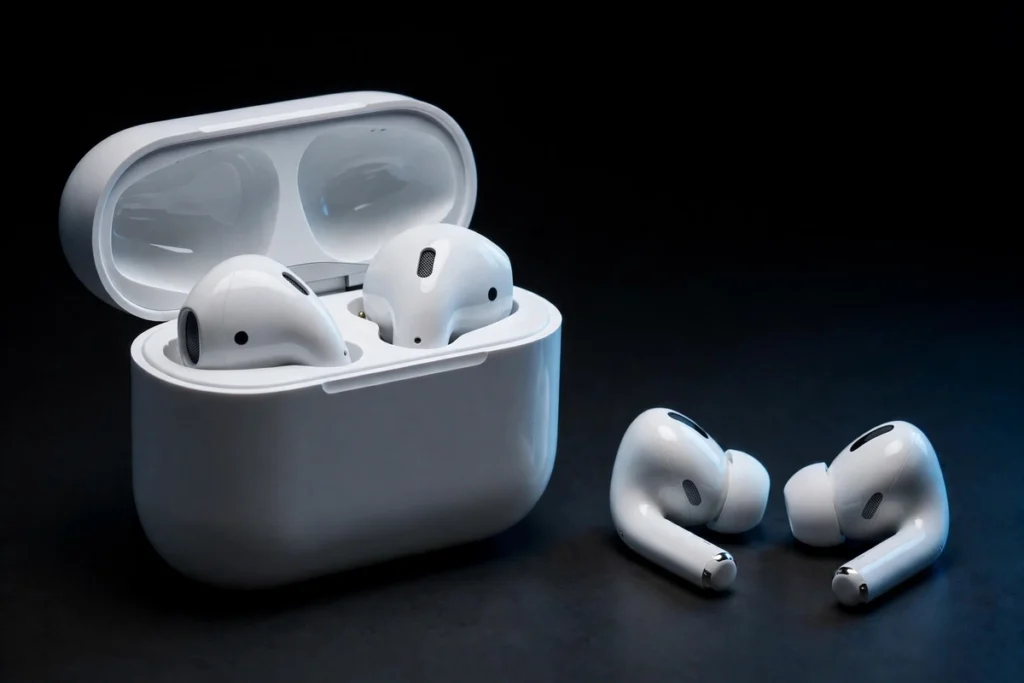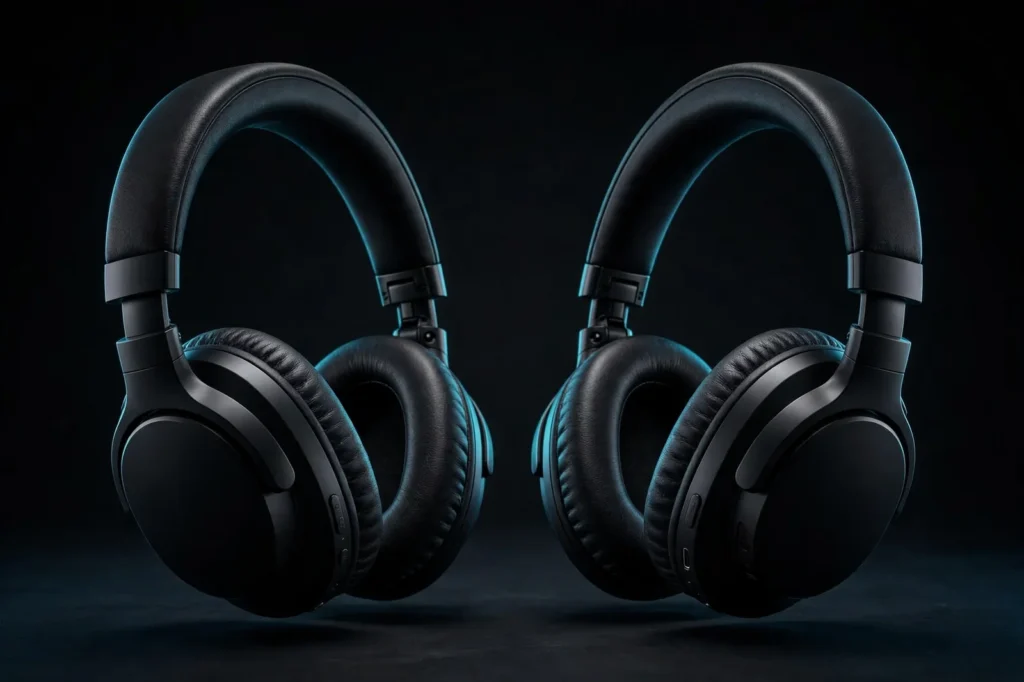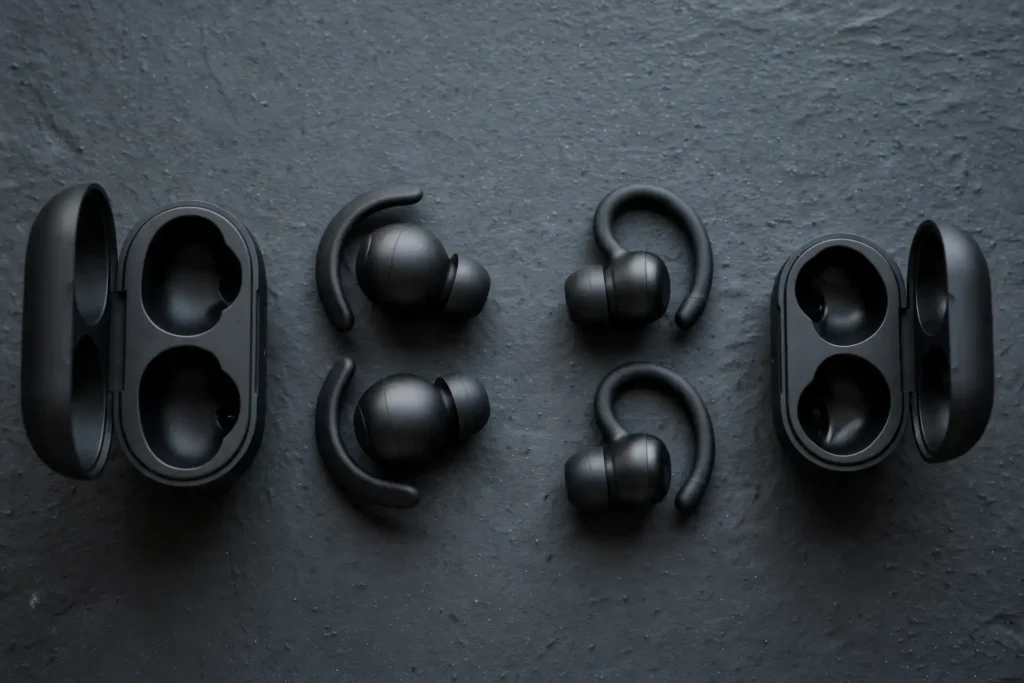
The bose earbuds vs beats earbuds debate comes down to two philosophies that have defined these brands for a decade: Bose chases silence, balance, and all-day comfort, while Beats chases energy, athletic performance, and the smoothest iPhone experience money can buy. This guide compares the current flagships — the Bose QuietComfort Ultra Earbuds (2nd Gen) against the Beats Powerbeats Pro 2 — and folds in the Beats Fit Pro as the step-down alternative, because that’s the pairing real shoppers are actually deciding between.
Our verdict up front: pick Bose if noise cancelling, call clarity, and long-wear comfort are your priorities — the QuietComfort Ultra Earbuds (2nd Gen) are the stronger all-rounders for travel, office work, and everyday listening. Pick the Powerbeats Pro 2 if you train hard, want heart-rate tracking built into your earbuds, and need the longest battery life in the class. Want Beats’ secure fit at a friendlier tier? The Fit Pro remains the value play.
What Earbuds Are Better: Bose or Beats?
This is the question searchers type most often, and the honest answer is that neither brand is universally better — they’re built for different listeners. Here’s how the flagship matchup shakes out at a glance:
| Category | Bose QuietComfort Ultra Earbuds (2nd Gen) | Beats Powerbeats Pro 2 |
|---|---|---|
| Sound signature | Balanced with deep, controlled bass | Bass-forward, energetic, workout-ready |
| Noise cancelling | Flagship-grade; Bose’s strongest ANC in earbuds | Strong ANC, a step behind Bose’s best |
| Fit system | Eartips + stability bands; lightweight in-ear | Nickel-titanium earhooks; locks in during sprints |
| Battery (buds) | Up to 6 hours | Up to 10 hours (ANC off) / 8 hours (ANC on) |
| Battery (total) | Case recharges over USB-C and Qi wireless | Up to 45 hours (ANC off) / 36 hours (ANC on) |
| Standout feature | Immersive Audio + CustomTune calibration | Built-in heart-rate monitoring |
| Ecosystem | Platform-neutral; multipoint across devices | Apple-first; deepest on iPhone |
| Best for | Travelers, commuters, remote workers | Runners, lifters, cyclists, athletes |
The Models Compared
Before the round-by-round breakdown, meet the contenders. Each link below goes to the exact model we reference throughout this comparison — no substitutions.
Bose QuietComfort Ultra Earbuds (2nd Gen)

Bose’s current flagship earbuds (released August 2025) combine the brand’s benchmark noise cancelling with CustomTune technology, which calibrates the sound to your ear shape each time you put them in. The 2nd Gen keeps the fit kit — three eartip sizes plus three stability band sizes — for a seal that’s both secure and comfortable, and adds Bluetooth 5.3 with multipoint so they can stay connected to your phone and laptop at once. IPX4 covers sweat and splashes, and the case charges over USB-C or Qi wireless.
Beats Powerbeats Pro 2

Launched in February 2025, the Powerbeats Pro 2 are the most complete workout earbuds Beats has ever made. Apple’s H2 chip drives ANC and transparency, while Beats layered on fitness hardware no AirPods model has: an optical heart-rate sensor in each earbud, nickel-titanium sport earhooks that lock in during explosive movement, and class-leading battery life. These are purpose-built training tools, not generalist earbuds.
Beats Fit Pro

The Fit Pro (2021) pairs Apple’s H1 chip — ANC, transparency, Spatial Audio — with angled silicone wingtips that lock in when stemmed designs shake loose. It’s the outgoing model now, succeeded by the Powerbeats Fit, but it remains on sale and has settled into a clear role: the discounted, workout-first alternative. Read our full Beats Fit Pro review for the deep dive.
Sound Quality Compared
This is the biggest real difference between the brands, and it’s a matter of philosophy. Beats tunes for excitement. The Powerbeats Pro 2’s 9.5mm dual-layer drivers deliver the signature Beats presentation: dynamic, energetic, and bass-forward, with Adaptive EQ adjusting the tuning to your ear fit automatically. For workout motivation — the actual use case — that’s a strength: punchy bass and forward mids keep energy high at tempo. The modern Beats tuning is more mature than the old “all bass, no detail” stereotype, but low-end energy is still the headline. Purists should know there’s no custom EQ in the Beats app.
Bose tunes for balance. The QuietComfort Ultra Earbuds (2nd Gen) aim for an even-handed presentation where no frequency range shouts over the others, with CustomTune calibration tailoring it to your ear shape. Acoustic, classical, jazz, podcasts, and calls all sound natural — which is exactly why Bose dominates travel and office use cases. Dynamic drivers cover a 20Hz–20kHz range per Bose’s spec sheet, and the “deep bass” the brand advertises is controlled rather than overwhelming.
Our take at SoundMavericks: neither tuning is “better” — they’re aimed at different ears. If your playlist is hip-hop, pop, and EDM, Beats’ energy will feel right. If you listen to a wide mix of genres plus spoken word and calls, Bose’s balance is the more versatile starting point. Bass lovers who find Bose polite will feel at home with Beats; listeners who find Beats fatiguing will prefer Bose. If you’re specifically hunting low-end, our best Bluetooth noise-cancelling earbuds roundup compares how the flagships rank on pure sound.
Noise Cancelling Compared
Noise cancelling is Bose’s home turf, and the QuietComfort Ultra Earbuds (2nd Gen) defend it. With CustomTune calibration, Quiet and Aware modes, and Bose’s industry-leading ANC pipeline, they’re built to erase cabin drone, office chatter, and commute rumble. The broader reviewer consensus puts Bose’s flagship earbuds at the top of the class for pure attenuation, and our analysis agrees.
The Powerbeats Pro 2’s ANC — powered by the same H2 chip architecture that made the AirPods Pro 2 an ANC benchmark, with six microphones feeding the system — is strong and genuinely useful: plenty for gym chatter, treadmill noise, and transit. Measured purely for noise reduction, though, the Bose flagship edges ahead. That said, for athletic contexts the gap narrows, because a secure earhook fit does as much work as the electronics. For runners, the Beats’ transparency mode may matter more than maximum ANC anyway — hearing traffic is a safety feature, not a compromise.
The Fit Pro sits a tier below both flagships on ANC. Its adaptive noise cancelling handles daily commutes and offices well, but it’s not in the same league as the QuietComfort Ultra’s. If ANC depth is your primary criterion — for flights and frequent commuting — the Bose flagship wins outright. For the full category landscape, see our best noise-cancelling earbuds under $150 guide for options at lower tiers.
Fit and Comfort
Fit is where the two brands diverge most physically. Bose takes the classic lightweight in-ear approach: the QC Ultra Earbuds (2nd Gen) ship with a full Fit Kit — three eartip sizes and three stability band sizes — so you can dial in a seal that’s secure without pressure. The buds are compact and balanced for multi-hour wear, which is exactly what long flights and workdays demand.
Beats takes the athletic route. The Powerbeats Pro 2’s nickel-titanium earhooks flex under force and snap back to shape, refined across extensive athlete testing; at roughly 8.7 grams per bud with five ear tip sizes in the box, they lock in during sprints, HIIT, and heavy lifting. In our judgment, no in-ear design stays planted during explosive movement like a well-executed earhook. The trade-off: earhooks are a presence you feel, and for pure desk-and-travel wear they’re more than you need.
The Fit Pro splits the difference with flexible wingtips molded into the bud — a second anchor point beyond the tip seal that works brilliantly for workouts, though the fixed wingtips can create pressure points past about ninety minutes of continuous wear. For all-day comfort, Bose’s stability-band system is the safer bet; for training, Beats’ earhooks are the gold standard.
Battery Life
This is Beats’ biggest on-paper win. The Powerbeats Pro 2 deliver up to 10 hours per charge with ANC off (8 hours with ANC on), and up to 45 hours total with the case (36 hours with ANC on) — nearly double the per-charge time of the AirPods Pro 2 and among the best figures in the true wireless class. A five-minute Fast Fuel top-up returns roughly 90 minutes of playback, and the 33%-smaller case charges over USB-C and Qi wireless. That’s a full marathon, a long ride, or a week of gym sessions without a charger.
The Bose QuietComfort Ultra Earbuds (2nd Gen) are rated for up to 6 hours per charge, with the wireless charging case topping them up over USB-C or Qi. That’s solid for travel and workdays — most people charge their case nightly regardless — but it’s not in Beats’ league for raw endurance. If you regularly forget to charge, the Powerbeats Pro 2 are far more forgiving.
The Fit Pro trails with up to 6 hours (ANC on) and 24 hours total — respectable for an outgoing model, but its 5-minute Fast Fuel charge (about an hour of playback) is its saving grace for quick top-ups.
iPhone vs Android: Ecosystem Matters
Ecosystem fit quietly decides this matchup for a lot of buyers. Beats is Apple-first. On iPhone, the Powerbeats Pro 2 deliver hands-free Siri, Find My, Audio Sharing, automatic device switching, and Personalized Spatial Audio with head tracking. Android users get the full hardware spec — H2 processing, Bluetooth 5.3, ANC, transparency, heart-rate monitoring — but lose the Apple-exclusive software layer: heart-rate sessions require a manual double tap-and-hold, there’s no automatic switching, and there’s no cross-platform multipoint.
Bose is platform-neutral. The QuietComfort Ultra Earbuds (2nd Gen) run Bluetooth 5.3 with multipoint, so they’ll stay connected to your phone and laptop regardless of brand, and the Bose app offers full control on both iOS and Android. If your daily life mixes iPhone, Windows, and Android, Bose is the friction-free choice. For Apple-only households, Beats’ integration is genuinely delightful.
Bose QuietComfort Earbuds vs Beats Fit Pro: The Step-Down Matchup
This is the pairing real shoppers actually search for — flagship Bose sound versus the discounted Beats workhorse. The Beats Fit Pro counters Bose’s balance with wingtip-locked security, H1-powered ANC and transparency, Spatial Audio, and full feature parity across iOS and Android (5.6 grams per bud, IPX4, USB-C charging). As the outgoing model it’s the value play: workout-grade fit and Apple-ecosystem features at a tier below the flagships.
The honest trade-offs: the Fit Pro’s H1 chip and Bluetooth 5.0 are a generation behind, there’s no wireless charging, and the fixed wingtips can’t be swapped. If your priority is maximum noise cancelling and multi-hour comfort, stepping up to the QuietComfort Ultra Earbuds (2nd Gen) is worth it. If your priority is a secure workout fit with AirPods-class features at the lowest entry point, the Fit Pro wins the step-down round. Our Beats Fit Pro review covers the full verdict, and our best Beats headphones guide places the whole lineup side by side.
Our Verdict: Who Should Buy Which
After weighing the full comparison, here’s how the decision breaks down:
| Buy this | If you… |
|---|---|
| Bose QuietComfort Ultra Earbuds (2nd Gen) | Fly often, commute daily, or work remotely and want the strongest noise cancelling in earbuds; wear earbuds for hours; mix iPhone and Android/Windows devices and need multipoint |
| Beats Powerbeats Pro 2 | Train hard and want heart-rate tracking without a watch; need earbuds that never fall out; want the longest battery life in the class; live in the Apple ecosystem |
| Beats Fit Pro | Want Beats’ secure fit and features at a lower tier; work out with sweat involved; want full iOS/Android feature parity in a compact wingtip design |
The bottom line from SoundMavericks: for most listeners, Bose’s flagship is the better all-rounder — better ANC, better long-session comfort, and no ecosystem caveats. For athletes, the Powerbeats Pro 2 are the better specialist — nothing touches the earhook security, the battery life, or the built-in heart-rate data at this level. And if the flagship tier is more than you need, the Fit Pro keeps the Beats experience within reach. Whichever you choose, you’re getting a genuinely good pair of earbuds — the question was never quality, it was fit for purpose.
Frequently Asked Questions
What earbuds are better, Bose or Beats?
It depends on your priorities. Bose is better for noise cancelling, balanced sound, and all-day comfort — the stronger all-rounder for travel and work. Beats is better for bass-forward sound, workout fit, battery life, and iPhone integration. Our verdict: Bose for most listeners, Beats Powerbeats Pro 2 for athletes.
Bose QuietComfort earbuds vs Beats Fit Pro — which should I buy?
Buy the Bose QuietComfort Ultra Earbuds (2nd Gen) if noise cancelling and long-wear comfort matter most. Buy the Beats Fit Pro if you want a secure workout fit with AirPods-class features at a lower tier — it’s the outgoing model and the better value for training.
Do Beats earbuds have noise cancelling as good as Bose?
No — Bose’s ANC remains the benchmark. The Powerbeats Pro 2 have strong, genuinely useful ANC for gyms and transit, and the Fit Pro’s adaptive ANC handles daily commutes, but neither matches the QuietComfort Ultra Earbuds (2nd Gen) for pure noise reduction. If ANC is your top priority, Bose is the clear choice.
Which earbuds are better for working out, Bose or Beats?
Beats, clearly. The Powerbeats Pro 2’s nickel-titanium earhooks are the most secure fit in the class for running, HIIT, and lifting, and the built-in heart-rate monitor turns them into a fitness tool. The Fit Pro’s wingtips are the next-best workout option. Bose earbuds are IPX4 sweat-resistant and fine for light training, but they’re built for travel and office life first.
Are Bose earbuds or Beats earbuds better for iPhone users?
Beats wins on iPhone. The Powerbeats Pro 2 and Fit Pro offer hands-free Siri, Find My, audio sharing, automatic device switching, and head-tracked spatial audio on Apple devices. Bose earbuds work perfectly on iPhone over standard Bluetooth with multipoint, but you don’t get Apple’s deep integration layer.
Do the Powerbeats Pro 2 have better battery life than Bose earbuds?
Yes, significantly. The Powerbeats Pro 2 deliver up to 10 hours per charge (ANC off) and up to 45 hours total with the case, versus up to 6 hours per charge for the Bose QuietComfort Ultra Earbuds (2nd Gen). If you hate charging, Beats is the pick.

I am the founder of Sound Mavericks, where I provide the polite truth about audio equipment. I started this site because consumer electronics reviews are often too technical. Instead of using a silent lab, I test headphones, earbuds, and Bluetooth speakers in the real world – like on a noisy subway or in a busy coffee shop.
To stay independent, I buy my own review units (mostly from the United States) rather than accepting free gifts from brands. Once I finish testing a product, I sell it locally to our community. My goal is to help you understand sound quality, active noise cancellation (ANC), and battery life without the marketing hype.