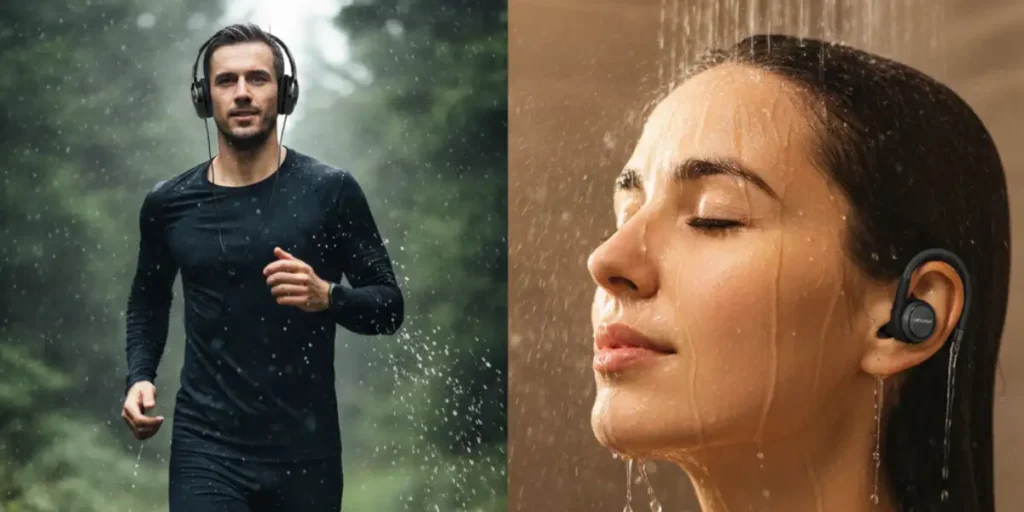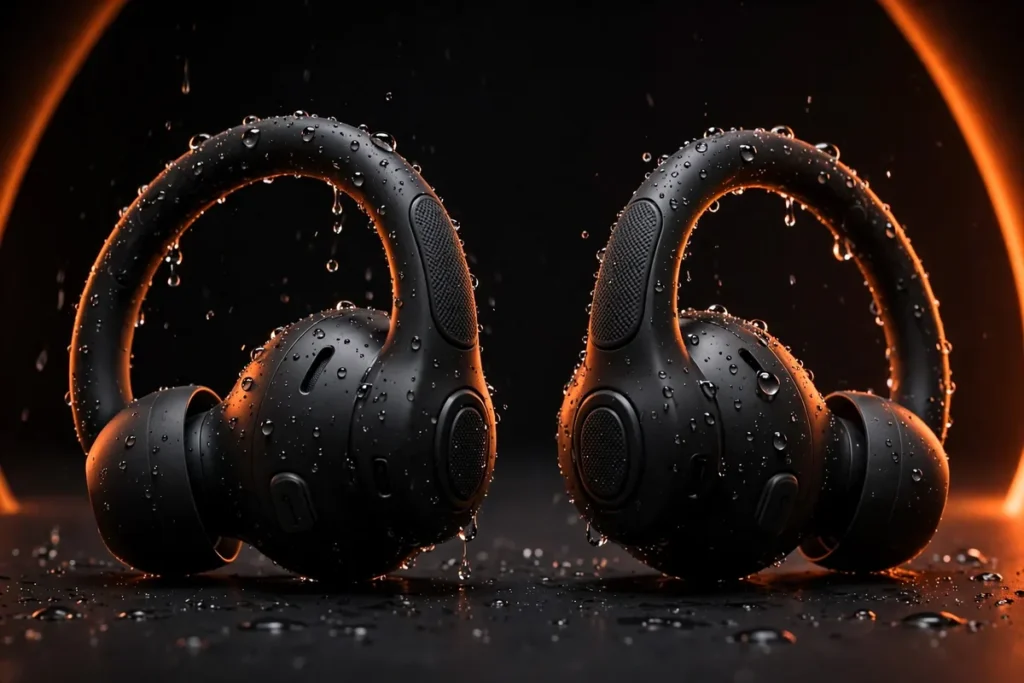
Search for the best noise cancelling earplugs and you will find hundreds of products promising silence — but here is the honest starting point SoundMavericks gives every reader: almost none of them cancel anything. True active noise cancellation needs microphones, a processor, and a speaker playing anti-noise, and a simple earplug has none of those. What earplugs actually do is block sound physically, and the best of them block it extremely well. A properly fitted foam plug can take the edge off a snoring partner, a dawn chorus, or a neighbour’s television far more effectively than most people expect — often better, decibel for decibel, than a pair of ANC headphones.
That distinction changes what you should buy. For maximum quiet, a high-NRR foam plug is still the benchmark. To take the volume down at work without going deaf to your own name, a filtered reusable plug is the smarter tool. And if passive blocking is not enough, electronic sleep earbuds add sound masking on top of a sealed fit. This guide ranks the best options in each class, explains NRR ratings honestly, and flags where marketing runs ahead of the physics. For the deeper comparison, see our explainer on active noise cancellation vs passive isolation.
Our verdict — the top 3:
Best overall for sleep: Mack’s Ultra Soft Foam Earplugs — the highest NRR on this list (33 dB) and the plug we would hand a light sleeper first.
Best reusable for sleep and focus: Loop Quiet 2 — soft silicone, low-profile for side sleepers, and washable enough to live on your nightstand for months.
Best filtered plug for side sleepers: Alpine SleepDeep — an oval, heat-adapting fit that reduces noise while still letting an alarm or a child’s call get through.
Best Noise Cancelling Earplugs at a Glance
| Pick | Type | Rating | Reusable? | Best for | Check Price |
|---|---|---|---|---|---|
| Mack’s Ultra Soft Foam | Disposable foam | NRR 33 dB | No (single/few uses) | Maximum blocking for sleep | Check Price |
| Loop Quiet 2 | Reusable silicone | 24 dB (SNR) | Yes, washable | Sleep + daily focus | Check Price |
| Alpine SleepDeep | Filtered reusable | 27 dB (manufacturer rated) | Yes, up to ~100 uses | Side sleepers who still need to hear alarms | Check Price |
| Mack’s Pillow Soft Silicone | Moldable putty | NRR 22 dB | A few uses per pair | Sensitive ears, nothing in the canal | Check Price |
| Loop Experience 2 | Filtered high-fidelity | 17 dB (SNR) | Yes, washable | Concerts and live events | Check Price |
| Soundcore Sleep A20 | Electronic sleep earbuds (masking) | Passive seal + masking (no ANC) | Yes, rechargeable | When blocking alone is not enough | Check Price |
NRR is the US laboratory rating; SNR is the European equivalent and usually reads a few decibels higher for the same plug. Real-world protection depends heavily on fit — see the NRR section below before comparing numbers across brands.
“Noise Cancelling” Earplugs: The Honest Terminology
There are four genuinely different products hiding behind the phrase “noise cancelling earplugs,” and knowing which is which saves you money and disappointment.
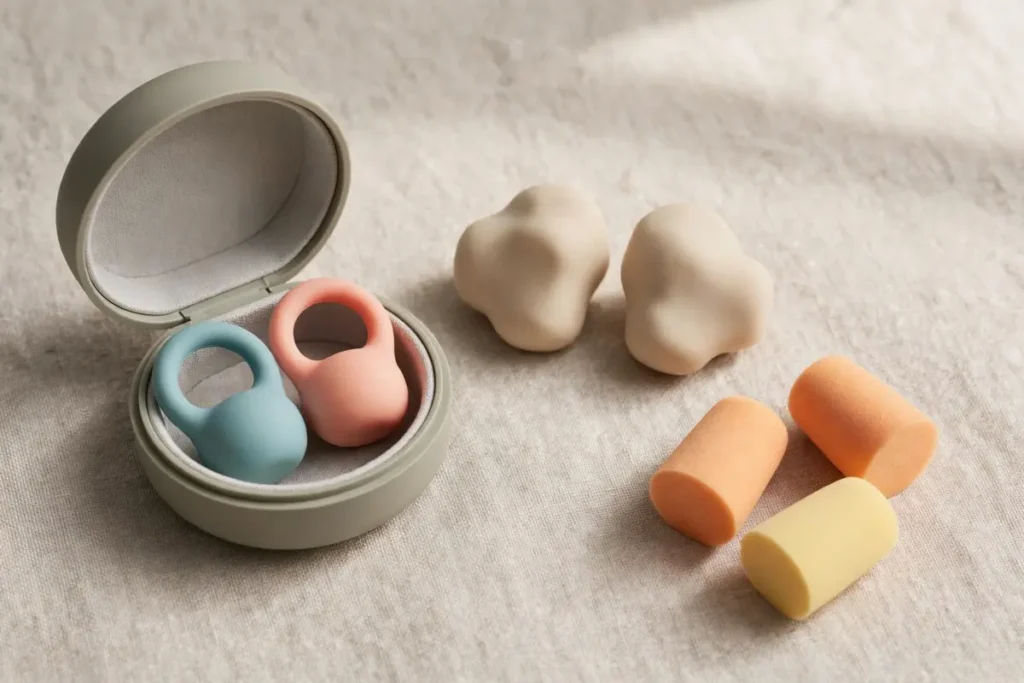
Passive foam plugs expand in the ear canal and physically block sound; they carry the highest certified ratings (up to NRR 33) and cost pennies per night. Moldable silicone putty seals over the ear opening rather than inside the canal — gentler and slightly lower-rated. Filtered reusable plugs use an acoustic filter or shaped silicone body to reduce volume more evenly, so speech and music stay intelligible; loop-style plugs sit in this family. Finally, electronic sleep earbuds combine a passive seal with played-back masking sounds — and a tiny number of specialist models add genuine active cancellation. Anker is admirably upfront that its Sleep A20 does not feature ANC. Any listing promising “60 dB noise cancelling” from a passive plug is inventing numbers; no consumer earplug is certified anywhere near that.
What NRR actually means
The Noise Reduction Rating is a laboratory figure: trained subjects fit the plugs under supervision, and the rating reflects the protection achieved. Two caveats matter. First, occupational-safety guidance commonly derates foam plugs substantially for real-world use, because most people insert them too shallowly — technique is half the product. Second, NRR and the European SNR are not interchangeable; SNR typically reads 3–7 dB higher for the same device. Compare NRR with NRR, SNR with SNR, and treat any plug advertised with an unsourced “up to X dB” claim as unrated.
1. Mack’s Ultra Soft Foam — Best Overall for Sleep

When the brief is simply “make the room as quiet as possible,” foam remains undefeated, and Mack’s Ultra Soft is the reference product: an NRR 33 rating — the highest commonly available — in a soft, tapered plug that most sleepers tolerate all night. The 50-pair pack format matters more than it sounds. Foam plugs lose their slow-rebound spring after a few uses, and a plug that no longer expands fully no longer seals; a bulk pack makes replacing them a non-decision, which is exactly what a nightly habit needs.
The trade-offs: foam is technique-sensitive, muffles alarms along with everything else, and generates waste. But for a snoring partner, shift-work daytime sleep, or a hotel over a busy street, nothing here blocks more. Prefer a headphone-format solution? See our guide to the best noise cancelling headphones for sleeping and snoring.
Key specs: NRR 33 dB · disposable slow-rebound foam · 50 pairs · made in USA
2. Loop Quiet 2 — Best Reusable for Sleep and Focus

Loop essentially created the modern “earplug as everyday carry” category, and the Quiet 2 is its sleep-and-focus model: soft silicone, a low-profile ring that sits flush enough for side sleepers, and a certified 24 dB (SNR) reduction. That is meaningfully less raw blocking than the Mack’s foam above — and for many focus users, that is the point. In an open-plan office, a café, or a house with children, total isolation is antisocial and slightly unnerving; the Quiet 2 turns the volume down to a level where concentration is easy but the world has not disappeared.
Four ear-tip sizes (XS–L) and a carry case are included, the plugs wash clean in seconds, and a pair lasts months rather than nights, which reverses the foam economics for daily wear. Fit is the whole game: if the seal breaks when you smile or chew, size up. Note that Loop’s figures are SNR, not NRR — treat these as comfort-and-concentration plugs, not certified protection for power tools.
Key specs: 24 dB (SNR) · reusable silicone · 4 tip sizes (XS/S/M/L) · carry case included
3. Alpine SleepDeep — Best Filtered Plug for Side Sleepers

Alpine’s SleepDeep takes the filtered approach seriously. The plug body is made from AlpineThermoShape material that softens with body heat and adapts to your canal, the cross-section is oval — matching the ear canal’s actual shape — and a soft noise-reducing core does the attenuation. Alpine rates it at 27 dB, and the design goal is different from foam’s: cut the snoring, traffic, and plumbing noises that fragment sleep while leaving higher, sharper sounds — an alarm clock, a smoke alarm, a baby stirring — comparatively audible. For parents and anyone anxious about sleeping through an alarm, that balance is the reason to buy filtered plugs at all.
Alpine rates the SleepDeep for up to roughly 100 uses with proper cleaning, in S and M/L sizes. It will not match foam for a thunderous snorer in the same bed; it is the plug for the far larger group whose problem is a noisy environment, not a chainsaw.
Key specs: 27 dB (manufacturer rated) · AlpineThermoShape body · reusable up to ~100 uses · sizes S and M/L
4. Mack’s Pillow Soft Silicone — Best for Sensitive Ears

Some ears simply refuse anything inserted into the canal — small canals, pressure sensitivity, a history of irritation from foam. Pillow Soft is the long-standing answer: a ball of moldable silicone putty pressed over the ear opening, sealing it from outside. The NRR 22 rating is the lowest of our sleep picks, and we will not dress that up; what you trade in decibels you gain in wearability, and a plug worn all night beats a stronger plug pulled out at 2 a.m. The flat profile is also genuinely side-sleeper friendly, and the same waterproof seal that blocks noise keeps water out, which is why Mack’s is the official earplug of USA Swimming.
Each pair survives a few nights before the putty loses its tack; the 6-pair pack keeps the per-night cost low. One rule is non-negotiable: the putty covers the opening, never pushed into the canal.
Key specs: NRR 22 dB · moldable silicone putty, seals over the canal · 6 pairs · waterproof seal
5. Loop Experience 2 — Best for Concerts

Concerts invert the usual goal: you do not want maximum blocking, you want the volume lowered evenly so the music still sounds like music. The Experience 2 uses an acoustic filter and mesh to deliver a 17 dB (SNR) reduction tuned to stay comparatively flat across frequencies, where foam notoriously eats the treble first and leaves a muffled, underwater mix. At a typical gig, that reduction is the difference between a loud-but-clear show and a loud show plus two days of ringing — and post-show tinnitus is your hearing filing a damage report.
They are discreet, reusable, and ship with four tip sizes and a keychain case. For louder duties — shooting, motorsport, industrial work — 17 dB is not enough; our guide to the best shooting earbuds covers protection built for impulse noise. For gigs and festivals, the Experience 2 is the pick.
Key specs: 17 dB (SNR) filtered reduction · reusable silicone · 4 tip sizes (XS/S/M/L) · keychain carry case
6. Soundcore Sleep A20 — Best Electronic Option (Masking, Not ANC)
For some sleepers, blocking is not the answer because the problem is not loudness — it is pattern. Irregular snoring, a dripping tap, a partner’s 5 a.m. podcast: the brain locks onto changes, not steady sound. That is the case for the Soundcore Sleep A20, sleep earbuds that pair a twin-seal passive fit with a library of masking sounds played directly into the ear. Anker states plainly that the A20 has no active noise cancelling; the seal does the blocking (Anker claims its twin-seal tips block substantially more than a standard single tip), and masking covers what remains — the same seal-plus-masking combination sleep clinicians recommend.
The buds are small and soft-winged for side sleeping, rated by Anker at up to 14 hours in sleep mode (10 hours streaming over Bluetooth 5.3), the case extending total use to around 80 hours, plus sleep tracking and a personal in-ear alarm via the app. This is the most expensive pick here by a wide margin, and charging joins the bedtime routine. Try foam first; buy the A20 when foam’s silence is not the silence your brain wants.
Key specs: twin-seal passive blocking + sound masking (no ANC) · up to 14 hrs sleep mode per charge · Bluetooth 5.3 · sleep tracking and personal alarm via app
Sleep vs Focus vs Concerts: Which Type Do You Actually Need?
For sleep, prioritise seal and comfort: foam (Mack’s Ultra Soft) for maximum quiet, putty (Pillow Soft) if your canals object, and a filtered or silicone plug (SleepDeep, Loop Quiet 2) if you must still hear alarms or children. Side sleepers should favour low-profile designs. For a child, earplugs are the wrong product class entirely; see our guide to the best baby noise cancelling headphones instead.
For focus, the sweet spot is moderate, even reduction — roughly the 16–24 dB zone — which drops chatter below the distraction threshold without deep foam’s isolation feeling. Reusables win on cost per wear.
For concerts, choose filtered high-fidelity plugs around 17–20 dB and ignore maximum-NRR foam: you are protecting hearing, not seeking silence, and flat attenuation keeps the show enjoyable enough that you will actually keep them in.
How to Choose (and Fit) Earplugs That Work
Start with the rating, read it correctly. For sleep, NRR 30+ foam or a 24 dB+ SNR reusable is the effective zone. Below that, you are buying mild relief. Fit beats ratings. A perfectly sealed NRR 22 putty plug outperforms a badly inserted NRR 33 foam plug in the real world, every time. For foam: roll to a thin crease-free cylinder, pull the top of your ear up and back, insert most of the plug’s length, and hold a fingertip on the end for 30–60 seconds while it expands. If you can see most of the plug from the front, it is too shallow.
Match the material to your ears. Small or sensitive canals: putty or small-fit foam. Nightly long-term use: washable silicone or filtered plugs. Think about what must still get through — alarms, a baby monitor — and step down from maximum blocking if the answer is “something important.” Finally, budget by cost per night: bulk foam is cheapest per use, reusables win over months, and electronic masking buds make sense only once simpler tools have genuinely failed you.
Frequently Asked Questions
Do noise cancelling earplugs actually exist?
Almost entirely, no. Standard earplugs block sound passively and do not cancel anything electronically. A small number of specialist electronic models add true active cancellation for low-frequency noise, and sleep earbuds like the Soundcore Sleep A20 add masking sounds on top of a passive seal — which is a different, and for sleep often more useful, technology. Treat any passive plug marketed as “noise cancelling” as noise blocking.
What earplugs block the most noise for sleeping?
Properly fitted high-NRR foam plugs block the most. Mack’s Ultra Soft carries an NRR 33 rating, the highest commonly available, provided you roll and insert it deeply enough for a full seal. Insertion technique matters as much as the rating — a shallow fit can halve real-world protection.
Can earplugs block out snoring completely?
No earplug blocks snoring completely, especially the low-frequency component, which travels partly through the body and skull rather than the ear canal. High-NRR foam reduces typical snoring to a faint background level for most sleepers; if a partner’s snoring is extreme or possibly a health issue like sleep apnoea, earplugs are a coping tool, not the fix.
What does NRR mean on earplugs?
NRR (Noise Reduction Rating) is a US laboratory rating of how much noise a plug can reduce when fitted correctly under test conditions. Higher is quieter. The European SNR is a different scale that usually reads a few decibels higher for the same product, so only compare ratings measured on the same scale.
Are reusable earplugs as good as foam?
They are better at different things. Foam wins on maximum blocking and price per pair; reusables like the Loop Quiet 2 and Alpine SleepDeep win on comfort, consistency of fit, sound quality (for filtered models), and cost over months of daily use. For nightly maximum quiet, choose foam; for daily focus or moderate sleep noise, reusables are usually the smarter buy.
Is it safe to sleep with earplugs every night?
For most people, yes, with basic hygiene: use a fresh or clean pair, insert with clean hands, and never push putty or foam deeper than intended. If your ears feel blocked, itchy, or sore, take a break and see a clinician if it persists.

I am the founder of Sound Mavericks, where I provide the polite truth about audio equipment. I started this site because consumer electronics reviews are often too technical. Instead of using a silent lab, I test headphones, earbuds, and Bluetooth speakers in the real world – like on a noisy subway or in a busy coffee shop.
To stay independent, I buy my own review units (mostly from the United States) rather than accepting free gifts from brands. Once I finish testing a product, I sell it locally to our community. My goal is to help you understand sound quality, active noise cancellation (ANC), and battery life without the marketing hype.