The best multipoint Bluetooth earbuds right now are the Technics EAH-AZ100, the only pick in this list that stays connected to three devices at once instead of two. The rest of the shortlist (Sony, Jabra, EarFun and Bose) all handle two connections, and they separate on switching behaviour: how fast audio moves when a call lands, which device wins when both play at once, and what the connection costs you in codec quality. Those behaviours, not the multipoint badge itself, decide which pair fits your desk.
This ranking is research-based, built from manufacturer specifications, listing data and published review consensus rather than hands-on testing. Where a behaviour comes from a maker’s documentation, we say so.

Technics EAH-AZ100 8.5/10
Why you: your work spreads across a laptop, a phone and a tablet, and this is the pair that keeps all three connected without re-pairing.
Trade-off: three-device multipoint is a setting you have to enable in the app, and the price sits at flagship level.
3-device multipoint · Bluetooth 5.3 · LDAC · Adaptive ANC · 10 h buds, 28 h with case
How multipoint works, briefly
Multipoint earbuds hold live Bluetooth connections to two devices (three on the Technics) at the same time. The buds listen to both, play the one that is active, and switch when the other demands attention, usually for a call. The details that matter are priority rules and codec cost, both covered per pick below. For the full mechanics, pairing steps and troubleshooting, read our explainer on what Bluetooth multipoint is; this roundup keeps to which models behave best.
The shortlist at a glance
| Product | Devices at once | Standout behaviour | Check Price |
|---|---|---|---|
| Technics EAH-AZ100 | 3 | Priority device setting in the app | Check Price |
 Sony WF-1000XM6 | 2 | Fast, predictable switching; LDAC pauses under multipoint | Check Price |
 Jabra Elite 10 Gen 2 | 2 | Calls take priority cleanly; strong mics | Check Price |
 EarFun Air Pro 4 | 2 | Bluetooth 5.4 multipoint at a budget price | Check Price |
 Bose QuietComfort Ultra Earbuds (2nd Gen) | 2 | Best ANC here; device list managed in the Bose app | Check Price |
Best overall: Technics EAH-AZ100
The AZ100 leads this list because its headline feature is the one the article is about. Technics documents multipoint connections to up to three Bluetooth devices at the same time, and the Technics Audio Connect app lets you set how many devices multipoint uses and which connection gets priority. In practice that means a laptop, a work phone and a personal phone, or a laptop, phone and tablet, all stay paired through the day. Switching follows the active source, and a call on any connected phone interrupts media from the others, which is the behaviour every model here aims for and the AZ100 delivers across one extra device.
The rest of the package supports the work brief. The 10 mm magnetic fluid driver gives the AZ100 the most detailed sound in this roundup, LDAC is on the spec sheet for single-device listening, adaptive ANC handles an office or a train, and Voice Focus AI works on call clarity at the mic end. Battery is rated at up to 10 hours with ANC on and 28 hours with the case. Two honest limits: three-device multipoint has to be switched on in the app rather than being the default, and with three radios to feed, expect battery life to land below the rated figure on heavy switching days. Neither changes the ranking. If you juggle three devices, nothing else in this list does what it does.
Best switching behaviour: Sony WF-1000XM6
Sony WF-1000XM6 8.6/10
Why you: you move between a laptop and a phone all day and want the switch to happen fast, every time, without digging into Bluetooth menus.
Trade-off: multipoint costs you LDAC; with two devices connected, Sony steps the codec down to AAC or SBC.
2-device multipoint · Bluetooth 5.3 · LDAC (single device) · ANC · 8 h buds, 24 h with case
Sony has shipped multipoint on its XM line for several generations, and the WF-1000XM6 behaves like it: two devices connected, audio follows whichever source starts playing, and an incoming call on the idle device takes over and hands back when it ends. Review consensus puts Sony at or near the top for switch speed and for the switch actually completing, which is where cheaper implementations fail. You also get the strongest all-round audio package here, with flagship ANC and the best sound score on the page.
The cost is documented and worth knowing before you buy. Sony states that while a multipoint connection is active, the codec is limited and LDAC is unavailable; high-resolution streaming is a single-device mode. If your routine is laptop plus phone, you will rarely notice. If your routine is a hi-res player plus phone and you bought the buds for LDAC, you will notice every day. That trade is the clearest example in this roundup of multipoint charging rent, and Sony at least prints it in the manual rather than leaving you to find it.
Best for calls between devices: Jabra Elite 10 Gen 2
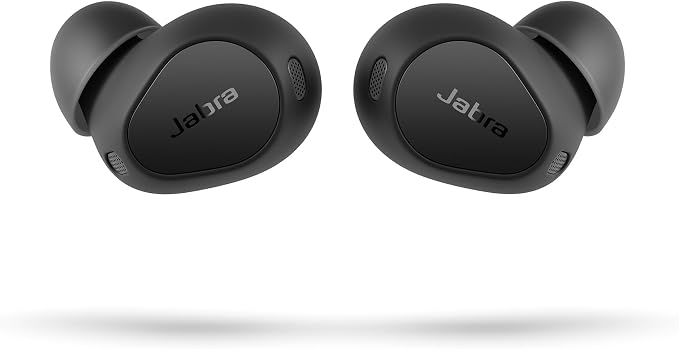
Jabra Elite 10 Gen 2 8.5/10
Why you: your two devices are a work laptop and a phone, and the switching that matters most to you is a meeting or a call landing cleanly.
Trade-off: two devices only, and Jabra has wound down its consumer earbud line, so long-term app support is a fair question to weigh.
2-device multipoint · Bluetooth 5.3 · Dolby Atmos · IP57 · LE Audio smart case
Jabra built its name on call handling, and the Elite 10 Gen 2 shows it in multipoint use. Call priority is the cleanest here: a call on either connected device interrupts media from the other, and the six-mic array with Jabra’s call algorithms keeps your voice forward in a noisy room. Comfort is the other reason it ranks this high. The semi-open, low-pressure fit is the one in this list people routinely wear for a full workday, and multipoint earbuds earn their keep across a full workday or not at all.
The Gen 2 case adds a trick none of the others match: plug the charging case into a laptop or an in-flight screen with the supplied cable and the case retransmits that audio to the buds over LE Audio. That is not multipoint in the strict sense, but it solves the same problem from the other side, connecting the buds to a source that has no Bluetooth pairing screen at all. Add Dolby Atmos with head tracking and an IP57 rating, and this is the most work-complete package here, with the support caveat in the card kept in view.
Best value multipoint: EarFun Air Pro 4
EarFun Air Pro 4 8.5/10
Why you: you want proper two-device multipoint, current Bluetooth 5.4 and long battery life at a fraction of flagship prices.
Trade-off: switching works well but is a beat slower and less polished than Sony’s, and call quality is good rather than class-leading.
2-device multipoint · Bluetooth 5.4 · aptX Lossless and LDAC · Adaptive ANC · 52 h total playtime
The Air Pro 4 is proof that multipoint is no longer a flagship tax. EarFun pairs Bluetooth 5.4 with two-device multipoint, and the basics are right: both devices stay connected, a call on the phone interrupts laptop audio, and playback resumes on the laptop afterwards. It is not the fastest switcher here, and in busy RF environments you may catch an occasional stumble that the Sony shrugs off, but the behaviour is consistent, which is what matters at a desk. Around the multipoint you get adaptive hybrid ANC, aptX Lossless and LDAC for single-device listening, six mics for calls and 52 hours of total playtime. For a phone-plus-laptop routine, this is the sensible spend, and it anchors the value end of our wider best Bluetooth earbuds coverage for the same reason.
Best noise cancelling with multipoint: Bose QuietComfort Ultra Earbuds (2nd Gen)
Bose QuietComfort Ultra Earbuds (2nd Gen) 8.3/10
Why you: you work in a loud office or fly often, and silence matters more to you than switching speed, as long as two devices stay connected.
Trade-off: switching is managed through the Bose app’s device list and is less automatic than Sony’s, and battery life is the shortest here.
2-device multipoint · Bluetooth 5.3 · aptX Adaptive · ANC · 6 h buds, 24 h with case · IPX4
Bose’s second-generation QC Ultra Earbuds added the multipoint the first generation lacked, holding two connections at once. The implementation leans on the Bose app, where you see and manage the connected device list, and switching leans more on you starting audio on the device you want than on the buds arbitrating. Calls still take priority, which is the rule that matters most. In exchange for that slightly manual feel you get the strongest noise cancelling in this roundup by a clear margin, plus aptX Adaptive on supported Android phones and Bose’s immersive audio mode. Buy it when the room is the problem. Buy the Sony or the Technics when the switching is the problem.
What multipoint costs you
Three costs recur across this category, and the picks above were ranked with them in mind. First, codec cost: holding two connections takes radio capacity, and several makers limit high-resolution codecs while multipoint is live, Sony’s LDAC restriction being the documented example. Second, battery cost: two live links draw more than one, so rated battery figures, which are measured on a single connection, flatter real multipoint days. Third, arbitration cost: when two devices make noise at once, something has to lose, and each brand’s priority rules differ. Calls winning is close to universal. Two media sources fighting is where behaviour gets model-specific, and it is the thing to test in your return window if your routine involves, say, a laptop video and a phone podcast in the same hour.
FAQ
Which earbuds can connect to three devices at once?
The Technics EAH-AZ100 is the pick here: Technics documents multipoint connections to up to three Bluetooth devices at the same time, set up in the Technics Audio Connect app. Most other earbuds, including the Sony, Jabra, EarFun and Bose picks in this list, hold two connections at once.
Does multipoint reduce sound quality?
It can. While multipoint is active, some models limit the codec: Sony documents that LDAC is unavailable during a multipoint connection on its XM earbuds, dropping playback to AAC or SBC. Single-device listening restores the full codec. If hi-res audio is your priority, treat multipoint as a work-hours mode rather than a permanent setting.
Do calls always take priority with multipoint earbuds?
On every pick in this list, yes. A call arriving on either connected device interrupts media playing from the other, and media resumes when the call ends. That priority rule is the main reason multipoint helps in a workday: you do not miss the call because you were listening to the laptop.
Can multipoint earbuds play audio from two devices at the same time?
No. Multipoint holds two connections but plays one source at a time. The second connection stays live for calls, notifications and a fast switch. Models that mix two sources into both ears at once are rare and use proprietary dongle systems rather than standard Bluetooth multipoint.
Does multipoint drain the battery faster?
Yes, somewhat. Two live connections draw more power than one, and rated battery figures are measured with a single connection. Expect a modest reduction on multipoint days, most noticeable on models with smaller batteries such as the Bose QC Ultra Earbuds (2nd Gen).
Verdict
Start with the device count. Three devices means the Technics EAH-AZ100, and it justifies its lead with sound quality and call handling to match the spec. Two devices opens the field: the Sony WF-1000XM6 switches fastest and most reliably, the Jabra Elite 10 Gen 2 handles calls and long days best, the EarFun Air Pro 4 delivers the core behaviour for far less money, and the Bose QC Ultra Earbuds (2nd Gen) trade a little switching polish for the best noise cancelling you can buy. Pick by the behaviour you will notice daily, not by the badge on the box.

I am the founder of Sound Mavericks, where I provide the polite truth about audio equipment. I started this site because consumer electronics reviews are often too technical. Instead of using a silent lab, I test headphones, earbuds, and Bluetooth speakers in the real world – like on a noisy subway or in a busy coffee shop.
To stay independent, I buy my own review units (mostly from the United States) rather than accepting free gifts from brands. Once I finish testing a product, I sell it locally to our community. My goal is to help you understand sound quality, active noise cancellation (ANC), and battery life without the marketing hype.