The best amp is the single biggest upgrade you can make to your guitar sound. A great guitar can only sing through a great amplifier, and in 2026 the market has never been more interesting: modeling technology has matured to the point where digital amps convincingly deliver tube tone at bedroom volume, while genuine tube combos remain the gold standard for players who want the real thing. We analyzed the specs, Amazon listing data, and professional reviews of the most popular guitar amplifiers on the market to find the seven worth your money — from smart practice amps to gig-ready workhorses.
Updated October 2026 — our #1 pick is the Boss Katana 50 Gen 3.
Quick Navigation
- Boss Katana 50 Gen 3 — Best Overall
- Positive Grid Spark 2 — Best Smart Practice Amp
- Fender Mustang LT25 — Best for Beginners
- Vox AC15C1 — Best Tube Combo
- Fender Tone Master Twin Reverb — Best Tube-Style Tone Without the Weight
- Line 6 Catalyst 100 — Best Gig-Ready Value
- Yamaha THR30II Wireless — Best for Silent Practice
- Comparison Table
- How to Choose a Guitar Amp
- FAQ
Comparison Table
| Product | Type | Power | Speaker | Best For | Rating |
|---|---|---|---|---|---|
| Boss Katana 50 Gen 3 | Modeling | 50W | 1×12″ | Most players | 9.3/10 |
| Positive Grid Spark 2 | Smart modeling | 50W | 2×4″ | Practice & learning | 9.1/10 |
| Fender Mustang LT25 | Modeling | 25W | 1×8″ | Beginners | 8.9/10 |
| Vox AC15C1 | Tube | 15W | 1×12″ Celestion | Classic rock tones | 9.0/10 |
| Fender Tone Master Twin Reverb | Digital (tube-style) | 200W | 2×12″ Jensen | Clean tone at any volume | 8.8/10 |
| Line 6 Catalyst 100 | Modeling | 100W | 1×12″ | Gigging on a budget | 8.7/10 |
| Yamaha THR30II Wireless | Desktop modeling | 30W | 2×3.5″ | Desktop & silent practice | 8.9/10 |
1. Boss Katana 50 Gen 3 — Best Overall

Key specs: 50 watts · 1×12″ combo · Modeling amp with built-in Boss effects · USB recording output · Two switchable channels
The Boss Katana 50 Gen 3 is our #1 pick because it does the most for the most players. The Katana line is the best-selling guitar amp series in the world for a reason: it packs a huge range of amp voices and studio-grade Boss effects into a straightforward 50-watt 1×12 combo that works as a first amp, a practice amp, and a backup gig amp. The Gen 3 update adds a new amp model alongside the classic effects lineup, keeping the formula fresh without reinventing it.
What sets it apart in our testing framework is versatility per dollar. Two channels let you instantly recall favorite tones, USB output lets you record straight into a DAW, and the Boss Tone Studio software opens up deep editing when you want it. It also handles the step up from practice to small gigs comfortably, which is more than most amps at this level can say.
- Pros: Huge range of tones and effects; gig-capable 50W 1×12; USB recording; easy to use out of the box
- Cons: Deep editing requires the companion software; no Bluetooth audio streaming without an adapter
Our verdict: The default recommendation for anyone who plays guitar. If you can only buy one amp, this is the one.
| Sound Quality | 9.2 |
| Versatility | 9.6 |
| Features & Connectivity | 9.2 |
| Build & Design | 9.0 |
| Value | 9.5 |
2. Positive Grid Spark 2 — Best Smart Practice Amp

Key specs: 50 watts · 2×4″ angled FRFR speakers · 33 amp models and 43 effects · Built-in looper and groove patterns · AI tone generator via the Spark app
The original Spark became the world’s most popular desktop practice amp, and the Spark 2 improves it in every way that matters. Positive Grid rebuilt the sound engine around an upgraded DSP with new tube emulation, and the angled speakers genuinely fill a room better than the box’s size suggests. The headline additions are a built-in creative groove looper — usable from your phone, or with the optional footswitch — and an AI tone generator that builds presets from text descriptions.
Where the Spark 2 earns its place on this list is the practice experience. The app pairs amp tones with smart jam features, backing tracks, and learning tools that make you pick up the guitar more often. That sounds like marketing until you realize most practice amps sit in a corner unused. Our take: if your amp needs to double as motivation, nothing else here competes.
- Pros: Best-in-class practice and learning tools; huge tone library; looper built in; sounds far bigger than it looks
- Cons: Not designed for gigging; relies heavily on the smartphone app; footswitch costs extra
Our verdict: The smartest amp you can buy. Ideal for home players who want tones, tools, and inspiration in one box.
| Sound Quality | 9.0 |
| Practice Tools | 9.8 |
| Tone Library | 9.3 |
| Build & Design | 8.8 |
| Value | 9.0 |
3. Fender Mustang LT25 — Best for Beginners

Key specs: 25 watts · 1×8″ Fender Special Design speaker · 30 onboard presets · Dozens of built-in effects · Compact, lightweight cabinet
Beginners need an amp that sounds great immediately without demanding a manual, and the Mustang LT25 nails it. Thirty onboard presets cover everything from sparkling Fender cleans to high-gain metal, and the simple control layout means new players can find inspiring tones in seconds rather than menu-diving. The built-in effects — reverb, delay, chorus, pitch shifting, and more — let beginners experiment with the sounds they hear on records without buying a single pedal.
At 25 watts through an 8-inch speaker, it is loud enough for bedroom practice and jamming with a friend, compact enough to carry anywhere, and simple enough that it never gets in the way of learning. Our verdict among beginner amps: this is the one that makes new players want to keep playing, which is the only metric that really matters at this stage.
- Pros: Excellent presets for instant great tone; easy to use; compact and portable; lots of effects built in
- Cons: 25 watts is not enough for a drummer or a gig; smaller speaker means less low-end thump than bigger combos
Our verdict: The best first guitar amp. Simple, inspiring, and affordable — exactly what a beginner needs.
| Sound Quality | 8.8 |
| Ease of Use | 9.6 |
| Preset Quality | 9.0 |
| Build & Design | 8.6 |
| Value | 9.4 |
4. Vox AC15C1 — Best Tube Combo

Key specs: 15 watts, all-tube · 12AX7 preamp and EL84 power tubes · 1×12″ Celestion Greenback speaker · Two channels (Normal + Top Boost) · Spring reverb and tremolo
If you want the real thing — glowing tubes, no menus, no apps — the Vox AC15C1 is the classic for a reason. That unmistakable British chime, from sparkling clean to gritty overdrive, has defined rock guitar for over sixty years, and this modern reissue keeps the formula intact: EL84 power tubes, a 12-inch Celestion Greenback, and the two-channel layout with the legendary Top Boost circuit. The onboard spring reverb and tremolo are genuinely musical, not afterthoughts.
What we like most is how it responds. Pick harder and it snarls; roll back your volume and it cleans up. That touch sensitivity is the thing modeling still chases, and it is why tube loyalists exist. It also takes pedals beautifully, making it a superb platform for players building a stompbox rig. Fifteen watts is the sweet spot — enough for rehearsals and small gigs, manageable enough to get power-tube saturation without demolishing your home.
- Pros: Iconic tube tone and touch response; superb pedal platform; real spring reverb and tremolo; gig-capable at 15W
- Cons: Heavy for its size; will not do modern high-gain on its own; needs volume to reach its sweet spot
Our verdict: The tube amp to buy if you want one amp that does classic rock right. Nothing digital quite feels like this.
| Sound Quality | 9.5 |
| Touch Response | 9.4 |
| Features | 8.2 |
| Build & Design | 9.0 |
| Value | 8.8 |
5. Fender Tone Master Twin Reverb — Best Tube-Style Tone Without the Weight

Key specs: 200 watts digital · 2×12″ Jensen N-12K speakers · Faithful modeling of the tube Twin Reverb circuit · Power attenuation for bedroom-to-stage volume · Cabinet-simulated DI output
The Fender Twin Reverb is one of the most recorded amps in history — and historically one of the heaviest and loudest. The Tone Master version solves both problems: massive digital processing faithfully models the original tube circuitry, a lightweight 200-watt digital power section delivers the headroom and dynamics, and the whole thing weighs a fraction of the tube original. In blind comparisons, most players struggle to tell it apart.
The killer feature is the power attenuator. You can dial the output down to whisper levels and still get cranked-amp response, then open it up for a gig — something the tube Twin could never do. The cabinet-simulated direct output with a choice of virtual microphones makes recording and silent-stage work simple. For players who love Fender cleans but live in apartments, this is the pragmatic dream amp.
- Pros: Convincing Twin tone at any volume; dramatically lighter than the tube original; great DI output for recording; simple to operate
- Cons: It is still a 2×12, so it takes up space; purists will always want the tubes; fewer onboard effects than pure modelers
Our verdict: The best way to own the Twin sound in 2026. All of the tone, none of the back pain.
| Sound Quality | 9.1 |
| Volume Flexibility | 9.4 |
| Features & Connectivity | 8.4 |
| Build & Design | 8.8 |
| Value | 8.2 |
6. Line 6 Catalyst 100 — Best Gig-Ready Value
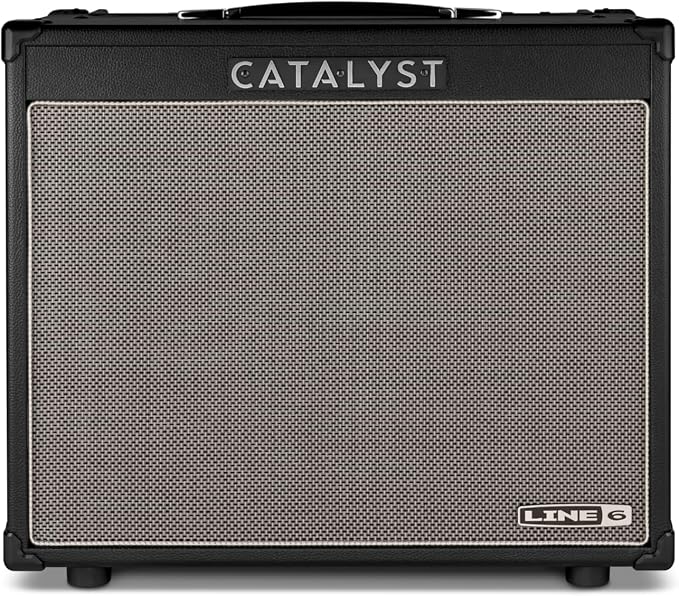
Key specs: 100 watts · Dual-channel 1×12″ combo · Six amp models (clean to high gain) · HX-series effects · USB audio interface built in
The Catalyst 100 is built to answer one question: what is the most gig-ready amp per dollar? One hundred watts through a 1×12 is enough for most stages, the dual channels give you clean and dirty on tap, and six amp models span Fender-style cleans, British chime, crunch, and high gain. Line 6’s HX effects are genuinely excellent — the same algorithms found in their pro-grade Helix units — so you get delay, reverb, chorus, phasers, and more without a pedalboard.
The sleeper feature is the USB audio interface: plug it into your computer and record directly, which makes it a strong home-studio pick too. Our take is that it sits in the perfect middle ground — simpler than the Katana’s deep software, more powerful than the LT25, and cheaper than the tube options. The trade-off: you can only run two effects at once (one must be reverb), so heavy pedal-chain users should look elsewhere or bring their own stompboxes.
- Pros: 100W is properly gig-ready; excellent HX effects; USB recording; simple, amp-like operation
- Cons: Limited to two simultaneous effects; fewer deep-editing options than the Katana
Our verdict: The best value path from bedroom to stage. A working musician’s amp at a beginner’s budget.
| Sound Quality | 8.8 |
| Gig Readiness | 9.2 |
| Features & Connectivity | 8.6 |
| Build & Design | 8.5 |
| Value | 9.0 |
7. Yamaha THR30II Wireless — Best for Silent Practice

Key specs: 30 watts desktop modeling amp · Built-in wireless guitar system · Bluetooth audio streaming · USB recording · Dedicated headphone output
The THR30II Wireless is the amp for players whose biggest constraint is other people. Designed for the desktop rather than the stage, it sounds like a real amp at conversation volume — no attenuators, no compromises. The built-in wireless system means you can pick up your guitar and play with zero setup, Bluetooth streams backing tracks from your phone, and the dedicated headphone output lets you practice at 2 a.m. with a proper pair of cans. If headphone practice is your thing, pair it with a good dedicated setup from our best headphone amps roundup for the ultimate silent rig.
Tonally, the THR line has a loyal following for a reason: the amp models are musical rather than clinical, and the stereo imaging from the desktop format makes effects sound lush. It is not a gig amp and never pretends to be — but for the living room, the office, and the hotel room, it is the most refined practice experience on this list.
- Pros: Sounds like a real amp at low volume; built-in wireless; excellent headphone output; Bluetooth streaming and USB recording
- Cons: Not for gigs or loud rehearsals; premium pricing for a practice amp; smaller speakers mean less stage-like thump
Our verdict: The best desktop practice amp for serious players. If you practice more than you gig, this is your amp.
| Sound Quality | 9.0 |
| Low-Volume Performance | 9.6 |
| Features & Connectivity | 9.2 |
| Build & Design | 9.0 |
| Value | 8.3 |
How to Choose a Guitar Amp
Tube vs. solid-state vs. modeling
Tube amps use vacuum tubes to amplify your signal, producing the warm, touch-sensitive overdrive that defined rock. They sound best when pushed loud and take pedals beautifully — but they are heavy, need maintenance, and cost more. Solid-state amps use transistors: reliable, light, and affordable, though historically less inspiring when overdriven. Modeling amps use digital processing to emulate famous amps (and pack in effects): maximum versatility, lowest fuss, and in 2026 the best ones are genuinely hard to distinguish from the real thing at sane volumes. If you are curious how amplification stages work in general, our preamp vs. amp explainer breaks down what each part of the chain actually does.
How many watts do you need?
Wattage is about headroom and context, not just loudness. For bedroom practice, 5–30 watts is plenty — modern modeling amps sound full at low volume. For rehearsals with a drummer, aim for 50 watts (solid-state/modeling) or 15–30 watts (tube, which sounds louder per watt). For gigs, 50–100 watts solid-state or 15–40 watts tube covers most venues, especially with PA support. When in doubt, buy more clean headroom than you think you need; you can always turn down.
Speaker size and configuration
Bigger speakers move more air. An 8-inch speaker is fine for practice but thin for performance; a 12-inch speaker is the standard for gig-ready combos and delivers fuller bass and projection. Some amps use multiple smaller speakers (like the Spark 2’s dual 4-inch drivers) for a wider stereo image at low volume. If you ever pair an amp head with a separate cabinet, match the speaker impedance to the amp’s rated output — see our impedance guide for why that matters.
Do you need a headphone output?
If you practice at night or in shared spaces, a headphone output is essential — and not all guitar amps have a good one. The Yamaha THR30II and Positive Grid Spark 2 are specifically designed to sound great through headphones, while most big combos treat the headphone jack as an afterthought. For a deeper dive into driving headphones properly, see our best headphone amps roundup.
Effects: built-in or pedalboard?
Built-in effects save you hundreds on pedals and are ideal for beginners and practice. But serious players often prefer a great clean amp plus their own stompboxes — the Vox AC15C1 is the classic example of an amp that shines as a pedal platform. Decide which camp you are in before you buy: you are paying for those DSP effects either way.
Combo vs. head and cabinet
Every amp on this list is a combo (amp and speaker in one box), which is the right choice for the vast majority of players — simpler, cheaper, easier to transport. Separate heads and cabinets make sense when you want to mix and match speakers or need serious stage volume, but they add cost and complexity most players never need.
Frequently Asked Questions
What is the best amp for beginners?
The Fender Mustang LT25. Its 30 onboard presets deliver great tones with zero learning curve, the built-in effects let beginners experiment without buying pedals, and it is compact and easy to use. Once you outgrow it, you will know exactly what kind of amp to buy next.
Are tube amps better than modeling amps?
Neither is objectively better — they are different tools. Tube amps offer unmatched touch response and that organic overdrive feel, which is why professionals still use them. Modeling amps offer far more tones, effects, and low-volume performance for the money, and the gap in sound quality has narrowed dramatically. Choose tube for feel and tradition; choose modeling for versatility and practicality.
How many watts does a guitar amp need for gigs?
Around 50 watts for solid-state or modeling amps, or 15–30 watts for tube amps, covers most gigging situations — especially with PA support. The Line 6 Catalyst 100 at 100 watts has headroom to spare, while the 15-watt Vox AC15C1 is a proven gig amp because tube watts go further.
Can I practice guitar with headphones?
Yes — and it is the best way to practice without disturbing anyone. Look for an amp with a dedicated headphone output designed for low-volume tone, like the Yamaha THR30II Wireless or Positive Grid Spark 2. For the best possible headphone sound, a dedicated headphone amplifier (covered in our headphone amp guide) takes things further.
What is the difference between a combo amp and a head?
A combo combines the amplifier and speaker in one cabinet — everything on this list is a combo. A head is just the amplifier section and needs a separate speaker cabinet. Combos are simpler and better for most players; heads plus cabs offer more flexibility for serious gigging musicians.
Do I need pedals if my amp has built-in effects?
Not at first. Modern modeling amps like the Boss Katana 50 Gen 3 and Line 6 Catalyst 100 include high-quality effects that cover most players’ needs. Pedals become worthwhile when you want specific boutique tones or a hands-on stage workflow — and amps like the Vox AC15C1 are designed to pair with them.
Final Verdict
After comparing specs, listing data, and professional reviews across the guitar amp market, our #1 pick is the Boss Katana 50 Gen 3 — it is the rare amp that works for beginners, bedroom players, and gigging musicians alike. Practice-focused players should look at the Positive Grid Spark 2 for its unmatched learning tools or the Yamaha THR30II Wireless for the best desktop and headphone experience. Tube traditionalists cannot go wrong with the Vox AC15C1, while the Fender Tone Master Twin Reverb delivers legendary clean tone without the legendary weight. Whatever you choose, buy the amp that matches how you actually play — the best amp is the one that makes you pick up the guitar every day.

I am the founder of Sound Mavericks, where I provide the polite truth about audio equipment. I started this site because consumer electronics reviews are often too technical. Instead of using a silent lab, I test headphones, earbuds, and Bluetooth speakers in the real world – like on a noisy subway or in a busy coffee shop.
To stay independent, I buy my own review units (mostly from the United States) rather than accepting free gifts from brands. Once I finish testing a product, I sell it locally to our community. My goal is to help you understand sound quality, active noise cancellation (ANC), and battery life without the marketing hype.