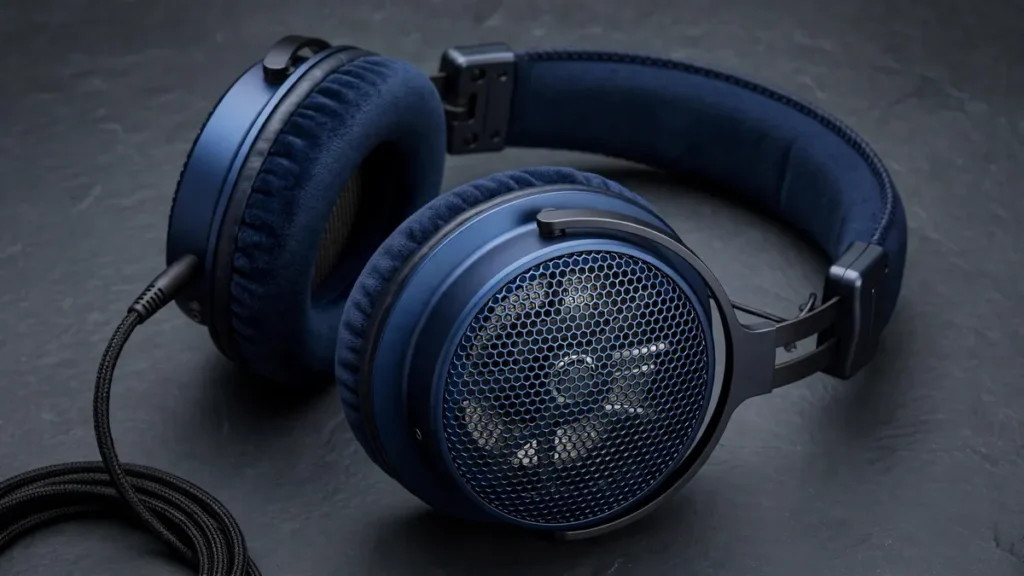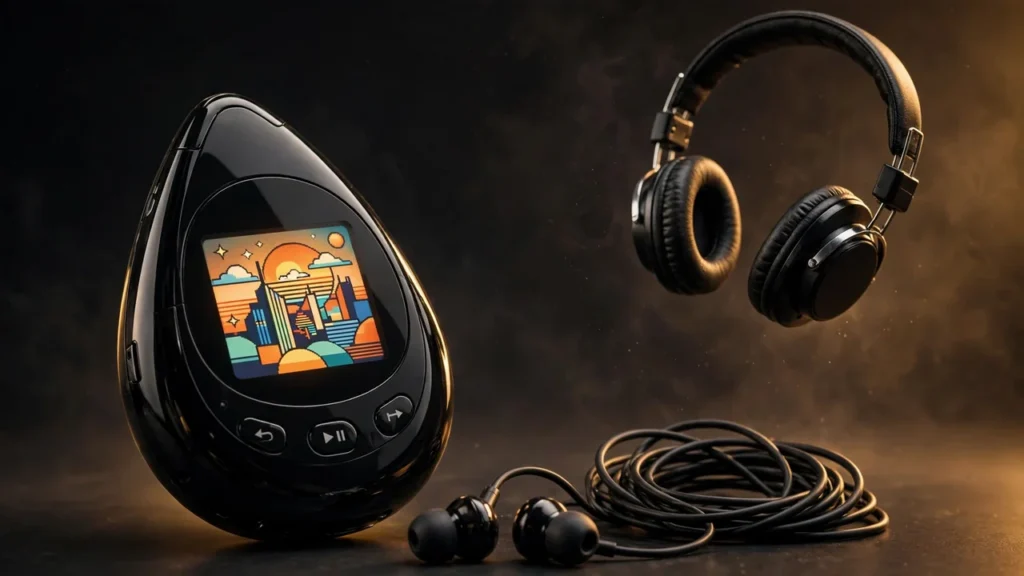
The Sony Walkman NW-S705F is a piece of headphone history — the first portable music player ever built with noise cancelling inside the player itself. Launched in late 2006, it was Sony’s answer to the iPod: a teardrop-shaped 2GB flash player with a color OLED display, an FM tuner, and a noise-cancelling engine that promised to erase up to three-quarters of the rumble on a train or bus. Twenty years on, it’s long discontinued, and any unit you find today will be used, refurbished, or sold by a third-party collector. This review treats it for what it is: a fascinating legacy gadget worth a collector’s shelf — and a genuinely interesting listen, if you can get music onto it.
SoundMavericks verdict: As a historical artifact, the NW-S705F is brilliant — Sony’s noise-cancelling milestone in a form factor smaller than a matchbox. As something you’d actually use in 2026, it’s a different story. The music-loading software it depends on no longer runs on modern computers, 2GB of storage is a relic, and the noise cancelling only works with the original bundled earbuds. Buy one to collect and admire; don’t buy one expecting a daily driver.
| Sound Quality | 8.0 |
| Noise Cancelling (era-adjusted) | 7.5 |
| Design & Build | 8.5 |
| Battery Life | 9.0 |
| Usability in 2026 | 5.5 |
| Collector Value | 8.5 |
Availability is used, refurbished, and third-party sellers only — Sony discontinued this player years ago.
Sony Walkman NW-S705F Specs at a Glance
| Feature | NW-S705F Detail |
|---|---|
| Released | Late 2006 (discontinued — used market only) |
| Storage | 2GB flash memory (siblings: NW-S703F 1GB, NW-S706F 4GB) |
| Noise cancelling | Built into the player; claimed up to 75% ambient noise reduction |
| NC frequency range | 100Hz to 1kHz (covers most vehicle/street rumble) |
| Display | 3-line color OLED, shows album art and visualizations |
| FM radio | Built-in FM tuner |
| Audio formats | MP3, WAV, non-DRM AAC, WMA, ATRAC, ATRAC Lossless |
| Battery life | Up to 50 hours of music playback (per Sony’s launch specs) |
| Navigation | Shuttle-switch knob (twist to browse, lift to switch views) |
| Earbuds | Bundled in-canal earbuds with proprietary NC connector |
| Transfer software | SonicStage (required; not compatible with modern operating systems) |
| Design | Elongated teardrop body, multiple colors by model and market |
Why This Walkman Mattered: The First Noise-Cancelling Player
Context matters with this one. In 2006, noise cancelling lived inside bulky over-ear headphones — Sony had been selling NC headsets for years, but nobody had stuffed the circuitry into the player itself. The NW-S705F was Sony’s flagship shot at the iPod nano era, and the headline was genuine: ambient noise reduction built into a flash player smaller than your thumb.
Here’s how it worked. The noise-cancelling microphones sit in the bundled earbuds, not the player. They pick up low-frequency environmental noise — engine drone, train rumble, street hum in roughly the 100Hz to 1kHz band — and the player generates inverse waveforms to cancel it out. Sony claimed up to 75% of ambient noise could be eliminated, and the pairing of active cancellation with the passive isolation of the in-canal earbuds genuinely impressed reviewers at the time. If you want to understand what this player was doing decades before today’s flagships, our explainer on active noise cancellation versus passive isolation lays out the same principles still at work in modern headphones.
The catch — and it’s a collector-relevant one — is that the NC system is locked to the original bundled earbuds. They use a proprietary connector that only works with the S700 series, so if a used unit arrives without those earbuds, the noise cancelling is gone with them. Third-party or modern earbuds will play music fine, but the signature feature won’t engage.
Design and Display: A Teardrop From 2006
The NW-S705F is shaped like an elongated teardrop, and even now it looks like nothing else. Depending on model and market, colors ranged from black, white, and violet to pink, blue, and aqua — used listings still surface in gold and neon pink, which collectors tend to chase. Navigation centers on a shuttle-switch knob at the top: twist to move through tracks, lift it to flip between artist and album views. Physical play and volume buttons sit flush against the display for a clean, unbroken look.
The three-line color OLED display was a genuine flex in 2006. It renders album art, time and track info, and simple visualizations — small by today’s standards, but backlit OLED on a player this size was a premium touch. Intelligent Shuffle modes (Sports Shuffle, Time Machine Shuffle, Artist Link Shuffle) were Sony’s early answer to the “just play something good” problem, and they’re still fun to poke around with on a working unit.
Sound, Formats, and the SonicStage Problem
Format support was broad for its era: MP3, WAV, non-DRM AAC, WMA, plus Sony’s own ATRAC and ATRAC Lossless codecs. Sound quality through the bundled earbuds was widely considered very good in 2006 — Sony had been refining this platform for years — and our 8.0 reflects what reviewers heard then, not a 2026 comparison.
Now the honest part, and it’s the single biggest reason we scored modern usability at 5.5. The NW-S705F was designed to work with Sony’s SonicStage software, which builds the music database the player needs to recognize tracks. SonicStage is long dead: it isn’t supported and doesn’t run properly on modern Windows versions. Sony’s own support community has confirmed there is no official way to transfer music on a modern computer — owners who wipe their files often end up with a player that just displays “No Data.” If you’re buying one, ask the seller whether it comes with music already loaded and whether the database is intact, because rebuilding it yourself in 2026 is a project, not a given.
Battery Life: 50 Hours Was Unheard Of
Sony rated the S700 series at up to 50 hours of music playback on a single charge — an extraordinary number in the iPod era and still respectable against modern players. One caveat for used buyers: that’s the spec for a fresh cell. Two decades later, original batteries are worn, and replacement batteries for a 2006 player are a specialist job. Budget mentally for diminished runtime, and treat a strong battery on a used unit as a bonus rather than a promise.
Buying a Used NW-S705F in 2026: The SoundMavericks Checklist
No retailer sells this player new. Your hunt is eBay, collector forums, and third-party sellers — where this model still changes hands regularly. Before you commit, run through this checklist:
- Insist on the original NC earbuds. Without them you lose noise cancelling, the player’s defining feature, and replacements only surface bundled with other used units.
- Check the screen and buttons. The OLED display and the shuttle knob are the two things most likely to show age. Ask for photos of the screen lit up and confirmation that every button responds.
- Ask about music transfer. Because SonicStage is dead on modern systems, confirm the unit plays from its existing library and doesn’t sit on a “No Data” screen.
- Test the FM tuner if you care about it. It’s a headline feature on the “F” models — make sure it actually tunes and holds stations.
- Check the USB cable situation. The proprietary USB cable is easy to lose; confirm it’s included or that you can source one before the player arrives.
- Expect wear, and read listing photos closely. Surface scratches and faded branding are normal at this age; missing ear cuffs on the bundled earphones are a common complaint in used listings.
Condition varies wildly from seller to seller, so patience pays. A tested unit with working NC earbuds and an intact library is worth waiting for over a cheaper “untested” gamble.
Modern Alternatives: If You Want the Spirit, Not the Museum Piece
The honest truth is that every functional reason to want an NW-S705F in 2026 — portable music, silence on a commute, a great pocket player — is done better by modern gear. Sony’s own noise-cancelling lineage runs from this teardrop straight through to today’s flagships: our Sony WH-1000XM4C review covers the modern endpoint of the NC story the S700 started, and the Sony MDR-1000X review looks at the mid-2010s chapter of that same journey.
For commute and travel silence specifically, our guide to the best noise cancelling headphones for airplanes and long flights will serve you far better than a 2GB player from 2006. But if what you want is the object itself — the teardrop, the OLED, the feeling of holding the first noise-cancelling player ever made — nothing modern replaces it. That’s what the collector’s score is for.
Sony Walkman NW-S705F: Frequently Asked Questions
Is the Sony NW-S705F still worth buying in 2026?
As a collector’s item or nostalgia piece, yes — it’s a genuine milestone as the first noise-cancelling music player, and working units still trade on the used market. As a practical music player, no: 2GB of storage, a dead software ecosystem, and worn batteries make modern alternatives the smarter buy for actual listening.
Can you still put music on the NW-S705F?
Not easily. The player depends on Sony’s SonicStage software to build its music database, and SonicStage doesn’t run on modern Windows systems. Sony’s own support has confirmed there’s no official workaround, and players with wiped libraries display “No Data.” Buy a unit with music already loaded and the database intact.
What does the NW-S705F’s noise cancelling actually do?
Microphones in the bundled earbuds sample ambient noise in roughly the 100Hz–1kHz band — engine drone, train rumble, street hum — and the player generates opposing waveforms to cancel it out. Sony claimed up to 75% of ambient noise could be eliminated, and the effect combines with the passive isolation of the in-canal earbuds. It only works with the original proprietary earbuds.
How much storage does the NW-S705F have?
The NW-S705F has 2GB of flash memory — room for a few hundred songs at typical MP3 bitrates, which was generous in 2006 and a handful of playlists by today’s standards. Its siblings, the NW-S703F and NW-S706F, offered 1GB and 4GB respectively.
What earbuds work with the NW-S705F?
Any standard earbuds will play music through it, but the noise cancelling only works with the bundled in-canal earbuds, which use a proprietary connector unique to the S700 series. Lose those, and you lose the NC feature — so confirm they’re included before buying used.
What’s the difference between the NW-S703F, NW-S705F, and NW-S706F?
Storage capacity and colors. The NW-S703F is the 1GB model (sold in violet and pink among others), the NW-S705F is the 2GB model, and the NW-S706F is the 4GB model that was primarily a Japan-market variant. All three share the same noise-cancelling platform, OLED display, and FM tuner.

I am the founder of Sound Mavericks, where I provide the polite truth about audio equipment. I started this site because consumer electronics reviews are often too technical. Instead of using a silent lab, I test headphones, earbuds, and Bluetooth speakers in the real world – like on a noisy subway or in a busy coffee shop.
To stay independent, I buy my own review units (mostly from the United States) rather than accepting free gifts from brands. Once I finish testing a product, I sell it locally to our community. My goal is to help you understand sound quality, active noise cancellation (ANC), and battery life without the marketing hype.