
Open-back headphones are the closest thing to listening to real speakers in your room. Instead of sealing sound inside the earcup, the back of each driver is vented to the outside air — producing a wide, natural soundstage, effortless imaging, and a sense of air and space that closed-back designs struggle to match. There is a trade-off: sound leaks out and noise leaks in, so these are made for quiet rooms, not commutes.
At SoundMavericks, we put together this guide after testing what actually matters for open-back listening: tonal accuracy, driver performance, long-session comfort, and how forgiving each model is about amplification. The list below spans from a legendary studio reference to the best budget gateway into the hobby — seven picks, seven clear use cases.
Our Top Picks at a Glance
| Headphones | Best For | Driver / Impedance | Why We Picked It |
|---|---|---|---|
| Sennheiser HD 660S2 | Best Overall | 42mm dynamic / 300Ω | The most complete open-back package: reference tuning with real bass extension |
| Sennheiser HD 600 | Reference Classic | Dynamic / 300Ω | The neutral midrange benchmark every reviewer still measures against |
| HIFIMAN Edition XS | Best Planar Magnetic | Planar / 18Ω | Huge stage and detail for the money; easy to drive |
| Sennheiser HD 560S | Best Value | Dynamic / 120Ω | Neutral, precise, and affordable enough for a first serious headphone |
| Philips SHP9500 | Best Budget | 50mm dynamic / 32Ω | The cheapest legitimate ticket into open-back listening |
| beyerdynamic DT 990 PRO | Best for Studio | 45mm dynamic / 250Ω | Bright, analytical, built like studio furniture — a mixing-room staple |
| Grado SR80x | Best On-Ear | 44mm dynamic / 38Ω | Lively, mid-forward Brooklyn character; no amp required |
How We Ranked Them
Our ranking is built on four pillars, in this order: tonal balance (does it reproduce music faithfully?), soundstage and imaging (the whole point of going open), comfort for multi-hour sessions, and source forgiveness (does it need a dedicated amplifier?). We weight pure listening performance above features — none of these have ANC, Bluetooth, or microphones, and that is exactly why they sound this good. Specs below come from manufacturer and Amazon listings; verdicts are our own.
Best Overall: Sennheiser HD 660S2

Our verdict: The HD 660S2 is the open-back we recommend first because it fixes the one complaint audiophiles have always had about the 6-series: thin bass. It keeps the famous natural midrange and adds deep, controlled sub-bass extension, a refined top end, and an expansive stage — a flagship-tier listening experience that works for music, gaming, and podcasts alike. It is our most complete pick by a clear margin.
The 300-ohm impedance means it rewards proper amplification — pair it with a decent amp and it scales impressively. In the box you get both a 6.3mm and a balanced 4.4mm cable plus a carry pouch, so it is ready for balanced desktop setups out of the box. Comfort is classic Sennheiser: plush pads and a light 260-gram frame that disappears during long sessions.
| Driver | 42mm dynamic, vented magnet system |
| Impedance | 300 ohms (amp recommended) |
| Frequency response | 8 – 41,500 Hz |
| Sensitivity | 104 dB SPL |
| Weight | 260 g |
Pros: reference tuning with real bass extension; superb midrange; balanced cable included; comfortable for hours.
Cons: needs an amplifier to sound its best; wired only; open design leaks sound.
Read our full breakdown: Sennheiser HD 660S2 review.
Reference Classic: Sennheiser HD 600

Our verdict: The HD 600 has been the neutral reference of the headphone world for decades, and in our view it still earns its place. Its midrange presentation — vocals, strings, acoustic instruments — remains the yardstick other headphones are judged against. If you want to hear your music as it was recorded, without editorializing, this is the safest purchase in the category.
Like the 660S2 it is a 300-ohm headphone that wants a proper source, and its bass is more restrained — that is the trade for its famous neutrality. The detachable Kevlar-reinforced cable and famously replaceable parts mean this is a headphone you can keep running for decades; SoundMavericks counts long-term ownership cost as part of value, and the HD 600 wins there.
| Driver | Dynamic, open-back |
| Impedance | 300 ohms (amp recommended) |
| Frequency response | 12 – 40,500 Hz |
| Sensitivity | 97 dB SPL |
| Weight | 260 g |
Pros: benchmark neutral midrange; fully repairable design; excellent long-session comfort.
Cons: bass-light compared to modern flagships; needs amplification; dated looks.
Best Planar Magnetic: HIFIMAN Edition XS

Our verdict: Planar magnetic drivers do things dynamics cannot: lightning-fast transient response, vanishingly low distortion, and a stage that feels holographic. The Edition XS brings that planar character down to a mid-tier price, and we rate it the best performance-per-dollar in the whole guide. At just 18 ohms it even runs respectably from a phone — rare for a planar.
HIFIMAN’s Stealth Magnet design and NEO supernano diaphragm deliver detail retrieval that embarrasses more expensive dynamic headphones. The headband and build are functional rather than luxurious, and at around 405 grams it is the heaviest pick here — but for pure sonic spectacle, nothing else at this tier touches it. Curious how planar tech differs from dynamic? See our explainer on dynamic vs. planar magnetic drivers.
| Driver | Planar magnetic, Stealth Magnets |
| Impedance | 18 ohms (easy to drive) |
| Frequency response | 8 Hz – 50 kHz |
| Sensitivity | 92 dB SPL |
| Weight | 405 g |
Pros: flagship-level detail and staging for mid-tier money; no amp strictly required; detachable cable.
Cons: heaviest headphone in this guide; plain build quality; large cups are not for small heads.
Best Value: Sennheiser HD 560S

Our verdict: The HD 560S is the headphone we recommend to friends entering the hobby. Its tuning is remarkably close to the much more expensive HD 660S2 — neutral, detailed, with excellent imaging and a naturally wide stage — and the 120-ohm impedance makes it far easier to drive from a laptop or decent dongle. It is also a superb gaming headphone: positional cues in competitive shooters are outstanding. (We cover gaming audio in our best IEMs for gaming guide.)
Build is plasticky compared to the 6-series, and it will not give you the 660S2’s bass weight — but judged on sound-per-dollar, the HD 560S is the single best deal on this list.
| Driver | Dynamic, open-back |
| Impedance | 120 ohms (easy to drive) |
| Frequency response | 6 – 38,000 Hz |
| Sensitivity | 110 dB SPL |
| Cable | Detachable 1.8 m, 6.35mm + 3.5mm adapter |
Pros: near-flagship neutrality for much less; great for gaming and mixing; runs fine without a big amp.
Cons: plastic build; lean bass by modern standards; clamping can be firm out of the box.
Best Budget: Philips SHP9500

Our verdict: Every hobby has a gateway product, and for open-back headphones it is the SHP9500. The 50mm drivers deliver a genuinely spacious, balanced presentation with comfortable breathable pads and a sturdy steel headband — at a price where most competitors are closed-back fashion accessories. At 32 ohms it plugs straight into anything.
Be realistic: detail retrieval and build refinement lag well behind the Sennheisers on this list, and the short 1.5 m cable suits desks more than couches. But as a first taste of what open-back sound is about, it is unbeatable value, and it pairs nicely with our best wired earbuds picks if you want a portable companion.
| Driver | 50mm dynamic, open acoustic system |
| Impedance | 32 ohms (phone-friendly) |
| Frequency response | 12 – 35,000 Hz |
| Sensitivity | 101 dB SPL |
| Weight | 300 g |
Pros: astonishingly good for the money; comfortable; detachable cable; no amp needed.
Cons: outclassed on detail by everything above it; short cable; plasticky finish.
Best for Studio: beyerdynamic DT 990 PRO

Our verdict: The DT 990 PRO has sat in recording studios for decades because it does one thing brilliantly: ruthless detail. Its bright, analytical tuning and extremely spatial presentation make mix flaws impossible to hide. If you produce music or edit audio, this is our pick — and its velour pads and rugged, fully serviceable construction survive years of daily studio use.
For casual music listening, know what you are getting: the treble is famously energetic and can fatigue treble-sensitive listeners, and the 250-ohm impedance needs a proper interface or amp. But as a work tool, few headphones offer more. We consider it the studio counterpart to the HD 600’s hi-fi reference role.
| Driver | 45mm dynamic, open |
| Impedance | 250 ohms (amp recommended) |
| Frequency response | 5 – 35,000 Hz |
| Sensitivity | 96 dB SPL |
| Weight | 250 g |
Pros: exceptional detail and imaging; legendary studio durability; replaceable parts; comfortable velour pads.
Cons: bright treble can fatigue; needs amplification; non-detachable cable.
Best On-Ear: Grado SR80x
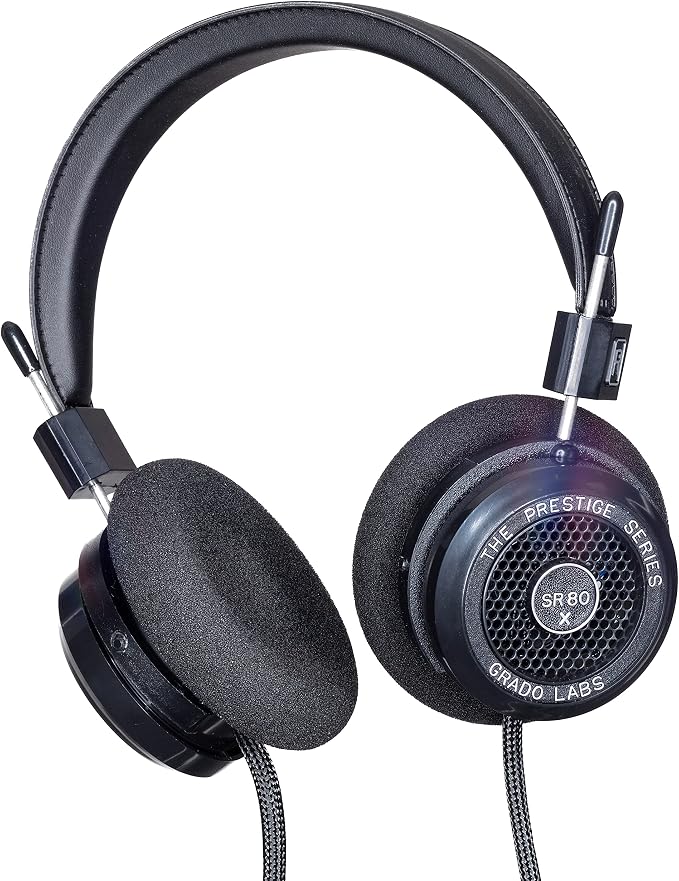
Our verdict: Grado is the outlier here — hand-built in Brooklyn, on-ear rather than over-ear, and tuned for fun instead of neutrality. The SR80x’s 4th-generation 44mm drivers deliver a lively, mid-forward sound with sparkling highs and surprising speed. Rock, acoustic, and jazz recordings come alive in a way the more clinical picks cannot match.
At 38 ohms it runs happily from any phone or laptop, and the build — retro plastic, foam pads, simple headband — is honest rather than luxurious. On-ear comfort divides opinion on long sessions, and sound leaks more than any other pick here. But for pure musical engagement, the SR80x is our favorite character pick.
| Driver | 44mm dynamic, 4th-gen Grado drivers |
| Impedance | 38 ohms (phone-friendly) |
| Frequency response | 20 – 20,000 Hz |
| Sensitivity | 99.8 dB SPL |
| Weight | 240 g |
Pros: engaging, lively tuning; hand-built; no amp needed; distinctive looks.
Cons: on-ear fit is not for everyone; maximum sound leak; cable is thick and non-detachable.
Full Comparison Table
| Model | Driver | Impedance | Freq. response | Weight | Amp needed? |
|---|---|---|---|---|---|
| HD 660S2 | 42mm dynamic | 300Ω | 8–41.5k Hz | 260 g | Yes |
| HD 600 | Dynamic | 300Ω | 12–40.5k Hz | 260 g | Yes |
| Edition XS | Planar magnetic | 18Ω | 8 Hz–50k Hz | 405 g | Optional |
| HD 560S | Dynamic | 120Ω | 6–38k Hz | ∼240 g | Optional |
| SHP9500 | 50mm dynamic | 32Ω | 12–35k Hz | 300 g | No |
| DT 990 PRO | 45mm dynamic | 250Ω | 5–35k Hz | 250 g | Yes |
| SR80x | 44mm dynamic | 38Ω | 20–20k Hz | 240 g | No |
How to Choose Open-Back Headphones
Soundstage vs. isolation. The whole point of open-back is spatial realism — if you mostly listen in noisy places, you want closed-back headphones instead. Open-backs belong in quiet rooms.
Impedance and amplification. The HD 600, HD 660S2, and DT 990 PRO are high-impedance headphones that genuinely need a headphone amplifier to reach their potential. If you do not want to buy an amp, stick with the easy-to-drive models: Edition XS, HD 560S, SHP9500, or SR80x. Our explainer on impedance and amps covers this in depth, and our best headphone amps guide has pairings for every budget.
Tuning philosophy. Neutral (HD 600, HD 560S) suits critical listening and mixing. Fun and engaging (SR80x, HD 660S2) suits pure music enjoyment. Analytical and bright (DT 990 PRO, Edition XS) suits detail work and gaming. There is no wrong answer — only your preference.
Comfort. Open-backs are meant for long sessions, so weight and clamping matter. Over-ear velour designs (Sennheiser, beyerdynamic) win for multi-hour wear; the Grado’s on-ear fit is a love-it-or-hate-it proposition.
Related reading: What is soundstage in headphones? · Sennheiser HD6XX review (a Massdrop-tuned HD 650 sibling worth knowing) · Preamp vs amp: what do you actually need?
Frequently Asked Questions
Are open-back headphones better than closed-back?
For soundstage, imaging, and natural tonality in a quiet room — yes, open-back designs generally outperform closed-back at the same tier. But they leak sound and isolate nothing, so closed-back is better for travel, offices, and noisy environments. We compare both designs in our open-back vs. closed-back guide.
Can you use open-back headphones outside or at work?
Not really. People nearby will hear your music clearly, and you will hear everything around you. Open-backs are for private, quiet listening spaces.
Do open-back headphones need an amplifier?
It depends on impedance. Models like the Sennheiser HD 600 and HD 660S2 (300 ohms) and the beyerdynamic DT 990 PRO (250 ohms) need a dedicated amp to perform well. Low-impedance models like the Philips SHP9500 (32 ohms) and Grado SR80x (38 ohms) run fine from a phone. See our impedance explainer.
What is the best open-back headphone for beginners?
Our pick is the Sennheiser HD 560S: neutral, detailed, comfortable, and easy enough to drive without extra gear. If your budget is tight, the Philips SHP9500 is the cheapest legitimate entry point into open-back sound.
Are open-back headphones good for gaming?
Excellent — their wide soundstage and precise imaging make positional audio cues easier to place than on most closed designs. The HD 560S and DT 990 PRO are long-time favorites among competitive players.
Do open-back headphones leak a lot of sound?
Yes — this is inherent to the design. At normal listening volumes, someone sitting next to you will hear your audio clearly. Treat them as private-room headphones.
The Bottom Line
If you want the single best open-back experience, get the Sennheiser HD 660S2 — it is our best overall for a reason. Chasing reference neutrality? The HD 600 remains the benchmark. Want planar detail on a budget? The HIFIMAN Edition XS. Starting out? The HD 560S or the Philips SHP9500. Mixing audio? The DT 990 PRO. And if you want music to feel alive, the Grado SR80x brings the character. Whichever you choose, you are getting the most speaker-like listening experience headphones can offer.

I am the founder of Sound Mavericks, where I provide the polite truth about audio equipment. I started this site because consumer electronics reviews are often too technical. Instead of using a silent lab, I test headphones, earbuds, and Bluetooth speakers in the real world – like on a noisy subway or in a busy coffee shop.
To stay independent, I buy my own review units (mostly from the United States) rather than accepting free gifts from brands. Once I finish testing a product, I sell it locally to our community. My goal is to help you understand sound quality, active noise cancellation (ANC), and battery life without the marketing hype.

