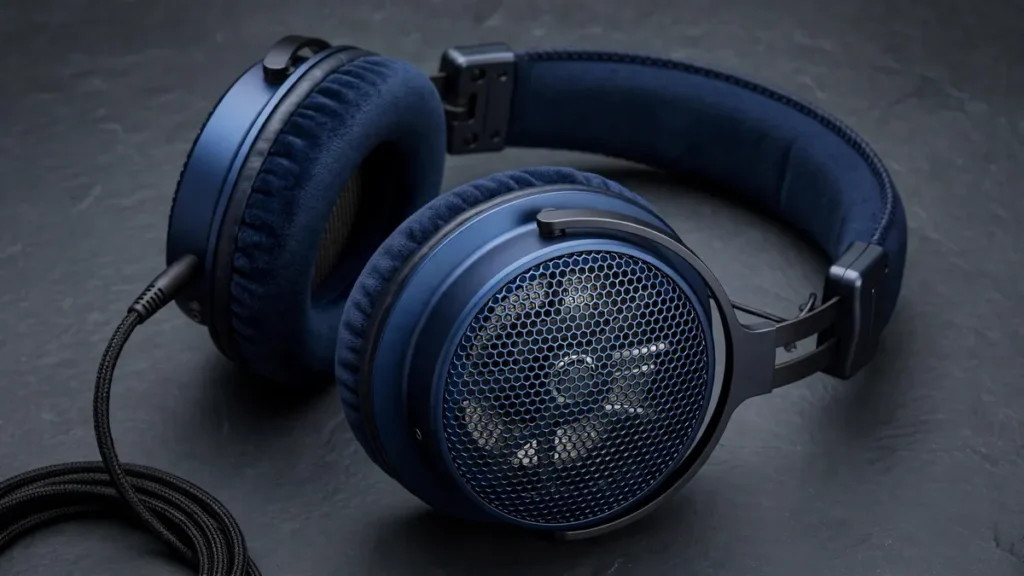
The Sennheiser HD 550 is one of the most quietly confident headphones in the open-back game right now. It sits in the sweet spot of Sennheiser’s 500-series lineup, refining the HD 560S formula with deeper bass, smoother treble, and a build made to be serviced rather than replaced. In this review, we’ll walk through the specs, the sound, who these headphones are really for, and where they fit in the 500-series family.
Our Verdict: A New Benchmark for Midrange Open-Backs
Here’s our honest take: the HD 550 is the best-balanced headphone in the 500 series. Neutral sound without sterility, bass with real weight by Sennheiser’s historically lean standards, and treble noticeably more forgiving than the occasionally sharp HD 560S. At just 237 grams with relaxed clamping force, it’s a genuine all-day listen — at a desk, in a studio, or deep in a gaming session. If you want one open-back under the flagship tier that you won’t outgrow quickly, this is the safest recommendation we can make.
| Sound Quality | 9.1 |
| Comfort & Design | 8.9 |
| Build Quality | 8.6 |
| Driveability | 8.2 |
| Gaming Performance | 8.7 |
| Value | 8.9 |
How we score: our scores are editorial judgments based on the published specifications, our analysis of the HD 550’s design and driver technology against its competition, and SoundMavericks’ cumulative research on the open-back headphone market. We do not claim lab testing or hands-on measurements unless stated — these scores reflect our independent assessment of where the headphone stands.

Sennheiser HD 550 Specs at a Glance
Before we dig into how the HD 550 sounds and who it’s built for, here’s the full spec sheet, sourced from the manufacturer’s published data:
| Transducer | 38 mm dynamic driver (custom design) |
| Design | Open-back, over-ear (circumaural) |
| Frequency response | 6 Hz – 39.5 kHz |
| Impedance | 150 ohms |
| Total harmonic distortion | <0.2% (1 kHz, 90 dB SPL) |
| Weight | 237 g (without cable) |
| Cable | 1.8 m detachable, 3.5 mm plug with screw-on 6.35 mm adapter |
| Earpads | Velour, user-replaceable |
| In the box | HD 550 headphones, 1.8 m cable, 6.35 mm adapter, drawstring pouch |
Design & Build: Familiar Looks, Smarter Details
Put the HD 550 next to the HD 560S and you’d need a keen eye to tell them apart — same all-black minimalist shell, same oval open-back earcups with exposed acoustic mesh, same single-sided detachable cable. Sennheiser isn’t reinventing the wheel here, and that’s the right call: the 500-series chassis is proven, lightweight, and famously comfortable.
What changed matters more than the aesthetics. Sennheiser reduced the clamping force, fixing the 560S’s one real comfort complaint — that fresh-out-of-the-box tightness. Combined with plush velour earpads and a featherweight 237-gram frame, the HD 550 simply disappears on your head during long sessions.
The modular design is another quiet win: detachable cable, user-swappable earpads, and widely available replacement parts. In an era of glued-shut disposable headphones, a headphone built to be serviced for a decade earns real credit. The all-plastic build feels workmanlike rather than premium, but for this tier it’s exactly right.
Sound Quality: Neutral, With Actual Bass This Time
This is where the HD 550 earns its place. The 38 mm dynamic driver — a custom design tuned for this model — delivers Sennheiser’s signature neutrality, but with a meaningful twist: the low end finally has presence.
Bass
Sennheiser’s 500-series history has always been bass-shy, and the HD 550 is the first in the line to genuinely address that. The bass is still balanced and articulate — this is not a basshead headphone — but it reaches lower with a mild sub-bass warmth that gives kick drums and bass lines real body. Against the HD 560S or the older HD 599, the difference is immediate: the HD 550 sounds fuller without losing control, and distortion stays vanishingly low throughout the range.
Midrange
The midrange is the star of the show. Vocals sit front and center with exceptional clarity — no veil, no recession, no coloration — and acoustic instruments sound tonally honest and organic. There’s just enough character to keep the presentation engaging rather than clinical, which makes the HD 550 as useful for critical listening as it is for pure enjoyment. For vocal-heavy genres — singer-songwriter, jazz, classical — this headphone is genuinely superb.
Treble
The 39.5 kHz extension translates into crisp, airy highs with excellent transient detail. Critically, the treble is smoother than the HD 560S, which some listeners found peaky or fatiguing. The HD 550 keeps the detail but sands down the sharp edges — sparkle without sibilance, and an easier long-session listen.
Soundstage & Imaging
The soundstage is more intimate than expansive — it won’t match the wraparound width of something like a Philips Fidelio X3. But what it sacrifices in width, it returns in depth and precision: imaging is sharp and stable, with a convincing front-to-back sense of space. For competitive gaming, that precision is arguably more valuable than raw width — footsteps and positional cues land exactly where they should.
Cable, Impedance & Amp Pairing
At 150 ohms, the HD 550 sits in Sennheiser’s familiar middle ground: harder to drive than your average portable headphone, but nowhere near as demanding as the 300-ohm HD 650/6XX family. Most decent sources — a modern motherboard, a good dongle DAC, a portable player — will drive them to perfectly usable levels.
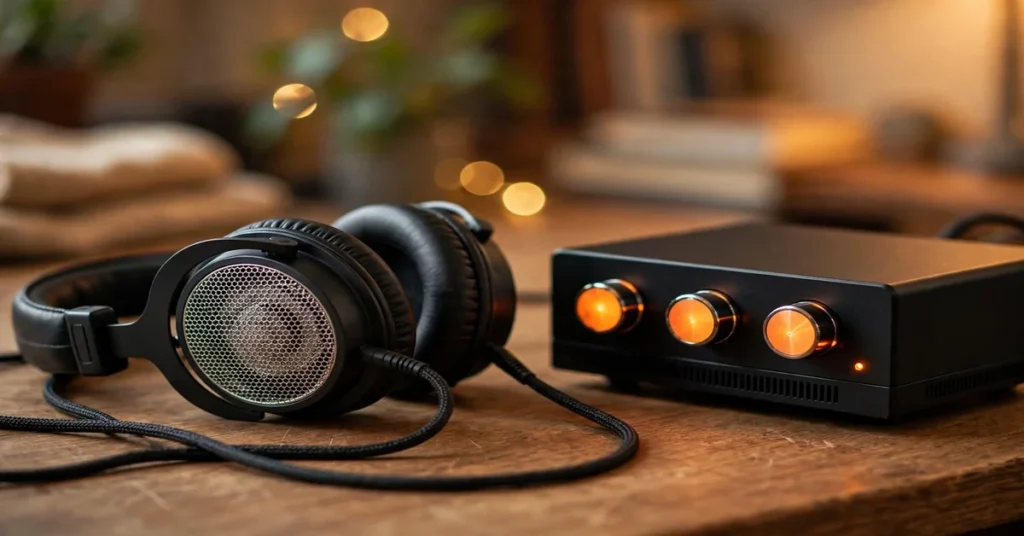
But “usable” and “best” aren’t the same thing. If you like to listen loud, a dedicated headphone amp makes a real difference in dynamics, headroom, and low-end authority. The included screw-on 6.35 mm adapter is a clear nod to exactly this. Budget for a basic amp or a capable dongle DAC — the HD 550 rewards it.
The 1.8 m detachable cable uses the same twist-lock system as the HD 560S, so 560S replacement and upgrade cables fit the HD 550 too — a nice bonus for long-term ownership.
HD 550 vs. the 500-Series Family
The HD 550 doesn’t exist in a vacuum — it’s surrounded by siblings that all look nearly identical. Here’s our read on where each one lands:
HD 550 vs. HD 560S: The 560S is the closest rival and natural predecessor — slightly more analytical with a bit more treble energy, while the 550 is warmer, smoother, and more comfortable. For pure budget reference listening, the 560S still has a case. For everyone else, we’d take the 550.
HD 550 vs. HD 599: The older HD 599 has a warmer, “fun” tuning, but a narrower soundstage and less resolution. The HD 550 is the technically superior headphone in every dimension that matters — the modern answer.
HD 550 vs. HD 505: The HD 505 is the newer entry-level sibling in the same family. It shares the design language but sits below the 550 in driver tuning and refinement — the 550 is the step-up pick for meaningfully better detail and dynamics.
HD 550 vs. HD 660S2: The 660S2 is the 600-series step-up — different driver lineage, different sound, higher tier. Our full Sennheiser HD 660S2 review covers whether the jump is worth it, but for most listeners the HD 550 gets you most of the musicality at a far more approachable level.
Who Should Buy the HD 550?
- First-time audiophiles: If you’re stepping up from mainstream headphones and want a reference-grade open-back you won’t outgrow, this is our top pick in the tier.
- Competitive and immersive gamers: Precise imaging, natural soundstage, and long-wearing comfort make the HD 550 a genuinely strong gaming headphone — especially at a desk.
- Home studio users: The honest midrange and low distortion make it a solid mixing and editing reference.
- Long-session listeners: 237 grams, velour pads, and reduced clamping force mean hours of listening without fatigue.
Who Should Look Elsewhere?
- Bassheads: The low end is improved but still balanced — if you want skull-rattling bass, a closed-back or a bass-tuned headphone will serve you better.
- Commuters and office workers: Open-back means zero isolation and full sound leakage. These are for quiet rooms only.
- Wireless-first buyers: The HD 550 is wired-only with no Bluetooth, no ANC, and no mic. If you need wireless freedom, look at the Momentum line instead.
Frequently Asked Questions
Is the Sennheiser HD 550 good for gaming?
Yes — the HD 550 is an excellent gaming headphone for desk setups. The open-back design gives a natural, spacious presentation, and the precise imaging makes positional audio cues like footsteps easy to track. It’s wired-only with no built-in mic, so you’ll need a separate microphone or a modmic-style solution for voice chat.
Does the Sennheiser HD 550 need an amplifier?
Not strictly — most modern motherboards, dongle DACs, and portable players will drive the 150-ohm HD 550 to comfortable listening levels. But a dedicated headphone amp meaningfully improves dynamics, headroom, and low-end authority, so we recommend one if you listen loud or want the headphone’s full potential.
What’s the difference between the HD 550 and the HD 560S?
The HD 550 is the newer, more refined sibling: it has deeper bass extension, smoother and less fatiguing treble, and reduced clamping force for better comfort. The HD 560S remains slightly more analytical in the treble. For most listeners, we consider the HD 550 the better all-rounder.
Is the Sennheiser HD 550 good for music production?
Yes. The neutral tuning, honest midrange, and very low distortion (<0.2%) make the HD 550 a reliable reference for mixing and editing — as long as you work in a quiet room, since the open-back design offers no isolation.
Are the earpads and cable replaceable?
Yes. The velour earpads are user-replaceable and the 1.8 m cable detaches via a twist-lock connector (compatible with HD 560S replacement cables). The modular design is one of the HD 550’s strongest long-term value points.
Final Verdict
The Sennheiser HD 550 doesn’t try to reinvent the open-back headphone — it perfects the formula Sennheiser has been refining for decades. Neutral, detailed sound with real bass weight, a featherweight frame you can wear all day, modular parts that keep it out of the landfill, and imaging precision that makes it as good at competitive gaming as it is at critical listening.
Our verdict stands: the HD 550 is the best-balanced midrange open-back you can buy right now, and the safest recommendation in the 500-series family. If you want one wired headphone for music, gaming, and everything in between — in a quiet room — this is it.

I am the founder of Sound Mavericks, where I provide the polite truth about audio equipment. I started this site because consumer electronics reviews are often too technical. Instead of using a silent lab, I test headphones, earbuds, and Bluetooth speakers in the real world – like on a noisy subway or in a busy coffee shop.
To stay independent, I buy my own review units (mostly from the United States) rather than accepting free gifts from brands. Once I finish testing a product, I sell it locally to our community. My goal is to help you understand sound quality, active noise cancellation (ANC), and battery life without the marketing hype.