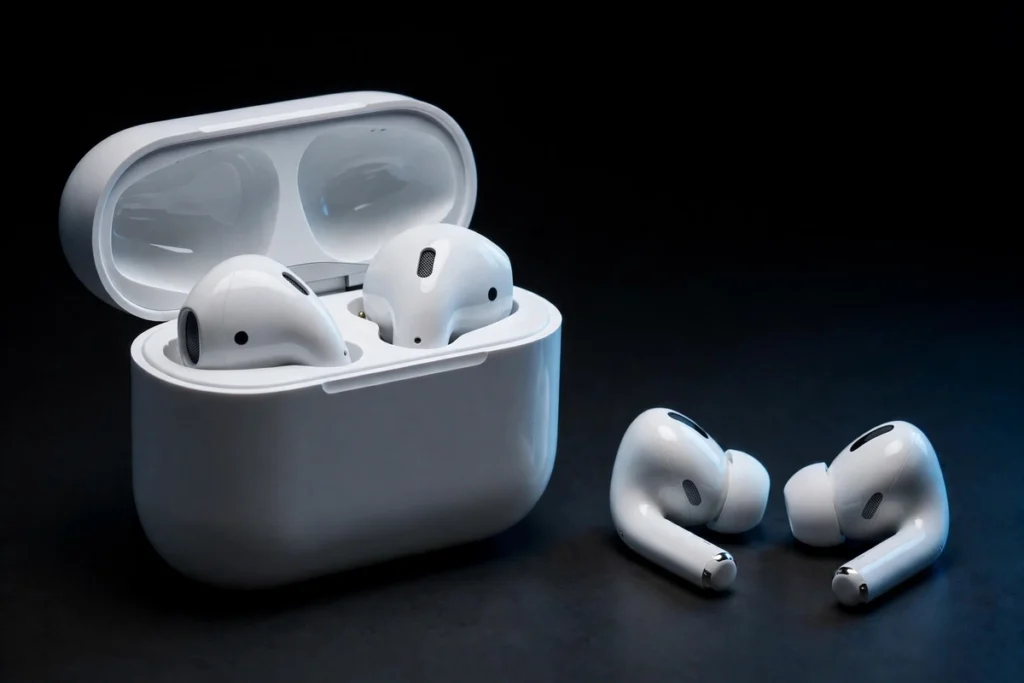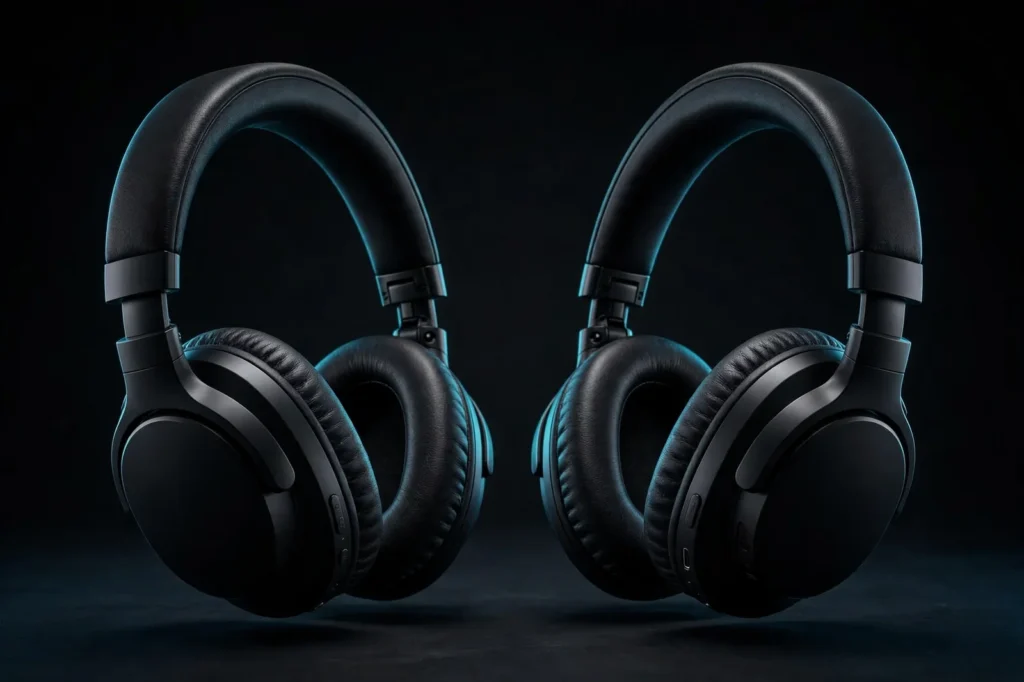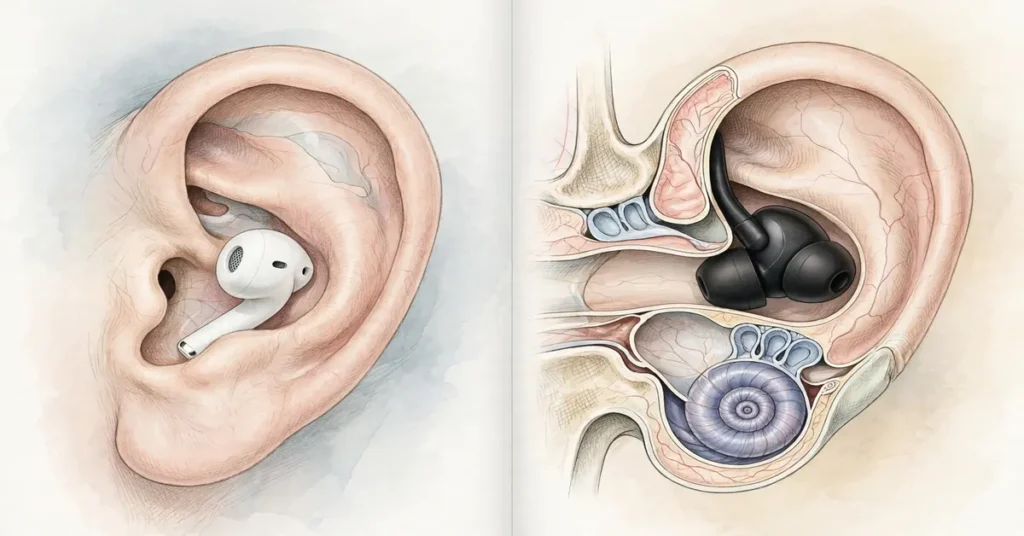
Earbuds vs earphones — the two words get tossed around like they mean the same thing, but they describe two genuinely different ways of wearing sound. Earbuds sit in the outer ear without entering the ear canal. In-ear earphones (often sold as IEMs or “in-ears”) insert into the ear canal and seal it with silicone or foam tips. That single design difference shapes everything that follows: isolation, bass, comfort, and which one you should actually buy.
SoundMavericks’ verdict
Choose in-ear earphones if you want the strongest noise isolation, fuller bass, and a secure fit for workouts, commuting, and travel. Choose earbuds if you want all-day comfort with zero pressure inside the ear canal, easy awareness of your surroundings, and the simplest fit possible. Neither type is universally better — the right pick is the one that matches how you’ll actually use it.
How we compare: this is an explainer comparison built on SoundMavericks’ editorial analysis of fit, design, and published specifications — not a lab test of every model on the market. Our scores reflect how each design type performs for its strengths, verified against manufacturer and listing specs.
Earbuds vs earphones at a glance
| Feature | Earbuds | In-ear earphones |
|---|---|---|
| Fit | Rest in the outer ear (concha), no canal entry | Insert into the ear canal, sealed with tips |
| Noise isolation | Low — you stay aware of your surroundings | High — the seal passively blocks outside noise |
| Bass response | Lighter and more open, less impact | Fuller and deeper, thanks to the sealed fit |
| Long-session comfort | Minimal pressure, easy to wear for hours | Snug fit; some ears feel canal pressure over time |
| Stability for sport | Can shift or slip during intense movement | Very secure with the right tip size |
| Situational awareness | Naturally good — traffic and voices come through | Limited by design; transparency mode helps on ANC models |
| Best for | All-day wear, calls, office, walking | Travel, gym, focused listening, noisy environments |
The terminology, cleared up
Strictly speaking, earbuds are the open-fit style: a housing shaped to rest in the concha — the bowl of the outer ear — like the classic AirPods design. Earphones is the broader term, but in practice it means in-ear models: a nozzle with interchangeable silicone or foam tips that seals inside the canal. Audiophiles call the premium end of that category IEMs (in-ear monitors), but for shoppers, “in-ear earphones” and “IEMs” describe the same fit.
Marketing makes it messier: plenty of products labeled “wireless earbuds” are actually in-ear earphones with tips. When shopping, ignore the label and check the photos — silicone tips on a nozzle means an in-ear design, whatever the box says. And note this guide isn’t about wired vs wireless; both types come in wired and true-wireless versions. Fit is what matters here.
5 key differences, compared
1. Fit and design
This is the root of every other difference. Earbuds are typically one-piece housings shaped to nestle into the concha — the bowl of the outer ear — with nothing entering the canal. The fit is simple, but it depends heavily on your ear shape: what sits perfectly for one person slides around for another. In-ear earphones use a slim nozzle plus soft tips in multiple sizes, so you can dial in a seal matched to your canal. Tip size is the single biggest factor in both comfort and sound quality for in-ears, and most models ship with three or four sizes in the box.
2. Sound quality and bass
A sealed ear canal acts like a tiny listening room: bass stays in, outside noise stays out, and the driver doesn’t have to fight the world to be heard. That’s why in-ear earphones deliver fuller low end and a more detailed presentation at lower volumes. Earbuds sound more open and airy — some listeners genuinely prefer that spacious feel — but without a seal, bass leaks out and ambient noise leaks in, so you’ll often turn the volume up to compensate. For listening quality in noisy places, in-ears have the structural advantage.
3. Noise isolation vs. awareness
Isolation is the in-ear earphone’s superpower and its tradeoff in one. The physical seal alone blocks a meaningful amount of ambient sound before any electronics get involved, which is why even non-ANC in-ears work well on planes and trains. Earbuds go the other direction: with no seal, you hear traffic, announcements, and coworkers naturally. That’s a safety and convenience win for runners, cyclists, and office workers — but a dealbreaker if your goal is immersion in a loud environment.
4. Comfort over long sessions
Earbuds win the comfort conversation for most people. Nothing sits inside the canal, so there’s no pressure buildup or tip fatigue, and they’re the easiest design to pop in and out all day for calls and casual listening. In-ear earphones can be perfectly comfortable — plenty of people wear them for hours — but the seal that gives them their sound advantage also creates gentle pressure, and sensitive ears sometimes need breaks. If your ears have ever ached from in-ears, open-fit earbuds are usually the fix.
5. Stability for sport and movement
For running, gym sessions, and anything bouncy, in-ear earphones are the safer bet: the sealed fit anchors them in place, and the right tip size makes them remarkably hard to dislodge. Earbuds rely on the shape of your outer ear alone, so sweat and movement can work them loose. One caveat: in-ears transmit some footstep thump through the seal when running, which bothers a few runners; if that’s you, a secure open-fit earbud with an ear hook is the alternative worth trying.
Example picks: what each type looks like in practice
To make the difference concrete, here are two representative models — one from each side — scored on how well each design type delivers its strengths.
Apple AirPods 4 — the classic open-fit earbud

The AirPods 4 are the textbook earbud: a redesigned contour that rests in the outer ear, no tips, nothing in the canal. You get Apple’s H2 chip, personalized spatial audio, and strong call quality in a package you can wear all day without thinking about it. The tradeoff is the open, airy sound with modest isolation — best for quieter settings, calls, and all-day wear rather than drowning out a commute. Listed battery life is around five hours per charge.
| Sound Quality | 8.5 |
| Comfort & Fit | 9.4 |
| Noise Isolation | 6.0 |
| Features | 8.7 |
| Value | 8.9 |
Sony WF-1000XM5 — the in-ear earphone done right

The WF-1000XM5 shows what the in-ear design is for: soft noise-isolating tips that seal the canal, active noise cancelling on top of that passive seal, and 8.4mm drivers delivering the full, detailed sound the seal makes possible. It’s the archetypal travel companion — rated IPX4 for sweat and splashes, with a listed eight hours of battery per charge — and the four included tip sizes are the fit-tuning that makes or breaks an in-ear. The tradeoff is the seal itself: you’ll feel it, and you’ll hear far less of the world around you.
| Sound Quality | 9.4 |
| Comfort & Fit | 8.6 |
| Noise Isolation | 9.6 |
| Features | 9.3 |
| Value | 8.9 |
Which should you buy?
Buy earbuds if: you wear audio all day and comfort is the priority; you take lots of calls and want to pop them in and out effortlessly; you run or cycle outdoors and need to hear traffic; or your ears simply don’t tolerate anything inside the canal.
Buy in-ear earphones if: you want the best sound quality and bass from a pocketable design; you commute, fly, or work in noisy spaces; you need a locked-in fit for the gym; or you want effective noise cancelling, which only works properly with a sealed fit.
One more option on the in-ear side: the Apple AirPods Pro (2nd Generation) pairs the sealed in-ear fit with strong ANC and Apple’s ecosystem conveniences, making it the natural upgrade path if you like the AirPods shape but want the isolation and bass that only a seal provides.
Frequently asked questions
What is the real difference between earbuds and earphones?
Earbuds rest in the outer ear without entering the ear canal. Earphones — specifically in-ear earphones — insert into the canal and seal it with silicone or foam tips. The seal is the fundamental difference: it gives in-ears better isolation and bass, while earbuds give you more comfort and natural awareness of your surroundings.
Are earbuds or in-ear earphones better for running and the gym?
In-ear earphones are generally better for exercise because the sealed fit stays put during movement, while earbuds can work loose with sweat and impact. The exception: if you run on roads, the natural awareness of open-fit earbuds is a genuine safety advantage.
Are in-ear earphones bad for your ears?
Not inherently — but the seal delivers sound more efficiently, so it’s easier to listen louder than you realize. Keep volumes moderate, take breaks, and clean the tips regularly. If you feel soreness, try a smaller tip size or switch to open-fit earbuds.
Can you wear earbuds all day?
Yes — all-day wear is arguably the earbud’s strongest use case. With nothing inside the canal, there’s minimal pressure buildup, and they’re easy to remove and reinsert between calls and meetings. They’re the most comfortable design type for extended wear for most people.
Are IEMs the same thing as earphones?
Essentially, yes. IEM (in-ear monitor) originally meant professional stage monitors, but today it covers any premium in-ear earphone with a nozzle-and-tip design. If it seals in your canal, it’s an in-ear earphone — whatever the box says.
Do I need noise cancelling, or are regular earbuds enough?
It depends on your environment. If you mostly listen in quiet rooms, at a desk, or on walks, open-fit earbuds are plenty — and more comfortable, too. If you commute, fly, or work in noise, a sealed in-ear design (with or without ANC) transforms the experience in a way earbuds structurally can’t match.

I am the founder of Sound Mavericks, where I provide the polite truth about audio equipment. I started this site because consumer electronics reviews are often too technical. Instead of using a silent lab, I test headphones, earbuds, and Bluetooth speakers in the real world – like on a noisy subway or in a busy coffee shop.
To stay independent, I buy my own review units (mostly from the United States) rather than accepting free gifts from brands. Once I finish testing a product, I sell it locally to our community. My goal is to help you understand sound quality, active noise cancellation (ANC), and battery life without the marketing hype.