It is a fair question to ask whether can headphones cause ear infections, because the timing often looks suspicious: a week of long listening days, then an itchy, sore ear. The careful answer is that headphones do not create infections out of nothing. They can, though, build the conditions infections like: warmth, trapped moisture, bacteria carried in on a dirty tip, and skin irritated by hours of contact. This page stays general on purpose. It explains the habits that raise or lower the risk, and the signs that mean it is time to talk to a clinician rather than a search engine.
What is actually going on in the ear
The outer ear canal is skin lined, warm and self cleaning. Wax is part of that system, not dirt: it protects the skin and slowly carries debris outward. Problems start when the balance shifts. Jamaica Hospital’s patient Q and A on earbuds makes the mechanism plain: wearing earbuds for hours can prevent wax from exiting the canal and create buildups, and the surfaces of earbuds are prime environments for dirt and bacteria to accumulate, which unclean earbuds then introduce into the canal.
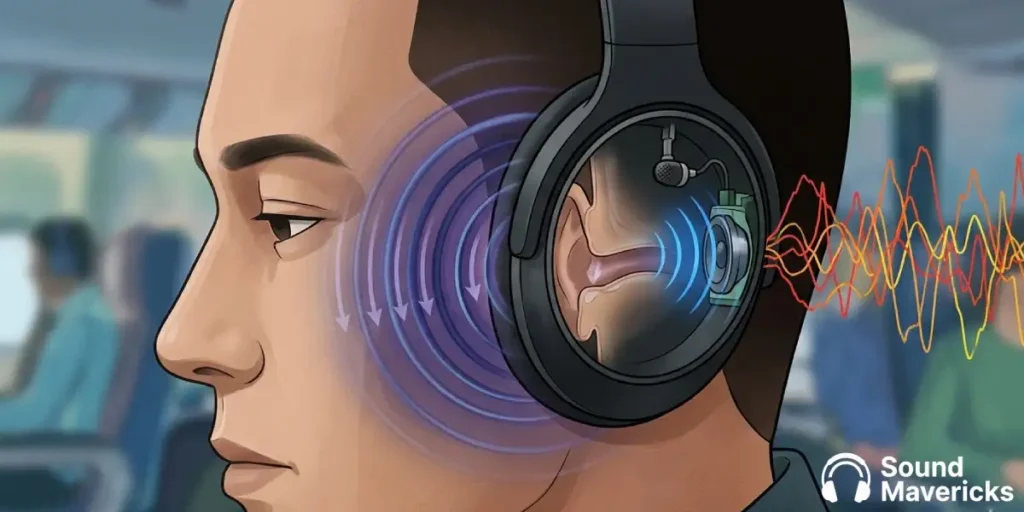
Seal the canal for most of the day and you also trap the moisture that would normally evaporate, especially after exercise or in humid weather. Warm, damp, bacteria rich and slightly irritated is a welcoming environment for the outer ear infections people commonly call swimmer’s ear. That is a risk picture, not a certainty; plenty of heavy listeners never have a problem, which is why habits matter more than fear.
In-ear, over-ear and open designs differ
In-ear models sit in or at the canal, carry the most wax and bacteria back and forth, and block airflow the longest, so they carry the highest hygiene burden. Over-ear headphones keep tips out of the canal entirely, but their cushions trap heat and sweat against the outer ear, and shared or gym worn cushions collect plenty of their own grime. Neither design is dangerous by itself. Both reward cleaning and breaks.
Open ear and bone conduction designs touch the canal least of all, which is one reason some people switch after repeated irritation. Our guide to bone conduction headphones covers that style, and our explainer on what open earbuds are covers the clip on alternative. Treat that as a comfort and airflow point, not a medical claim.
The habits that raise the risk
Four habits account for most of the trouble. Sharing earbuds is the clearest: Jamaica Hospital’s advice is blunt about not sharing, since sharing increases exposure to bacteria from someone else’s ears. Long unbroken wear is next, particularly buds worn through workouts and then left in for the commute home. Dirty tips and cases follow; a case that lives loose in a gym bag seeds every clean pair it holds. The fourth is listening through early irritation, treating itch or soreness as something to push past rather than a cue to rest the ear.
Fit plays a quieter role. A tip that is too large chafes the canal wall; one that is too small gets pushed deeper to hold a seal. Either way the skin ends up irritated, and irritated skin is easier for bacteria to colonise. If one ear is always the sore one, suspect fit before anything else.
The habits that lower it
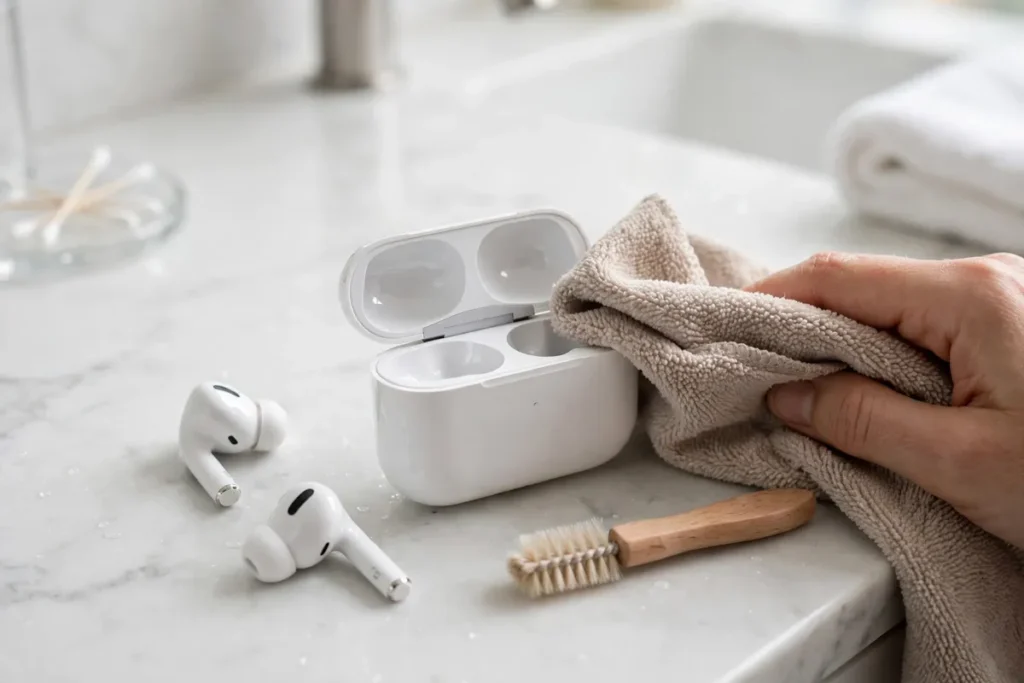
The counter habits are dull and effective. Clean tips and buds regularly following the maker’s guidance, store them in their case rather than a pocket or bag, and let everything dry fully after sweaty use before the case closes. Take listening breaks so the canal airs out; Jamaica Hospital’s guidance pairs regular sanitising with minimising wear time. Our step by steps on how to clean earbuds and how to clean headphones cover the methods that do not damage drivers or coatings.
Replace worn foam and silicone tips rather than washing them forever, keep a separate cheap pair for the gym if you train daily, and never share buds, even with family. None of this guarantees a problem free ear. It simply removes the conditions that stack the odds against you.
Gentler options for sensitive ears
For households where ear comfort and hygiene are the priority, these three take different routes: two volume capped kids’ models with simple wipe clean builds, and one open ear design that keeps the canal uncovered entirely.


Whichever style you pick, the routine matters more than the product: clean, dry, unshared, and rested ears are the actual intervention.
Children deserve a specific mention, because they share more and clean less. School and car headphones that move between siblings, classrooms and bags collect exactly the grime this page is about. A labelled pair per child, a wipe down habit at home, and cushions checked for cracks where bacteria lodge will do more than any lecture. If a child complains repeatedly about one sore ear, that is a clinician conversation, not a cleaning problem.
Workouts and travel, where routines break down
Two situations undo otherwise good habits. The first is training: sweat soaks tips and cushions, buds go straight from ear to case to gym bag, and the case stays damp and closed for hours. The fix is boring and works. Let everything air dry before the case shuts, wipe tips after sessions, and consider a dedicated cheap pair for exercise so your main pair is not living in sports kit.
The second is travel. Long flights mean long unbroken wear in dry cabin air, followed by earbuds dropped loose into seat pockets and hotel drawers. Break wear up across the flight, use the case every time without exception, and clean the pair when you get home rather than at some later date. Neither situation makes infection likely on its own. Both simply stack the warmth, moisture and grime factors at once, which is precisely the combination worth avoiding.
Signs to take seriously
General information only, and deliberately so: persistent ear pain, discharge, swelling, a feeling of blockage that does not clear, muffled hearing that lasts, or repeated infections in the same ear are all reasons to see a clinician or pharmacist promptly rather than to self treat. Avoid wearing in-ear devices while an ear is sore or being treated, since the device keeps the canal warm and damp and can slow things settling down. Do not dig wax out with tools; that is a common way to turn a small problem into a bigger one.
The balanced summary is this. Headphones are a contributing factor you control, not a hazard to fear. Clean gear, dry ears, unshared buds, sane wear time and a prompt response to symptoms cover nearly all of what the risk actually is.
Frequently asked questions
Can headphones cause ear infections?
They do not create infections directly, but they can raise the risk. Sealing the ear canal for long periods traps warmth and moisture, dirty tips carry bacteria into the canal, and blocked wax drainage can build up. Clean gear and breaks keep the risk low.
Are earbuds worse than over-ear headphones for ear health?
In-ear models carry the higher hygiene burden because they sit at the canal, block airflow and transfer wax and bacteria. Over-ear models avoid the canal but trap heat and sweat in their cushions. Both are fine with regular cleaning.
Can sharing earbuds cause problems?
Yes, sharing is one of the clearest risk habits. Another person’s earbuds carry their bacteria straight into your ear canal. Health guidance on earbud hygiene consistently advises against sharing for exactly this reason.
How often should I clean my earbuds?
Regularly, and always after sweaty use: wipe tips and buds following the maker’s guidance, keep them in their case, and let everything dry before closing it. Replace worn tips rather than washing them indefinitely.
When should I see a doctor about my ear?
If you have persistent pain, discharge, swelling, lasting muffled hearing, a blocked feeling that does not clear, or infections that keep returning in the same ear, see a clinician or pharmacist promptly instead of self treating.

I am the founder of Sound Mavericks, where I provide the polite truth about audio equipment. I started this site because consumer electronics reviews are often too technical. Instead of using a silent lab, I test headphones, earbuds, and Bluetooth speakers in the real world – like on a noisy subway or in a busy coffee shop.
To stay independent, I buy my own review units (mostly from the United States) rather than accepting free gifts from brands. Once I finish testing a product, I sell it locally to our community. My goal is to help you understand sound quality, active noise cancellation (ANC), and battery life without the marketing hype.