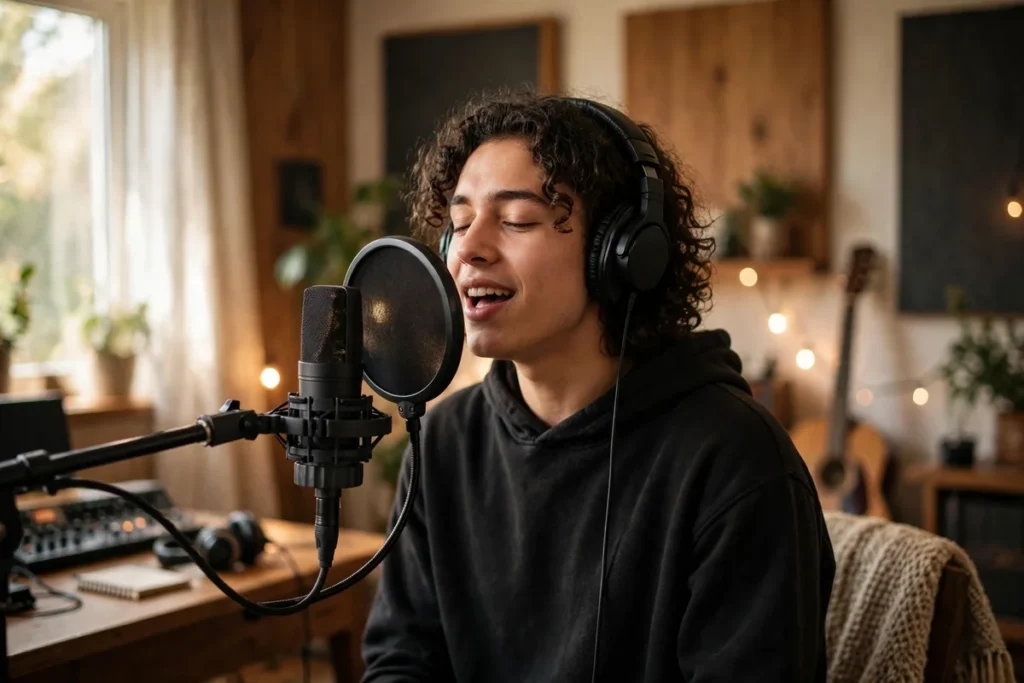
The best headphones for recording vocals have one job before all others: keep the backing track out of the microphone. A vocal take is ruined quietly, by bleed. The singer hears a full mix through the cups, a fraction of it escapes around the pads, the microphone picks it up, and the leaked track is baked into the recording where no edit can fully remove it. Every pick on this page is therefore closed-back, wired, and sealed, and the ranking weighs leakage and midrange honesty ahead of everything else. The Beyerdynamic DT 770 Pro (80 Ohm) leads at 6.5 overall on comfort and value; the flattest pair here, the Audio-Technica ATH-M40x, sits close behind at 6.3.
Tuning is the second test. A tracking headphone should tell you the truth about the midrange, where the voice lives, without flattering it. A boosted top end can hide sibilance until the mix stage, and a heavy low end can mask the boom that comes from singing too close to the microphone. Below, each pick is scored on the same six bars we use across the site, and the sections explain what each tuning does to a vocal performance in practice. If your work leans toward spoken voice, our best headphones for recording podcasts roundup covers the neighbouring ground.
The shortlist: best headphones for recording vocals at a glance
Beyerdynamic DT 770 Pro (80 Ohm): Best overall: comfort 9.0, value 9.4 and a seal that has kept backing tracks out of vocal takes for years of studio use. Check Price on Amazon
Audio-Technica ATH-M40x: Flattest tuning: the honest midrange to judge a take by, with value at 9.3. Check Price on Amazon
AKG K371: Best for home studios: even, measured tuning that runs off any interface. Check Price on Amazon
Sennheiser HD 280 Pro: Strongest seal: isolation at 4.5 for loud rooms and louder click tracks. Check Price on Amazon
Audio-Technica ATH-M50x: Best all-rounder: a gentle bass lift that helps a singer feel the track. Check Price on Amazon
Beyerdynamic DT 700 Pro X: Best comfort upgrade: comfort 8.8 and a detachable cable. Check Price on Amazon
FiiO FT1: Warmest listen: a V-shaped tuning for singers who perform better into a finished sound. Check Price on Amazon
Compared: the seven picks side by side
The table lines the picks up on the scores that decide a tracking session: sound, isolation (the ANC column, which for these passive wired models is the seal score), comfort across long takes, and the overall ranking figure.
| Pick | Sound | Isolation | Comfort | Our score | |
|---|---|---|---|---|---|
| Beyerdynamic DT 770 Pro (80 Ohm) | 8.8 | 4 | 9 | 6.5 | Check Price on Amazon |
| Audio-Technica ATH-M40x | 8.6 | 3.5 | 8.2 | 6.3 | Check Price on Amazon |
| AKG K371 | 8.8 | 3.5 | 8.4 | 6.3 | Check Price on Amazon |
| Sennheiser HD 280 Pro | 8.4 | 4.5 | 7.8 | 6.3 | Check Price on Amazon |
| Audio-Technica ATH-M50x | 8.8 | 3.5 | 8.1 | 6.2 | Check Price on Amazon |
| Beyerdynamic DT 700 Pro X | 8.8 | 3.5 | 8.8 | 6.2 | Check Price on Amazon |
| FiiO FT1 | 8.8 | 3.5 | 7.8 | 6.2 | Check Price on Amazon |
Read the isolation column as a leakage column. The HD 280 Pro at 4.5 is the pair for a loud room or a hot click track; the rest cluster at 3.5 to 4.0, which is plenty for a normal home studio at sensible monitoring volume. Comfort is the other session-length figure: the DT 770 Pro at 9.0 and the DT 700 Pro X at 8.8 are the pairs singers forget they are wearing.
The picks, one by one
Beyerdynamic DT 770 Pro (80 Ohm)

Beyerdynamic DT 770 Pro (80 Ohm) 6.5/10
Why you: the closed-back studio workhorse. Comfort leads this list at 9.0, the seal keeps the backing track out of the microphone, and the 80-ohm load runs happily from any audio interface.
Trade-off: wired only, with a fixed cable and no microphone. The treble lift that helps you hear consonants can flatter a dull voice, so check sibilance on a second pair.
Over-ear · Closed-back · Wired · 80 ohms · Velour pads
The DT 770 Pro earns the top spot on the two things a tracking session actually tests: how long you can wear it, and how little it leaks. Comfort scores 9.0, the highest figure in this roundup, because the velour pads and the even clamp spread pressure instead of concentrating it. A singer on take fourteen needs that more than any tuning subtlety. Sound scores 8.8, built on a low end that stays out of the way of the voice and a treble lift that puts consonants where you can hear them.
The 80-ohm version is the one to buy for this job. It reaches full volume from a modest interface output, where the higher-impedance versions ask for more gain than small interfaces enjoy giving. Isolation scores 4.0, a solid seal rather than the strongest here, and in practice it keeps a normal backing track out of a vocal microphone at sensible monitoring levels. Value at 9.4 is the best in this list, which reflects how long these tend to stay in service: pads and headbands are replaceable, and the design shrugs off studio handling.
Audio-Technica ATH-M40x

Audio-Technica ATH-M40x 6.3/10
Why you: the flattest tuning in this list. What the microphone captured is close to what you hear, which makes it the safest pick for judging a take while you are still singing it.
Trade-off: the pads are a step behind velour for true marathon sessions. Wired only, and there is no microphone, which matters not at all in a tracking room.
Over-ear · Closed-back · Wired · 35 ohms · Detachable cables · Folds flat
The ATH-M40x is the purist pick. Its tuning stays close to flat through the midrange, so the balance you hear while tracking is close to the balance the microphone is capturing. That honesty matters most at the moment you decide a take is good: a headphone that flatters the voice sends you home with takes that disappoint on speakers. Sound scores 8.6, a touch behind the leaders, and the difference is excitement rather than accuracy. Nothing here is boosted to impress you in a shop.
Practical details suit a small studio. The cables detach, so a damaged lead is a cheap replacement instead of a repair, and the cups fold flat into a bag. At 35 ohms it runs from anything with a headphone socket. Comfort at 8.2 is good rather than plush; the stock pads are the one place the budget shows, and a long session in a warm room will remind you of it. Our best headphones for recording podcasts guide puts the same pair to work for spoken voice, where the flat midrange pays off in the same way.
AKG K371

AKG K371 6.3/10
Why you: closed-back neutral accuracy that runs off anything. The response follows a measured, even curve, so vocal balance decisions made on it tend to survive the move to speakers.
Trade-off: wired only, with no microphone. The light frame folds for travel, and that same lightness means the seal depends on getting the fit right.
Over-ear · Closed-back · Wired · 32 ohms · 50 mm drivers · Detachable cables
The K371 takes a different route to honesty: a tuning shaped around measured target curves, with a low end that follows the shape listeners tend to judge as natural in closed-back designs. For vocal work the useful result is a midrange with no dips to hide behind. Pitch problems, proximity boom from singing too close to the microphone, and a harsh top note all show up plainly. Sound scores 8.8, joint best in this roundup, and comfort reaches 8.4.
It is also the easiest pair here to live with outside the studio. At 32 ohms a phone or a laptop drives it without complaint, the frame folds, and three detachable cables cover desk and travel lengths. The seal is the thing to check on your own head: the cups are not the deepest, and a poor seal costs you the low end and the isolation at the same time. Our AKG K371 review covers the fit question in detail. Judged purely as a tracking tool that also tells the truth, it runs the DT 770 Pro close.
Sennheiser HD 280 Pro

Sennheiser HD 280 Pro 6.3/10
Why you: tracking and monitoring with serious passive isolation. Its 4.5 isolation score is the strongest seal here, and Sennheiser rates the passive attenuation at up to 32 dB, which is what keeps a loud click track out of a quiet vocal take.
Trade-off: the clamp is firm and the soundstage is closed-in. It is a work tool rather than a musical treat, and long sessions reward a short break.
Over-ear · Closed-back · Wired · 64 ohms · Folding frame
Buy the HD 280 Pro when the room is the problem. A drummer in the next room, a loud click track, a singer who monitors hot: this is the pair that keeps the outside out and the inside in. The isolation score of 4.5 leads this roundup, and the firm clamp that produces it is also the trade-off you accept. Comfort sits at 7.8, the lowest here, and the fit loosens its grip on your attention after an hour or so. For tracking, where sessions come in bursts between takes, that trade is usually worth it.
The tuning helps the job too. Sound scores 8.4 with a lean, matter-of-fact presentation that keeps the voice in front of the track, so pitch and timing errors are hard to miss. It folds for storage, the cable is a long coiled studio lead, and at 64 ohms it wants a real headphone output rather than a phone dongle. Podcasters who record in untreated rooms reach the same conclusion, which is why this model anchors our best studio headphones coverage as the isolation pick.
Audio-Technica ATH-M50x

Audio-Technica ATH-M50x 6.2/10
Why you: studio-trusted bass with definition. The low end has a gentle lift that helps a singer feel the track, while the midrange stays clear enough to judge pitch and phrasing.
Trade-off: wired only. The bass is accurate rather than huge, and the extra low-end weight means it is a tracking favourite first and a mixing reference second.
Over-ear · Closed-back · Wired · 38 ohms · 45 mm drivers · Detachable cables
The ATH-M50x is the pair most singers have already used somewhere, and familiarity is a genuine feature in a tracking room: you know how your voice sounds in it, so you can get on with performing. The tuning adds a modest lift at the bottom that gives a backing track some body, and keeps the top end clear enough for consonants and breath noise to register. Sound scores 8.8. Comfort is 8.1, with a clamp that settles after the first weeks of use.
Three detachable cables ship in the box, including a coiled studio lead and a short straight cable, and the cups swivel flat for one-ear monitoring, the classic singer trick for hearing your own pitch in the room. Value scores 8.7. The honest caution is about roles: the low-end lift that helps a performance makes it a second choice for judging a mix, where the M40x above is the straighter tool. As a dedicated tracking pair that doubles for everyday listening, it is hard to argue with.
Beyerdynamic DT 700 Pro X

Beyerdynamic DT 700 Pro X 6.2/10
Why you: closed-back truth about the bottom octave with comfort at 8.8. The modern Beyerdynamic driver keeps low notes tidy, and the detachable cable survives the chair-wheel accidents that kill fixed leads.
Trade-off: wired only, with no microphone. It asks more of your budget than the DT 770 Pro below it, and the gain goes on comfort and build rather than a different tuning idea.
Over-ear · Closed-back · Wired · 48 ohms · Detachable mini-XLR cable
The DT 700 Pro X is Beyerdynamic rebuilding its studio line with modern parts: a newer driver, a detachable mini-XLR cable, and pads you can swap in seconds. For vocal tracking the headline is comfort at 8.8 with a seal that matches the older DT 770 Pro. Long sessions in a warm vocal booth are where that pays. Sound scores 8.8, with a low end kept tidier than the DT 770 Pro manages, so a bass-heavy backing track is less likely to mask the bottom of your vocal range.
At 48 ohms it runs from interfaces and mixers without drama, and the build feels a step up from the older design in every hinge and slider. Value at 8.2 is the honest counterweight: you pay more than the DT 770 Pro costs, and the extra money buys comfort, build and the cable, not a different class of sound. Studios that bill by the hour and singers who record daily will feel the difference. Occasional recordists can save the money and take the older pair.
FiiO FT1
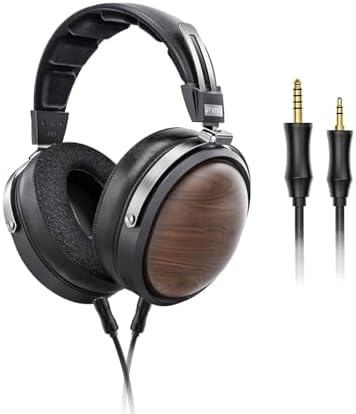
FiiO FT1 6.2/10
Why you: closed-back privacy with a warmer shape. Singers who track better when the music feels finished, rather than flat, often sing with more confidence into this kind of tuning.
Trade-off: it weighs 340 g, the pads feel firm at first, and the tuning is V-shaped rather than neutral. Neither included cable has a microphone.
Over-ear · Closed-back · Wired · 32 ohms · 60 mm driver · 340 g
The FT1 is the mood pick, and we mean that as a real recommendation for the right singer. Its tuning is V-shaped, with lifted bass and treble around a calmer midrange, which makes a backing track sound closer to a finished record than a work in progress. Some vocalists simply perform better into that illusion: they lean in, they commit, and the takes improve. Sound scores 8.8 and value reaches 9.0, helped by wooden cups and a finish that looks well above its station.
Hold it to the tracking basics and it still passes. The closed cups seal properly, the 32-ohm load runs from any interface, and two cables cover balanced and single-ended outputs. The cautions are weight, at 340 g the heaviest here, pads that feel firm for the first sessions, and that tuning: do not judge a final vocal balance on it. Our FiiO FT1 review covers its listening character in full. Use it to sing into, then check the take on something flatter.
How to choose headphones for recording vocals
Start with the seal, because it decides whether the take is usable at all. Press the cups against your head with music playing at your normal tracking level and listen from a foot away, or have someone else listen: if the track is clearly audible outside the cups, it will reach the microphone. Fit matters as much as model choice here. Glasses break seals, worn pads leak, and a singer who moves a lot needs a clamp that holds without hurting.
Then judge the midrange with a voice you know well, ideally your own recorded dry. You are listening for honesty, not beauty. Sibilance should be audible but not exaggerated, chest resonance should sound like body rather than boom, and pitch errors should be easy to hear. Finally, match the impedance to your interface: everything on this page runs from a standard headphone output, which is deliberate. Save the amplifier questions for open-back mixing headphones, and read our best headphones for mixing guide when the work moves to that stage.
Also consider
Two more closed-back studio pairs sit just outside the seven. Both carry full scores in our database and suit singers with specific priorities.


Our verdict
Take the Beyerdynamic DT 770 Pro (80 Ohm) if you want one pair that does the whole job comfortably. Take the Audio-Technica ATH-M40x for the straightest answer about your voice, the Sennheiser HD 280 Pro when the room fights back, and the FiiO FT1 if a warmer sound helps you perform. The microphone only hears what leaks, and none of these seven leaks enough to matter.
Frequently asked questions
Do you need closed-back headphones for recording vocals?
For tracking, yes, in almost every home setup. A vocal microphone sits close to your headphones, and it hears whatever leaks out of them. Closed-back cups keep the backing track and the click inside the seal, so the recorded take stays clean. Open-back models leak in both directions and belong to mixing and listening, not to singing into a live microphone.
Can you record vocals with open-back headphones?
You can, and engineers sometimes do it at low monitoring volume with the singer standing back from the microphone, but the bleed risk is real. On a quiet ballad the leaked backing track can print into the take and limit what you can do in the mix later. For a home studio with one microphone position, a closed-back pair removes the problem entirely.
Is the ATH-M40x or the ATH-M50x better for vocals?
The ATH-M40x, scored 6.3 overall here, has the flatter tuning, so it tells you more about how the voice actually sits. The ATH-M50x, at 6.2, adds low-end weight that many singers enjoy while performing. If the same pair has to judge takes and enjoy them, the M40x is the safer buy; if you track first and mix on speakers, the M50x is fine.
Do vocal tracking headphones need a headphone amplifier?
Not the picks on this page. Every model here sits between 32 and 80 ohms and runs at healthy volume from a normal audio interface or mixer headphone output. Spend the money on the microphone position and the room first. An amplifier becomes a real question with high-impedance mixing headphones, which are a different tool for a different stage of the work.
How loud should the backing track be while you track?
As low as you can still perform against confidently. Lower monitoring volume means less leakage at the microphone, less fatigue across a long session, and fewer blown takes from singing sharp against a loud track. Many singers pull one cup slightly off the ear to hear their own voice in the room; that trick works, but it opens the seal on that side, so keep the microphone on the sealed side.

I am the founder of Sound Mavericks, where I provide the polite truth about audio equipment. I started this site because consumer electronics reviews are often too technical. Instead of using a silent lab, I test headphones, earbuds, and Bluetooth speakers in the real world – like on a noisy subway or in a busy coffee shop.
To stay independent, I buy my own review units (mostly from the United States) rather than accepting free gifts from brands. Once I finish testing a product, I sell it locally to our community. My goal is to help you understand sound quality, active noise cancellation (ANC), and battery life without the marketing hype.