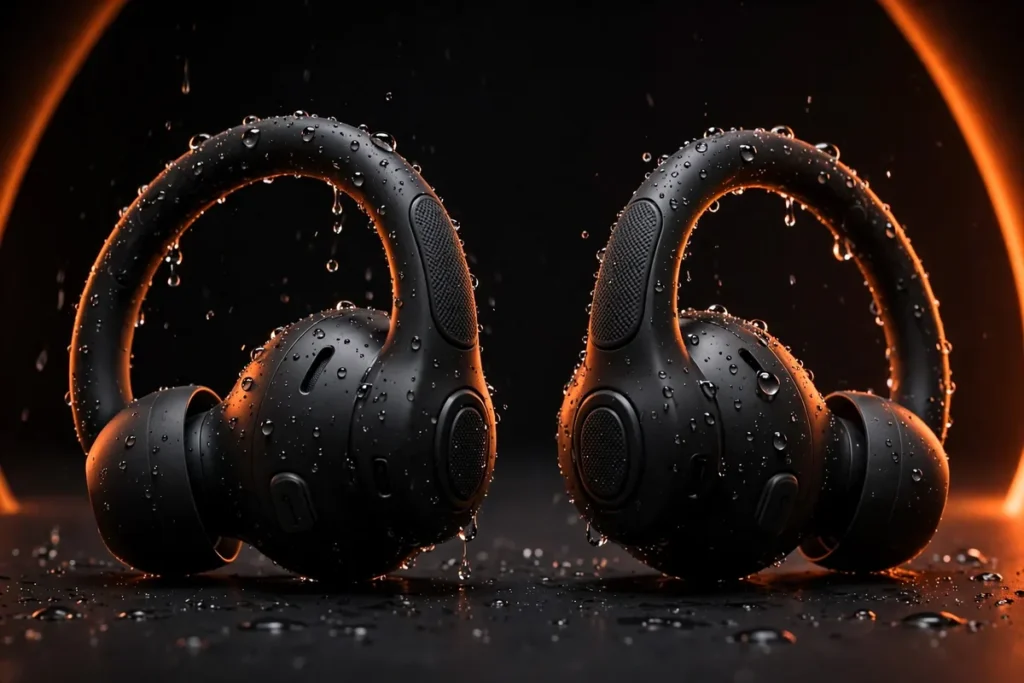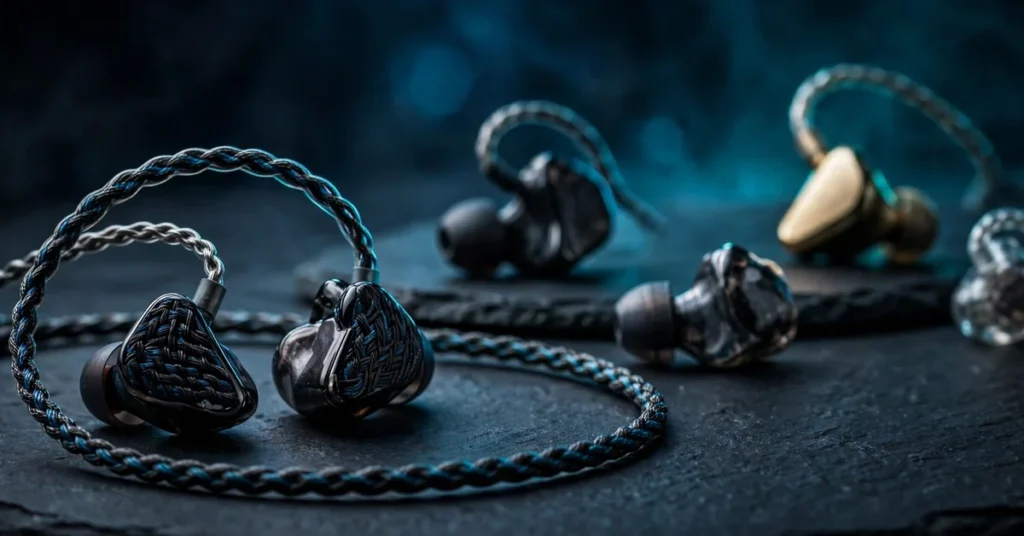
In-ear monitors — IEMs — are the worst-kept secret in audio. For years they were stage gear: musicians wore them to hear themselves over screaming crowds. Then the tuning got better, the cables got detachable, and the entire category spilled out of the recording studio and into commutes, desks, and gaming setups. The best IEMs 2026 now deliver detail and separation that embarrasses wireless earbuds costing several times more — as long as you don’t mind a wire.
Updated October 2026 — our #1 pick is the Sennheiser IE 200. New this update: the TRUTHEAR Hexa replaces last cycle’s hybrid pick, and the Moondrop Chu II joins the shortlist.
Our Picks
- Best overall — Sennheiser IE 200: neutral, fatigue-free tuning from a 7mm TrueResponse driver, with a clever dual-tuning tip system.
- Best hybrid — TRUTHEAR Hexa: 1DD+3BA configuration with reference-style tuning at a mid-range position.
- Best mid-budget all-rounder — Moondrop Aria 2: warm-neutral 10mm single-DD with detachable cable and replaceable nozzles.
- Best value — 7Hz x Crinacle Salnotes Zero:2: Crinacle-tuned 10mm dynamic driver; the budget benchmark.
- Best for beginners — Tangzu Wan’er S.G: smooth, warm tuning that flatters everything you play through it.
- Cheapest fun pick — KZ ZSN Pro X: 1BA+1DD hybrid with an energetic V-shape.
How we picked: we compared manufacturer specifications, Amazon listing data, and published third-party measurements and reviews to rank six current models. Scores reflect sound, technical detail, comfort, build, and value. We do not claim hands-on lab testing — consider this a research-backed shortlist, not a lab report.
Quick Comparison
| Product | Driver | Connector | Score |
|---|---|---|---|
| Sennheiser IE 200 | 7mm TrueResponse dynamic | MMCX detachable | 9.0/10 |
| TRUTHEAR Hexa | 1DD + 3BA hybrid | 0.78mm 2-pin detachable | 8.8/10 |
| Moondrop Aria 2 | 10mm dynamic | 0.78mm 2-pin detachable | 8.7/10 |
| 7Hz Salnotes Zero:2 | 10mm dynamic (dual-cavity) | 0.78mm 2-pin detachable | 8.6/10 |
| Tangzu Wan’er S.G | 10mm dynamic (PET diaphragm) | 0.78mm 2-pin detachable | 8.4/10 |
| KZ ZSN Pro X | 1BA + 1DD hybrid | 2-pin detachable | 8.2/10 |
1. Sennheiser IE 200 — Best Overall
EDITOR’S CHOICE

| Sound Quality | 9.4 |
| Technical Detail | 9.1 |
| Comfort & Fit | 8.8 |
| Build & Cable | 8.7 |
| Value | 8.9 |
Key specs: 7mm TrueResponse dynamic driver · Dual-tuning ear tips · Detachable braided cable (MMCX) · 18Ω impedance · Silicone and foam tips included
The IE 200 is the closest thing this category has to a default recommendation. Sennheiser’s 7mm TrueResponse dynamic driver delivers a neutral, diffuse-field-style tuning with almost no distortion — the kind of clean, even presentation that makes poorly mixed tracks sound honest and great recordings sound spectacular. Nothing is exaggerated, nothing masks anything else, and long sessions stay fatigue-free.
The standout trick is the dual-tuning ear tip system: mount the tips in one of two positions and you get two bass tunings from a single IEM — a leaner, analytical profile or a warmer, more impactful low end. The housings are tiny and featherlight with adjustable ear hooks, and the braided MMCX cable is replaceable if it ever wears out. At 18Ω they run happily off a phone or laptop, though a decent DAC will sharpen the detail further.
- Pros: Benchmark neutral tuning; two bass tunings in one IEM; featherlight fit; detachable cable
- Cons: Bass-light for bassheads in the lean position; minimalist accessories
Our verdict: The IEM we’d hand to someone who wants to hear what their music actually sounds like. Neutral, detailed, and built by a company that has been making transducers for decades.
2. TRUTHEAR Hexa — Best Hybrid

| Sound Quality | 9.2 |
| Technical Detail | 9.3 |
| Comfort & Fit | 8.4 |
| Build & Cable | 8.3 |
| Value | 8.7 |
Key specs: 1DD + 3BA hybrid drivers · Reference-style Harman-inspired tuning · 0.78mm 2-pin detachable cable · Low impedance, easy to drive
The Hexa is what happens when a chi-fi brand stops chasing hype curves and tunes for accuracy. A 10mm-class dynamic driver handles the bass while three balanced armatures cover mids and treble, and the result is a clean, reference-leaning signature with genuinely impressive separation — instruments sit in their own space instead of smearing together. For critical listening, mixing reference checks, and gaming positional cues, it’s the most technically capable IEM on this list.
The trade-off is character: bassheads will find the low end polite rather than physical, and the resin shells are functional rather than luxurious. But the 0.78mm 2-pin cable is detachable, isolation is strong with the right tips, and the tuning is the rare kind that rewards better sources. If the IE 200 is the safe recommendation, the Hexa is the enthusiast’s one.
- Pros: Outstanding detail and separation for the tier; reference-style tuning; strong isolation; detachable cable
- Cons: Bass can feel light; plain resin build; not the most forgiving of poor recordings
Our verdict: The technical-performance pick of the roundup. Buy it for accuracy and detail; skip it if you want your skull rattled.
3. Moondrop Aria 2 — Best Mid-Budget All-Rounder

| Sound Quality | 8.9 |
| Technical Detail | 8.6 |
| Comfort & Fit | 8.7 |
| Build & Cable | 8.9 |
| Value | 8.5 |
Key specs: Single 10mm dynamic driver (TiN-coated diaphragm) · VDSF warm-neutral tuning · 0.78mm 2-pin detachable cable · Replaceable nozzle design · Swappable 3.5mm / 4.4mm plugs
Moondrop practically invented the modern budget-audiophile IEM, and the Aria 2 refines the formula. The single 10mm dynamic driver with a titanium-nitride-coated diaphragm delivers a warm-neutral tuning: smooth mids, natural vocal timbre, and a treble that sparkles without turning harsh. It’s the easiest listen on this list for long sessions — the IEM equivalent of a well-broken-in pair of speakers.
Build is a step above the price tier: double-ported metal shells in a grey-titanium finish, a replaceable nozzle design for easy maintenance, and a cable whose plug swaps between 3.5mm single-ended and 4.4mm balanced terminations. At around 32Ω it’s an easy load for phones and laptops. Compared with the TRUTHEAR Hexa, it trades some technical sharpness for musical warmth — pick your poison.
- Pros: Gorgeous metal build; warm, fatigue-free tuning; swappable cable plugs; easy to drive
- Cons: Mid-bass emphasis can sound thick on some tracks; stock tips are average
Our verdict: The sweet spot of this list — premium feel, forgiving tuning, and genuine all-day comfort.
4. 7Hz Salnotes Zero:2 — Best Value
BEST VALUE

| Sound Quality | 8.8 |
| Technical Detail | 8.3 |
| Comfort & Fit | 8.4 |
| Build & Cable | 8.0 |
| Value | 9.6 |
Key specs: 10mm dual-cavity dynamic driver · Tuned by Crinacle · 0.78mm 2-pin detachable OFC cable · Multiple color options
Tuned in collaboration with reviewer Crinacle — one of the most trusted ears in the hobby — the Zero:2 takes the original Salnotes Zero formula and fixes its main weakness: the bass. The 10mm dual-cavity dynamic driver now delivers a fuller, more satisfying low end while keeping the clean, balanced midrange and smooth treble that made the original famous. For the money, the tonal balance is absurdly good.
The shell is lightweight plastic and the stock cable is basic, but it’s detachable — the 0.78mm 2-pin connection means a cheap cable upgrade is always an option. Available in several colors including the signature silver and blue. If you’re IEM-curious and want maximum sound per dollar, start here and thank us later.
- Pros: Exceptional tuning for the money; improved bass over the original Zero; detachable cable; Crinacle-tuned credibility
- Cons: Basic cable and plastic shells; treble detail lags the mid-range picks
Our verdict: The budget benchmark. Nothing else near this tier sounds this coherent.
5. Tangzu Wan’er S.G — Best for Beginners

| Sound Quality | 8.5 |
| Technical Detail | 7.9 |
| Comfort & Fit | 8.7 |
| Build & Cable | 8.2 |
| Value | 9.0 |
Key specs: 10mm dynamic driver (PET diaphragm) · Warm, smooth tuning · Recessed 0.78mm 2-pin detachable cable
If you’ve never owned an IEM, the Wan’er S.G is the gentlest possible on-ramp. The 10mm PET-diaphragm dynamic driver is tuned warm and smooth — vocals sit forward, treble never bites, and everything from lo-fi to pop sounds pleasant. Nothing about it demands that you learn audiophile vocabulary first.
The recessed 2-pin connector keeps the detachable cable secure, the shells are compact and comfortable, and isolation is solid once you find your tip size. It’s less technically resolving than the Zero:2, but more forgiving — bad recordings and low-bitrate streams won’t get punished. For a first IEM, forgiving is exactly what you want.
- Pros: Wonderfully smooth, non-fatiguing tuning; comfortable small shells; detachable cable; very forgiving of poor sources
- Cons: Treble detail is soft; soundstage is intimate; bass can feel loose next to the Zero:2
Our verdict: The IEM for people who just want their music to sound nice — no learning curve required.
6. KZ ZSN Pro X — Cheapest Fun Pick

| Sound Quality | 8.0 |
| Technical Detail | 7.8 |
| Comfort & Fit | 8.1 |
| Build & Cable | 8.3 |
| Value | 9.2 |
Key specs: 1BA + 1DD hybrid drivers · Zinc alloy shells · Detachable 2-pin cable · Energetic V-shaped tuning
KZ built its empire on the idea that multi-driver hybrids shouldn’t cost much, and the ZSN Pro X remains the purest expression of that philosophy. A balanced armature handles treble detail while a dynamic driver pumps out bass, and the resulting V-shaped signature is pure fun — punchy lows, sparkly highs, and the kind of energy that makes gym sessions and gaming feel bigger.
The zinc alloy faceplates look far more expensive than they are, and the detachable cable means the most fragile part is replaceable. The tuning is not refined — treble can edge toward sharpness on bright recordings — but as a first taste of what hybrids do, or a beater pair you won’t cry over, it’s unmatched. Pair it with foam tips to tame the top end.
- Pros: Exciting, energetic tuning; metal faceplates; detachable cable; absurdly affordable
- Cons: Treble can be sharp; tuning is fun-first, not accurate; cable is stiff
Our verdict: Maximum excitement per dollar. The gateway drug of the IEM world — and we mean that as a compliment.
What Are IEMs, Exactly?
IEM stands for in-ear monitor: an earphone that seals inside your ear canal with silicone or foam tips, originally designed so musicians could hear themselves on loud stages. The seal does two things — it delivers bass properly (no seal, no bass) and it passively blocks outside noise, often rivaling basic active noise cancelling without any batteries.
Unlike the wireless earbuds most people know, traditional IEMs are wired: a detachable cable runs to a 3.5mm plug (or a USB-C dongle DAC on phones without headphone jacks). That wire is the whole point — it means zero latency, no battery anxiety, and no Bluetooth compression. Gamers get perfectly synced audio, commuters get an all-day passive barrier against train rumble, and desk workers get detail that wireless buds at multiples of the price struggle to match.
How to Choose the Right IEM
Driver type. Most IEMs use dynamic drivers (like tiny speakers — great natural bass), balanced armatures (tiny, precise, excellent detail), or hybrids that combine both. Neither is inherently better: single dynamic drivers tend to sound the most natural, while hybrids chase technical precision.
Tuning. This matters more than driver count. “Neutral” or “reference” tunings aim for accuracy; “V-shaped” boosts bass and treble for excitement; “warm” smooths everything for relaxed listening. If you don’t know your preference yet, a warm-neutral tuning like the Aria 2 or Wan’er S.G is the safest starting point.
Fit and tips. An IEM lives or dies by its seal. Try all the included tip sizes — and consider foam tips if silicone slips out. A good seal is also what gives IEMs their excellent passive noise isolation, which is why many travelers prefer them over ANC headphones on planes (see our travel roundup).
Source gear. Every IEM here runs fine from a phone or laptop, but phones without a headphone jack need a USB-C DAC dongle. Learn the basics in our Bluetooth audio codecs guide — the wired section explains why bypassing Bluetooth matters for detail.
Use case. Working out? Sweat and cables can clash — check our gym headphones guide for secure-fit wireless options. Want zero wires for TV? Our TV watching guide covers that. Just want silence on calls and commutes? Our ANC earbuds roundup is your next stop.
How We Score
SoundMavericks scores weigh five categories: sound quality 40%, technical detail 20%, comfort & fit 15%, build & cable 10%, and value 15%. Scores are research-based — compiled from manufacturer specifications, Amazon listing data, and published third-party measurements and reviews — and refreshed whenever the shortlist changes.
Frequently Asked Questions
What does IEM stand for?
IEM stands for in-ear monitor. It describes earphones that seal inside the ear canal with silicone or foam tips, originally built for musicians to monitor their sound on stage. Today the term covers everything from budget chi-fi earphones to multi-thousand-dollar custom monitors.
Are IEMs better than regular wireless earbuds?
For pure sound quality, usually yes — a wired IEM avoids Bluetooth compression and battery-driven compromises, so even budget models can out-resolve pricier wireless earbuds. Wireless earbuds win on convenience: no cable, active noise cancelling, and features like transparency mode. It depends whether you prioritize sound or convenience.
Do I need a DAC or amplifier for IEMs?
Almost never. Every IEM on this list is efficient enough to run from a phone or laptop headphone output. The one exception: phones without a 3.5mm jack need a small USB-C (or Lightning) DAC dongle, which doubles as a quality upgrade over the phone’s internal audio path.
What’s the difference between dynamic drivers and balanced armatures?
Dynamic drivers work like miniature speakers — a diaphragm moves air — and typically produce natural, powerful bass. Balanced armatures are tiny reed-based drivers prized for precision and detail, especially in mids and treble. Hybrids combine both, using a dynamic driver for bass and armatures for the rest.
Do IEMs block noise like noise-cancelling headphones?
They block noise passively, and very well: a good tip seal can cut 20–25 dB of outside sound with no batteries or electronics. That rivals entry-level ANC for steady drone like plane engines, though premium ANC headphones still win on low-frequency rumble and add convenience features IEMs lack.
How long do IEMs last?
The drivers themselves can last a decade or more. Cables are the weak point — but because nearly all quality IEMs (including every pick here) use detachable cables, a worn cable is a cheap replacement, not a dead earphone. Replaceable nozzles and filters, like those on the Moondrop Aria 2, extend lifespan further.

I am the founder of Sound Mavericks, where I provide the polite truth about audio equipment. I started this site because consumer electronics reviews are often too technical. Instead of using a silent lab, I test headphones, earbuds, and Bluetooth speakers in the real world – like on a noisy subway or in a busy coffee shop.
To stay independent, I buy my own review units (mostly from the United States) rather than accepting free gifts from brands. Once I finish testing a product, I sell it locally to our community. My goal is to help you understand sound quality, active noise cancellation (ANC), and battery life without the marketing hype.