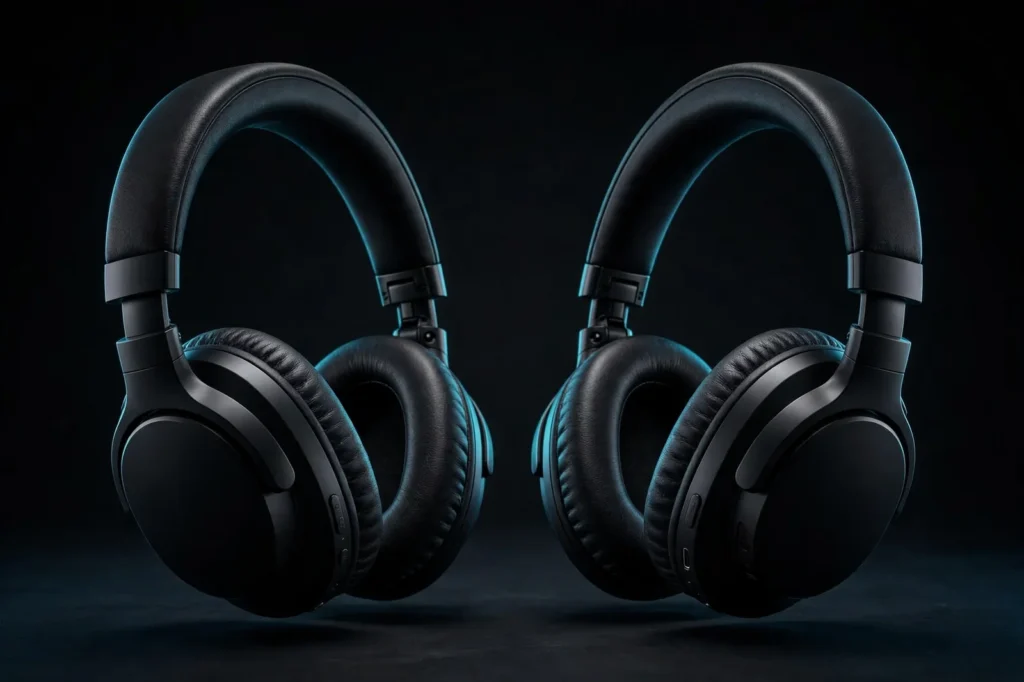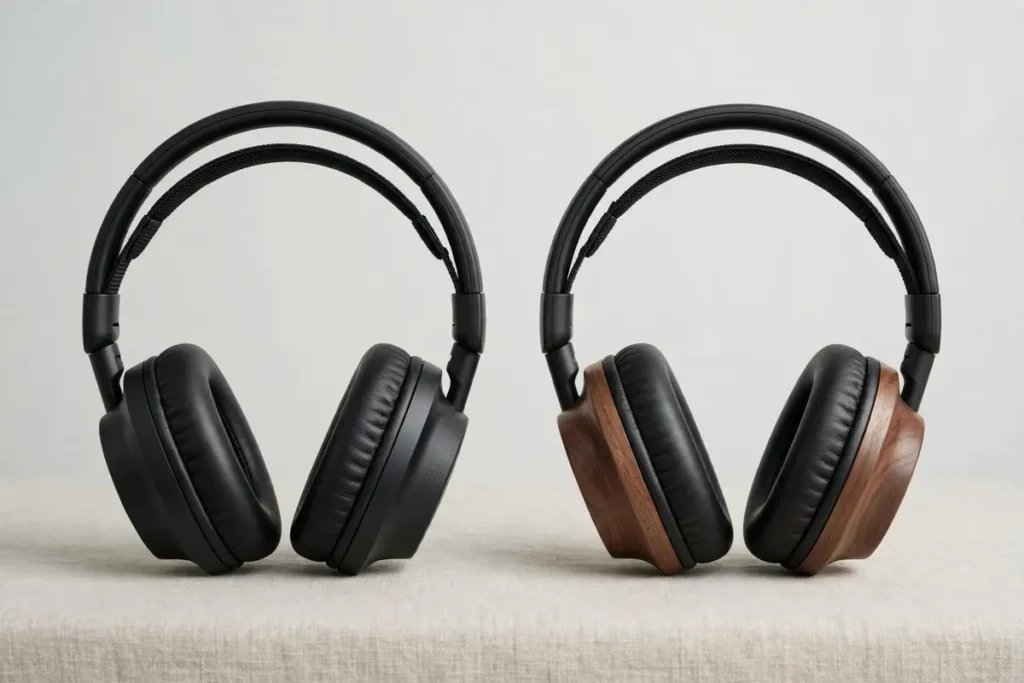
This meze 99 neo vs classic comparison puts Meze’s two 99-series headphones head to head: the same 40mm driver, the same self-adjusting headband, the same serviceable build, separated by one decision, walnut wood or ABS plastic for the ear cups, and the price gap that follows it. Both models score 6.3 overall in our database, and the interest is in how they get there: the Classics lead on Sound at 8.8, the Neo answers on Value at 8.8. Note the naming: the cluster of searches says “classic”, the product itself is the 99 Classics, and that is the name used below.
A note on method. This comparison is research-based. The 99 Classics’ scores are the canonical set from our headphone database, copied exactly. The 99 Neo has no database record yet, so its scores are provisional, set from Meze’s published specifications and the pattern of reviewers who have tested the two side by side, including Crutchfield’s listening notes, cited by name where used.

Meze 99 Neo 6.3/10 provisional
Why you: you want the 99-series warmth and comfort for less. Same driver, same pads, same headband, with a bassier edge that suits modern music and a black finish that travels better.
Trade-off: the ABS cups give up the walnut’s tighter bass and natural tone, and the plastic picks up fingerprints. Sound scores 8.4 against the Classics’ 8.8.
40mm dynamic driver · ABS cups, coal black · 26 Ω · 260 g · Detachable cables

Meze 99 Classics 6.3/10
Why you: warm closed-back sound that stays full at low volume, in a walnut build that looks and feels like furniture-grade work. Sound scores 8.8, the highest bar in this comparison.
Trade-off: wired only, no microphone, and the walnut costs more for a difference that is refinement rather than transformation. Battery scores the neutral placeholder for wired models.
40mm dynamic driver · Walnut wood cups · 32 Ω · 260 g · Detachable cables
Sound: same driver, different manners
Both headphones are warm, full and easy-going, with a mid-bass emphasis and a treble that stays polite. The difference is in the low end’s discipline. The Neo leans harder into its mid-bass, which gives electronic music and hip-hop real thump and leaves busy acoustic tracks slightly crowded. The Classics keep the same warmth under better control: bass notes stop cleaner, the midrange breathes, and the whole presentation reads a little more natural. Crutchfield’s listening notes land in the same place, crediting the walnut cups with a slightly more natural tonal quality and noting the Neo is a fraction easier to drive. That is why Sound splits 8.8 to 8.4 while everything else stays close. Buyers comparing the wider field should see our best closed-back headphones roundup for where both sit against rivals.
Build: what the walnut actually buys
Under the cups, the two are the same headphone: manganese spring-steel headband that adjusts itself, memory-foam pads, zinc alloy hardware, and an assembly held together with screws so every part can be replaced. The cup is the whole argument. Meze’s walnut housings are shaped, sanded and lacquered over a process the company measures in weeks per batch, and each pair’s grain is unique. The Neo’s textured coal-black ABS is lighter in feel, tougher against knocks and fingerprints aside, the more practical travel material. Neither build is a compromise; they are different answers to what a headphone should be made of. The Romanian design language carries into the rest of the range, as our Meze Alba review shows on the in-ear side.
Comfort and everyday use
Comfort ties at 9.0, the highest bar either model carries. At 260 grams with self-adjusting fit and deep, soft pads, both disappear through long sessions, and both isolate passively at the same modest level, an ANC bar of 3.5 that means a quieter room rather than a silenced one. Calls tie at 3.0 on the wired convention. Both ship with detachable cables, including a shorter cable with a microphone for phone use, and both run from anything: the Neo at 26 ohms, the Classics at 32. Owners who later want a desktop step up will find both respond well to a clean amplifier, and our best wired headphones guide covers the natural upgrade path.
One ownership trick belongs to this pair alone: the pads are interchangeable between them. Owners who A/B the two often pad-swap to isolate what the cups are doing, and the exercise usually confirms that the tuning difference lives mostly in the cup material and the pad combination rather than the driver. Practically, it also means a Neo owner can borrow the Classics’ pad behaviour, and both models draw on the same pool of replacement parts, which keeps long-term running costs identical. Few rival pairs at any price share parts this freely.
Meze 99 Neo vs 99 Classics specs
| Spec | Meze 99 Neo | Meze 99 Classics |
|---|---|---|
| Driver | 40mm dynamic | 40mm dynamic |
| Ear cups | ABS plastic, coal black textured finish | Walnut wood, hand-finished |
| Impedance | 26 ohms | 32 ohms |
| Sensitivity | 103 dB | 103 dB |
| Frequency response | 15 Hz – 25 kHz | 15 Hz – 25 kHz |
| Weight | 260 g | 260 g |
| Headband | Self-adjusting spring steel, both models | Self-adjusting spring steel, both models |
| Serviceability | Screw assembly, replaceable pads and cables | Screw assembly, replaceable pads and cables |
Verdict
Buy the 99 Neo if value leads. It keeps the driver, the comfort and the build philosophy, adds a bassier edge many listeners will prefer, and banks the saving. Its 6.3 overall is provisional, and the Value bar of 8.8 is the reason it ties.
Buy the 99 Classics if sound refinement and materials lead. The walnut is not jewellery; it is the tighter, more natural listen, scored from our database at the same 6.3 overall with the strongest Sound bar here. Either way you are buying one of the most likeable wired headphones in its class, and the choice is taste, not quality.
If it helps the decision, think about where each will live. The Neo’s finish shrugs off bags, desks and travel, and its stronger bass flatters the compressed, modern recordings most people actually play. The Classics reward a shelf, a stand and recordings with air in them. Owners rarely regret either; they regret buying the walnut for a backpack or the plastic for a listening room.
Frequently asked questions
Do the Meze 99 Neo and 99 Classics sound the same?
Close, not identical. They share the same 40mm driver and the same warm, bass-forward tuning family, but the Neo’s ABS cups give its mid-bass a looser, boomier edge, while the Classics’ walnut cups keep the low end tighter and the tone a touch more natural. Crutchfield’s listening notes reach the same conclusion: the walnut lends the Classics a slightly more natural tonal quality.
Which is easier to drive, the Neo or the Classics?
The Neo, on paper: 26 ohms against the Classics’ 32 ohms, with the same 103 dB sensitivity. In practice both reach full volume from a phone, a laptop or a dongle without help, and the difference is small enough that no buying decision should rest on it. Neither needs an amplifier.
Which Meze 99 is better for bass?
It depends on the kind of bass you want. The Neo delivers more of it, with a heavier mid-bass emphasis that suits electronic and hip-hop listening at the cost of some control. The Classics deliver less quantity with better texture and separation. Bassheads chasing impact pick the Neo; listeners who want the low end tidy pick the Classics.
Are parts replaceable on the 99 Neo and 99 Classics?
Yes, on both. Meze builds the 99 series with screws rather than glue, and the ear pads, cables, headband strap and hardware can be replaced individually. It is one of the strongest ownership arguments for either model, and a genuine difference from sealed rivals at this price.
Meze 99 Neo or 99 Classics: which should I buy?
Buy the Neo if you want the 99 sound for less money, prefer the black finish, or lean toward bass-heavy music. Buy the Classics if the walnut build matters to you, your music is acoustic or jazz-led, or you plan to keep the headphone for many years and want the tighter low end. Our scores tie at 6.3 overall; the split is taste and materials, not quality.

I am the founder of Sound Mavericks, where I provide the polite truth about audio equipment. I started this site because consumer electronics reviews are often too technical. Instead of using a silent lab, I test headphones, earbuds, and Bluetooth speakers in the real world – like on a noisy subway or in a busy coffee shop.
To stay independent, I buy my own review units (mostly from the United States) rather than accepting free gifts from brands. Once I finish testing a product, I sell it locally to our community. My goal is to help you understand sound quality, active noise cancellation (ANC), and battery life without the marketing hype.