

This Klipsch Flexus-Core-300 review covers the flagship soundbar in Klipsch’s Flexus line: a 54-inch bar with a true 5.1.2-channel layout, Dolby Atmos and DTS:X decoding, Dirac Live room correction built in, and electronics engineered with Onkyo. It sits two steps above the Core 100 in the same range, and it is the bar for buyers who want real height channels and proper room correction without a separate AV receiver. This review covers the bar-only Black listing on Amazon US under ASIN B0DHF1C4QY. The Amazon page is a family listing that also covers the smaller Core bars and bundle configurations with a separate subwoofer and surrounds; those bundles are different SKUs, and they are not the product covered here.
A note on method. This is a research review, built from Klipsch’s published specifications, the verified Amazon US listing for this exact model, and independent coverage. We have not had a unit on the desk, so nothing here claims hands-on testing, and speaker products on this site carry no scores.
The Core 300 is the Flexus bar that stops asking you to compromise on the basics. It has real height channels instead of virtualized ones, four woofers built into the cabinet instead of a mandatory separate subwoofer, and Dirac Live, the room correction system usually found in AV receivers, built into a soundbar for the first time. Klipsch rates it at 185W RMS, and the expansion path to a 7.1.4 system stays open if you add the Flexus subwoofer and surrounds later. The costs are size, a 54-inch width that demands a big TV and a solid stand, and a Dirac licence that covers a limited bandwidth unless you pay for the full-bandwidth upgrade. Among the bars in our best Dolby Atmos soundbar coverage, it is the one built most like a receiver replacement. Check Price on Amazon
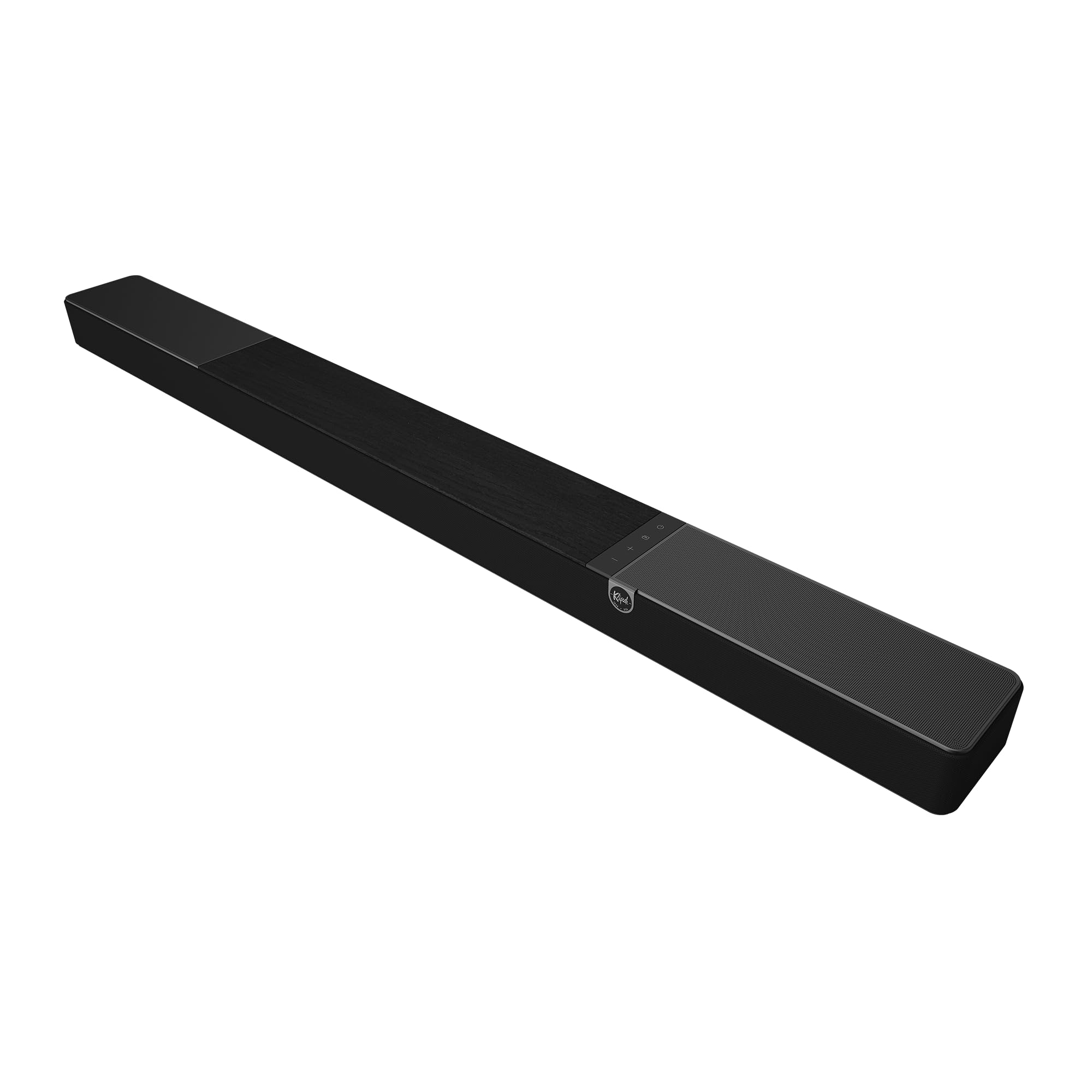
Why you: A 54-inch 5.1.2 bar with 13 drivers, four built-in woofers, Dirac Live room correction and Onkyo-engineered electronics, plus a wireless path to a full 7.1.4 system later.
Trade-off: It is a big, heavy bar that needs a large TV and stand, and the included Dirac licence is limited-bandwidth, with the full-bandwidth version sold as a paid upgrade.
Klipsch Flexus Core 300 specifications
| Spec | Klipsch Flexus Core 300 |
|---|---|
| Product | Klipsch Flexus Core 300, bar only, Black finish |
| Channels | 5.1.2 Dolby Atmos / DTS:X, expandable to 7.1.4 with Flexus Sub 200 and Surr 200 |
| Drivers | 13 drivers, including four built-in 4-inch woofers |
| Power | 185W RMS system power (Klipsch specification sheet) |
| Room correction | Dirac Live built in (limited-bandwidth licence; full-bandwidth upgrade available as a paid extra) |
| Connections | HDMI eARC, HDMI in with 4K 120Hz passthrough, optical, Bluetooth |
| Streaming | Wi-Fi with AirPlay, Google Cast, Spotify Connect and Tidal Connect |
| Dimensions | 54 in wide |
| Weight | 18.7 lb, bar only |
One honest footnote on the power figure. Klipsch’s specification sheet rates the Core 300 at 185W RMS, and that is the figure used in this review. Klipsch marketing material cites 285W as a total system power figure, and the Amazon listing field claims 300W maximum. Total and maximum figures are not the same measurement as RMS, and the spec sheet is the safer source, so 185W RMS is what we print. Judge the bar against rivals on the same basis.
Dirac Live in a soundbar
The headline feature is Dirac Live. Room correction of this grade normally lives in AV receivers and processors: you run a measurement routine with a microphone, the system maps how your room distorts the sound, and it applies correction filters to flatten the response. Bass boom from walls and corners is where the difference shows most, and it is the problem nearly every living room has.
The Core 300 is the first soundbar to build Dirac Live in, and that changes what a bar can do about a difficult room. Two qualifications belong in the open. The licence included with the bar is the limited-bandwidth version, which corrects the lower frequencies where room problems are worst; the full-bandwidth upgrade is a paid extra. And correction has limits: it can tame a boomy corner, but it cannot fix a bar placed badly or a room with bare walls on every side. Even with those caveats, having receiver-grade correction at all puts the Core 300 in a class of its own among single bars.
Real 5.1.2 channels from the bar alone
Where the smaller Flexus bars virtualize their Atmos, the Core 300 has the physical layout: 5.1.2 channels from 13 drivers, including dedicated height drivers and four 4-inch woofers built into the cabinet. Those built-in woofers matter. They give the bar genuine low-end output of its own, so film soundtracks carry weight without a separate subwoofer box on the floor, and the system stays a single piece of furniture under the TV.
DTS:X decoding sits alongside Dolby Atmos, which covers the disc-based formats that Atmos-only bars leave to the TV to convert. The practical shape of the sound is width and height from the bar’s own drivers rather than processing tricks, with the limits that any single-bar layout has: rear effects are simulated from the front, because there are no speakers behind you until you add them.
The growth path: from 5.1.2 to 7.1.4
Like the rest of the Flexus range, the Core 300 is a starting point as much as a finished system. Add the Flexus Sub 200 subwoofer and the Flexus Surr 200 surround speakers and the layout grows to 7.1.4, with real rear channels and a separate subwoofer doing the deepest bass. Each piece is a separate purchase, so the finished system costs more than the bar alone suggests, but the bar itself never becomes the weak link you have to replace.
The comparison with the entry bar makes the step-up logic clear. Our Klipsch Flexus Core 100 review covers a 28-inch 2.1 bar with virtualized Atmos for smaller rooms. The Core 300 is the same idea at the opposite end of the range: bigger cabinet, real height channels, built-in woofers, Wi-Fi streaming and Dirac. Buyers pick their end of the range by room size and by how far they plan to take the expansion path.
Connections and streaming
HDMI eARC is the main TV connection, and there is a second HDMI input with 4K 120Hz passthrough, which matters for gamers: a console can run through the bar without giving up the high-refresh modes that older passthrough ports blocked. Optical and Bluetooth cover legacy sources and phone playback.
Streaming is the other step up from the smaller Flexus bars. The Core 300 has Wi-Fi with AirPlay, Google Cast, Spotify Connect and Tidal Connect built in, so music does not have to route through the TV. In the best soundbars field, that combination of receiver-style inputs and proper streaming is what separates flagship bars from simple TV speakers with better marketing.
Who should buy the Klipsch Flexus Core 300
Buy it if you have a large TV in a main living room, you want real Atmos height channels and room correction without an AV receiver, and you like the option of growing to 7.1.4 in stages. It suits buyers replacing an ageing receiver-and-speakers setup who want the performance ideas kept and the cable count cut.
Skip it if your TV is small, because a 54-inch bar under a compact set looks and sounds oversized for the room, or if you want a finished surround system in one box on day one, because the surrounds and subwoofer here are separate purchases. Skip it, too, if your room is small enough that the Core 100 or Core 200 covers it; the Dirac licence and the extra drivers earn their money in bigger, harder rooms.
Frequently asked questions
Does the Klipsch Flexus Core 300 include a subwoofer?
There is no separate subwoofer in the box. The bar has four 4-inch woofers built into its cabinet, which give it real bass output on its own. If you want a dedicated subwoofer, the Flexus Sub 200 connects to the bar as an optional extra.
What does Dirac Live do on the Core 300?
Dirac Live measures how your room changes the sound and applies correction filters, mainly to tame the bass boom that walls and corners cause. The bar includes the limited-bandwidth licence; a full-bandwidth upgrade is available as a paid extra.
Can the Flexus Core 300 become a full surround system?
Yes. Adding the Flexus Sub 200 subwoofer and Flexus Surr 200 surround speakers expands the bar from 5.1.2 to a 7.1.4 system with real rear channels.
Does the Core 300 pass through 4K 120Hz video?
Yes. Alongside its HDMI eARC connection, the bar has an HDMI input with 4K 120Hz passthrough, so a current games console can connect through the bar without losing high-refresh video modes.
How wide is the Klipsch Flexus Core 300?
The bar is 54 inches wide and weighs 18.7 lb on its own. It is sized for large TVs, and it needs a stand or wall space that can take the full width.

I am the founder of Sound Mavericks, where I provide the polite truth about audio equipment. I started this site because consumer electronics reviews are often too technical. Instead of using a silent lab, I test headphones, earbuds, and Bluetooth speakers in the real world – like on a noisy subway or in a busy coffee shop.
To stay independent, I buy my own review units (mostly from the United States) rather than accepting free gifts from brands. Once I finish testing a product, I sell it locally to our community. My goal is to help you understand sound quality, active noise cancellation (ANC), and battery life without the marketing hype.

