
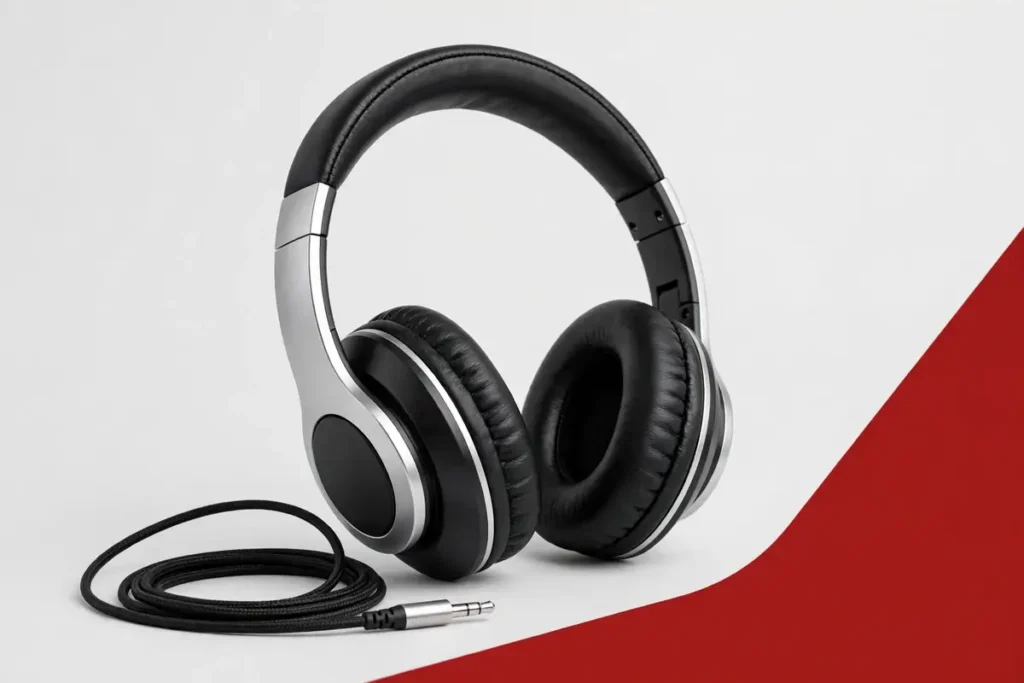
This sony mdr-1a review covers one of the most comfortable wired headphones Sony has made: a closed-back design built around a 40mm driver with an aluminium-coated liquid crystal polymer diaphragm, sold here in the Silver colourway. Sony discontinued it in favour of the MDR-1AM2, so this is a catalogue review. Current offers on the listing are third-party and new-old-stock units, and availability should be checked rather than assumed.
A note on method. This review is research-based. The scores are our provisional assessment, built from specialist reviewers’ measurements and hands-on verdicts from the model’s active years, together with Sony’s confirmed specifications. Wired headphones in our database carry a neutral battery placeholder and score isolation in place of active cancelling, which pulls the overall down. The Comfort bar is the honest headline here.

Sony MDR-1A 6.2/10
Why you: you want a wired headphone you can wear all day without thinking about it. The deep cushions, soft clamp and 225-gram weight made this a benchmark for comfort, and the warm tuning suits long, relaxed listening.
Trade-off: the bass is generous to a fault on some recordings, and the model is discontinued, so you are buying third-party or old stock. There is no wireless mode and no cancelling. Buy it for the fit and the easy sound.
40mm dynamic driver · 24 ohms · 225 g · Two cables included · Wired only
Sound quality
Sound scores 7.6. The MDR-1A was Sony’s pitch for a premium portable sound: detailed, warm and easy to listen to for hours. The coated diaphragm keeps distortion low and gives the treble a clean extension that supports the Hi-Res Audio badge, while the midrange carries vocals with a natural weight. It is a polished presentation, and reviewers at the time rated it among the best closed-back portables at its tier.
The reservation is the bass. The low end is lifted enough that bass-heavy recordings can turn thick, and faster double-bass or electronic passages lose some definition against leaner rivals. On most pop, rock and film soundtracks the warmth reads as richness rather than bloat, and the overall balance is forgiving of poor recordings. In our best Sony headphones coverage the MDR-1A stands as the wired comfort pick in a range now dominated by wireless cancelling models, and its Sound bar shows why it has not been forgotten.
Comfort and design
Comfort scores 8.8, the highest bar on this card and the reason the model still trades on the used market. The cushions are deep and soft, the clamp is gentle, and at 225 grams the headphone disappears over long sessions in a way few closed-backs manage. The earcups sit around the ear with room to spare, so heat build-up is slower than the closed design suggests.
The design language is restrained: metal yokes, a leather-textured headband and, on this listing, the silver finish with tan padding. The cups fold flat for a bag and the cable detaches at the left cup. Build quality in long-term reviews held up well, with the cushions again the predictable wear item on older units. Inspect pad condition on any new-old-stock or used example, because flattened pads change the fit that makes this headphone worth buying.
Isolation and calls
There is no active noise cancelling. The closed cups and the seal from those deep cushions give passive isolation that scores 3.0: enough to take the edge off office noise and street sound once music plays, not enough to quiet a cabin or a train. Sound leaks less than with open designs, which makes the MDR-1A a reasonable shared-room listener at moderate volume.
Sony shipped two cables in the box, and the distinction matters for the Calls score of 5.5. One cable carries an inline microphone and remote for phone calls and playback control; the other is a plain listening cable. Call quality on the mic cable is standard wired quality, fine at a desk and strained outdoors. The Bluetooth sibling, the MDR-1ABT, is a different product and not covered by this listing. For Sony’s stranger corners, our Sony MDR-3R review covers the open-ear wired experiment from the same catalogue lineage.
Everyday use and sourcing
At 24 ohms the MDR-1A runs happily from a phone, a laptop or a handheld player, and it was always meant to. There is nothing to charge, pair or update. The single-sided cable keeps desk use tidy, and the flat-folding cups travel well in the supplied pouch.
Sourcing needs a careful sentence. Because the model is discontinued, the linked listing’s offers come from third-party sellers and remaining old stock rather than Sony or Amazon directly. Prices and condition vary between sellers, and a suspiciously cheap unit deserves scrutiny, since popular Sony models attract copies. Buy from a seller with a returns policy you trust. Our best wired headphones guide covers the current-production alternatives if you would rather buy new with a full warranty.
How it compares with the current Sony range
Sony’s headphone line has moved decisively toward wireless cancelling models, and the MDR-1A reads differently against them than it did against its wired contemporaries. The flagship wireless models cancel far better and add codecs and app tuning the 1A never had. What they do not reproduce is this fit. Their cushions are shallower, their clamp is firmer, and their sound is tuned for a market that expects strong bass with digital processing behind it. The 1A’s warmth comes from the driver and the enclosure alone, and it sounds more natural for it on well-recorded material.
Against its own successor the comparison is closer. The MDR-1AM2 tightened the bass, lightened the frame and modernised the styling, and many listeners prefer it. Others keep the original for the deeper pads and the fuller low end. Neither view is wrong, but it means a buyer choosing between them should decide on fit and tuning rather than assuming the newer model wins by default. That is also why clean 1A units hold their value: the headphone it competes with most directly is its own replacement.
Sony MDR-1A specs
| Spec | Sony MDR-1A |
|---|---|
| Driver | 40mm dynamic, aluminium-coated liquid crystal polymer diaphragm |
| Design | Closed-back, over-ear, folding flat |
| Noise cancelling | None. Passive closed-back isolation |
| Impedance | 24 ohms |
| Battery | None. Wired only |
| Weight | 225 g |
| Extras | Two detachable cables, one with inline mic and remote; carry pouch |
| Availability | Discontinued model; third-party and new-old-stock offers (Silver) |
Verdict
Buy the MDR-1A if comfort decides your purchase and you listen wired at home or at a desk. The 8.8 Comfort score is earned, the sound is warm and detailed, and a good unit still gives an account of itself that plenty of current models cannot match on fit alone. Value scores 7.4 because clean examples trade at sensible money for what they deliver.
Skip it if you need a warranty, travel on loud transport, or prefer a tight and disciplined low end. The successor and the current wired field cover those needs with less sourcing risk. As a catalogue classic bought with open eyes, the MDR-1A remains easy to recommend.
Frequently asked questions
Is the Sony MDR-1A discontinued?
Yes. Sony replaced it with the MDR-1AM2, a lighter and differently tuned model, and the original MDR-1A now sells through third-party and new-old-stock offers. The listing linked here is the Silver colourway. Check the seller and the condition grade before buying.
What is the difference between the MDR-1A and the MDR-1AM2?
The 1AM2 is the successor: lighter, with a revised driver, a new grille pattern and a more controlled low end. The original 1A is warmer and plusher, with deeper cushions and a fuller bass presentation. They are different headphones, and listings or reviews for one should not be read as covering the other.
Can you take calls on the Sony MDR-1A?
Yes, on the supplied cable that carries the inline microphone and remote. Call quality is ordinary wired-mic quality, clear in quiet rooms and weaker in wind, which is why Calls scores 5.5 rather than the 3.0 we give wired headphones with no microphone at all. The second supplied cable has no mic and suits pure listening.
Does the MDR-1A need an amplifier?
No. At 24 ohms it was designed for phones and portable players and reaches full volume from almost any source. A better DAC improves clarity a little, as it does with most wired headphones, but nothing in the design demands extra power.
Why does the overall score read 6.2?
Our overall averages six categories scored on one scale across every headphone we cover. A wired model takes the neutral 5.0 battery placeholder and a 3.0 for active cancelling it does not have. The bars that describe the MDR-1A itself are Comfort at 8.8 and Sound at 7.6.

I am the founder of Sound Mavericks, where I provide the polite truth about audio equipment. I started this site because consumer electronics reviews are often too technical. Instead of using a silent lab, I test headphones, earbuds, and Bluetooth speakers in the real world – like on a noisy subway or in a busy coffee shop.
To stay independent, I buy my own review units (mostly from the United States) rather than accepting free gifts from brands. Once I finish testing a product, I sell it locally to our community. My goal is to help you understand sound quality, active noise cancellation (ANC), and battery life without the marketing hype.
