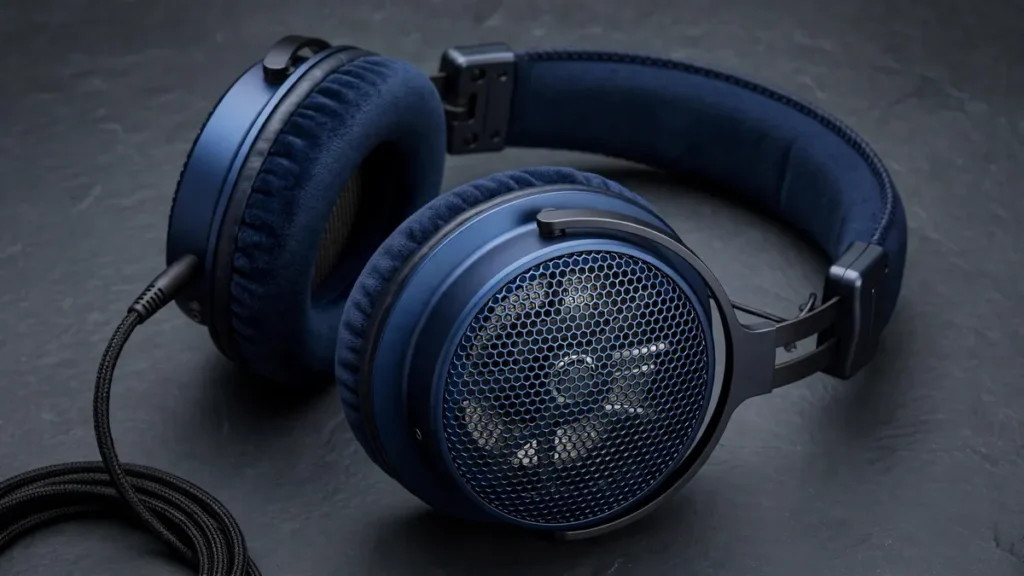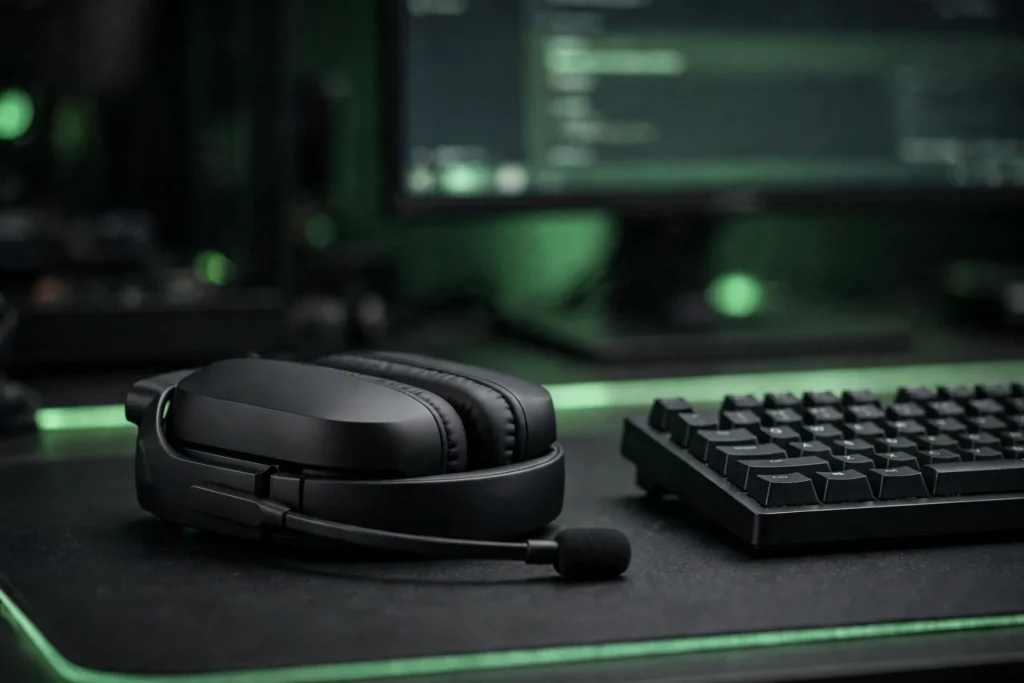
The Razer Barracuda V2 Pro arrived on October 15, 2026 with a very specific mission: fix the one thing that held the original Barracuda Pro back. The 2022 model had the right idea — a gaming headset discreet enough to wear on a train, with hybrid noise cancelling and dual wireless — but its built-in-only microphone sounded thin, and at its launch price it asked a lot for that compromise. The V2 Pro answers with a detachable boom mic, a claimed 70 hours of battery (up from 40), a lighter 285g fold-flat frame, and a lower launch price than the model it replaces.
This is a launch review: our assessment is drawn from Razer’s published specifications, the verified Amazon listing data, and the first wave of independent review coverage, rather than hands-on testing. The headline findings are unusually consistent across that coverage — the microphone is the upgrade owners of the original asked for, the ANC is strong for a gaming headset, and the dual-wireless trick of hearing your game and your phone at the same time is the feature people keep coming back to. The caveats are equally specific, and we flag them where they belong: Xbox support, stock tuning, and fit.
The Razer Barracuda V2 Pro is the Barracuda concept finished: a detachable HyperClear boom mic for ranked nights, internal beamforming mics for the commute, hybrid ANC with four levels, simultaneous 2.4GHz and Bluetooth 6.0 audio, and up to 70 hours between charges in a 285g frame that folds flat and swallows its own dongle. If you split your life between a PC or PlayStation desk and everywhere else, this is one of the most complete single-headset answers we have seen. Xbox-first players should check the compatibility note below before buying.

| Sound Quality | 8.7 |
| Noise Cancelling | 8.8 |
| Comfort & Design | 9.0 |
| Battery Life | 9.6 |
| Microphone & Calls | 8.9 |
| Value | 8.6 |
Razer Barracuda V2 Pro: Specifications
| Product | Razer Barracuda V2 Pro | Check Price |
|---|---|---|
| Drivers | 40mm Razer TriForce Bio-Cellulose | |
| Frequency Response | 12 Hz – 20 kHz; 32Ω impedance | |
| Noise Cancelling | Hybrid ANC (external + internal mics), 4 adjustable levels, plus Ambient Mode | |
| Microphones | Detachable Razer HyperClear full-band boom mic + internal beamforming mics; AI-powered noise cancellation in both modes | |
| Wireless | Razer HyperSpeed 2.4GHz (USB-C dongle, ~20ms latency) + Bluetooth 6.0 — simultaneous audio from both; SmartSwitch toggle; multipoint and Auracast support | |
| Wired | USB-C audio | |
| Spatial Audio | THX Spatial Audio+ with 7.1.4 virtual surround on PC (Razer Synapse, Windows 11) | |
| Battery Life | Up to 70 hours (Razer rating) | |
| Design | 285g; foldable, lay-flat earcups; USB-C dongle storage inside the earcup; leatherette memory-foam cushions; no RGB | |
| Compatibility | PC, PlayStation, Nintendo Switch, Steam Deck, mobile (per Razer’s supported list) | |
| Software | Razer Audio App (iOS/Android) and Synapse (PC); 10-band EQ with onboard profiles | |
The Microphone: The Fix This Headset Needed
Ask anyone who owned the original Barracuda Pro what let it down and the answer was the microphone. To keep the silhouette clean, Razer relied entirely on internal beamforming mics, and voices came through distant and thin — fine for a quick call, poor for squad comms. The V2 Pro keeps those internal mics for travel and calls, but adds the thing the original was missing: a detachable Razer HyperClear full-band boom mic for desk and competitive play, with AI-powered noise cancellation running in both modes.
Early coverage backs up the fix. Wolf’s Gaming Blog’s multi-week test — the review that set the early 4.5-out-of-5 tone — called the boom mic “a step above” a typical headset mic and the internal mics “perfectly serviceable” for calls. That split is exactly the Barracuda pitch done properly: broadcast-clear voice when the boom is on, discreet headphone looks when it is off. Razer also carries over its onboard mic monitoring and per-mode EQ through the Audio App, so the mic you use at your desk and the mic you use at the airport are tuned independently.
Sound Quality and THX Spatial Audio+
The V2 Pro moves to 40mm TriForce Bio-Cellulose drivers — smaller than the original’s 50mm units, but bio-cellulose diaphragms are the same material family Razer uses in its audiophile-leaning BlackShark line, chosen for low distortion and clean separation between the TriForce’s three tuned chambers for highs, mids and bass. The rated response runs from 12 Hz to 20 kHz, and on PC, Synapse unlocks THX Spatial Audio+ with 7.1.4 virtual surround, adding height channels to the usual 7.1 bubble for positional cues above and below you — a genuine edge in shooters where verticality matters.
The honest note from launch coverage: the stock tuning is balanced rather than bass-heavy, and more than one early reviewer reached for the EQ to add low-end weight. That is a preference, not a flaw — the 10-band EQ with savable onboard profiles means the fix travels with the headset between devices, and if you are coming from the Barracuda X family, our Razer Barracuda X Chroma EQ settings guide walks through the same tuning approach in Razer’s app. Music listeners get a clean, detailed presentation; competitive players get the imaging they actually need.
Hybrid ANC and Ambient Mode
Hybrid noise cancelling — feedforward mics outside the cups plus feedback mics inside — is still rare on gaming headsets, and Razer leans into it with four selectable ANC levels rather than a single on/off. Early testers rated the implementation among the best they had tried on a gaming headset at this tier, effective everywhere from a noisy gym to a commute. There is an Ambient Mode for hearing announcements and traffic, though launch coverage notes it has no separate level control of its own and can push voices forward a little aggressively.
For the dual-life brief — desk by day, travel and street by necessity — this matters more than another RGB mode would. ANC that works outside the house is what turns a gaming headset into your only pair of headphones, which has always been the Barracuda line’s reason to exist.
Connectivity: Two Radios, One Headset
The V2 Pro’s party trick is simultaneous audio: game sound over the 20ms-latency HyperSpeed 2.4GHz link while your phone stays connected over Bluetooth 6.0, so a call, a podcast or a Discord chat on mobile never costs you the game feed. A SmartSwitch button flips the primary connection without digging through menus, Bluetooth multipoint keeps two devices paired, and there is even Auracast support for tapping into shared broadcasts. USB-C wired audio covers the no-battery and high-resolution cases. Our wired vs wireless gaming headset breakdown covers why that latency figure matters if you are weighing this against a cabled setup.
Two practical details deserve credit. The USB-C dongle stores inside the earcup, ending the lost-receiver problem that plagues travel headsets. And the compatibility list is PC, PlayStation, Switch, Steam Deck and mobile — Xbox is not on Razer’s official dongle support list, so Xbox-first players should not assume the wireless link will work with their console.
Design, Comfort and Battery Life
At 285g, the V2 Pro is a full 55g lighter than the original Pro, and it folds flat with rotating, lay-flat earcups — travel-headphone behaviour, not desk-ornament behaviour. The look stays deliberately anonymous: matte black, no RGB, leatherette memory-foam cushions and a padded headband. Early long-session reports are positive on comfort, with roomy cups and no hot spots over the crown; the one consistent fit note is a relatively relaxed clamp, which commuters will like and lifters will not — more than one early tester found it too loose for the gym floor.
Battery is the headline number: up to 70 hours per Razer’s rating, against roughly 40 on the original. Razer quotes the figure without a separate ANC-on rating, so treat 70 as the ceiling rather than a promise for ANC-heavy weeks — but even discounted, early testers were charging it once across several weeks of mixed use. Small gripes from launch coverage, for completeness: the magnetic outer side covers can pop off more easily than they should, and there is no hard carry case in the box.
Barracuda V2 Pro vs Barracuda Pro: What Changed
| Spec | Razer Barracuda V2 Pro | Razer Barracuda Pro (2022) |
|---|---|---|
| Drivers | 40mm TriForce Bio-Cellulose | 50mm TriForce Bio-Cellulose |
| Microphone | Detachable HyperClear boom + internal beamforming | Internal beamforming only |
| Simultaneous Audio | Yes — 2.4GHz + Bluetooth together | No |
| 2.4GHz Latency | ~20ms | ~35ms |
| Battery Life | Up to 70 hours | Up to 40 hours |
| Weight | 285g, foldable with dongle storage | 340g, rotating earcups |
| Buy | Check Price | Check Price |
Read down the microphone and battery rows and the generational story tells itself: Razer fixed the two most-criticised parts of the original, cut the weight and the launch price, and kept everything people liked. The one paper downgrade — 40mm drivers in place of 50mm — has not translated into a sound-quality complaint in early coverage, which credits the cleaner bio-cellulose tuning instead.
Who Should Buy the Barracuda V2 Pro
Buy it if you play on PC or PlayStation and want one headset that also owns your commute: the ANC, the 70-hour battery and the travel-ready fold make the dual-life case better than anything else in our best PC gaming headset roundup at this tier. Buy it if your current headset’s mic undersells you in comms — the boom mic is the headline upgrade. Skip it if Xbox is your main platform, if you want a tight gym-proof fit, or if you only ever play at one desk, where a wired headset buys you the same competitive core for less.
Frequently Asked Questions
Is the Razer Barracuda V2 Pro worth it?
For PC and PlayStation players who also travel with their headset, yes. You get hybrid ANC, simultaneous dual wireless, a proper boom mic and up to 70 hours of battery in one 285g package — a combination no rival currently matches at this tier. It launched for less than the original Barracuda Pro while fixing that model’s two biggest weaknesses.
Does the Razer Barracuda V2 Pro work on Xbox?
Xbox is not on Razer’s official support list for the USB-C HyperSpeed dongle. Razer’s listed platforms are PC, PlayStation, Nintendo Switch, Steam Deck and mobile, so Xbox-first players should not count on the wireless connection working with their console.
How long does the Barracuda V2 Pro battery last?
Razer rates it at up to 70 hours. Razer does not publish a separate ANC-on figure, so heavy ANC use will land below the ceiling — but early reviewers were still charging it only about once across several weeks of mixed gaming and travel.
Does the Barracuda V2 Pro have a detachable microphone?
Yes. A detachable Razer HyperClear full-band boom mic handles gaming and calls at your desk, and internal beamforming microphones take over when the boom is removed for travel. AI-powered noise cancellation works in both modes.
What is the difference between the Barracuda V2 Pro and the original Barracuda Pro?
The V2 Pro adds the detachable boom mic the original lacked, nearly doubles battery life from 40 to 70 hours, adds simultaneous 2.4GHz + Bluetooth audio, cuts latency to around 20ms, drops the weight from 340g to 285g with a foldable design and in-earcup dongle storage, and launched at a lower price. Drivers move from 50mm to 40mm TriForce Bio-Cellulose.
Can you listen to two devices at once with the Barracuda V2 Pro?
Yes. It plays 2.4GHz HyperSpeed and Bluetooth 6.0 audio simultaneously, so you can hear your game on PC or console while a call, podcast or notification plays from your phone — the feature early reviewers singled out as hard to give up.
Final Verdict
The Barracuda V2 Pro is what happens when a manufacturer reads its own one-star reviews. The mic is fixed, the battery is close to doubled, the frame is lighter and foldable, the dongle has a home, and the launch price went down instead of up. The stock tuning will send bass lovers to the EQ, the clamp is too relaxed for the gym, and Xbox players are left out of the dongle party — all visible before you buy. For everyone else in the PC/PlayStation-and-everywhere-else crowd, this is the new benchmark for a single headset that does both lives properly, and it earns our 8.8.

I am the founder of Sound Mavericks, where I provide the polite truth about audio equipment. I started this site because consumer electronics reviews are often too technical. Instead of using a silent lab, I test headphones, earbuds, and Bluetooth speakers in the real world – like on a noisy subway or in a busy coffee shop.
To stay independent, I buy my own review units (mostly from the United States) rather than accepting free gifts from brands. Once I finish testing a product, I sell it locally to our community. My goal is to help you understand sound quality, active noise cancellation (ANC), and battery life without the marketing hype.