
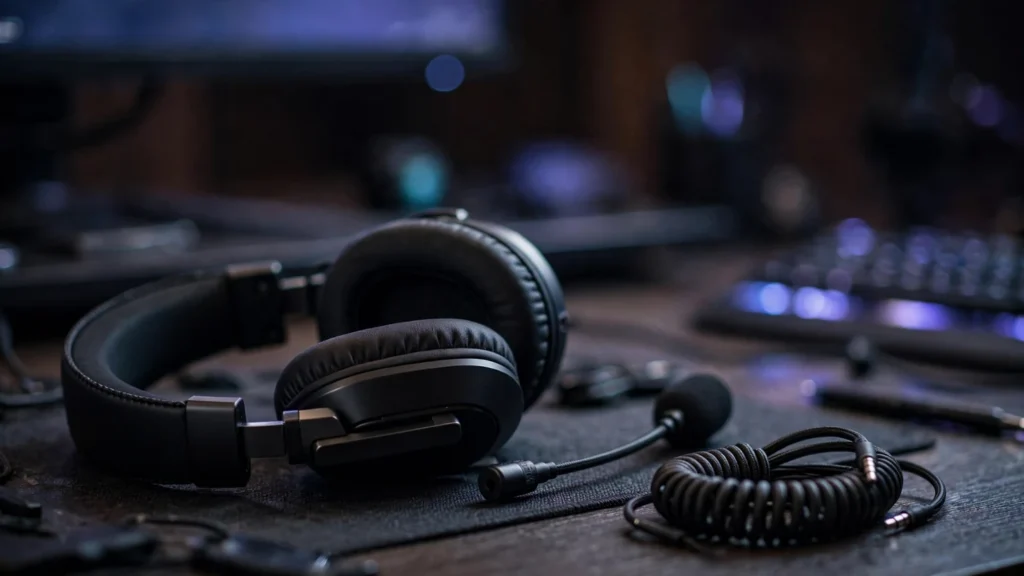
Looking for a mic with headset flexibility — a boom you can pull off for the commute and snap back on for game night or a work call? Our verdict: the HyperX Cloud III is the best detachable-mic headset for most people, the Logitech G PRO X 2 LIGHTSPEED is the wireless pick, and if you already own headphones you love, the V-Moda BoomPro turns them into a headset for the price of a cable. This guide is ranked on one thing the spec sheets bury: how the microphone attaches, detaches, retracts or adds on — because that single design choice decides whether one device can cover your desk, your sofa and your train ride. SoundMavericks compared seven options across detachable, retractable and attachable designs using manufacturer specifications and the published consensus of specialist outlets. If instead you want a fixed boom built for all-day phone work, see our guide to the best noise cancelling headphones with a microphone for clear calls.
Why choose a headset with a detachable microphone?
A fixed boom mic is a billboard that says “gamer at work” — fine at your desk, awkward on a train, in a café or on a video call with a client. A detachable mic with headset design solves that in about two seconds: pull the boom out and the headset becomes plain headphones for music and travel, with no dangling arm, no accidental mute-button presses and nothing to snap off in a bag. Plug it back in and the mic sits exactly where a boom should sit — close to your mouth, which is why boom mics consistently sound clearer than the tiny microphones built into wireless headphones.
There are three flavours of flexible mic, and this guide covers all of them. Detachable booms unplug completely (HyperX, Logitech G, Razer). Retractable booms slide inside the earcup and disappear without a loose part to lose (SteelSeries). Attachable mics are bought separately and added to ordinary headphones — a replacement cable with a boom (V-Moda BoomPro) or a magnetic stick-on mic (Antlion ModMic) — which is the cheapest route of all if your current headphones still sound great. One honest caveat before the picks: a detached mic is also a losable mic. Every pick below keeps working as headphones with the boom removed, but if you are the type to misplace cables, the retractable SteelSeries design exists precisely for you.
Mic with headset options compared
| Product | Mic type | Connection | Platforms | Best for |
|---|---|---|---|---|
| HyperX Cloud III | Detachable boom | 3.5mm, USB-C, USB-A | PC, PS5, Xbox, Switch, mobile | Best overall |
| Logitech G PRO X 2 LIGHTSPEED | Detachable boom | 2.4GHz, Bluetooth, 3.5mm | PC, PlayStation, Switch, mobile | Best wireless |
| Razer BlackShark V2 Pro (2023) | Detachable boom | 2.4GHz, Bluetooth | PC, PlayStation, Switch, mobile | Esports voice clarity |
| HyperX Cloud II | Detachable boom | 3.5mm, USB sound card | PC, PlayStation, Xbox, mobile | Proven value classic |
| SteelSeries Arctis Nova 5 | Retractable boom | 2.4GHz, Bluetooth | PC, PlayStation, Switch, mobile | Nothing to lose |
| V-Moda BoomPro | Attachable (cable mic) | 3.5mm TRRS cable | Any device with a 3.5mm port | Best add-on for wired headphones |
| Antlion ModMic 5 | Attachable (magnetic) | 3.5mm, own cable | PC, consoles with adapters | Any headphones, even wireless |
Best detachable boom mic headsets
1. HyperX Cloud III — best mic with headset for most people

The Cloud III is the cleanest expression of the detachable idea. Its 10mm boom microphone unplugs from the left earcup in one pull — complete with an LED mute indicator so you always know whether Discord can hear you — and the headset underneath is a genuinely good pair of headphones: angled 53mm drivers, HyperX’s signature memory-foam cushions and a full aluminium frame that shrugs off being thrown in a backpack, mic detached, for the commute. Connectivity is the other flexibility story: a single headset that runs over 3.5mm, USB-C or USB-A covers PC, PlayStation, Xbox, Switch and phones without dongles or pairing rituals. SoundMavericks’ take: this is the default recommendation for anyone whose headset has to be a work tool at 9am, a gaming headset at 9pm and plain headphones in between. Wired-only operation is the one trade-off — there is no battery to die mid-session, but also no walking to the kitchen mid-call.
| Mic Flexibility | 9.2 |
| Sound Quality | 8.7 |
| Comfort & Design | 9.0 |
| Compatibility | 9.4 |
| Value | 8.6 |
2. Logitech G PRO X 2 LIGHTSPEED — best wireless headset with removable mic

Want the mic to disappear and the cable to disappear? The G PRO X 2 pairs a detachable 6mm cardioid boom — tuned with Logitech’s BLUE VO!CE filters in G HUB for a more broadcast-like voice — with three ways to connect: LIGHTSPEED 2.4GHz for gaming, Bluetooth for your phone, and a 3.5mm cable for everything else. Battery life is rated up to 50 hours, and the 50mm graphene drivers are a real step up in clarity from the previous generation, which matters because a detachable-mic headset only earns its keep if the headphone half is worth wearing on its own. Remove the boom and the understated design passes as regular headphones in public in a way most gaming headsets never manage. The gaps: no native Xbox wireless support, and BLUE VO!CE processing needs the USB connection and G HUB on PC. As a flexibility package, though, nothing else here does detachable plus triple connectivity this completely.
3. Razer BlackShark V2 Pro (2023) — detachable mic, esports tuning
Razer’s 2023 refresh of the BlackShark V2 Pro is built around its detachable HyperClear Super Wideband boom: a hypercardioid capsule with an unusually wide 20Hz–20kHz microphone response, designed so your voice keeps its natural register instead of the thin, telephone-like tone of older headset mics. Pull the boom and the aviation-inspired headset — 50mm TriForce Titanium drivers, plush noise-isolating cushions — becomes a clean pair of wireless headphones for the desk or the street. Battery life stretches to a rated 70 hours over 2.4GHz HyperSpeed, with Bluetooth on board for a second device, and the built-in pro-tuned FPS profiles are stored on the headset itself. Two honest limits shape who should buy it: there is no Xbox support and no 3.5mm fallback, so this is a PC/PlayStation/Switch headset only. For competitive players on those platforms who detach the mic daily, it is the sharpest tool here.
4. HyperX Cloud II — the detachable classic that still earns its place

The Cloud II has been teaching other headsets how detachable should work for a decade. The noise-cancelling boom unplugs for music and travel; plug in the included USB sound card on PC and you add virtual 7.1 surround and echo cancellation to the chain, or run it as a plain 3.5mm headset into a controller or phone. The 53mm drivers, memory-foam pads and aluminium frame are the same formula that made it a tournament staple, and its durability is precisely why the detachable design matters here: the mic is the part most likely to wear out, and on the Cloud II it is the part you can remove, spare or replace instead of retiring the whole headset. It lacks the Cloud III’s USB-C convenience and modernised tuning, which is why it sits fourth — but as a proven, usually cheaper route into detachable-mic ownership, it remains easy to recommend.
Best retractable mic headset — nothing to lose
5. SteelSeries Arctis Nova 5 — the mic that hides inside the headset

The Nova 5 answers the detachable design’s one weakness — the loose boom in a drawer somewhere — by making the mic retractable instead. The ClearCast Gen 2.X boom slides fully inside the left earcup: pull it out for chat, push it home and the headset is visually and physically just headphones, with nothing to misplace, ever. The mic itself is no afterthought either, running a high-bandwidth 32kHz/16-bit chipset for clearer voice than the original ClearCast generation. Around it sits a very complete wireless package: 2.4GHz and Bluetooth 5.3 with quick-switching between game and phone, up to 60 hours of battery, fast charging that returns hours of play from a short top-up, and more than 100 game-specific audio presets in the companion app. At around 265g it is also the lightest full headset here. Choose the Nova 5X variant if you need Xbox; the standard Nova 5 covers PC, PlayStation, Switch and mobile.
How to add a microphone to headphones you already own
The most flexible mic with headset setup of all may not be a headset. If your current headphones sound great and fit your head, an attachable mic adds a boom for a fraction of a new headset’s cost — and removes completely when you don’t need it. This is also the route we point office workers toward in our roundup of the best office headsets: your music headphones plus a boom can out-perform a mediocre all-in-one at both jobs.
6. V-Moda BoomPro — the cable that turns headphones into a headset

The BoomPro is elegantly simple: it is your headphone cable, with a flexible boom mic built in. Unplug your headphones’ standard 3.5mm cable, plug the BoomPro in its place, and you have a headset — with inline volume and mute controls on the cable — for gaming, Zoom or calls. Swap the plain cable back and the headphones are untouched. The omnidirectional capsule is forgiving about positioning, the Kevlar-reinforced cable is built for daily coiling, and because it’s a standard 3.5mm TRRS connection it works with controllers, phones and laptops alike (PCs with separate mic and headphone jacks may need a splitter). The compatibility caveats matter, though, and they are covered in the buying guide below: your headphones need a detachable, non-locking 3.5mm socket — and Bose owners need an adapter, because Bose uses a 2.5mm jack.
7. Antlion ModMic 5 — a magnetic mic for literally any headphones

Where the BoomPro needs a compatible cable socket, the ModMic needs only a flat spot on an earcup. A small adhesive base clasp sticks to your headphones; the boom then attaches magnetically and twists off in one motion when you want your headphones back. That makes the ModMic the universal option — it works with open-back audiophile headphones, wireless ANC headphones used in wired-off mode, even VR headsets. The ModMic 5’s capsule module is switchable between a noise-cancelling unidirectional mode for chat in noisy rooms and an omnidirectional mode with a fuller, more studio-like pickup for recording, and Antlion’s range also includes USB and fully wireless variants on the same magnetic idea. The trade-off is a second cable running alongside your headphone cable (managed with the included clips) and a higher price than the BoomPro. For owners of premium headphones, it is still the cheapest way to add a serious boom mic without replacing them.
Buying guide: connectors, compatibility and what to check
Detachable vs retractable vs attachable. Detachable gives the cleanest headphone-only profile and a replaceable wear part, at the cost of a loose boom to store. Retractable can never be lost but the mic itself can’t be upgraded or replaced. Attachable keeps your existing headphones in service — the best value move if you already own a pair you like. For more on how boom designs affect your voice on calls, our explainer on the best noise cancelling microphone setups is a useful companion read.
Check the socket before you buy an add-on mic. The BoomPro pattern fits headphones with a single detachable 3.5mm cable and a non-locking socket — most V-Moda, Philips Fidelio and many Sony wired models qualify. Three traps catch people out: Bose QuietComfort headphones use a smaller 2.5mm jack (a 2.5mm-to-3.5mm adapter fixes it); Sennheiser’s HD 5xx/6xx lines use proprietary or locking connectors (the ModMic is the safer route there); and headphones with a fixed cable can’t take a cable mic at all — again, ModMic territory. On the headset side, check what the mic plugs into as well: some detachable booms use a plain 3.5mm plug, others a proprietary multi-pin connector, and a proprietary boom means replacements come from the original maker only.
Platform notes. Wired 3.5mm headsets work everywhere, including Xbox controllers. USB and 2.4GHz dongle headsets are primarily PC/PlayStation/Switch devices, and Xbox wireless support is model-specific — SteelSeries sells X variants, Razer’s BlackShark line skips Xbox entirely. If one headset has to cover a work laptop, a console and a phone, the Cloud III’s three wired connections or the G PRO X 2’s wireless-plus-cable mix are the safest bets in this guide.
Frequently asked questions
What is a headset with a removable microphone called?
Usually a detachable-mic headset (or detachable boom mic headset). Related designs are retractable mics, which slide into the earcup like the SteelSeries Arctis Nova 5, and attachable add-on mics like the V-Moda BoomPro and Antlion ModMic, which add a removable boom to ordinary headphones.
Can you use a gaming headset without the microphone attached?
Yes. Every detachable and retractable pick in this guide works as normal headphones with the mic removed or stowed — audio playback is unaffected. Just remember that on most models you lose the microphone entirely until you plug it back in, so keep the boom somewhere you’ll find it.
Can I add a mic to my regular headphones?
Almost always. If your headphones have a detachable 3.5mm cable, a cable mic like the V-Moda BoomPro replaces it. If not — or if they’re wireless — a magnetic attachable mic like the Antlion ModMic sticks to the earcup and works with virtually any headphone.
Is the V-Moda BoomPro compatible with Bose headphones?
Not directly. Bose QuietComfort headphones use a 2.5mm headphone jack while the BoomPro is 3.5mm, so you’ll need an inexpensive 2.5mm-to-3.5mm adapter. With the adapter fitted, the combination works well for calls and gaming.
Detachable or retractable microphone — which is better?
Detachable is better if you want the slimmest travel profile or the option to replace a worn mic. Retractable is better if you know you’ll lose a loose boom — the mic is always with the headset. Sound quality is comparable between good examples of both; design and your own tidiness should decide it.

I am the founder of Sound Mavericks, where I provide the polite truth about audio equipment. I started this site because consumer electronics reviews are often too technical. Instead of using a silent lab, I test headphones, earbuds, and Bluetooth speakers in the real world – like on a noisy subway or in a busy coffee shop.
To stay independent, I buy my own review units (mostly from the United States) rather than accepting free gifts from brands. Once I finish testing a product, I sell it locally to our community. My goal is to help you understand sound quality, active noise cancellation (ANC), and battery life without the marketing hype.

