
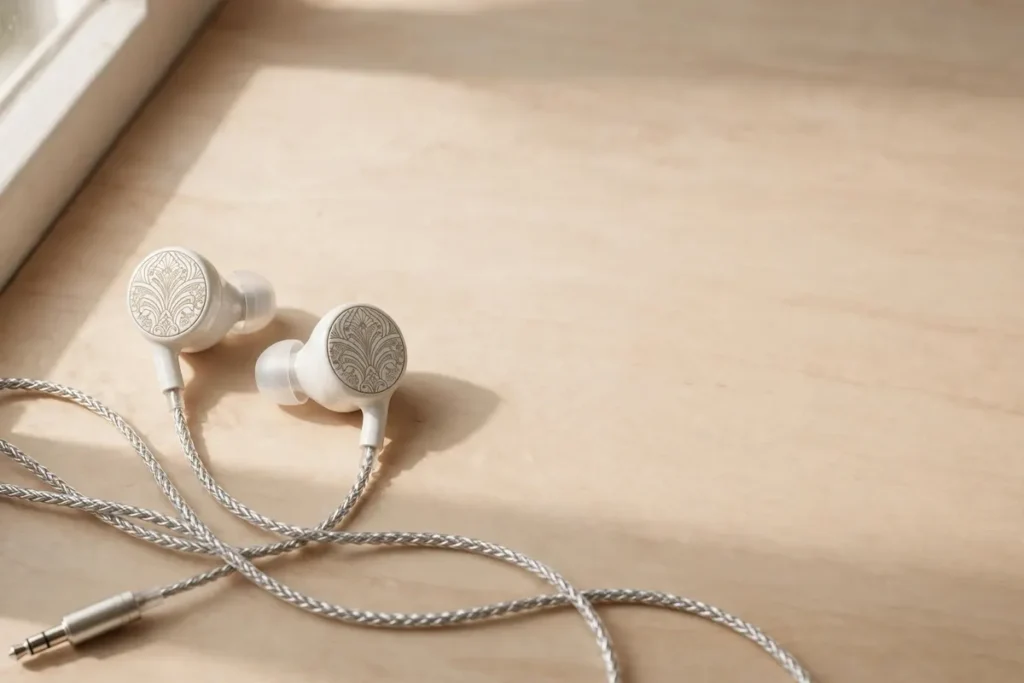
This tangzu waner review covers the original Wan’er S.G, the budget single-driver earphone that made Tangzu’s name: a 10mm PET dynamic driver in a light resin shell, tuned smooth and vocal-forward at a price where most rivals are still shouting. Our provisional verdict is 6.1 overall, with Sound at 7.8 and Value at 9.2 doing the heavy lifting. One identity note before anything else: this is the first-generation model linked below. The Wan’er S.G II and the Studio Edition are different, newer variants on separate listings, and they are not reviewed here.
A note on method. This review is research-based. The scores are provisional, set from Tangzu’s published specifications and the pattern of specialist reviewers’ hands-on verdicts, including SoundGuys’ review of this model, which is cited by name where its findings are used.

Tangzu Wan’er S.G 6.1/10
Why you: you want a budget earphone that is easy to listen to for hours. The smooth, vocal-led tuning never turns harsh, the shells are light, and the value at this price is close to the top of the class.
Trade-off: fine treble detail is understated and the bass is polite rather than punchy. Listeners who want sparkle or slam should shop the brighter budget sets instead.
10mm PET dynamic driver · Dual-cavity shell · N52 magnet · 20 Ω · 0.78mm recessed 2-pin
Sound quality
Sound scores 7.8, high for the price because the tuning choices are right. The Wan’er S.G keeps vocals forward and intelligible, gives the bass a modest lift without bloat, and rolls the treble gently so nothing turns sharp or tiring. SoundGuys’ review of the Wan’er S.G praised exactly that combination, the sound, the isolation and the tip choice for the price, while noting that upper-frequency detail is understated. Our reading agrees: this is a set tuned for long, relaxed listening, and the detail it trades away at the very top is the price of the smoothness everywhere else.
Tangzu says the driver went through five rounds of adjustment before the tuning settled, and it shows in the coherence. A single dynamic driver has no crossover seams to hide, and the dual-cavity shell with its N52 magnet keeps the low end controlled at volume. In our best budget IEMs guide the Wan’er S.G is the recommendation we give people who say every cheap earphone they have tried sounds harsh.
Two listening habits flatter it most. The first is low volume: the vocal-forward balance stays intelligible when the level drops, where bass-boosted rivals turn to mush and treble-led ones turn thin, so it is an unusually good bedtime and background set. The second is long sessions of voice-led material, podcasts, audiobooks, singer-songwriter catalogues, where the smooth top end simply never becomes the story. What it will not do is thrill: bass-heavy electronic music wants more sub-bass weight than this driver offers, and detail hunters will keep noticing the softened cymbals. Both limits are the tuning working as designed, and at this price, choosing a character this deliberately is the achievement.
A name from the Tang dynasty
One detail explains a lot about this earphone’s design intent. Tangzu names its models for figures from Chinese history, and Wan’er takes hers from Shangguan Wan’er, the Tang dynasty poet and court official remembered for literary talent rather than force. The earphone follows the same brief: it wins on phrasing and tone, not on impact. Even the shell design, with its patterned faceplate, leans decorative instead of aggressive, a deliberate contrast with the gaming-styled rivals at this price. It is a small thing, but buyers choosing between near-identical budget sets often decide on exactly this kind of character, and the Wan’er S.G has more of it than most.
Fit, isolation and cable
The shells are small, light resin with a 5.19mm nozzle, and they suit smaller ears better than most Chi-Fi rivals. Comfort scores 7.6. Isolation is respectable once the tips seal, which is the other half of the SoundGuys finding above; the ANC bar of 4.2 is passive blocking only, scored a touch above the vented hybrids because the shell is fully closed. The cable is a 5N OFC braid on recessed 0.78mm 2-pin connectors, the common standard this time, so replacement and upgrade cables are easy to find. Cable variants with and without a microphone are sold; Calls scores 3.0 on the plain-cable convention, and the with-mic variant is the one to pick if calls matter.
Tip choice matters more than usual here. The nozzle takes standard tips, and moving from the stock silicone to a foam set buys a firmer seal, a little more bass weight and noticeably better isolation on transport, at the cost of a slightly duller top end. Wide-bore tips do the opposite, opening the treble a fraction. Neither turns the Wan’er into a different earphone, but between the two you can lean its balance toward your taste for the price of a coffee, which is the right scale of upgrade for a set at this price.
Everyday use and value
At 20 ohms and 107 dB, the Wan’er S.G reaches full volume from anything with a headphone socket or a basic dongle. Battery scores the wired neutral of 5.0. Value scores 9.2, among the highest we give: the combination of tuning, comfort and a detachable cable at this price is the reason the model stayed a default recommendation while rivals rotated around it. Buyers weighing it against brighter, more detailed sets should read our best IEMs roundup for the contrast, and our best audiophile earbuds guide for the step-up path when the budget grows.
Tangzu Wan’er S.G specs
| Spec | Tangzu Wan’er S.G |
|---|---|
| Driver | Single 10mm dynamic driver, PET diaphragm, dual-cavity, N52 magnet |
| Impedance | 20 ohms |
| Sensitivity | 107 dB (1 kHz) |
| Frequency response | 20 Hz – 20 kHz |
| Distortion | Under 0.5% (manufacturer figure) |
| Cable | 5N OFC, detachable, 0.78mm recessed 2-pin, 3.5mm plug, 1.2m |
| Nozzle diameter | 5.19mm |
| Model note | Original Wan’er S.G. Not the Wan’er S.G II or the Studio Edition |
Verdict
Buy the Wan’er S.G if you want the easiest budget listen in the class. Sound 7.8, Comfort 7.6 and Value 9.2 describe an earphone that gets the fundamentals right and never annoys, which is rarer at this price than any spec.
Skip it if you chase treble detail, deep bass or a gaming edge. The 6.1 overall is dragged down by the wired conventions, as with every set in this lane; judged on the listening alone, it is one of the strongest budget buys we cover.
Frequently asked questions
Is this the original Wan’er S.G or the Wan’er S.G II?
The original. The verified listing behind this review is the first-generation Wan’er S.G: 20 ohms, 107 dB sensitivity, recessed 2-pin sockets. The Wan’er S.G II is a newer revision with a redesigned shell and different tips in the box, and the Studio Edition is a flatter-tuned variant again. They are separate listings, and nothing from them is scored or linked here.
Does the Wan’er S.G have a microphone?
It depends on the cable variant chosen on the listing. The Wan’er S.G is sold with plain and with-mic cable options; our Calls score of 3.0 follows the wired convention for the plain-cable configuration. If you take calls, pick the with-mic variant at the same listing, or swap the detachable cable later.
Is the Wan’er S.G good for vocals?
Yes, that is its strength. The tuning keeps vocals forward and clear with a smooth top end, which suits vocal-led music, podcasts and long listening sessions. The trade-off named by several reviewers is that upper-frequency detail is understated, so cymbals and fine texture sit further back than on brighter rivals.
Does the Wan’er S.G need an amplifier?
No. At 20 ohms and 107 dB sensitivity it reaches full volume from a phone, a laptop or a basic dongle with room to spare. A clean source helps any IEM, but there is no power requirement to plan around.
What does S.G stand for in the Wan’er S.G name?
Tangzu names its earphones after figures from Chinese history, and Wan’er is drawn from Shangguan Wan’er, the Tang dynasty poet and court figure. The initials are part of the model’s full name as Tangzu sells it. Search listings shorten it to Waner, which is why the name appears both ways.

I am the founder of Sound Mavericks, where I provide the polite truth about audio equipment. I started this site because consumer electronics reviews are often too technical. Instead of using a silent lab, I test headphones, earbuds, and Bluetooth speakers in the real world – like on a noisy subway or in a busy coffee shop.
To stay independent, I buy my own review units (mostly from the United States) rather than accepting free gifts from brands. Once I finish testing a product, I sell it locally to our community. My goal is to help you understand sound quality, active noise cancellation (ANC), and battery life without the marketing hype.
