The bottom line: The Sennheiser HD 598 is a discontinued classic that helped define the open-back audiophile headphone category. Its 50-ohm drivers are easy to drive from any device, the soundstage is huge, and the midrange is smooth and natural — but it was officially replaced by the HD 599, and new units are now only found through third-party and used listings. SoundMavericks Score: 8.3/10

| Sound Quality | 8.8 |
| Comfort | 9.0 |
| Build | 8.2 |
| Value | 7.2 |
Sennheiser HD 598 — Key Specifications
| Spec | Detail |
|---|---|
| Design | Open-back, over-ear (circumaural), wired |
| Driver | Dynamic neodymium drivers |
| Frequency response | 12 Hz – 38,500 Hz |
| Impedance | 50 ohms |
| Sensitivity | 112 dB SPL (1 kHz / 1 Vrms) |
| THD | < 0.1% (1 kHz, 100 dB SPL) |
| Weight | ~270 g |
| Cable | 3 m single-sided cable with locking (changeable) connector; 6.3 mm stereo plug with 3.5 mm adapter |
| Wireless / ANC | None — wired only, no noise cancelling, no microphone |
| Colors | Ivory with brown accents (original); black (SR revision) |
| Status | Discontinued — succeeded by the Sennheiser HD 599 |
Technical data per Sennheiser’s published HD 598 technical documentation, cross-checked by SoundMavericks against the verified Amazon listing.
What Is the HD 598?
The Sennheiser HD 598 launched in 2010 and quickly became one of the most recommended first audiophile headphones in the world. It sat just below Sennheiser’s legendary 600-series reference headphones, offering much of the same open, natural sound at a friendlier price and — crucially — a 50-ohm impedance that phones and laptops could drive without a dedicated amp.
The model went through two notable revisions: the HD 598 SR, an updated open-back version in black with detachable cables and an inline remote cable, and the HD 598 CS, a closed-back variant for listeners who wanted the 598 sound without leaking audio everywhere. Sennheiser eventually retired the whole line in favor of the HD 599, which carries the design and tuning forward.
An honest word on availability: Sennheiser no longer makes the HD 598. Amazon’s own listing for the original Ivory model currently shows as unavailable from Amazon itself — what you’ll find are third-party sellers and used units. That’s the reality of buying a discontinued classic: stock is finite, condition varies, and you should check seller ratings before buying. Everything in this guide reflects that status.
Sound Quality: Big Stage, Smooth Mids
The HD 598’s sound is why people still hunt for it more than a decade later. The open-back design gives it a wide, airy soundstage that makes music feel like it’s coming from around you rather than from inside your head — orchestral pieces, live recordings, and well-produced rock albums all breathe.
The midrange is the star: vocals and acoustic instruments come through smooth and natural, with none of the shouty harshness that cheaper headphones smear over everything. Treble is extended enough to give cymbals and strings real air, but deliberately fatigue-free — you can listen for hours without your ears begging for a break.
The honest trade-off is the bass. The HD 598’s low end is polite rather than powerful: kick drums and bass guitars have presence and texture, but they won’t thump. Bass heads and EDM listeners will want to look elsewhere. This was a tuning choice for naturalism over excitement, and it defines who these headphones are for.
Design & Comfort
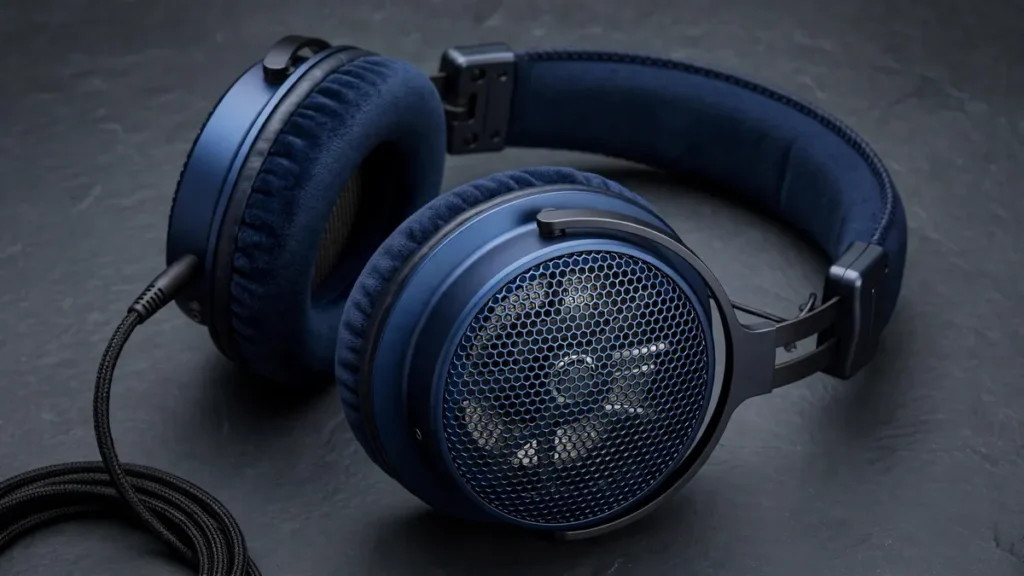
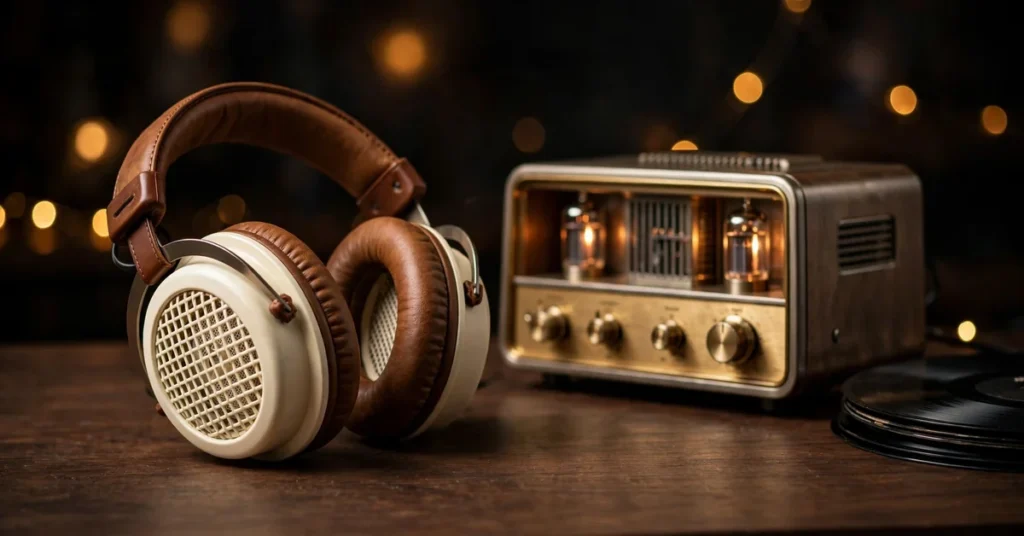
The original HD 598 is instantly recognizable: ivory-cream earcups and headband with warm brown accents, velour-covered ear pads, and a light 270-gram build. It was a polarizing look in its day — some called it vintage elegance — but it aged into one of headphone design’s icons.
Comfort is genuinely excellent and one of the HD 598’s strongest suits. The velour pads are deep and plush, the clamping force is gentle from the first wear, and the lightweight build disappears during long listening sessions. If you wear glasses or listen for hours at a desk, this is a headphone built for you.
The open-back design is both the magic and the limitation: sound leaks out freely, so everyone around you hears your music, and outside noise flows right in. These are headphones for a quiet room, not a commute or an open office.
Do You Need an Amp for the HD 598?
No — and that’s one of the HD 598’s greatest strengths. At 50 ohms with 112 dB sensitivity, the HD 598 runs happily straight from a phone, laptop, or tablet. It will reach satisfying volume with clean dynamics from any modern headphone jack.
A dedicated headphone amp is not required, though adding one can tighten things up slightly if your source is particularly weak. If you’re building a desk setup anyway, our best headphone amps guide covers options — but unlike Sennheiser’s 300-ohm 600-series models, the HD 598 was designed to sound great without one.
HD 598 vs HD 599 vs HD 598 SR vs HD 598 CS
Sorting out the variants matters, because sellers don’t always label them clearly:
- HD 598 (original): The 2010 ivory open-back covered in this review. Single-sided 3 m cable with a proprietary locking (replaceable) connector, 6.3 mm plug with 3.5 mm adapter.
- HD 598 SR: The updated open-back in black. Same 50-ohm tuning with detachable cables — a 3 m home cable and a shorter cable with an inline remote/mic for mobile use.
- HD 598 CS: The closed-back variant. Completely different specs (23 ohms, 10–28,000 Hz, detachable cable): it isolates sound and has punchier bass, but gives up the big open soundstage.
- HD 599: The official successor. Similar open-back sound signature with slightly punchier bass, refreshed styling, and a warmer color scheme. It’s the HD 598’s spiritual continuation, and unlike the 598, it’s still in production.
Who Should Buy the HD 598 — And Who Shouldn’t
Buy it if: you want a legendary open-back headphone for quiet-room listening, you love natural mids and a wide soundstage, you don’t want to fuss with amps, and you’re comfortable buying from third-party or used sellers.
Skip it if: you need isolation, portability, or wireless — the open back leaks in both directions and there’s no Bluetooth or ANC. If you’re shopping new and want warranty support, the still-in-production HD 599 is the smarter pick. And bass-forward listeners should look elsewhere entirely.
Pros & Cons
Pros:
- Wide, airy open-back soundstage — the headphone’s defining strength
- Smooth, natural midrange that flatters vocals and acoustic music
- Excellent long-session comfort: light build, plush velour pads, gentle clamp
- 50-ohm impedance — easy to drive from any device, no amp needed
- Fatigue-free treble for hours of listening
Cons:
- Discontinued — only third-party and used units available, no warranty support
- Bass is polite rather than powerful; not for bass heads
- Open-back design leaks sound out and lets noise in
- No Bluetooth, no ANC, no microphone
- Ivory styling shows dirt over time (the black SR revision avoids this)
Final Verdict
The Sennheiser HD 598 remains one of the most beloved open-back headphones ever made: a wide soundstage, effortless natural mids, superb comfort, and 50-ohm drivability that needs no amp. Its only real problems are external — it’s discontinued, stock is third-party and used-only, and the official successor HD 599 exists for buyers who want a new unit with warranty.
If you’re shopping used and find a well-kept pair from a reputable seller, the HD 598 is still a fantastic first audiophile headphone. If you’d rather buy new, get the HD 599. Either way, you end up with one of the finest easygoing open-back listens Sennheiser has ever made.
SoundMavericks Score: 8.3/10 — Sound 8.8, Comfort 9.0, Build 8.2, Value 7.2.
Method note: SoundMavericks’ review process cross-checked Sennheiser’s published technical data against the verified Amazon product listing and published reviews — no hands-on testing was performed, and nothing in this review should be read as a lab measurement. The score and final verdict are SoundMavericks’ own editorial assessment. The HD 598 is discontinued; availability was verified on Amazon as third-party/used only.
Frequently Asked Questions
Is the Sennheiser HD 598 still available?
Sennheiser discontinued the HD 598, and it was succeeded by the HD 599. Amazon’s own listing shows as unavailable; units now come from third-party sellers and the used market. Check seller ratings and return policies before buying.
What is the difference between the HD 598, HD 598 SR, and HD 598 CS?
The HD 598 SR is an updated open-back version in black with detachable cables and an inline remote/mic cable. The HD 598 CS is a closed-back variant with different specs (23 ohms, 10–28,000 Hz) that isolates sound but loses the big open soundstage. Always check the listing title to confirm which version you’re buying.
Do I need an amplifier for the Sennheiser HD 598?
No. With 50-ohm impedance and 112 dB sensitivity, the HD 598 runs at full performance straight from a phone, laptop, or tablet. A dedicated amp is optional, not required.
Is the HD 598 or HD 599 better?
The HD 599 is the official successor and the smarter buy if you want a new unit with warranty support — its tuning is similar with slightly punchier bass. The HD 598 is the classic, available only used or through third-party sellers, and beloved for its original sound and design.
Does the Sennheiser HD 598 have Bluetooth or noise cancelling?
No. The HD 598 is wired only, with no Bluetooth, no active noise cancelling, and no microphone. For wireless or noise-cancelling options, see our best noise-cancelling headphones for travel guide.
Is the Sennheiser HD 598 good for gaming?
The wide soundstage and accurate imaging make it enjoyable for single-player and atmospheric games, but the open back leaks sound into microphones — not ideal for competitive voice chat. For gaming-focused picks, see our best IEMs for gaming guide.

I am the founder of Sound Mavericks, where I provide the polite truth about audio equipment. I started this site because consumer electronics reviews are often too technical. Instead of using a silent lab, I test headphones, earbuds, and Bluetooth speakers in the real world – like on a noisy subway or in a busy coffee shop.
To stay independent, I buy my own review units (mostly from the United States) rather than accepting free gifts from brands. Once I finish testing a product, I sell it locally to our community. My goal is to help you understand sound quality, active noise cancellation (ANC), and battery life without the marketing hype.