
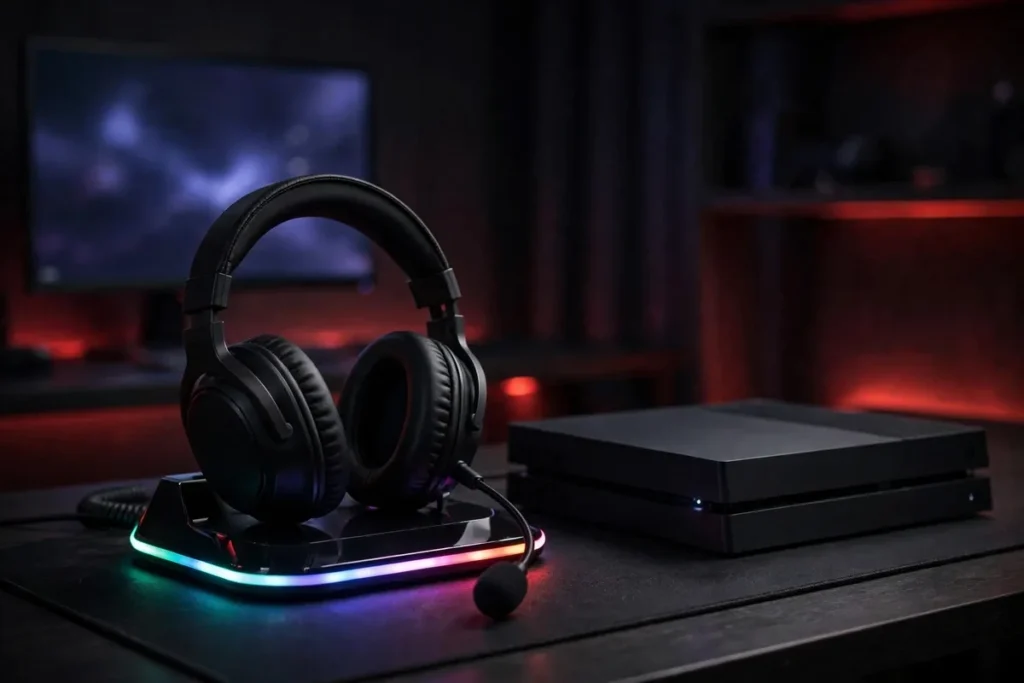
The RIG R8 Spectre Pro is Nacon’s new flagship gaming headset, built as the successor to the well-liked RIG 800 Pro. It pairs 40 mm graphene-coated drivers tuned for first-person shooters with dual wireless: a low-latency 2.4 GHz link for game audio and Bluetooth 5.2 running at the same time for calls and mobile Discord. Add an RGB charging base station, a full-bandwidth boom microphone and a battery rated past 60 hours. It went on sale in the US on April 24, 2026, in two versions you must not mix up: the HS, officially licensed for PlayStation, and the HX, certified for Xbox. The Amazon listing linked throughout this review is the HS.
This review is built from RIG’s published specifications, the verified US Amazon listing and hands-on coverage from other publications rather than our own testing. The scores are provisional.

RIG R8 Spectre Pro HS 8.0/10 provisional
Why you: you play competitive shooters on PS5 or PC and want positional audio you can trust, a mic your squad hears clearly, and a dock that keeps the headset charged between sessions.
Trade-off: there is no active noise cancelling, and the variant split is strict. The HS linked here is the PlayStation model, so Xbox players need the HX version instead.
40 mm graphene drivers · Dual 2.4 GHz + Bluetooth 5.2 · 60+ h battery · RGB charging base station
What the R8 Spectre Pro is
RIG made its name on the 800 Pro, a headset players bought for comfort and a good microphone. The R8 Spectre Pro keeps that formula and adds the features that have since become standard one tier up: simultaneous Bluetooth, a charging dock, an app with EQ, and swappable parts. RIG calls it the technical evolution of the 800 Pro, and the spec sheet backs that up.
The base station is the clearest sign of intent. Most rivals ship a dongle and a cable and leave charging to you. The R8 Spectre Pro lives on its dock, so it starts every session full, and the dock takes the 2.4 GHz adapter through a passthrough port: one USB-C cable handles both link and charging. Our roundup of the best premium gaming headsets shows the field it joins.
Design, comfort and the SNAP+LOCK system
The R8 Spectre Pro is an around-ear headset with memory foam in the headband and ear cushions, and a frame that folds flat for storage. At 364 grams it sits in the middle of the wireless pack: heavier than the Razer BlackShark V2 Pro, far lighter than the Audeze Maxwell 2. Hands-on reports agree the padding is generous and the clamp is gentle. TechRadar’s reviewer raised one fit caveat: the headband runs short, and on a smaller head the earcups can fan out slightly at the bottom instead of sealing evenly. If your head is on the smaller side, confirm the fit in person or through a returns window.
Customization runs through RIG’s SNAP+LOCK system. The ear cushions and outer Mod-Plates attach magnetically and swap without tools, so worn cushions become a cheap replacement instead of a reason to retire the headset. RIG also sells limited-edition plates and publishes 3D print files. Earcup controls cover power, volume, game and chat mix, transmitter switching, Bluetooth pairing and mic mute.
Sound: graphene drivers tuned for shooters
The drivers are 40 mm units with a graphene layer coated onto a mylar diaphragm. Graphene stiffens the diaphragm, so it moves in a more controlled way and distorts less. RIG claims total harmonic distortion under 0.5% across the range, and the frequency response is quoted at 20 Hz to 40 kHz with 32-ohm impedance, so any console or PC drives it easily. Treat the distortion figure as a manufacturer claim, but hands-on reviews back the direction: tight, clean sound and positional cues that are easy to place.
The tuning is deliberate. RIG boosts the upper midrange, where footsteps, reloads and movement cues live, and the HS is optimized for PlayStation’s Tempest 3D Audio while the HX carries Dolby Atmos support. One criticism has appeared more than once: maximum volume. The Shortcut’s review found the HS does not get as loud as some rivals at full tilt. In a quiet room that is a footnote; in a loud house it may matter, and it is part of why our sound score sits at 8.7 rather than the low 9s.
The microphone is a genuine step up
Most gaming headset mics send your voice up a narrow, compressed channel. The R8 Spectre Pro’s boom mic captures at full bandwidth, 16-bit and 48 kHz, the resolution of a decent USB microphone rather than a typical headset uplink. The capsule is a 6 mm cardioid unit, so it hears what is in front of it and rejects sound from the sides and behind, and RIG adds noise-rejection processing to keep keyboard clatter out of team chat. The boom flips up to mute and detaches fully.
That spec set puts the R8 in rare company at this level, and it is the main reason our calls score reaches 8.9. The Razer BlackShark V2 Pro holds the mic crown in our coverage so far, and our guide to the headset with the best mic shows what it has to beat. The RIG Navigator app adds mic gain and sidetone controls. Published mic recordings sound clear and full next to the thin output most wireless headsets produce, though a firm ranking needs more recordings in noisy rooms.
Battery, base station and dual wireless
Battery life is rated at over 60 hours from a 1,180 mAh lithium-ion cell: weeks of daily play between charges, and the dock makes even that easy to forget. The battery is user-replaceable, hidden under the left Mod-Plate. A sealed battery is the part that kills most wireless headsets after a few years; RIG has made it a service part instead.
The dual wireless system is the other headline. The 2.4 GHz USB-C adapter carries game audio with low latency, and Bluetooth 5.2 connects to a phone at the same time, mixing both feeds together. You can take a call or sit in a mobile Discord chat without leaving your game, and the earcup mix control sets the balance. Multi-system switching goes further: register up to four USB-C adapters, sold separately, and move between consoles and PCs at the push of a button. Wired fallbacks exist too, over USB-C and a 3.5 mm cable, for a flat battery or a handheld console.
Compatibility: the HS and HX split, stated plainly
This is the section to read before you order. The hardware is near-identical, but the variants are licensed for different consoles, and the split is not cosmetic. The HS is officially licensed for PlayStation: it connects to PS5 and PS4 over the 2.4 GHz adapter and is tuned for Tempest 3D Audio. It also works on PC, Mac, Nintendo Switch and Switch 2, and with any phone or tablet over Bluetooth. Our guide to the best headphones for PS5 covers the wider PlayStation field.
The HX is the Xbox version, certified for Xbox Series X|S and Xbox One, and it activates a lifetime Dolby Atmos for Headphones license through its transmitter. Xbox wireless requires a licensed adapter, so the HS cannot connect to an Xbox wirelessly, full stop. The HX is also reported to work on PS5, and PC players can choose either variant. If you play on Xbox, our roundup of the best gaming headsets for Xbox Series X is the comparison set, and the HX is the R8 you want there.
How it compares
The R8 Spectre Pro’s closest rivals are already in our premium roundup. The BlackShark V2 Pro still leads on microphone and overall polish. The Sony INZONE H9 is the PS5 pick with real noise cancelling, which the R8 lacks entirely. The HyperX Cloud Alpha Wireless plays a different game: a 300-hour battery and nothing else fancy. Rival scores are their published roundup scores; the R8’s 8.0 is provisional.
| Product | Driver | Battery | Wireless | SoundMavericks score | Check Price |
|---|---|---|---|---|---|
| RIG R8 Spectre Pro HS | 40 mm graphene-coated | 60+ h, charging dock | 2.4 GHz + Bluetooth 5.2, simultaneous | 8.0 (provisional) | Check Price |
 Razer BlackShark V2 Pro | 50 mm | 70 h | 2.4 GHz + Bluetooth, simultaneous | 8.8 | Check Price |
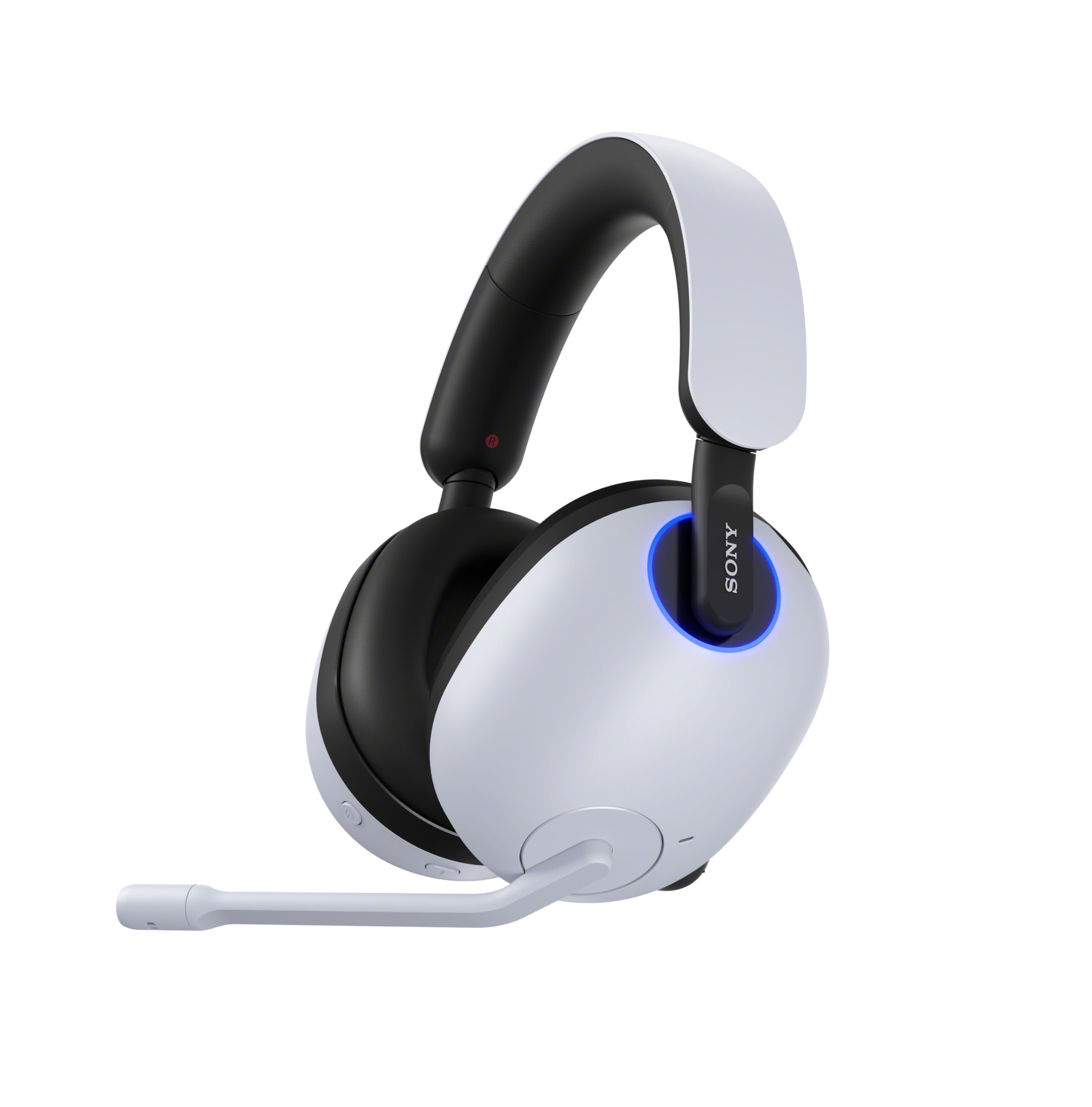 Sony INZONE H9 | 40 mm | 32 h | 2.4 GHz + Bluetooth, simultaneous | 8.7 | Check Price |
 HyperX Cloud Alpha Wireless | Dual-chamber 50 mm | 300 h | 2.4 GHz only, no Bluetooth | 8.7 | Check Price |
Pick the R8 Spectre Pro for the dock, the full-bandwidth mic and swappable parts in one package. Pick the BlackShark V2 Pro if microphone quality outranks everything else. Pick the INZONE H9 if you need active noise cancelling on PS5; its 32-hour battery is the cost. Pick the Cloud Alpha Wireless if you would rather charge four times a year, and accept no Bluetooth and no dock.
RIG R8 Spectre Pro specifications
| Product | RIG R8 Spectre Pro HS Check Price |
| Model | R8 PRO HS (SKU RIGR8PROHS); HX variant for Xbox |
| Driver | 40 mm graphene-coated mylar, custom-tuned for FPS |
| Frequency response | 20 Hz – 40 kHz |
| Impedance | 32 ohms |
| Microphone | 6 mm cardioid boom, 16-bit / 48 kHz full-bandwidth capture, noise rejection, flip-to-mute, detachable |
| Noise cancelling | None. Passive isolation from closed earcups only |
| Wireless | 2.4 GHz via USB-C adapter + Bluetooth 5.2, simultaneous mix; up to 4 adapters for multi-system switching (extras sold separately) |
| Wired options | USB-C, 3.5 mm |
| Battery | 60+ h per charge; 1,180 mAh lithium-ion, user-replaceable; RGB base station with dongle passthrough |
| App | RIG Navigator (iOS and Android): EQ, mic gain, sidetone, per-game profiles |
| Weight | 364 g |
| Compatibility | HS: PS5, PS4, PC, Mac, Switch / Switch 2, Bluetooth devices. HX: Xbox Series X|S, Xbox One, PC (Atmos license included) |
What we still need to test
Four questions keep these scores provisional. First, fit across head sizes: the short-headband report needs a second and third opinion, because comfort is half the reason to buy a RIG. Second, the microphone in hostile conditions, a mechanical keyboard and a loud room, recorded against the BlackShark V2 Pro’s output. Third, real battery drain with both radios running at once, since the 60-hour rating will not have been measured with phone audio mixed over game audio. Fourth, maximum volume headroom on the HS, following The Shortcut’s finding that it tops out early. When long-term reviews settle those points, we will update the scores.
FAQ
What is the difference between the RIG R8 Spectre Pro HS and HX?
The hardware is near-identical; the licensing and spatial audio differ. The HS is officially licensed for PlayStation and tuned for Tempest 3D Audio. The HX is certified for Xbox and includes a lifetime Dolby Atmos for Headphones license through its transmitter. Both work on PC. The listing linked in this review is the HS.
Does the RIG R8 Spectre Pro have noise cancelling?
No. There is no active noise cancelling on either variant. The closed earcups and memory foam cushions give passive isolation only. The microphone’s noise rejection cleans up your outgoing voice for your team; it does not quiet the room around you.
How long does the RIG R8 Spectre Pro battery last?
RIG rates it at over 60 hours per charge from a 1,180 mAh lithium-ion battery. The headset charges on the included base station between sessions, and the battery is user-replaceable, so a worn cell is a spare part rather than a dead headset.
Can the R8 Spectre Pro play game audio and phone audio at the same time?
Yes. The 2.4 GHz adapter carries game audio while Bluetooth 5.2 connects to your phone, and the feeds mix together. You can answer a call or join a mobile Discord chat mid-game; the earcup mix control sets the balance.
Does the RIG R8 Spectre Pro HS work on Xbox?
No. Xbox wireless requires a licensed adapter, and the HS is the PlayStation model. For Xbox Series X|S or Xbox One you need the HX variant, which also works on PC. The HS works on PS5, PS4, PC, Mac, Switch and Bluetooth devices.
Can you replace the ear cushions and battery?
Yes to both. The ear cushions and outer Mod-Plates attach magnetically through SNAP+LOCK and swap without tools, and the battery sits under the left Mod-Plate. Spares are sold separately.
Verdict
The R8 Spectre Pro gets the daily routine of console gaming right. It sounds clean and deliberate, its microphone is a class above most wireless rivals, and the dock means it is charged every time you pick it up. The replaceable battery and magnetic cushions suggest RIG expects you to keep it for years. The limits are equally clear: no active noise cancelling, a headband that may run short on smaller heads, a volume ceiling some reviewers found low, and a variant split that punishes a careless order. Buy the version that matches your console and it is one of the most complete headsets at its level. Our provisional score is 8.0 out of 10.

I am the founder of Sound Mavericks, where I provide the polite truth about audio equipment. I started this site because consumer electronics reviews are often too technical. Instead of using a silent lab, I test headphones, earbuds, and Bluetooth speakers in the real world – like on a noisy subway or in a busy coffee shop.
To stay independent, I buy my own review units (mostly from the United States) rather than accepting free gifts from brands. Once I finish testing a product, I sell it locally to our community. My goal is to help you understand sound quality, active noise cancellation (ANC), and battery life without the marketing hype.
