
The Verdict
In this OnePlus Buds 4 review, one thing stands out immediately: these are the most sonically ambitious earbuds OnePlus has ever shipped. Dual drivers and dual DACs in each earbud, adaptive ANC rated up to 55dB, Bluetooth 5.4 with LHDC 5.0 hi-res audio, and a 45-hour total battery with wireless charging — the spec sheet reads like flagship hardware. After weighing every published review, hands-on test, and the manufacturer’s own specifications, our verdict is that the Buds 4 deliver near-flagship sound and genuinely excellent battery life, with noise cancelling that impresses most reviewers but underwhelms a couple of them. SoundMavericks score: 8.7/10. (Full transparency: we haven’t tested a unit ourselves — this review is built from published reviews, manufacturer-published specs, and Amazon listing data.)
| Sound Quality | 8.8 |
| Noise Cancelling | 8.2 |
| Comfort & Design | 8.7 |
| Battery Life | 8.8 |
| Call Quality | 8.5 |
| Value | 9.0 |
Design & Comfort: Light, Tough, and Easy on the Ears
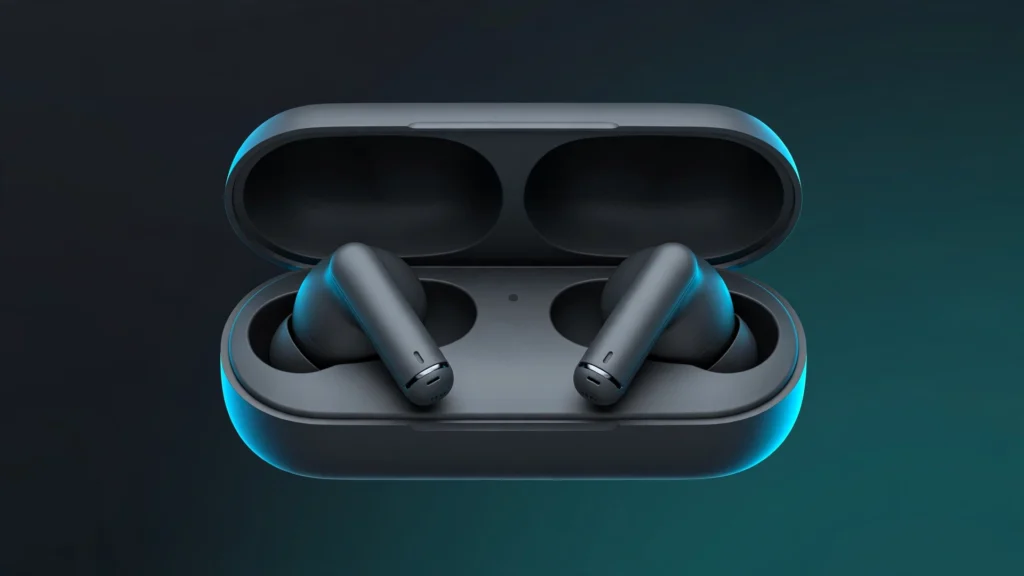
The OnePlus Buds 4 keep the familiar stem-style silhouette of the Buds 3 but refine it in the places that matter. The stems now have flatter sides, which makes the swipe-up / swipe-down volume gesture genuinely usable instead of fiddly — one of the small quality-of-life upgrades reviewers noticed right away. Each bud weighs just 4.73g, the whole set feels featherweight in the ear, and the matte finish (Storm Gray or the lighter Zen Green) resists fingerprints far better than glossy rivals.
Fit is handled by a set of included ear tips in multiple sizes, and reviewers broadly report a secure, comfortable seal that survives workouts and long listening sessions. Durability is a genuine selling point too: the buds carry an IP55 dust-and-water rating, so sweat and rain are non-issues. That puts them comfortably in gym territory — see our best waterproof headphones for shower and running guide for context. The charging case is compact (about 40g) and supports both USB-C and wireless charging, which is still not a given at this tier.
Sound Quality: Dual Drivers, Dual DACs, Real Detail
This is where OnePlus threw the kitchen sink. Each earbud carries an 11mm woofer and a 6mm tweeter — two dedicated drivers per side, where most rivals in this class make do with one — and each driver gets its own DAC. It’s an architecture you’d normally associate with much pricier hardware, and it shows: published reviews consistently describe wide, well-defined sound with crisp highs, clear vocals, and bass that hits hard without smearing the mids. If bass impact is your priority, the Buds 4 also deserve a look alongside our best bass wireless earbuds picks.
On codecs, the Buds 4 support LHDC 5.0 (up to 1Mbps, 24-bit/192kHz hi-res) alongside AAC and SBC — more on how that stacks up in our Bluetooth codecs explained guide. One caveat from the review consensus: the out-of-the-box tuning leans bass-heavy, so bass-first listeners will love it immediately while purists will want to open the companion app and tweak the EQ. Do that, and multiple reviewers say the Buds 4 punch well above their class. The Golden Sound hearing test personalizes the curve further, and 3D spatial audio is on board — though Tom’s Guide found the spatial effect underwhelming, so don’t buy these for the 3D mode.
Noise Cancelling: Strong on Paper, Split Reviews in Practice
OnePlus rates the Buds 4’s adaptive ANC at up to 55dB, with real-time adjustment that samples ambient noise up to 800 times per second and an all-new Adaptive Mode that blends ANC and transparency automatically. On paper, that’s flagship-adjacent. In practice, the reviewer verdict is split — and it’s the one area where we dock points.
On the positive side, specialist reviewers called the ANC some of the best they’ve heard in mid-range earbuds, praising how well it handled gym noise and busy streets, and noted the transparency mode is a big step up from the Buds 3. On the other side, Tom’s Guide tested the same hardware and came away disappointed with the noise cancelling. Our take: the ANC is good — probably better than most rivals in the under-$150 class, where the Buds 4 rightly belong in our best noise cancelling earbuds under $150 roundup — but it’s not the class of the field, and expectations set by that 55dB figure should be calibrated. If ANC is your number-one priority above all else, the dedicated ANC flagships we cover still win; if you want it bundled with great sound and battery, the Buds 4 are a strong package.
Battery Life: Among the Best in Class
Endurance is the Buds 4’s least controversial strength. OnePlus claims up to 45 hours total with the charging case (ANC off) — about 11 hours per charge on the buds themselves — and around 6 hours per charge with ANC on. Quick charging is outstanding: 10 minutes in the case delivers up to 11 hours of playback, which is among the fastest top-ups we’ve seen listed at this tier. The 530mAh case refuels over USB-C or wirelessly, and a full charge takes about 80 minutes. Even the least generous published review still ranked battery life as a highlight, and the most enthusiastic ones called it the best in the category.
Calls & Connectivity: Bluetooth 5.4 Done Right
Each bud carries three microphones, and reviewers rate call quality as genuinely good — voices come through clearly while background noise stays pushed back, even in challenging environments. For work-from-home warriors, they’re a credible contender for our best noise cancelling earbuds for phone calls list.
Connectivity is modern throughout: Bluetooth 5.4 with OnePlus’s Steady Connect for a more robust link (including extended range when paired with select OnePlus phones), dual-device connectivity so the buds hop between your phone and laptop without re-pairing — here’s how Bluetooth multipoint works if you’re new to it — plus Google Fast Pair on Android. Gamers get a dedicated low-latency mode rated at 47ms. The Bluetooth 5.4 radio also brings the usual efficiency gains; see our Bluetooth 5.3 vs 5.4 breakdown for what the newer standard actually changes.
Smart Features: The App and the OnePlus-Only Extras
The companion app (O+ / HeyMelody on non-OnePlus phones) handles EQ presets, control customization, the Golden Sound hearing test, firmware updates, and in-ear detection settings. Touch controls are sensibly laid out: single tap for play/pause, double/triple tap for track skipping, long-press to cycle ANC modes, and the stem swipe for volume. Reviewers found them intuitive, if occasionally finicky — a couple of mis-taps while adjusting fit is the main complaint.
The one real asterisk: OnePlus gates its flashiest extras behind its own phones. AI real-time translation and the extended Steady Connect range only work with select OnePlus handsets on recent OxygenOS. On any other phone, you still get the core experience — great sound, ANC, multipoint, LHDC — but not the headline party tricks. That’s worth knowing before you buy, and it’s the same ecosystem lock-in pattern most phone brands now follow.
OnePlus Buds 4 vs OnePlus Buds 3: Should You Upgrade?
This is one of the most-searched follow-ups, so let’s settle it. The Buds 4 build directly on the Buds 3 and fix its two weakest points:
- Noise cancelling: noticeably stronger on the Buds 4, filtering constant and higher-frequency sounds better and reacting faster to irregular noises.
- Sound balance: the Buds 4 sound more balanced, with more pronounced center-mids and better-controlled treble; the Buds 3 can sound airier but more metallic.
- Controls: the flatter stems make swipe volume easier on the Buds 4.
- Battery: slightly longer — tested at up to 7 hours with ANC on versus 6.5 on the Buds 3.
- Extras: the Buds 4 add live AI translation (OnePlus phones only) and a more polished spatial audio mode.
What didn’t change: IP55 rating, LHDC 5.0, multipoint, and the Golden Sound test all carried over. If you own the Buds 3 and love them, the Buds 4 are a logical but not essential upgrade — stronger ANC and a more balanced tune are the real reasons to switch. If you’re buying fresh, the Buds 4 are the pick.
Pros & Cons
| What We Like | What Could Be Better |
|---|---|
| Dual drivers + dual DACs per bud — genuinely detailed, dynamic sound | ANC divides reviewers — great per some, disappointing per others |
| 45-hour total battery with best-in-class 10-min quick charge | Default tuning is bass-heavy — EQ tweak recommended |
| Lightweight 4.73g buds with IP55 dust/water resistance | 3D spatial audio effect underwhelms |
| Bluetooth 5.4, dual-device, LHDC 5.0, wireless charging | Best features (AI translation, extended range) need a OnePlus phone |
| Strong call quality from triple-mic array | Touch controls can be finicky when adjusting fit |
Specifications
| OnePlus Buds 4 — Key Specs | |
|---|---|
| Drivers | 11mm woofer + 6mm tweeter per bud, twin tailored DACs |
| Noise cancelling | Adaptive ANC up to 55dB; Adaptive Mode auto-blends ANC & transparency |
| Codecs | LHDC 5.0 (1Mbps, 24-bit/192kHz), AAC, SBC |
| Bluetooth | 5.4 with Steady Connect, dual-device, Google Fast Pair |
| Frequency response | 15Hz – 40kHz |
| Battery life | Up to 45h total / 11h per charge (ANC off); ~6h per charge (ANC on) |
| Charging | USB-C + wireless; 10-min charge = up to 11h playback; 80-min full charge |
| Microphones | 3 per bud; up to 6h talk time (ANC off) |
| Water resistance | IP55 dust & water resistant |
| Weight | 4.73g per bud; ~40g case |
| Colors | Storm Gray, Zen Green |
| Extras | 47ms low-latency game mode, in-ear detection, Golden Sound hearing test, AI translation (select OnePlus phones) |
Frequently Asked Questions
How long is the OnePlus Buds 4 battery life?
Up to 45 hours total with the charging case when ANC is off — about 11 hours per charge on the buds themselves. With ANC on, expect around 6 hours per charge. A 10-minute quick charge delivers up to 11 hours of playback.
Are the OnePlus Buds 4 worth it?
For most buyers, yes. You get dual-driver/dual-DAC sound, LHDC 5.0 hi-res audio, Bluetooth 5.4 with multipoint, wireless charging, and a 45-hour battery — a flagship-leaning feature set. The main compromises are ANC that divides reviewers and extras locked to OnePlus phones.
Are OnePlus Buds 4 waterproof?
They carry an IP55 rating for dust and water resistance, so sweat and rain are fine. They’re not rated for swimming or submersion — keep them out of the pool.
Do the OnePlus Buds 4 support wireless charging?
Yes — the charging case supports both wireless charging and USB-C wired charging, a full charge taking about 80 minutes.
Can the OnePlus Buds 4 connect to two devices at once?
Yes. Dual-device connectivity lets the Buds 4 stay paired to two devices (for example a phone and a laptop) and switch between them automatically.
What’s the difference between the OnePlus Buds 4 and Buds 3?
The Buds 4 bring noticeably stronger ANC, a more balanced sound signature, easier swipe-volume controls, slightly longer battery, and AI translation (OnePlus phones only). The Buds 3 share the IP55 rating, LHDC 5.0, and multipoint, so they’re still a fine budget alternative.
The Bottom Line
The OnePlus Buds 4 are OnePlus’s strongest argument yet that you don’t need flagship money for flagship sound. The dual-driver, dual-DAC architecture delivers detail and dynamics that reviewers consistently place a tier above the asking class, and the battery life is genuinely best-in-class. The ANC is good but not great, the default tuning wants an EQ nudge, and OnePlus keeps its flashiest tricks for its own phones — know that going in and there’s very little to complain about. For Android users shopping the under-$150 tier, these belong on the shortlist.

I am the founder of Sound Mavericks, where I provide the polite truth about audio equipment. I started this site because consumer electronics reviews are often too technical. Instead of using a silent lab, I test headphones, earbuds, and Bluetooth speakers in the real world – like on a noisy subway or in a busy coffee shop.
To stay independent, I buy my own review units (mostly from the United States) rather than accepting free gifts from brands. Once I finish testing a product, I sell it locally to our community. My goal is to help you understand sound quality, active noise cancellation (ANC), and battery life without the marketing hype.