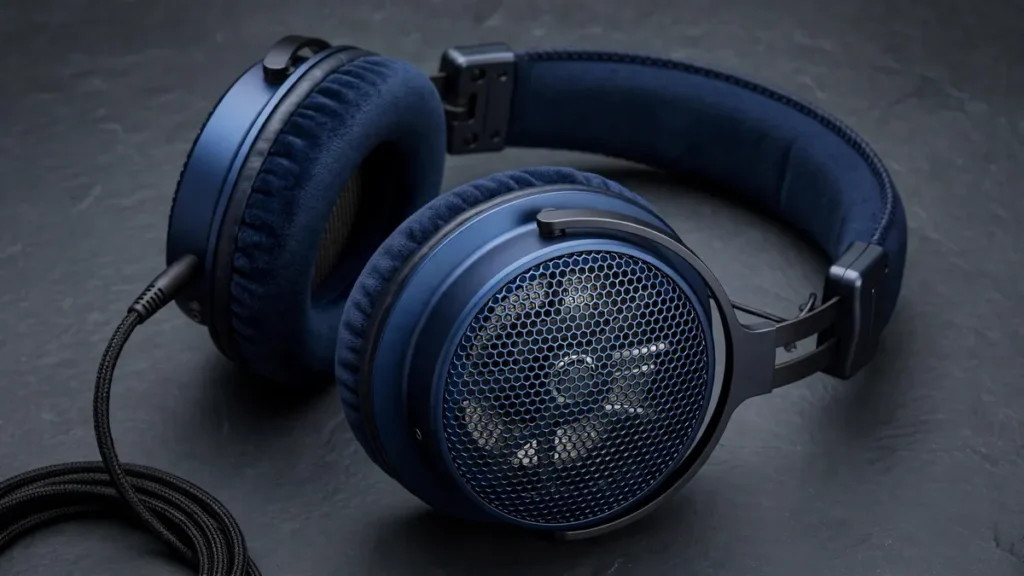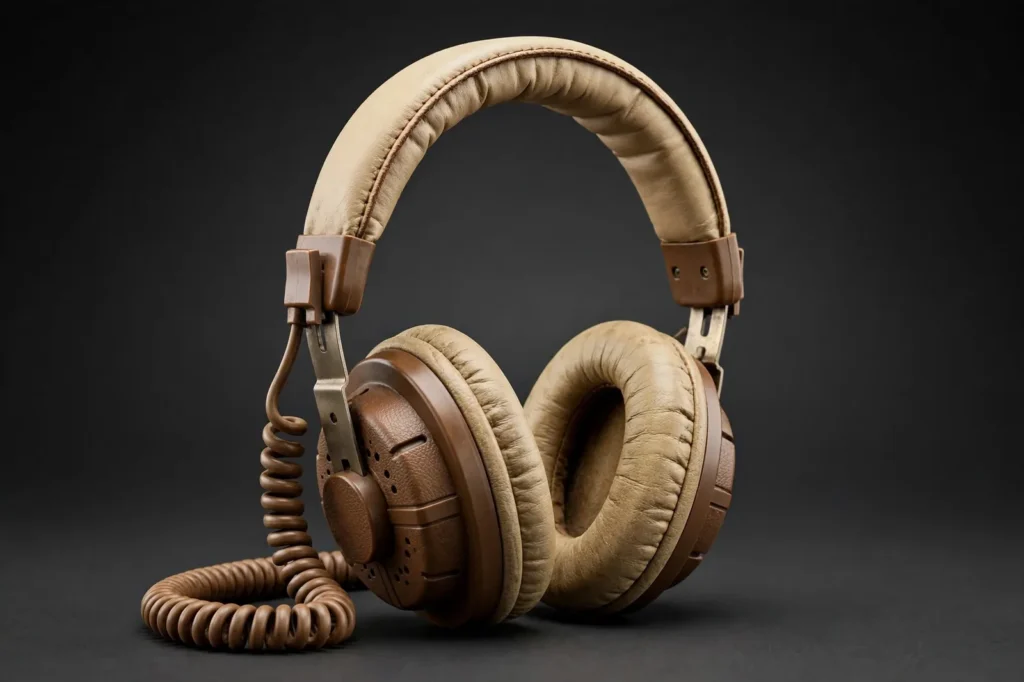
The koss pro 4aa headphones are a genuine piece of audio history you can still buy new today. Introduced in 1970 as the first dynamic headphones to deliver true full-frequency, high-fidelity performance, the PRO4AA became a staple of radio and recording studios for decades. Koss retired the model in the late 1980s — then brought it back because broadcasters and studios kept demanding it. In 2026, it’s essentially the same headphone: a closed-back, 250-ohm wired studio design with an 8-foot coiled cord and a look that hasn’t changed in half a century.
Our verdict, based on Koss’s published specs, the product documentation, and what long-term owners report: the Koss Pro 4AA headphones remain a legitimate reference point for studio and home listening — with a warm, isolating closed-back sound, tank-like build, and one of the best warranties in audio. But they’re heavy, need proper amplification to sound their best, and come with zero modern conveniences. This review breaks down the real specs, what they sound like, and who should (and shouldn’t) buy them in 2026.
SoundMavericks Review: Koss Pro 4AA Headphones
| Sound Quality | 8.8 |
| Isolation | 9.0 |
| Comfort & Design | 7.0 |
| Features & Connectivity | 6.0 |
| Durability | 9.2 |
| Value | 9.0 |

Koss Pro 4AA Headphones Specs
Here are the official specs, from Koss’s documentation and current product listings:
| Driver type | Dynamic |
| Frequency response | 10 – 25,000 Hz |
| Impedance | 250 ohms |
| Sensitivity | 95 dB SPL/1mW |
| Ear coupling | Circumaural (over-ear), closed-back |
| Cable | 8 ft coiled cord, single entry |
| Connector | 6.3 mm (1/4 inch) stereo plug |
| Foldable | No |
| Bluetooth / ANC / microphone | None — wired only |
| Headband | Steel with padded rubber band, adjustable slide bars |
| Weight | About 22.6 oz (heavy by modern standards) |
| Warranty | Koss limited lifetime warranty |
Sound Quality: Vintage Studio Tuning
The Koss Pro 4AA headphones have a sound that divides listeners the way any 50-year-old design will: it’s colored, characterful, and unapologetic about it. The closed-back design delivers strong passive isolation — Koss historically advertised the sealed cushions for studio tracking work — and the overall tuning leans warm and full in the mid-bass with a smooth, non-fatiguing treble. This is the headphone that sat on radio-station consoles for decades because announcers and engineers could wear it for hours without ear fatigue, and because its strong isolation let them hear the feed in a loud control room.
Owner reports are consistent on two points. First, the seal matters: the Pro 4AA needs the ear cushions seated firmly against the head to sound right — a loose fit reportedly thins out the bass and makes them sound tinny. Second, the 250-ohm impedance and 95 dB sensitivity mean they want a real source behind them. Owners note they can be driven from a basic dongle, but they open up properly on a headphone output or dedicated amp — which is exactly the studio gear they were designed for. If you’re wondering how impedance interacts with amplification, our guide to impedance and amps explains the mechanics, and we’ve rounded up the best headphone amps if you need one.
Set expectations honestly: this is not a detail-monster in the modern sense. Against contemporary studio headphones, the Pro 4AA’s treble extension and resolution are of another era — some owners even prefer its vintage charm to newer models for relaxed listening, while others keep it as a secondary pair for mix-checking. What it does offer is a big, forgiving, closed-back presentation that suits broadcast, tracking, and long listening sessions. If you want reference-flat modern tuning, see our best headphones for mixing roundup instead.
Build and Comfort: Built Like Studio Gear
The Pro 4AA’s construction is the main reason it’s still here. The headband is steel with a generously padded rubber band, and the fit adjusts via metal slide bars rather than the plastic sliders that break on so many modern headphones. The earcups are big, full-size over-ears, and the whole thing feels like broadcast equipment — because that’s what it is. Durability is the strongest argument in its favor after the warranty: these are headphones you repair, not replace.
Comfort is the tradeoff. At roughly 22.6 ounces — well over twice what a modern wireless flagship weighs — the Pro 4AA is unmistakably heavy on the head, and owners widely report a firm clamping force. The padded headband distributes the weight reasonably well, and some owners praise the cushion design for even pressure, but this is not an all-day comfort champion by today’s standards. Listeners with larger heads or who wear glasses should expect a break-in period, and the non-folding design means these live at the desk or in the studio, not in a bag. For a closed-back refresher on what this design buys you, see our open-back vs closed-back explainer — and our best closed-back headphones list for modern alternatives.
Cable, Connectivity and What’s in the Box
There is nothing modern about the Pro 4AA’s connectivity, and that’s the point. You get a permanently attached 8-foot coiled cord (single entry, into the left earcup) terminating in a 6.3 mm (1/4-inch) stereo plug — the connector of mixing desks, broadcast consoles, and proper headphone amps. There’s no Bluetooth, no active noise cancelling, no microphone, no inline remote, and no 3.5 mm adapter in the box. To use it with a phone or laptop’s 3.5 mm jack, you’ll need a 1/4-to-1/8 inch adapter (cheap and widely available, but not included).
The coiled cord is a studio classic: it stretches when you lean back from the console and retracts so it doesn’t drag across the desk. At 8 feet extended it’s generous for desk use but cumbersome anywhere else — this is emphatically not a portable headphone. The lifetime warranty remains one of the standout features: Koss’s limited lifetime warranty covers the headphones long after most manufacturers’ two-year coverage expires, which is part of why vintage pairs from the 1970s and ’80s still circulate.
Who Should Buy the Koss Pro 4AA Headphones?
The Koss Pro 4AA headphones make sense for a specific buyer. Get them if you want a closed-back wired studio headphone with genuine broadcast heritage, strong passive isolation, a bulletproof build, and a lifetime warranty — for tracking, radio-style monitoring, or a vintage-flavored home listening setup. They’re also a reasonable second reference pair for producers who mix on something flatter and want a different perspective, and an easy gift pick for the retro-audio enthusiast.
Skip them if any of this sounds like you: you need portability or travel headphones (they’re heavy and don’t fold), you listen primarily from a phone (the 1/4-inch plug and 250-ohm impedance fight you), you want wireless, ANC, or a mic, or you need ruler-flat reference tuning for critical mixing. Modern studio headphones give you more resolution for less weight; modern wireless headphones give you convenience this can’t touch.
Koss Pro 4AA vs Sony MDR-7506
The most common comparison question is the Pro 4AA versus the Sony MDR-7506 — the other immortal studio headphone. They’re both closed-back wired classics, but they serve different masters. The Sony MDR-7506 is lighter, folds for transport, terminates in a 3.5 mm plug with a 1/4-inch adapter, and runs at 63 ohms — easy to drive from anything, which is why it’s the default tracking headphone in video production. The Koss Pro 4AA is heavier, more isolating, needs an amp or strong source to shine, and has a warmer, more relaxed vintage tuning versus the Sony’s brighter, more analytical edge. Choose the Sony if portability and easy drive matter; choose the Koss if you want maximum isolation, lifetime-warranty durability, and a vintage character the Sony deliberately avoids.
Pros and Cons
Pros
- Genuine studio heritage: in continuous production lineage since 1970
- Strong passive isolation from the closed-back, sealed-cushion design
- Tank-like build: steel headband, slide-bar adjustment, no fragile hinges
- Koss limited lifetime warranty — rare in any price bracket
- Warm, non-fatiguing sound suited to long sessions
- 8-foot coiled cord is ideal for console and desk use
Cons
- Heavy (about 22.6 oz) with a firm clamp — not an all-day comfort pick
- 250-ohm impedance needs a proper amp or strong source for best results
- 1/4-inch plug only; needs an adapter for phones and laptops
- No Bluetooth, no ANC, no microphone, no folding
- Vintage tuning — not the resolution of a modern reference headphone
- Beige retro look isn’t for everyone
FAQ: Koss Pro 4AA Headphones
Are the Koss Pro 4AA good headphones?
For their intended use — wired studio and home listening — yes, with caveats. The Koss Pro 4AA headphones offer strong isolation, durable construction, a warm non-fatiguing sound, and a lifetime warranty. They’re not good as an all-rounder in 2026: they’re heavy, need amplification, and lack every modern convenience. Buy them for what they are, not as a substitute for a modern wireless or reference headphone.
What are the Koss Pro 4AA specs?
The headline specs: dynamic drivers, 10–25,000 Hz frequency response, 250-ohm impedance, 95 dB SPL/1mW sensitivity, closed-back over-ear design, 8-foot coiled cord with a 6.3 mm (1/4-inch) plug, and Koss’s limited lifetime warranty. They are wired-only with no Bluetooth, ANC, or microphone.
Do the Koss Pro 4AA need an amp?
They strongly benefit from one. At 250 ohms and 95 dB sensitivity, the Pro 4AA is designed for headphone outputs on mixers, interfaces, and dedicated amps. A phone dongle or basic laptop jack will drive them to moderate volume, but dynamics and bass control improve noticeably with proper amplification. If your source chain lacks a strong output, budget for an amp — our impedance guide explains why.
Are Koss Pro 4AA good for studio use?
Yes — that’s what they were made for. The closed-back design isolates well for vocal tracking and broadcast monitoring, the coiled cord suits console work, and the build survives daily studio abuse. For critical mixing decisions, most engineers pair them with a flatter reference headphone; the Pro 4AA is better as a tracking and listening tool than as a sole mixing reference.
Koss Pro 4AA vs Sony MDR-7506 — which is better?
Neither is universally better; they optimize for different things. The Sony MDR-7506 is lighter, folds, drives easily at 63 ohms, and sounds brighter and more analytical. The Koss Pro 4AA isolates better, lasts longer (lifetime warranty), and sounds warmer and more relaxed — but it’s heavy, needs an amp, and won’t leave the desk. For portable production work, pick the Sony; for stationary studio duty and character, pick the Koss.
Is the Koss Pro 4AA still made?
Yes. Koss retired the Pro 4AA in the late 1980s but returned it to the lineup due to demand, and it remains in production and sold new in 2026 — the current listing is sold as the “Rhythm Beige” wired version. Koss’s limited lifetime warranty applies to new purchases.
Verdict: Should You Buy the Koss Pro 4AA Headphones?
The koss pro 4aa headphones earn their 8.5 out of 10 the old-fashioned way: by being exactly what they claim to be. This is a half-century-old studio design that never tried to become anything else — closed-back isolation you can track vocals in, a build that shrugs off daily studio abuse, and a warranty that outlasts the competition’s entire ownership cycle. Paired with a proper amp, it’s a genuinely enjoyable, characterful listen for broadcast-style monitoring and relaxed home listening.
Buy it if you want a stationary wired studio headphone with heritage, isolation, and bulletproof build — or a second reference pair with vintage flavor. Skip it if you need portable, wireless, or easy-to-drive, or if flat reference tuning is your job. Within its lane, the Pro 4AA is a classic for a reason — and few classics are still available new with a lifetime warranty.

I am the founder of Sound Mavericks, where I provide the polite truth about audio equipment. I started this site because consumer electronics reviews are often too technical. Instead of using a silent lab, I test headphones, earbuds, and Bluetooth speakers in the real world – like on a noisy subway or in a busy coffee shop.
To stay independent, I buy my own review units (mostly from the United States) rather than accepting free gifts from brands. Once I finish testing a product, I sell it locally to our community. My goal is to help you understand sound quality, active noise cancellation (ANC), and battery life without the marketing hype.