
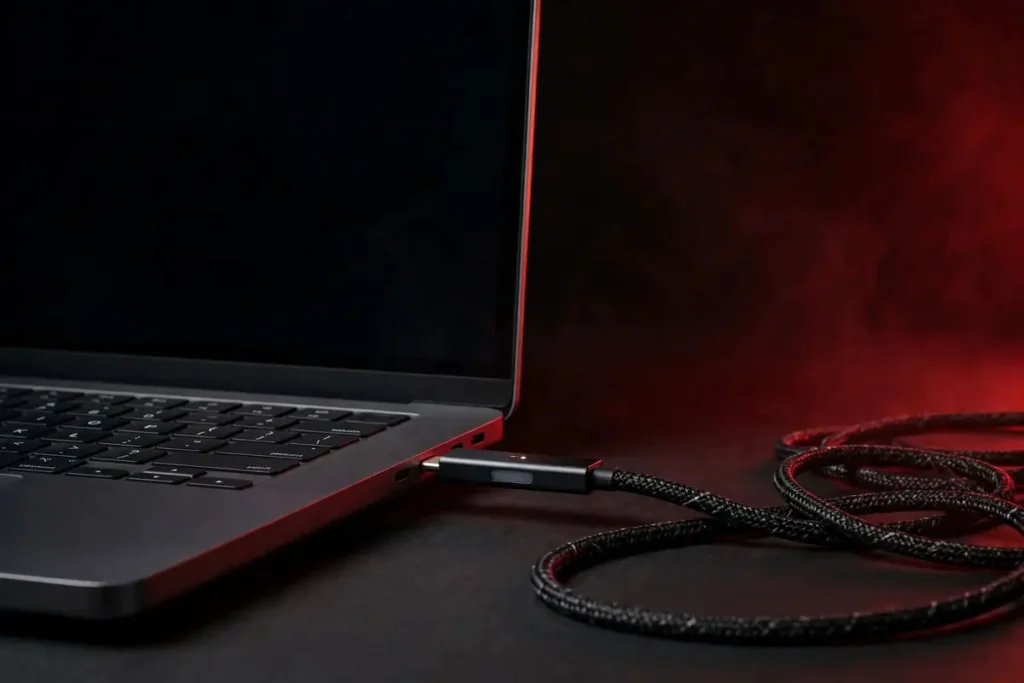
This helm audio bolt review covers Helm Audio’s USB-C dongle DAC and headphone amplifier: a metal DAC block on a short cable, a single 3.5mm output, full MQA rendering and a THX-certified amplifier stage, in a body barely bigger than the adapters bundled with phones.
A note on how this review was put together. It is a research review, built from Helm Audio’s published specifications, the verified Amazon US listing and independent review coverage, including owner reports on reliability. We have not had a unit on the desk, so there is no hands-on claim here, and there is no score. We do not score source gear from a spec sheet.

Why you: It does the full dongle job in a tiny body. PCM up to 384kHz, DSD up to 5.6 MHz and full MQA unfolding cover the hi-res bases, output reaches a 2-volt ceiling that drives most earphones and portable headphones properly, and an LED shows what kind of signal it is receiving.
Trade-off: One single-ended socket, no controls, no Bluetooth and no battery. Owner reports include units that stopped working, and MQA playback depends on the source app sending the stream correctly, which has broken for some users after phone software updates. Buy it for simple plug-in listening, not as a system hub.
Helm Audio Bolt specifications
| Product | Helm Audio Bolt USB-C dongle DAC and headphone amplifier |
| DAC chipset | ESS ES9281PRO |
| Formats | PCM up to 384kHz, DSD up to 5.6 MHz, full MQA rendering |
| Input | USB-C (audio and power from the host) |
| Output | 3.5mm single-ended, up to 2 V full-scale output |
| Certification | THX certified amplifier stage |
| Indicator | LED on the DAC block: blue for standard sample rates, red for high sample rates, magenta for MQA |
| Controls | None on the unit; volume is set on the host device |
| Where to buy | Helm Audio Bolt on Amazon US |
What the Bolt is for
The Bolt answers the same problem as every dongle DAC: the headphone output built into a phone or laptop is an afterthought, and on many phones it no longer exists at all. Where the Bolt set itself apart at launch was completeness. A full MQA renderer onboard, hi-res PCM and DSD support, a certified low-distortion amplifier stage and automatic matching to headphone impedance were features spread across larger devices at the time. Helm put them in a metal block at the end of a short cable.
The design keeps the DAC hardware away from the USB plug on its own short run of cable, with the amplifier in the same housing. A small carry pouch in the box holds the Bolt and a pair of earphones, which tells you the intended life: loose in a pocket or a bag, pulled out when wired listening starts. Our roundup of the best portable DACs and dongles shows how crowded that pocket category has become since, and the Bolt’s feature list is the reason it still gets a hearing in it. It also helps that the Bolt asks nothing of the listener: no firmware routine, no companion app, no battery to manage between sessions.
MQA, PCM and DSD: the format story
The ES9281PRO at the Bolt’s core is a DAC chip with MQA rendering built in, so the Bolt completes the final unfold of an MQA stream itself rather than relying on the player app to do part of the work. For Tidal listeners from the service’s MQA era, that was the headline: plug in, see the LED turn magenta, and the stream is handled end to end. MQA’s commercial footprint has shrunk since, and buyers should weigh that honestly. The Bolt’s value now rests more on its plain PCM and DSD handling, which covers hi-res downloads and every lossless streaming tier without fuss.
One practical catch runs through the owner reports. On Android, getting bit-perfect hi-res audio to any USB DAC depends on the app, because the system audio path resamples by default. Owners who wanted guaranteed full-resolution playback used a player with its own USB driver, and some found MQA delivery broke after phone software updates changed how their streaming app handed audio over. None of that is unique to Helm, but dongles live or die by the phone in front of them, and the Bolt’s forum history shows it plainly. Our guide to a portable DAC for iPhone covers the adapter side of the same story for Apple users, who need a Lightning or USB-C adapter path before the Bolt can connect at all.
Power and the THX badge
Output reaches a 2-volt full-scale ceiling, with a gain lift over a standard phone adapter and automatic adjustment for the headphones plugged in. Read plainly, that is enough for in-ear monitors of any sensitivity and for the broad middle of portable and home headphones. Independent reviewers at launch found it drove a wide selection of sensibly priced headphones to full listening level, while falling short of big desktop units on the hardest loads. Low-sensitivity planar headphones remain desktop-amp territory, as with every bus-powered dongle.
The THX certification on the box refers to the amplifier stage meeting THX limits for distortion and crosstalk, with the design isolating the audio path from interference generated by the phone. Certification is not a sound signature and it does not make the Bolt tuned in any particular direction. What it promises is a clean output stage, and the listening coverage broadly agreed the Bolt sounds clean, open and neutral rather than warmed up. Our explainer on what a DAC does is the right background for buyers deciding how much of that they can expect to hear.
Living with it, and the reliability question
Day to day, the Bolt is as simple as the category gets. There are no buttons, no app and no settings. Plug it in, set volume on the host, and read the LED: blue for standard rates, red for high rates, magenta for MQA. The metal housing feels a step above plastic adapters and the unit draws its power from the host, so there is nothing to charge.
The reliability record needs a straight mention, because a review that skipped it would not be doing its job. Among the many positive owner reports sit recurring ones of units that stopped working, sometimes early, alongside praise for Helm’s support replacing faulty units. The pattern suggests a product most owners are happy with and a failure rate worth knowing about. Buy through a channel with a painless returns route, and keep the receipt. That advice costs nothing and covers the one real risk in an otherwise simple purchase.
Verdict
The Bolt makes sense for a wired listener who wants one small dongle with full format coverage, a clean certified output stage and no settings to manage, and whose listening runs through earphones and portable headphones. Its MQA headline matters less than it once did, but the PCM and DSD core underneath it is sound. Skip it if you need a balanced output, onboard controls, or the reassurance of a spotless reliability record, and look at the wider dongle field instead.
Frequently asked questions
Does the Helm Audio Bolt work with an iPhone?
Yes, with an adapter. The Bolt itself ends in USB-C, so USB-C iPhones connect directly, while Lightning iPhones need Apple’s camera adapter or an equivalent USB adapter in between, as with other USB-C DACs.
Does the Helm Audio Bolt decode MQA by itself?
Yes. Its ESS ES9281PRO chip includes MQA rendering, so the Bolt completes the unfold onboard when the source app delivers an MQA stream. The LED on the body turns magenta to confirm an MQA signal.
Can the Helm Audio Bolt drive full-size headphones?
Most portable and efficient home headphones, yes. Its output reaches a 2-volt ceiling, which covers earphones and a wide range of headphones at full listening level. Low-sensitivity planar models still need a desktop amplifier.
Does the Helm Audio Bolt have volume controls or Bluetooth?
No. There are no controls on the unit at all, and volume is set on the phone or computer. It is a wired USB-C device with no Bluetooth receiver and no battery.
What do the Helm Audio Bolt LED colours mean?
Blue shows a standard sample rate signal, red shows a high sample rate signal, and magenta shows an MQA stream. It is the only display the Bolt has.

I am the founder of Sound Mavericks, where I provide the polite truth about audio equipment. I started this site because consumer electronics reviews are often too technical. Instead of using a silent lab, I test headphones, earbuds, and Bluetooth speakers in the real world – like on a noisy subway or in a busy coffee shop.
To stay independent, I buy my own review units (mostly from the United States) rather than accepting free gifts from brands. Once I finish testing a product, I sell it locally to our community. My goal is to help you understand sound quality, active noise cancellation (ANC), and battery life without the marketing hype.

