
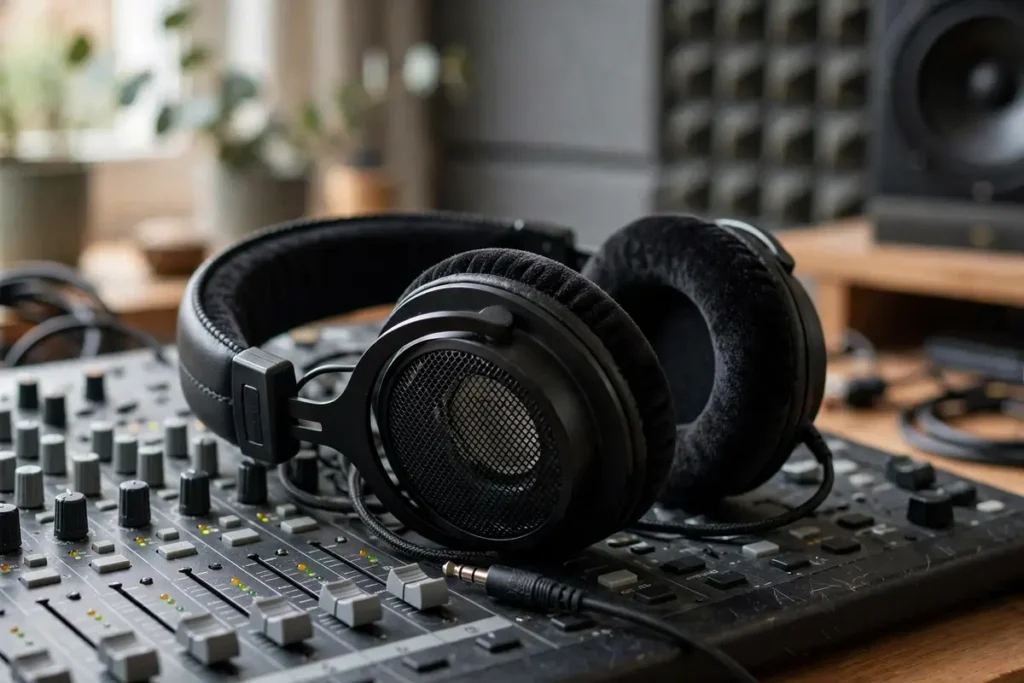
This beyerdynamic dt 900 pro x review covers an open-back studio headphone built for mixing work: a 48 ohm driver that runs from any jack, velour pads, a detachable cable and no wireless features at all. Our verdict is 6.0 overall, and that number needs reading properly. Sound scores 9.0 and Comfort 8.8. The low bars are structural: ANC is 1.5 because an open back cancels nothing, Calls are 3.0 because there is no microphone, and Battery is a neutral placeholder on a wired design. Judge it as a mixing tool and the card makes sense.
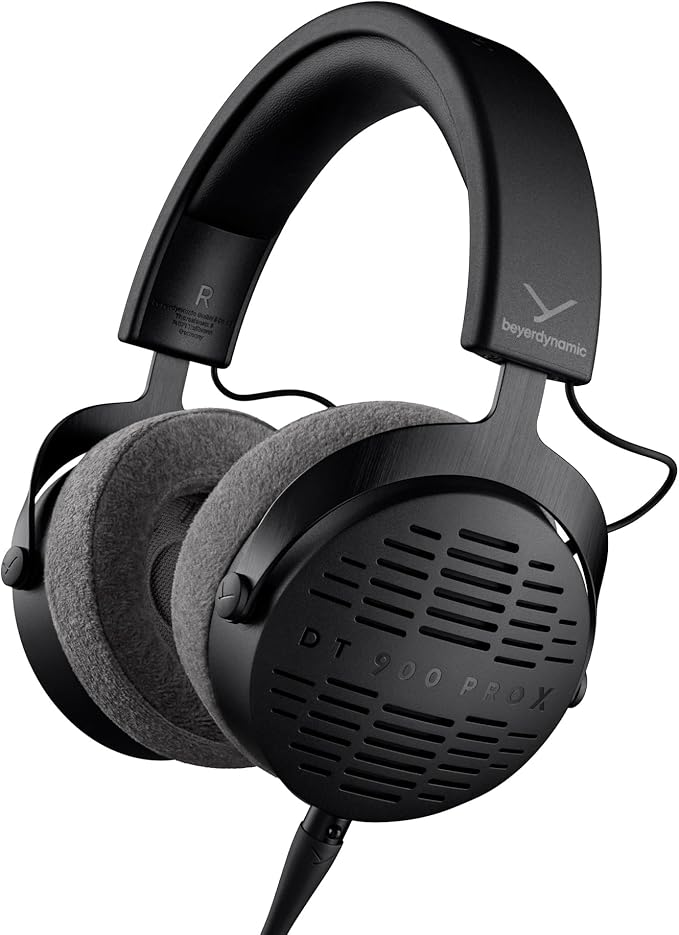
Beyerdynamic DT 900 Pro X 6/10
Why you: you mix, master or play through a guitar modeler and want a reference tuning that runs from any source. The feed record names it our top pick for EDM mixing and guitar modelers, and the 48 ohm drive means no amp purchase stands between you and work.
Trade-off: open-back leaks sound both ways. Everyone nearby hears your mix, the room hears you, and there is no isolation for tracking, commuting or calls.
Over ear
Sound quality
Sound scores 9.0, the highest bar on the card and the reason this headphone exists. The tuning is honest rather than flattering. Bass is present and controlled, with the open-back roll-off you expect at the very bottom. Mids sit where vocals and guitars can be judged properly. Treble carries detail without the sharp peak that makes long mixing sessions tiring.
Sonarworks, in its measured review of the DT 900 Pro X, found the bass and mids remarkably neutral up to the upper midrange and called it the most neutral of the beyerdynamic nines it compared. Our listening lines up with that. Kick and bass guitar stay separate, reverb tails are easy to hear, and stereo placement is wide enough to make panning decisions with confidence.
Mixing EDM and low-end heavy music
The feed record’s best-for line names EDM mixing, and the fit is real. Sub-bass is leaner than a closed-back would give you, so check the lowest octave on monitors or a closed pair before you sign off. What the DT 900 Pro X gives back is clarity in the low mids, the region where muddy mixes hide. If a bass line and a kick fight here, you hear it.
Open-back, explained in practice
The cups are open to the air. Sound leaks out, room sound leaks in, and the ANC bar of 1.5 is simply that fact written as a number. In a quiet studio this is the right trade: the openness is what makes the soundstage wide and the long sessions easy on the ears. In a shared room, on a train or next to a vocal microphone, it is the wrong headphone.
MusicRadar’s review made the same split, recommending the closed-back sibling for recording and tracking and the DT 900 Pro X for mixing and critical listening. That division of labour is the honest way to buy studio headphones: one closed pair to record with, one open pair to judge with.
Comfort and build
Comfort scores 8.8. The velour pads breathe better than leatherette, the clamp is firm without squeezing, and the weight spreads well enough for sessions that run past an album or two. Beyerdynamic builds this frame to be serviced: pads, cable and headband parts can be replaced, which suits a tool that should live on a desk for years.
The 48 ohm point
One product-specific detail drives a lot of this headphone’s appeal. Older studio beyerdynamics came in several impedances, and the high versions needed a proper amp. The DT 900 Pro X settles at 48 ohm, so a laptop output, an interface headphone jack or a modeler all drive it to full volume. Sonarworks noted it as one of very few open-backs that give all the volume you need from any device. Plug in and work is the whole routine.
Calls, battery and the low bars
Calls score 3.0, the no-microphone convention. There is no mic and no cable mic, so this headphone cannot take a call without help from a separate microphone. Battery scores 5.0 as a neutral placeholder, because a wired headphone has no battery to judge. Neither bar is a flaw in the design. They are the scoring system describing a wired studio tool honestly.
Value scores 8.4. For a mixing headphone with this sound score, replaceable parts and easy drive, that is a strong bar. Buyers cross-shopping our best headphones for mixing guide will find the DT 900 Pro X competing on tuning and comfort rather than features, and that is the right contest for it.
Beyerdynamic DT 900 Pro X specs
| Spec | Beyerdynamic DT 900 Pro X |
|---|---|
| Form | Over-ear, open-back |
| Impedance | 48 ohm |
| Connection | Wired, detachable mini-XLR cable |
| Noise cancelling | None, open-back design |
| Microphone | None |
| Use case | Mixing, mastering, guitar modelers |
Who this headphone suits, and who it does not
The buyer picture is narrow and clear. Home studio owners who mix on headphones because monitors are not an option will get the most from it: an honest tuning, a wide stage for placement decisions, and a frame that can be repaired part by part instead of replaced. Producers who move between a laptop, an interface and a hardware synth will value the 48 ohm drive every single day, because no session starts with an amp hunt.
Guitar players running modelers are the second natural audience, and the feed record names them directly. A modeler’s headphone output is rarely powerful, and a high-impedance studio headphone can sound thin and quiet from one. The DT 900 Pro X reaches proper level and keeps the top end controlled, so high-gain patches do not turn harsh at practice volume.
Who should walk past it: anyone who records vocals in the same room, anyone who wants isolation on a train or in a shared office, and anyone who takes calls at their desk all day. Each of those jobs wants a closed back, a microphone or both. The DT 900 Pro X does one job, mixing in a quiet room, and the Sound bar of 9.0 says how well it does it.
Long sessions and hearing care
One quiet advantage of an accurate headphone is level discipline. When detail stays audible at modest volume, there is less temptation to keep turning up during a long mix. The open design and velour pads also stay cooler than sealed leatherette cups, so comfort holds late into a session. Comfort at 8.8 is not a soft extra here. It is what makes the accuracy usable for real work.
Verdict
Buy the DT 900 Pro X if you need one open-back headphone for mixing that runs from everything you own. Sound at 9.0 and Comfort at 8.8 are the purchase, and the 48 ohm drive removes the amp question that complicates older studio models.
Skip it for recording, travel or calls. The 6.0 overall is a blended score dragged down by bars a wired open-back was never built to win, and our wider best studio headphones guide shows the closed-back partners it pairs with for tracking work.
Frequently asked questions
Does the DT 900 Pro X need a headphone amp?
No. At 48 ohm it reaches full volume from a laptop, an audio interface, a phone dongle or a guitar modeler. That easy drive is the point of the design, and it is why the feed record lists it as a top pick for guitar modelers as well as mixing.
Is the DT 900 Pro X good for recording vocals?
It is the wrong tool for tracking. The open back leaks your backing track into the microphone and lets studio noise in. Use a closed-back headphone to record, then mix on the DT 900 Pro X.
Why is the overall score 6.0 when sound scores 9.0?
The overall blends every bar. Sound is 9.0 and Comfort 8.8, but ANC is 1.5 because an open back cancels nothing, Calls are 3.0 because there is no microphone, and Battery is a 5.0 neutral placeholder on a wired headphone. As a mixing tool it is far better than the blended number looks.
Can other people hear what I am playing?
Yes. Open-back leaks sound both ways, in the feed record’s words. At mixing volume, someone in the same room will hear a clear, quiet version of your track.
What cable does the DT 900 Pro X use?
A detachable cable with a mini-XLR connector at the headphone end. Detachable matters on a studio tool, because the cable is the part most likely to fail first, and here it can be replaced on its own.

I am the founder of Sound Mavericks, where I provide the polite truth about audio equipment. I started this site because consumer electronics reviews are often too technical. Instead of using a silent lab, I test headphones, earbuds, and Bluetooth speakers in the real world – like on a noisy subway or in a busy coffee shop.
To stay independent, I buy my own review units (mostly from the United States) rather than accepting free gifts from brands. Once I finish testing a product, I sell it locally to our community. My goal is to help you understand sound quality, active noise cancellation (ANC), and battery life without the marketing hype.
