The best headphones right now are not a single pair. They are a short list, because the right answer depends on where the listening hours go: flights, calls, training, or a desk. If one name has to come first, it is the Sony WH-1000XM6. It scores near the top for sound, noise cancelling and comfort, and it avoids the weak category that lets most rivals down.
The eight picks below are drawn from the products we have reviewed and scored on this site, each rated the same way across sound, noise cancelling, calls, comfort, battery and value. Five are flagships, over-ear and earbud. One is a workout specialist with earhooks, one is a call-quality specialist, and one, the Soundcore Life Q30, costs a fraction of the rest and still holds a full score of 8.8. If a pick has a weakness, it is named in its card rather than buried.
Best overall: Sony WH-1000XM6: top scores across sound, ANC and comfort in one pair, and the one we recommend first. Check Price on Amazon
Best noise cancelling: Bose QuietComfort Ultra Headphones (2nd Gen): the strongest noise cancelling we score, with the plushest fit here. Check Price on Amazon
Best earbuds: Sony WF-1000XM6: flagship sound and ANC in earbud form, with LDAC for Android. Check Price on Amazon
Best for Apple users: Apple AirPods Pro 3: the default pick for iPhone owners, with heart-rate sensing on top. Check Price on Amazon
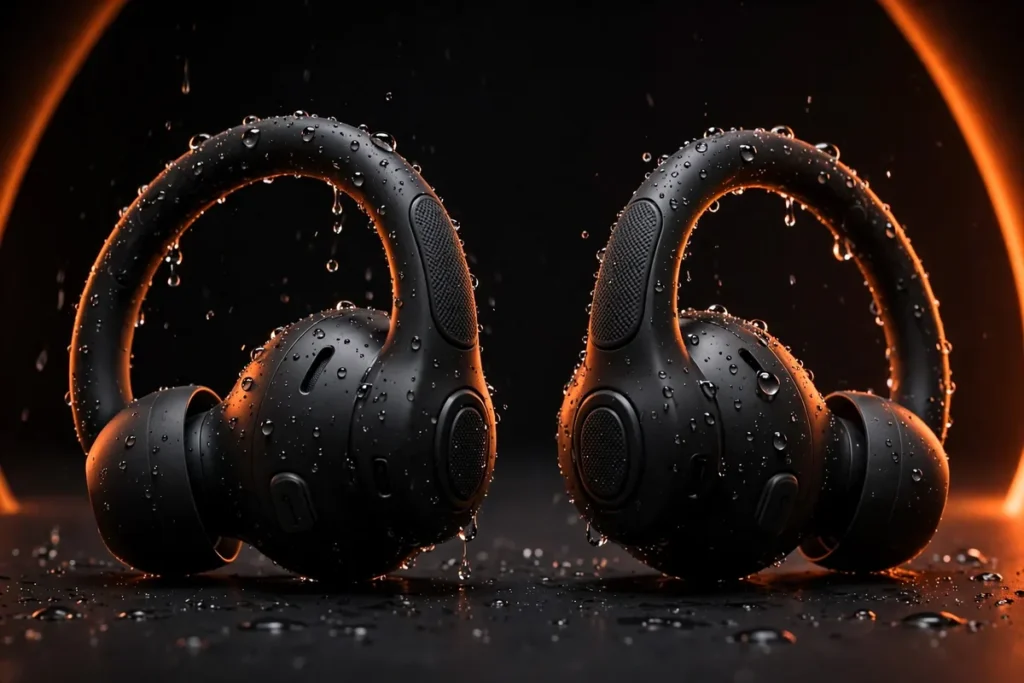
Best for workouts: Beats Powerbeats Pro 2: earhooks that stay put and heart-rate tracking for training. Check Price on Amazon
Best for calls: Technics EAH-AZ100: the clearest calls of any earbud we score, plus three-device multipoint. Check Price on Amazon
Best battery life: Sennheiser Momentum 4 Wireless: 60 hours of battery and sound that ties the Sony flagship. Check Price on Amazon
Best value: Soundcore Life Q30: most of the flagship experience for a fraction of the money. Check Price on Amazon
How we score, and what actually matters
Three things decide whether a pair of headphones earns its keep. The first is noise cancelling, and the gap at the top is real: our dedicated best noise cancelling headphones guide shows the same pattern as this page: Bose and Sony trade the lead, everyone else follows. The second is battery honesty. Maker figures are quoted with ANC on unless stated, and the case totals for earbuds include the recharges in the case, so an 8-hour bud with a 24-hour total is a 16-hour case, not a 24-hour one. The third is fit. A seal that breaks when you smile breaks the ANC and the bass with it.
Codecs matter less than the marketing suggests. On Android, LDAC and aptX Adaptive can carry more data from a compatible phone. On an iPhone, everything runs on AAC, and the Apple and Beats picks below are tuned for exactly that. Buy fit, silence and battery first; the codec is a tiebreak.
The best headphones, pick by pick
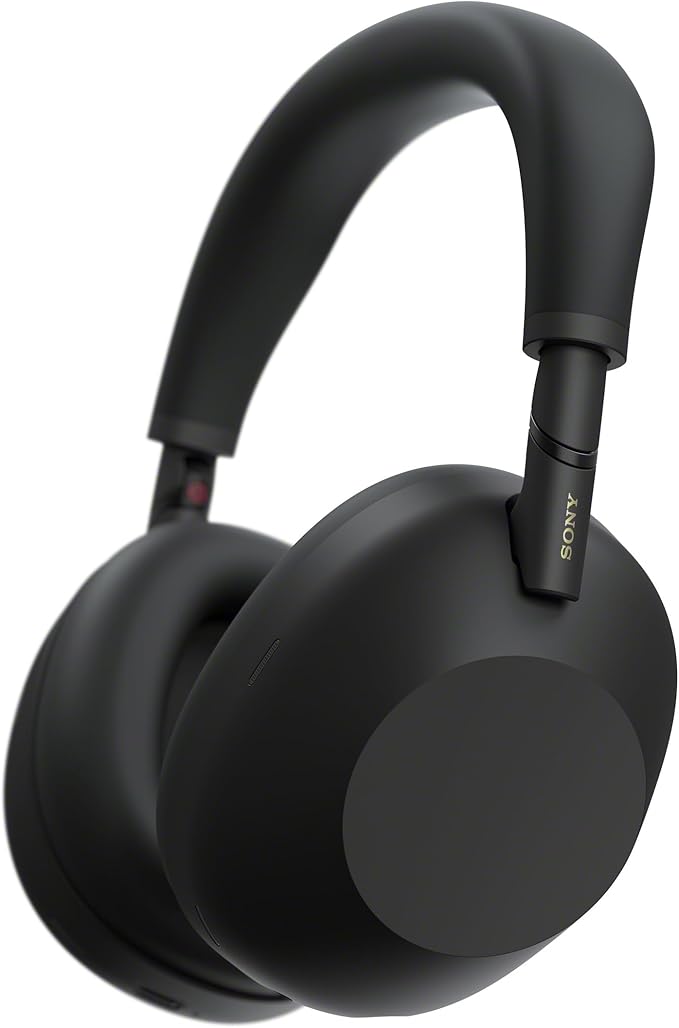
Why you: The complete package. Sound, noise cancelling and comfort all score near the top of this list at once, the battery runs 30 hours with ANC on, and multipoint pairing handles a laptop and a phone without fuss.
Trade-off: Flagship money, and the touch panel still takes a day or two to stop misreading swipes.
Sony’s flagship does the thing the rest of this list keeps almost doing: it has no soft category. The sound is detailed without turning sharp, the bass stays controlled at volume, and the 12-microphone ANC system holds its own against Bose in planes, trains and open offices. The cups fold flat again, so the case takes less bag space than the previous generation’s did.
It is the pair we send people to when the budget stretches to a flagship and the use case is a bit of everything. Our Sony WH-1000XM6 review goes deeper on the sound tuning and the microphone tests. If silence matters most, read the Bose card next.

Why you: The strongest noise cancelling we score, full stop. On a loud flight, nothing else on this page quiets the cabin further, and the plush fit earns the highest comfort mark on the list.
Trade-off: Immersive Audio cuts battery from 30 hours to about 24, and the tuning leans warm rather than neutral.
Bose built this pair around one job and did it better than anyone: quiet. The ANC score of 9.7 is the highest in this roundup, and CustomTune calibrates the sound and the cancelling to your ears each time you put the headphones on. Immersive Audio widens the stage usefully for films, though it is the reason the battery figure drops from 30 hours to about 24 in that mode.
Choose it over the Sony if your listening is mostly travel and you value a warm, relaxed tuning over the last degree of detail. Choose the Sony if you need the better all-round score set and the smaller case. It is also the comfort pick: at 9.2, the fit is the gentlest here for long sessions and glasses wearers.

Why you: The flagship argument in pocket form. Sound scores 9.4, the highest of any earbud here, the ANC sits just behind the Bose over-ears, and LDAC support keeps Android phones honest.
Trade-off: The case brings the total to 24 hours, which is mid-pack, and at 7.6 the value score is the lowest on this page.
Everything the big Sony does, shrunk into a pocket. The WF-1000XM6 posts the highest sound score of any earbud in this roundup at 9.4, its ANC at 9.5 sits within reach of the Bose over-ears, and call quality holds up outdoors better than most buds manage. The foam tips seal well once you get the size right, and that seal is doing much of the work.
The compromises are the usual earbud ones, priced in. The case total of 24 hours is fine rather than generous, and the value score of 7.6 reflects flagship money for a product category that dates quickly. Our Sony WF-1000XM6 review covers the fit kit and the app in full. If you know you want buds rather than over-ears, start there.
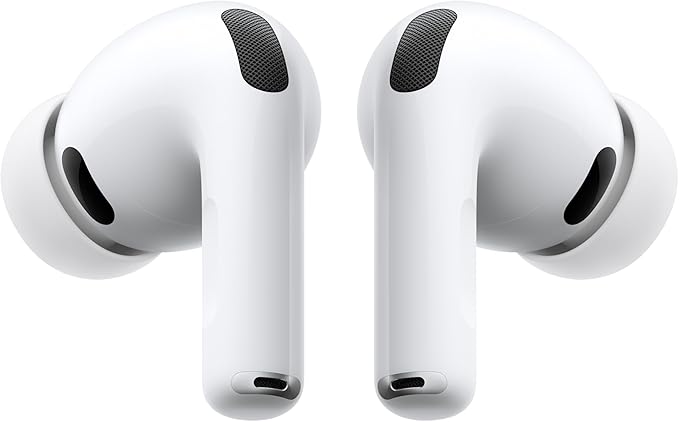
Why you: If your phone, laptop and watch are all Apple, nothing else integrates like this. The ANC is genuinely strong, calls are clean, and heart-rate sensing during workouts removes one more gadget from your bag.
Trade-off: The best features live inside Apple’s ecosystem, and there is no LDAC or aptX if you switch to Android later.
Within Apple’s ecosystem, the AirPods Pro 3 are the path of least resistance and, on the numbers, a strong pair of earbuds in their own right. Our published review scores them 8.6 overall, with ANC at 9.2 and calls at 9.0. The additions this generation are practical: heart-rate sensing during workouts, live translation through the paired iPhone, and a fit that stays sealed for more ear shapes than the previous model.
The catch is lock-in, and it is worth stating plainly. Spatial audio, the hearing features and the smoothest pairing all assume an iPhone at the centre. Paired with Android, these are good earbuds missing their best tricks. Our AirPods Pro 3 review breaks down which features need which device.

Why you: Earhooks that simply do not come loose, the highest comfort score here, and heart-rate monitoring that talks to your watch and training apps. Ten hours per charge covers a full week of sessions.
Trade-off: The charging case is the biggest on this list by a wide margin, and it charges over USB-C only, no wireless pad.
For training, the argument ends at the earhooks. The Powerbeats Pro 2 lock on before a run and stay on through it, with a comfort score of 9.5 that reflects hours of wear rather than minutes. Heart-rate monitoring feeds the Fitness app and common training apps, the H2 chip brings proper ANC this time, and ten hours per charge means the case comes out about once a week.
That case is the trade. It is the largest here, closer to a sunglasses case than a pocket item, and it charges by cable only. Sound favours bass weight over fine detail, which suits training playlists better than quiet listening. For gym-floor work the Sony buds above are smaller; for running in weather, these are the pick.

Why you: Call quality scores 9.5, the best we give any earbud, and the sound is close behind at 9.3. Multipoint holds three devices at once, so a laptop, a phone and a tablet can all stay connected.
Trade-off: Flagship pricing with a value score to match, and the ANC, while strong, trails the Sony buds by a clear step.
The AZ100 is the earbud for people whose day is calls with music between them. A 9.5 call score is the best we give, built on a microphone system that keeps your voice in front of office and street noise, and the magnetic fluid drivers give it sound quality that ties the best here at 9.3. Three-device multipoint is the quiet killer feature: a work laptop, a personal phone and a tablet can all stay paired.
You pay flagship money for it, and the value score of 7.8 says so. The ANC is strong but a step behind the Sony WF-1000XM6, and the case is plain. Buy it for the calls and the connection flexibility; buy the Sony for silence and value.

Why you: Sixty hours of battery, double the Sony flagship, with sound that ties it at 9.4. A week of office days or one very long trip on a single charge, with aptX Adaptive for Android.
Trade-off: The ANC scores 8.0, a clear step behind Sony and Bose on a loud flight, and the touch controls misread the odd swipe.
The Momentum 4 makes the simplest pitch on this page: charge it rarely, enjoy it daily. Sixty hours is double the Sony flagship’s battery, enough for a month of commutes or the longest itinerary you can book, and the sound ties the XM6 at 9.4 with a warmer, easier character. aptX Adaptive covers Android phones properly, and the wired USB-C mode doubles as a desk headphone.
Where it gives ground is noise cancelling: 8.0 is good, not class-leading, and on a full flight the Sony and Bose pull ahead audibly. The touch surface also misreads the occasional swipe. If your days are office, home and train rather than long-haul, the battery and the sound carry the argument.
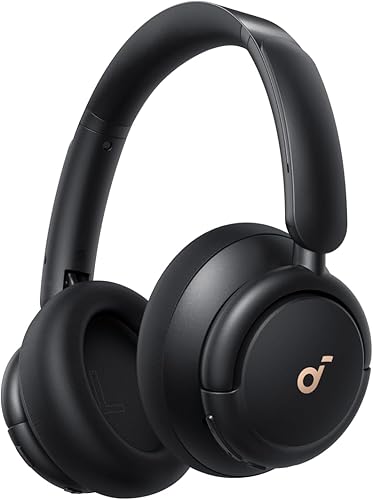
Why you: The budget reality check. ANC at 8.7 and 40 hours of battery get you most of the flagship experience, and our full score lands at 8.8, level with the Sennheiser above it.
Trade-off: The build is plastic and feels it, and call quality at 7.8 is the softest score in this roundup.
Every roundup needs a control group, and the Life Q30 keeps embarrassing the flagships. It scores 8.8 overall, level with the Sennheiser Momentum 4, with ANC at 8.7 that handles an office or a bus ride without drama and 40 hours of battery. The app EQ fixes the bass-heavy stock tuning in a minute, and multipoint at this level is still not a given.
The savings show up in the build, which is plastic throughout, and in call quality, the lowest score in this roundup at 7.8. Neither matters much for music on a commute, and it is the pair we recommend to students and first-time ANC buyers.
All eight picks, side by side
| Model | Our score | Sound | ANC | Battery | Best for | Price |
|---|---|---|---|---|---|---|
| Sony WH-1000XM6 | 8.9 | 9.2 | 9.6 | 30 hours | Best overall | Check Price |
| Bose QuietComfort Ultra Headphones (2nd Gen) | 9.0 | 9.0 | 9.7 | 30 hours | Noise cancelling | Check Price |
| Sony WF-1000XM6 | 9.4 | 9.4 | 9.5 | 8h buds / 24h total | Earbuds | Check Price |
| Apple AirPods Pro 3 | 8.6 | 8.7 | 9.2 | 8h buds / 24h total | Apple users | Check Price |
| Beats Powerbeats Pro 2 | 9.0 | 9.2 | 9.0 | 10h buds / 45h total | Workouts | Check Price |
| Technics EAH-AZ100 | 8.9 | 9.3 | 8.8 | 10h buds / 28h total | Calls | Check Price |
| Sennheiser Momentum 4 Wireless | 8.8 | 9.4 | 8.0 | 60 hours | Battery life | Check Price |
| Soundcore Life Q30 | 8.8 | 8.8 | 8.7 | 40 hours | Value | Check Price |
Scores are the published SoundMavericks scores for each product, across sound, noise cancelling, calls, comfort, battery and value. Battery figures are with ANC on; earbud figures include the case total.
How to choose between them
Over-ear or earbuds first. Over-ears give you the biggest batteries, the strongest ANC headroom and the easiest long-session comfort. Earbuds give you pocketability, workouts and discretion. Most two-device households end up with one of each, which is why this list leads with an over-ear and keeps three buds in the top half.
Match the pick to the day. Flights point at the Bose QC Ultra and its 9.7 ANC. A mixed commute-and-office day points at the Sony XM6 or the Momentum 4 and its 60 hours. A call-heavy job points at the Technics AZ100. Training points at the Powerbeats. The wrong flagship is still the wrong purchase, even at a discount.
Check your phone before the codec. iPhone owners get AAC from everything, so the AirPods Pro 3 and Powerbeats Pro 2 lose nothing. Android owners with a recent flagship phone can use LDAC on the Sonys and Technics, or aptX Adaptive on the Bose and Sennheiser. If your phone supports neither, all of these still sound good on standard codecs.
Frequently asked questions
What are the best headphones overall?
The Sony WH-1000XM6, for most people. It is the only pick here with no weak category: sound 9.2, ANC 9.6, comfort 8.8 and a 30-hour battery. The Bose QuietComfort Ultra (2nd Gen) beats it on pure noise cancelling and comfort, so heavy travellers may prefer the Bose.
Are earbuds or over-ear headphones better?
Neither, for everything. Over-ears win on battery life, ANC strength and long-session comfort. Earbuds win on portability, workouts and sleeping on a plane. The top over-ear and top earbud here are close on sound quality; the format is the decision.
How much battery life do I actually need?
Thirty hours covers a week of commuting and working for most people, and every over-ear here meets that. For earbuds, look at the case total: 24 hours is typical, 28 to 45 hours is generous. Only the Sennheiser Momentum 4, at 60 hours, changes the habit from weekly charging to monthly.
Do I need LDAC or aptX headphones?
Only if your phone supports them and you listen closely on Android. LDAC and aptX Adaptive can carry more detail from a compatible phone, but fit, seal and tuning change the sound far more. iPhone owners lose nothing: every headphone here runs AAC well on Apple devices.
Is the budget pick really close to the flagships?
For music and everyday noise, closer than the price gap suggests. The Soundcore Life Q30 scores 8.8 overall in our ratings, with ANC at 8.7. The flagships pull ahead on call quality, build, codec support and the last step of noise cancelling on flights. If those are not your priorities, the Q30 is the sensible buy.

I am the founder of Sound Mavericks, where I provide the polite truth about audio equipment. I started this site because consumer electronics reviews are often too technical. Instead of using a silent lab, I test headphones, earbuds, and Bluetooth speakers in the real world – like on a noisy subway or in a busy coffee shop.
To stay independent, I buy my own review units (mostly from the United States) rather than accepting free gifts from brands. Once I finish testing a product, I sell it locally to our community. My goal is to help you understand sound quality, active noise cancellation (ANC), and battery life without the marketing hype.