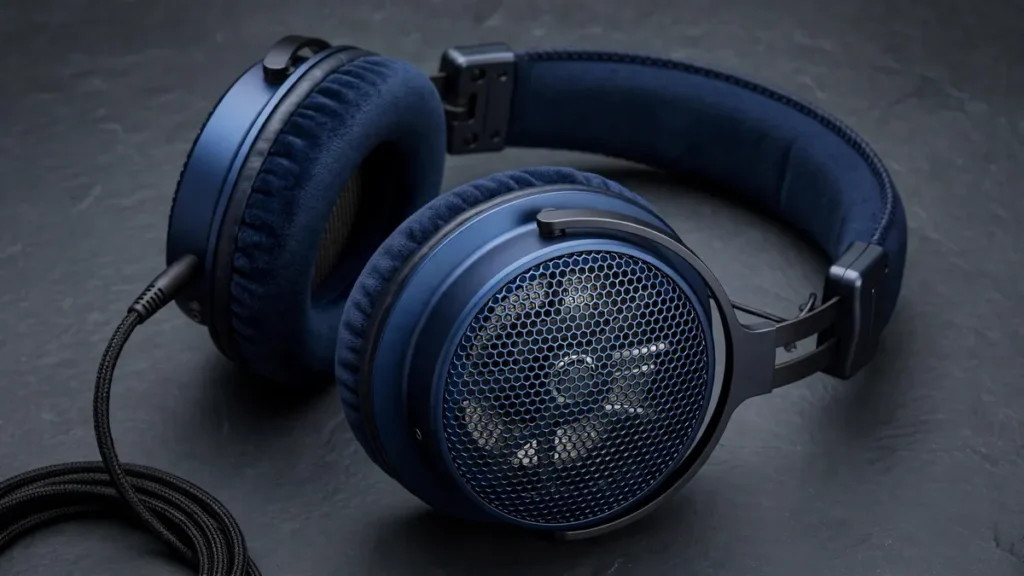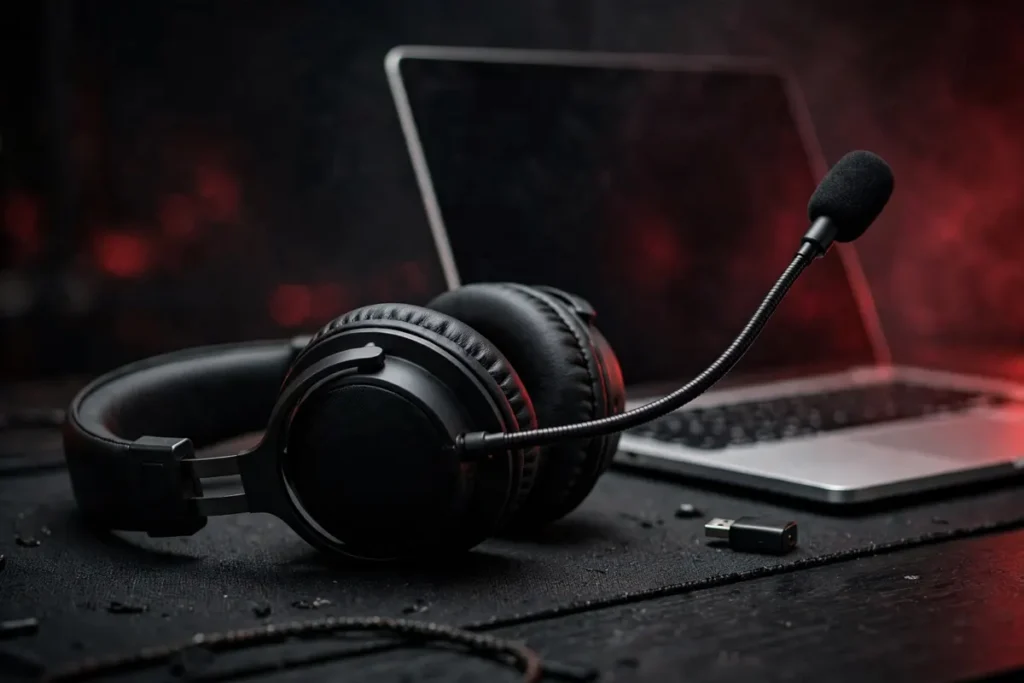
The Audio-Technica ATH-M50xSTS-WL takes the StreamSet formula, studio headphones plus a proper broadcast microphone, and cuts the cord for the first time. It pairs the 45mm drivers from the ATH-M50x with a large-diaphragm cardioid condenser mic based on Audio-Technica’s 20 Series studio microphones, then connects over a low-latency 2.4 GHz USB transceiver instead of Bluetooth. It launched on October 28, 2026, aimed squarely at streamers, podcasters and gamers who record their voice as much as they listen.
This is a launch review. We have not tested the ATH-M50xSTS-WL hands-on, so the verdict below is built from Audio-Technica’s published specifications, the verified US Amazon listing, and the first wave of launch coverage. Where a figure is the manufacturer’s rating rather than a measurement, we say so, and the score is provisional until independent testing lands.

Audio-Technica ATH-M50xSTS-WL 7.8/10 provisional
Why you: you stream, record or take calls for a living and want broadcast-grade voice from the headset itself, with M50x monitoring sound and no cable tying you to the desk.
Trade-off: there is no Bluetooth, so phones and tablets are out, and at 365 g it is heavier than most gaming headsets.
2.4 GHz dongle · 24 h battery · USB-C wired fallback · Two earpad sets included
What the ATH-M50xSTS-WL is
Audio-Technica’s StreamSet line has always been a simple idea executed well: take the ATH-M50x, the closed-back studio headphone half the internet’s creators already own, and bolt on a microphone good enough to broadcast with. Until now every StreamSet was wired, in XLR and USB versions. The ATH-M50xSTS-WL is the first wireless model, and the wireless part is a deliberate choice. There is no Bluetooth radio in this headset at all. Audio travels over a dedicated 2.4 GHz link to a small USB transceiver, because Bluetooth latency is a real problem when you are monitoring your own voice or playing competitively, and because a dongle connection is plug-and-play on PC and consoles.
That decision defines who this headset is for. If your work happens at a desk or a console, the WL removes the one annoying part of the wired StreamSets, the cable, and keeps everything that made them popular. If you wanted one headset for your desk and your phone on the train, this is not it, and Audio-Technica is not pretending otherwise.
The microphone is the headline
Most gaming headsets use a small electret mic capsule that costs very little and sounds like it. The StreamSet’s microphone is a different class of part: a large-diaphragm cardioid condenser based on Audio-Technica’s 20 Series studio microphones, with a rated frequency response of 50 Hz to 20 kHz. In plain terms, it captures the body and detail of a voice the way a desk condenser does, which is why the wired StreamSets built their reputation among streamers who did not want a separate mic arm in frame. Our roundup of the headsets with the best microphones has made this point for a while: the wired StreamSet is the benchmark most boom mics get measured against.
The boom is flexible, so you can position the capsule close to your mouth, and flipping it up mutes the microphone instantly. Audio-Technica adds adaptive noise reduction on the mic signal with two selectable levels, which listens to the incoming audio and pushes background noise down so your voice stays in front. There is also sidetone, so you can hear your own voice in the headphones while you talk, and the earcup carries controls for volume and the noise-reduction level. One honest caveat: the noise reduction works on your outgoing voice, not on what you hear. The headphones themselves have no active noise cancelling, only the passive isolation of a closed-back design, and our score card marks that plainly.
Sound: the M50x, unchanged
On the headphone side there are no surprises, which is the point. The drivers are the same 45 mm units used in the ATH-M50x, with rare-earth magnets and copper-clad aluminium voice coils. Audio-Technica rates the wireless model’s frequency response at 20 Hz to 22 kHz. Expect the familiar M50x character: strong, controlled bass, clear mids that keep voices intelligible, and treble with enough edge for detail work. It is a monitoring tune, not a bass-heavy gaming tune, and for streamers checking their own mixes that accuracy matters more than spectacle.
The closed-back cups fold flat for transport and give decent passive isolation from room noise. Audio-Technica ships two sets of earpads in the box: a standard set tuned for sound quality and isolation, and a mesh set that breathes better on long sessions. Swappable pads are a small thing until you are four hours into a stream in a warm room.
Connection: 2.4 GHz dongle, USB-C wired, no Bluetooth
The USB transceiver plugs into a PC, PlayStation 5 or Nintendo Switch 2 and just works; a USB-A adapter is included for older ports, and the rated range is 10 metres. Xbox is not on Audio-Technica’s compatibility list, so Xbox players should look elsewhere. When the battery runs down, the included 2 m USB-C cable switches the headset to wired audio and charges it at the same time, so a session never has to stop. We have covered the wired vs wireless gaming headset trade-offs in depth; the WL’s answer is to give you both, with the wired mode as a genuine fallback rather than an emergency measure.
The missing Bluetooth radio will be the dealbreaker for some buyers, and it is worth being direct about it: no phone pairing, no tablet on the couch, no multipoint. Rival headsets like the Audeze Maxwell and Razer BlackShark V2 Pro include Bluetooth alongside their dongles. Audio-Technica traded that flexibility for a simpler, lower-latency link and a mic-first design. Whether that trade suits you depends entirely on where you use a headset.
Battery, comfort and build
Battery life is rated at up to 24 hours, with a full charge taking about 3.5 hours. That is enough for several long sessions between charges, though gaming rivals running 70 to 80 hours ask for the cable far less often. The use-while-charging wired mode softens the gap in practice.
At roughly 365 g without the cable, the WL is heavier than most gaming headsets and lighter than the Audeze Maxwell. The M50x headband and the choice of two pad sets help, but weight is weight on a long day, and our comfort score reflects that honestly. Build follows the M50x pattern: mostly plastic, proven hinges, folds flat, nothing exotic.
ATH-M50xSTS-WL vs Audeze Maxwell vs Razer BlackShark V2 Pro
Three headsets chase the same desk, with different priorities. The Maxwell is the sound-first pick in our best PC gaming headset coverage, with planar magnetic drivers and a huge battery. The BlackShark V2 Pro is the esports pick, light on features that slow you down and strong on battery and clarity. The StreamSet WL is the voice-first pick: its microphone is a studio part, and its sound is a monitoring reference rather than a gaming tune.
| Product | Microphone | Connection | Battery | Check Price |
|---|---|---|---|---|
| Audio-Technica ATH-M50xSTS-WL | Cardioid condenser boom, 20 Series based | 2.4 GHz dongle + USB-C wired, no Bluetooth | Up to 24 hours | Check Price |
 Audeze Maxwell | Detachable boom mic with AI noise reduction | 2.4 GHz dongle + Bluetooth | Up to 80 hours | Check Price |
 Razer BlackShark V2 Pro (2023) | Detachable boom mic | 2.4 GHz dongle + Bluetooth | Up to 70 hours | Check Price |
Pick the StreamSet WL if your voice is the product: podcasts, streams, commentary, client calls you record. Pick the Maxwell if music and game audio come first and you can live with its weight. Pick the BlackShark if you play competitively and want the battery to disappear as a concern.
Audio-Technica ATH-M50xSTS-WL specifications
| Product | Audio-Technica ATH-M50xSTS-WL Check Price |
| Drivers | 45 mm, rare-earth magnets, CCAW voice coils (ATH-M50x drivers) |
| Frequency response | 20 Hz to 22 kHz |
| Design | Closed-back, folds flat |
| Microphone | Cardioid condenser boom based on 20 Series technology, 50 Hz to 20 kHz, flip-up to mute, adaptive noise reduction (2 levels), sidetone |
| Wireless | 2.4 GHz via USB transceiver, up to 10 m range, USB-A adapter included |
| Bluetooth | None |
| Wired mode | USB-C cable (2 m included), works while charging |
| Battery | Up to 24 hours, full charge about 3.5 hours |
| Weight | About 365 g without cable |
| Earpads | Two sets included: standard (isolation) and mesh (breathability) |
| Compatibility | PC, PlayStation 5, Nintendo Switch 2 |
The wired StreamSets still make sense
The WL does not replace the wired models, and the differences matter. The XLR StreamSet is built for desks with an audio interface or mixer, where the mic runs through proper preamps and the headphones plug into the same chain. The USB StreamSet suits a simpler fixed desk: one cable, no interface, no battery to think about. The WL trades those fixed connections for freedom of movement and console support, and it asks you to charge it. If your StreamSet never leaves one desk and you already own an interface, the wired XLR model remains the cleaner tool. If you stream from a couch setup, a console, or a desk you also use for calls away from the chair, the WL is the one that fits. Nothing about the WL makes the wired versions worse buys; it just covers a setup they could not.
One more difference worth knowing: the wired models have carried the StreamSet reputation for years, so their long-term durability is a known quantity. The WL folds at the same hinges and uses the same headband pattern, but a wireless model’s battery ages in a way a passive wired headset never will. That is a consideration for a headset bought to last five years, and it is priced into our provisional value score.
What we still need to test
Three open questions keep this score provisional. First, Audio-Technica does not publish a latency figure for the 2.4 GHz link, so the real-world delay for competitive play is unmeasured; the technology is the same class as other dongle headsets, but we do not print numbers we cannot source. Second, the adaptive microphone noise reduction needs a noisy room and a recording to judge properly; manufacturer demos are not evidence. Third, the microphone itself is the reason to buy this headset, and while the wired StreamSet’s capsule is a known quantity, the WL’s wireless chain, its conversion, compression and noise reduction, could change the sound in ways only recordings will show. When independent measurements and long-form reviews appear, we will update this review and revisit the score.
FAQ
Does the ATH-M50xSTS-WL have Bluetooth?
No. It connects through a 2.4 GHz USB transceiver for low-latency audio on PC, PlayStation 5 and Switch 2, or through its USB-C cable. There is no Bluetooth radio, so it will not pair with a phone or tablet.
Does the ATH-M50xSTS-WL work on Xbox?
Audio-Technica lists PC, PlayStation 5 and Nintendo Switch 2 as compatible. Xbox is not on that list, so Xbox players should choose a headset with official Xbox wireless support instead.
How long does the ATH-M50xSTS-WL battery last?
Up to 24 hours per charge by Audio-Technica’s rating, and a full charge takes about 3.5 hours. If the battery runs down mid-session, the USB-C cable keeps the headset working while it charges.
What makes the StreamSet microphone different from a normal gaming headset mic?
It is a large-diaphragm cardioid condenser based on Audio-Technica’s 20 Series studio microphones, rated from 50 Hz to 20 kHz. Most gaming headsets use small electret capsules with a much narrower capture. The result is a fuller, more detailed voice, closer to a desk condenser mic than to a typical boom mic.
ATH-M50xSTS-WL vs the wired StreamSet: which should you buy?
The formula is the same in both: M50x sound plus the 20 Series based condenser mic. Buy the WL if you work at a PC or console and want the cable gone. The wired USB StreamSet still makes sense at a fixed desk, and it never needs charging.
Verdict
The ATH-M50xSTS-WL does one job better than any other wireless headset we can point to right now: it makes your voice sound like it came from a studio microphone, while giving you the M50x monitoring sound that creators already trust. The trade-offs are clear and honestly labelled: no Bluetooth, no headphone noise cancelling, a 24-hour battery that rivals beat, and 365 g on your head. For streamers, podcasters and gamers who record or broadcast their voice, none of those trade-offs touches the main event. Our provisional score is 7.8 out of 10, held back by the missing Bluetooth and the passive-only isolation, and it will be revisited once independent measurements and long-term reviews are in.

I am the founder of Sound Mavericks, where I provide the polite truth about audio equipment. I started this site because consumer electronics reviews are often too technical. Instead of using a silent lab, I test headphones, earbuds, and Bluetooth speakers in the real world – like on a noisy subway or in a busy coffee shop.
To stay independent, I buy my own review units (mostly from the United States) rather than accepting free gifts from brands. Once I finish testing a product, I sell it locally to our community. My goal is to help you understand sound quality, active noise cancellation (ANC), and battery life without the marketing hype.