
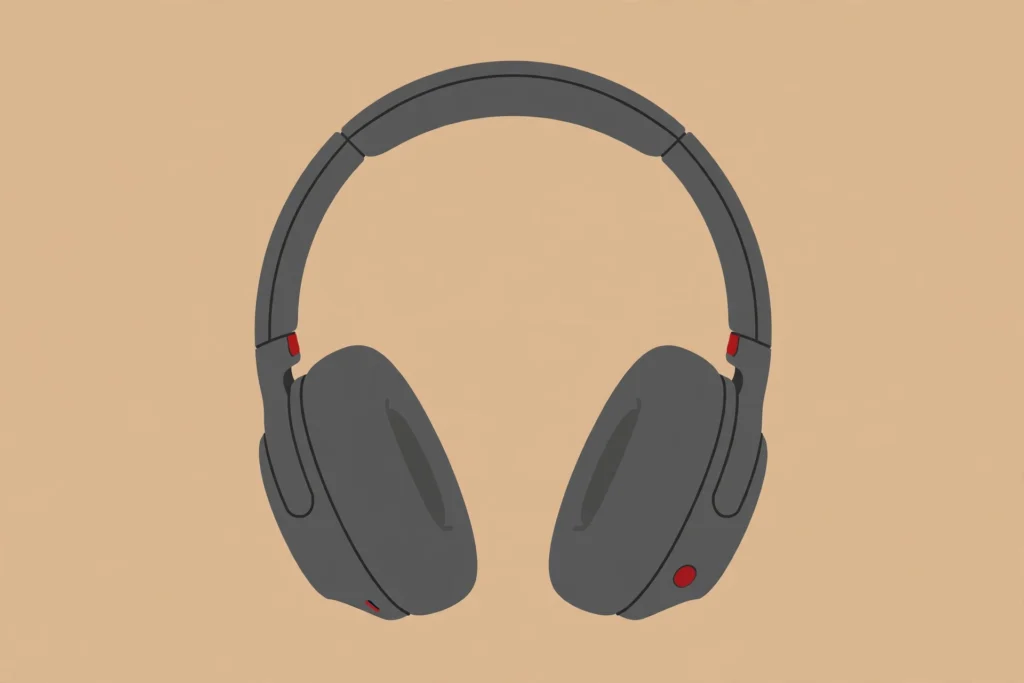
This anker soundcore life q20 review covers the original Life Q20 (model A3025): Anker’s budget over-ear with hybrid active noise cancelling, a 40mm dynamic driver and a battery rated at 40 hours with cancelling on. It is not the Q20i, a later and different model with app EQ and multipoint, and nothing from that headphone’s data is used here. The Q20’s reputation was built on a simple trade: real cancelling and very long battery life at the lowest end of the market, paid for with bass-heavy sound and a plastic build.
A note on method. This review is research-based. The scores are our provisional assessment, built from Anker’s published specifications for the original model and the specialist test record, including the lab measurements published by RTINGS and SoundGuys. Anker has refreshed this listing’s copy over time, so where refreshed copy disagrees with the original model’s ratings, this review prints the original figures and says so.

Anker Soundcore Life Q20 7.6/10
Why you: you want noise cancelling that actually works and a battery that lasts the week, at the bottom of the price range. The hybrid ANC cuts travel and office noise by a margin you can hear at once, and 40 hours between charges makes it a true grab-and-go travel headphone.
Trade-off: the sound is bass-heavy to a fault, with mids that can turn muddy, and there is no app EQ to correct it. The build is plasticky, and pairing covers one device at a time. Buy it for cancelling and battery, not for fidelity.
40mm dynamic driver · Hybrid ANC · Bluetooth 5.0 · 40 h with ANC on · About 263 g
Sound quality
Sound scores 6.8, the weakest bar that matters on this card, and the test record agrees on why. The Q20 pushes its low end hard: bass sits well forward of the midrange, which gives electronic and hip-hop material weight and drive, then crowds vocals and guitars on busier recordings. The word that recurs across specialist reviews is muddy, and it is earned on acoustic material. Treble is present but unremarkable, and fine detail is not what this tuning is for.
Context matters, though. The Q20 was tuned for the listening its buyers actually do: streaming on trains, in cabins and at desks, where a lean and accurate balance can sound thin against background noise even with cancelling on. The warmth reads as body in those settings. What the original model lacks is any way to adjust the result, since there is no companion app and no onboard EQ. Owners who want less bass must EQ at the source, in their music app or player.
Noise cancelling and battery
The ANC scores 7.2 and is the reason this headphone is still bought. The hybrid system works from four microphones, inside and outside the cups, and Anker’s claim of up to 90 percent noise reduction should be read as marketing framing rather than a measurement. The measured picture from the test record is more modest and still impressive for the class: engine drone, cabin wash and office hum drop by a margin that changes how a journey feels. Voices and sudden sounds pass through more easily, as they do on every system near this price.
Battery scores 9.0. The original model’s ratings are 40 hours with cancelling on and 60 hours with it off, and they hold up well in owners’ long-term reports. A note on the listing: Anker has refreshed its copy over time and currently advertises a higher playtime figure. The original Q20 shipped with the 40 and 60 hour ratings, so those are the figures printed here and carried in our database. In our best Anker noise cancelling headphones coverage the Q20 is the budget anchor under the brand’s newer and stronger models.
Comfort, build and everyday use
Comfort scores 7.6. The memory foam cushions and a weight of about 263 grams keep the Q20 wearable across a long flight, and the cups fold for the bag. The build is the honest cost of the price: mostly plastic, with a finish that marks easily and hinges that ask to be treated kindly. Nothing about it feels premium, and nothing about it pretends to.
Everyday details follow the same pattern. Bluetooth 5.0 with SBC and AAC covers phones and laptops without fuss, but pairing is one device at a time: there is no multipoint on the original model, and switching means re-pairing. Calls score 6.4, serviceable in quiet rooms and strained in wind. Taken together it is a travel and commuting tool rather than a desk hub, and our best noise cancelling headphones under 100 guide shows the field it competes in at that tier.
On a plane: where the Q20 earns its keep
The use case that made this headphone’s name is the long flight, and it is worth walking through why the parts add up there. Cabin drone sits exactly in the low, steady band its hybrid cancelling handles best, so the fatigue that builds over hours drops away. The battery rating covers a return long-haul trip without a charge. The folding cups go into a carry-on without drama, and at this price a lost or damaged unit hurts far less than a flagship would. Airlines’ own handouts are not competition; the Q20 is.
The same qualities carry to trains and open-plan offices, the other two places it is bought for. What it does not do is isolate the wearer from a busy home: children’s voices, doorbells and conversation sit in the band where budget cancelling is weakest, and the passive seal of the cups only helps a little. Buyers working from home around family should know that before expecting silence.
Anker Soundcore Life Q20 specs
| Spec | Anker Soundcore Life Q20 |
|---|---|
| Driver | 40mm dynamic |
| Design | Closed-back, over-ear, folding |
| Noise cancelling | Hybrid ANC, four-microphone system |
| Bluetooth | 5.0, SBC and AAC |
| Battery | 40 hours (ANC on) / 60 hours (ANC off) |
| Impedance | 16 ohms |
| Multipoint | No. Single device connection |
| Weight | About 263 g |
| Model | Life Q20 (A3025), original model. Not the Q20i or Q20+ |
Verdict
Buy the original Life Q20 if the brief is cancelling and battery at the lowest spend. ANC at 7.2, Battery at 9.0 and Value at 8.8 make the case in three bars: it quiets a journey properly and then runs for a week of commutes before it needs a cable. For flights, open offices and noisy homes it remains an easy recommendation.
Skip it if sound quality leads your decision, if you need multipoint, or if you want app EQ to fix the tuning. Those buyers should look at the newer models in our best budget over-ear headphones guide, where the Q20’s successors and rivals trade blows. On its own terms, the original Q20 still does the job it was built for.
Frequently asked questions
What is the difference between the Life Q20 and the Life Q20i?
They are different models. The Q20i is the newer refresh and adds app-based EQ and multipoint pairing. The original Q20 covered here has neither: no app support and one device connection at a time. Listings and reviews for the Q20i do not describe this headphone, and the scores on this page belong to the original only.
How long does the Life Q20 battery last?
The original Q20 is rated at 40 hours with noise cancelling on and 60 hours with it off. Anker has refreshed the listing copy over time and it currently advertises a higher figure, but 40 and 60 are the ratings the original model shipped with, and they are the figures this review and our database use.
Does the Life Q20 support multipoint?
No. The original Q20 connects to one device at a time. Switching between a laptop and a phone means re-pairing or toggling Bluetooth on the device you are leaving. Multipoint arrived on the later Q20i, which is a different model.
Is the Life Q20 noise cancelling any good?
For the money, yes. The hybrid system with four microphones cuts engine drone, cabin noise and office hum by a clearly audible margin, and it is the main reason this headphone built its reputation. It does not match current mid-range models on voices or sudden sounds, and it was never priced to.
Does the Life Q20 have an app or EQ?
No. The original Q20 predates Soundcore’s app support for this line, so the tuning you buy is the tuning you keep. Owners who want to trim the bass should use an equaliser in their music app or player instead.

I am the founder of Sound Mavericks, where I provide the polite truth about audio equipment. I started this site because consumer electronics reviews are often too technical. Instead of using a silent lab, I test headphones, earbuds, and Bluetooth speakers in the real world – like on a noisy subway or in a busy coffee shop.
To stay independent, I buy my own review units (mostly from the United States) rather than accepting free gifts from brands. Once I finish testing a product, I sell it locally to our community. My goal is to help you understand sound quality, active noise cancellation (ANC), and battery life without the marketing hype.
