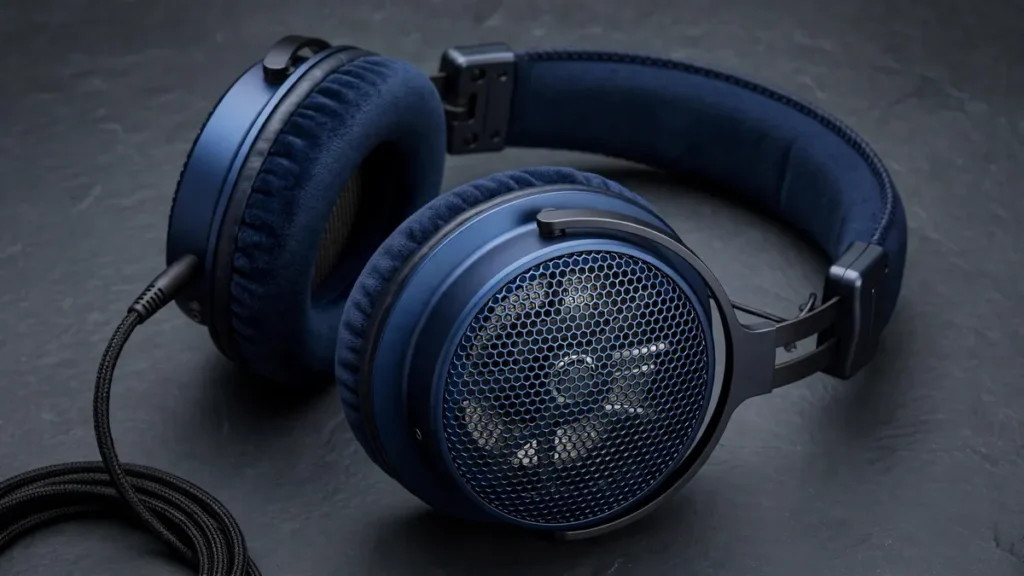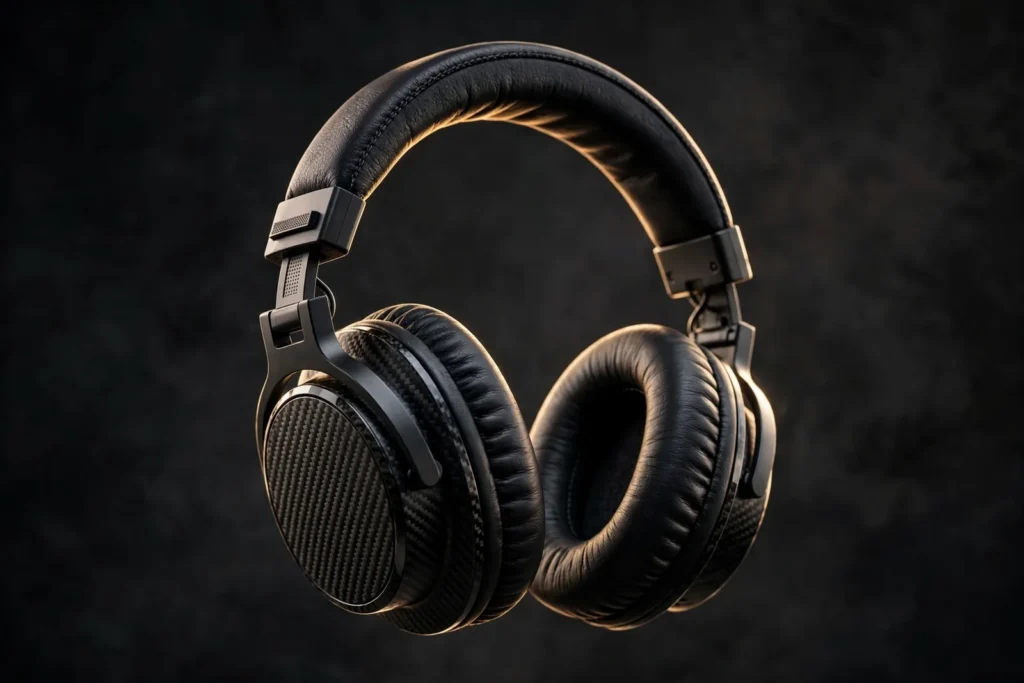
Our verdict: The Shure SRH1540 is one of the finest closed-back studio headphones ever made — a premium wired headphone whose warm, detailed sound, superb long-session comfort, and studio-grade build make it a reference point for mixing, critical listening, and audiophile enjoyment. It lacks Bluetooth, active noise cancelling, and a microphone, and it asks a premium investment — but for pure wired sound quality in a closed-back design, few headphones at this level do it better.
| Sound Quality | 9.2 |
| Comfort & Design | 9.0 |
| Build & Durability | 9.0 |
| Isolation | 8.5 |
| Accessories & Cable | 8.6 |
| Value | 8.3 |
How we score: SoundMavericks scores are editorial ratings based on manufacturer specifications, the live Amazon listing data, and analysis of long-term owner and professional-review consensus. We do not imply hands-on testing of every unit we cover.

Shure SRH1540 Specs at a Glance
| Driver | 40 mm neodymium dynamic drivers |
| Diaphragm | APTIV film for improved linearity and lower distortion |
| Design | Closed-back, circumaural (over-ear) |
| Sensitivity | 99 dB/mW |
| Impedance | 46 ohms (nominal, at 1 kHz) |
| Frequency range | 5 Hz – 25 kHz |
| Max input power | 1000 mW |
| Weight | 10.1 oz (286 g) |
| Cable | Dual-exit detachable oxygen-free copper, 6 ft (1.8 m), gold-plated MMCX connectors |
| Plug | Gold-plated 3.5 mm stereo mini jack (threaded 1/4 in adapter included) |
| Ear pads | Alcantara with low-density, slow-recovery foam; replaceable (spare pair included) |
| Construction | Aircraft-grade aluminum alloy yoke, carbon fiber earcup caps, steel driver frame |
| In the box | Headphones, 2 detachable cables, spare Alcantara ear pads, hard zippered case, threaded 1/4 in adapter |
Spec figures are taken from Shure’s official specifications and the live Amazon listing for the Shure SRH1540.
Sound Quality: Warm, Detailed, and Studio-Ready
The SRH1540 runs 40 mm neodymium dynamic drivers with diaphragms built on APTIV film — a material Shure chose for better linearity and lower total harmonic distortion. In practical terms, that engineering shows up as a clean, controlled sound that stays consistent whether you are listening quietly or pushing serious volume.
Bass is warm and full without ever getting sloppy. Reviewers consistently describe tight, musical low end with excellent extension — present and satisfying, but tastefully rendered rather than boosted. Compared with many modern consumer tunings, the low end may feel restrained at first; give it time and you will hear bass that supports the music instead of smothering it.
Mids are the heart of the SRH1540. Vocals and acoustic instruments sound natural, open, and richly textured — the kind of midrange that makes long listening sessions effortless. It is a slightly warmer presentation than Shure’s open-back SRH1840, giving the SRH1540 an intimate, engaging character that suits everything from jazz and classical to rock and electronic.
Treble is detailed and sparkling with genuine extension, revealing the texture in strings, cymbals, and vocal breath without tipping into harshness. Detail retrieval across the board is outstanding — small spatial cues and low-level information in a mix are easy to pick out, which is exactly what studio users need.
Soundstage deserves a special mention: for a closed-back design, the SRH1540 images remarkably like an open headphone — spacious, well-separated, and free of the boxy, congested feeling that plagues lesser closed designs. Shure credits the steel driver frame with its vented center pole piece, which is designed to eliminate internal resonance. Whatever the mechanism, the result is a closed headphone that does not sound closed.
At 46 ohms and 99 dB sensitivity, the SRH1540 is easy to drive — a phone or laptop gets it plenty loud, and reviewers have noted it pairs well straight from a smartphone. That said, it scales nicely with better source gear; if you already own one of the best headphone amps, the SRH1540 will reward it. With 1000 mW of max input power on tap, it handles dynamic peaks without strain.
Design and Comfort: Alcantara, Carbon Fiber, 286 Grams
The SRH1540’s build reads like a premium materials checklist: an aircraft-grade aluminum alloy yoke, carbon fiber earcup caps, and a steel driver frame. Despite all that metal, it weighs just 286 grams — genuinely light for a full-size closed-back — and reviewers repeatedly call it supremely comfortable for multi-hour sessions.
The ear pads are the standout: Alcantara — a breathable suede-like material — over low-density, slow-recovery foam. Alcantara breathes better than leather or synthetic leather, so the pads stay comfortable during long wears, and Shure includes a spare pair in the box for when the originals eventually wear down. The dual-frame padded headband is fully adjustable and distributes the weight evenly, with minimal clamping pressure.
Isolation is solid for a passive design. The closed-back, circumaural seal blocks a meaningful amount of background noise — owners use them for tracking, composing on the road, and focused listening in shared spaces. They are not noise-cancelling headphones (there is no ANC here, and no battery), but for a wired studio headphone, the isolation is a genuine strength. If you want a deeper dive on the trade-offs, see our open-back vs closed-back headphones guide.
Cable, Accessories, and What’s in the Box
The SRH1540 ships with two detachable dual-exit cables — meaning the cable feeds each driver separately, splitting below the chin. The cables use gold-plated MMCX snap-in connectors, which lock in securely and detach for easy storage or replacement. The cable itself is oxygen-free copper with a Kevlar-reinforced jacket, and at 6 feet (1.8 m) it is a practical length for desk and studio use.
The box is generous by any standard: the headphones, two cables, a spare set of Alcantara ear pads, a threaded 1/4-inch adapter for studio gear, and a hard zippered carrying case. Few headphones at this level arrive this complete — the spare pads alone are a thoughtful touch that extends the headphone’s service life by years.
One honest note: the dual-exit cable takes a little getting used to if you have only ever used single-sided cables. Owners report a short adjustment period — catching the cable under the chin when taking the headphones off — before it becomes second nature.
Shure SRH1540 vs Shure SRH1840: Closed-Back or Open-Back?
The SRH1540’s closest sibling is the Shure SRH1840 — Shure’s premium open-back flagship. They share the same 40 mm driver platform, the same aluminum yoke design, and the same dual-exit MMCX cable system, so the choice comes down to sound philosophy and use case:
- SRH1540 (closed-back): warmer bass, more intimate presentation, significantly better isolation, 46 ohms / 99 dB sensitivity — easier to drive from portable devices.
- SRH1840 (open-back): more transparent and airy, smoother extended highs, wider perceived soundstage, 65 ohms / 96 dB sensitivity — slightly more demanding of amplification.
Owners who have compared the two describe the SRH1840 as sounding like a performance in an open space and the SRH1540 as a more intimate venue — like a jazz club. Imaging and detail are excellent on both; the difference is presentation, not quality.
Our take: choose the SRH1540 if you need isolation — tracking, shared offices, travel, or late-night listening — and want a slightly warmer, more forgiving sound. Choose the SRH1840 if you listen in a quiet room and prioritize maximum transparency and air. For most buyers who can only own one, the SRH1540’s versatility wins.
Is the Shure SRH1540 Worth It?
It depends entirely on what you value. If your priority list reads “sound quality, comfort, durability” — the SRH1540 is worth it. One professional review outlet rated it a perfect 10, calling it the closest thing to their ideal sound among full-size headphones under four figures. Long-term owners routinely describe it as the best headphone investment they have made, with pairs staying in daily use for years.
The case against it is equally clear: this is a wired, passive headphone with no Bluetooth, no active noise cancelling, no microphone, and no app. If you need wireless convenience or travel ANC, your money buys more features elsewhere — the SRH1540 puts its entire budget into drivers, materials, and acoustic engineering.
The honest framing: the SRH1540 is a specialist instrument, not an all-rounder. Buy it for the sound and the craft. Skip it if you need modern wireless features — no headphone does both jobs, and the SRH1540 does not pretend to.
Shure SRH1540 for Mixing: A Studio Workhorse?
Yes — with the usual closed-back caveats. The SRH1540 was designed with professional engineers, musicians, and audiophiles in mind, and studio users report that mixes translate well from the SRH1540 to speakers and other playback systems. The detail retrieval, low distortion, and consistent performance at all listening levels are exactly what you want when making mix decisions.
Two things to keep in mind. First, the SRH1540’s tuning is slightly warm rather than ruthlessly flat — it flatters music a little, so cross-checking important mixes on studio monitors or a known-neutral reference remains good practice. Second, closed-back headphones always present bass and soundstage differently than speakers; the SRH1540 minimizes this better than most, but it cannot eliminate the physics.
For a dedicated mixing setup, the SRH1540 pairs well with the headphones in our best headphones for mixing and mastering roundup, and it is a natural upgrade from entry-level studio staples. If mixing is your primary use case, also browse our best headphones for mixing picks to see how it stacks up against the field.
Who Should Buy the SRH1540 — and Who Should Skip It
Buy it if: you want reference-grade wired sound in a closed-back design; you mix, master, or critically listen and need isolation; you value premium materials and a replaceable-cable design that lasts; or you are an audiophile who prefers a warm, intimate presentation over clinical neutrality. Fans of Shure’s house sound should also check our Shure SE535 review for the in-ear side of the family.
Skip it if: you need Bluetooth or active noise cancelling — this headphone has neither; you make phone calls on your headphones — there is no microphone; you want a ruthlessly flat studio monitor — the SRH1540 is musical first, clinical second; or you are on a tight budget — strong studio sound exists for far less, just not with this level of refinement. Our best headphones for audiophiles guide covers alternatives across budgets.
Frequently Asked Questions
Is the Shure SRH1540 worth it?
For buyers who prioritize wired sound quality, comfort, and durability, yes. Its warm, detailed tuning, Alcantara comfort, and premium build have earned it a loyal long-term following and top marks from professional reviewers. It is not worth it if you need Bluetooth, ANC, or a microphone — it offers none of those.
What is the difference between the Shure SRH1540 and SRH1840?
The SRH1540 is closed-back and the SRH1840 is open-back — that is the fundamental difference. The SRH1540 sounds warmer and more intimate with far better isolation, and at 46 ohms it is easier to drive. The SRH1840 sounds more transparent and airy with a wider soundstage, at 65 ohms. Same 40 mm driver platform, same cable system, different philosophy.
Is the Shure SRH1540 good for mixing and mastering?
Yes. Its low distortion, excellent detail retrieval, and consistent performance at all listening levels make it a strong studio tool, and users report mixes translate well to speakers. Note its slightly warm tuning — cross-check critical mixes on monitors or a neutral reference.
Does the Shure SRH1540 need an amplifier?
No. At 46 ohms and 99 dB sensitivity, the SRH1540 reaches full volume from a phone, laptop, or portable player with no amplifier required. It does scale with better source gear, so a dedicated DAC or amp will refine the sound — but it is optional, not necessary.
Are the Shure SRH1540 ear pads replaceable?
Yes. The Alcantara ear pads are user-replaceable, a spare pair ships in the box, and Shure sells official replacement pads (model HPAEC1540) separately — so worn pads never mean a dead headphone.
Does the Shure SRH1540 have Bluetooth or noise cancelling?
No. The SRH1540 is a purely wired, passive headphone — no Bluetooth, no active noise cancelling, no microphone, and no battery. Isolation comes from the closed-back design and the circumaural seal alone.
The bottom line: the Shure SRH1540 is a masterclass in what a wired closed-back headphone can be — warm yet detailed sound, all-day Alcantara comfort, and a build meant to last a decade. It will not do your commuting ANC or your wireless calls, but for pure listening and studio work, it remains one of the safest premium recommendations in audio.

I am the founder of Sound Mavericks, where I provide the polite truth about audio equipment. I started this site because consumer electronics reviews are often too technical. Instead of using a silent lab, I test headphones, earbuds, and Bluetooth speakers in the real world – like on a noisy subway or in a busy coffee shop.
To stay independent, I buy my own review units (mostly from the United States) rather than accepting free gifts from brands. Once I finish testing a product, I sell it locally to our community. My goal is to help you understand sound quality, active noise cancellation (ANC), and battery life without the marketing hype.