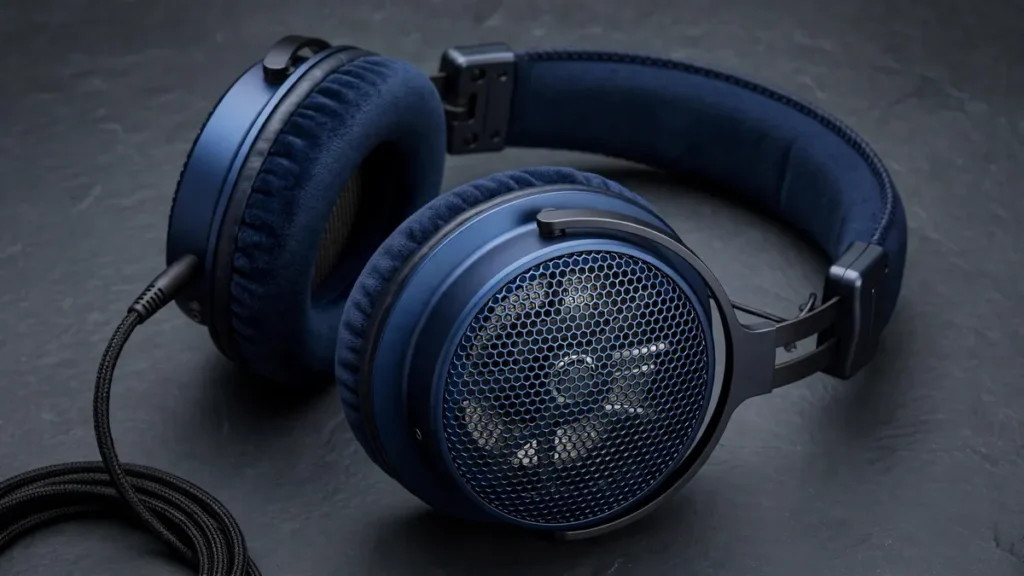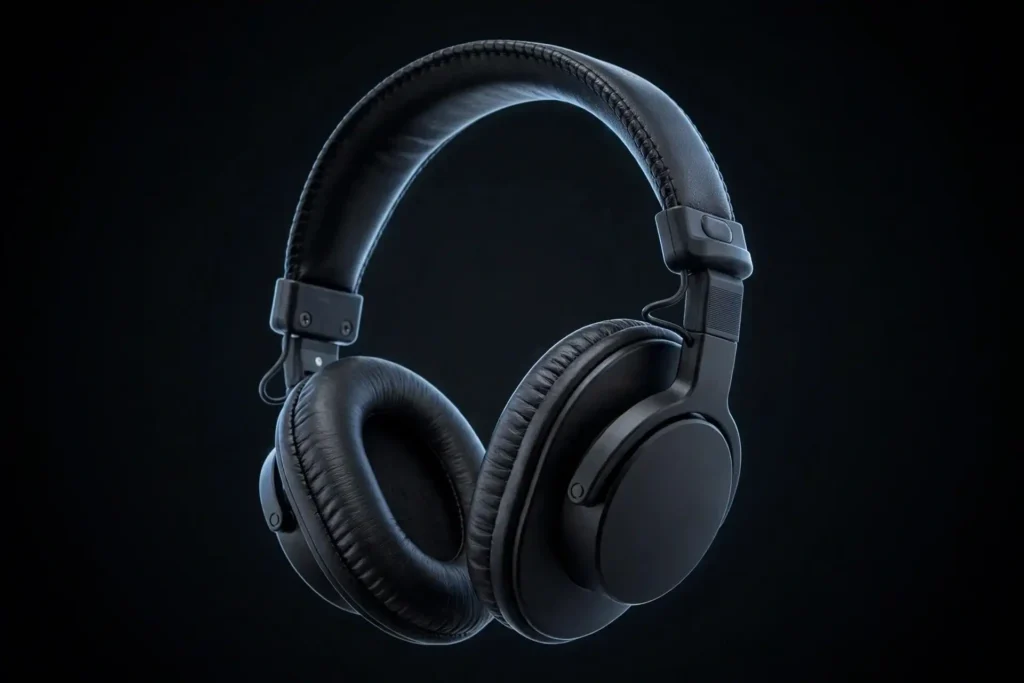
The sony mdr-cd900st is the headphone Japan’s studios never stopped using. Born inside CBS/Sony’s own recording studios and refined for one job — letting engineers and vocalists hear the human voice with total honesty — it has been a fixture of Japanese recording sessions for decades, and it’s still in production today. Outside Japan it’s an import-only curiosity; inside Japan it’s simply the standard.
In this review, SoundMavericks breaks down the real MDR-CD900ST specs, what its famously vocal-forward sound is actually like, how it compares to the better-known Sony MDR-7506, and what to know before buying an import-only classic.
The Sony MDR-CD900ST earns its legend status as a vocal monitoring specialist. Its mid-forward, ruthlessly honest tuning exposes every detail of a vocal performance — pitch, breath, sibilance — which is exactly what studio tracking demands and exactly why it can sound thin or unforgiving for casual listening. Buy it if you record or mix vocals; buy the MDR-7506 instead if you want the more widely available, more forgiving all-rounder.
| Sound Quality | 9.0 |
| Vocal Clarity | 9.4 |
| Build Quality | 8.4 |
| Comfort | 8.0 |
| Isolation | 8.3 |
| Value | 8.5 |
What Is the Sony MDR-CD900ST?
The Sony MDR-CD900ST is a closed-back dynamic studio monitor headphone designed for professional recording work. Its story starts with the consumer MDR-CD900 (1985), but the “ST” variant was created specifically for CBS/Sony’s studios in Shinanomachi, Tokyo — the engineers there wanted a monitor that put the voice first, because in a recording studio, vocal timbre is the top priority. The studio-built prototype (known internally as the CD900CBS) gradually spread beyond CBS/Sony’s own rooms as visiting musicians and engineers took a liking to it, and Sony commercialized it as the MDR-CD900ST.
That origin explains everything about how it sounds. Where most headphones are tuned to flatter music, the CD900ST is tuned to expose it. Decades later it remains in production and remains the default vocal-tracking headphone in Japanese studios — a working tool with a cult reputation rather than a lifestyle product.
Sony MDR-CD900ST Specs
Here are the official Sony specifications for the MDR-CD900ST — no inflated claims, just the manufacturer’s numbers:
| Specification | Sony MDR-CD900ST |
|---|---|
| Type | Closed, dynamic |
| Driver | 40 mm dome type (CCAW voice coil) |
| Frequency response | 5 Hz – 30,000 Hz |
| Impedance | 63 ohms |
| Sensitivity | 106 dB/mW |
| Maximum input | 1,000 mW |
| Cable | 2.5 m straight, non-detachable |
| Plug | Stereo standard plug (6.3 mm / 1/4″) |
| Weight | Approx. 200 g (without cable) |
A few practical notes on these numbers. At 63 ohms and 106 dB/mW, the CD900ST is efficient enough to run happily from an audio interface, a laptop, or even a phone — no dedicated headphone amp is required, though it won’t object to clean power (if you’re curious, our guide to what impedance means for your setup explains why). The 1,000 mW maximum input is unusually high for a headphone and reflects its studio pedigree: it was built to survive being driven hard at a mixing desk without complaint.
Sony MDR-CD900ST Sound Quality
SoundMavericks’ verdict on the sound is drawn from Sony’s design history and the consistent consensus of studio owners and long-term listeners: the CD900ST is mid-forward, honest, and deliberately unforgiving. It was voiced so engineers could judge a vocal take, and that single-mindedness defines it.
Bass: tight and lean
The low end is controlled and precise rather than full or warm. Owner comparisons consistently describe the bass as tighter and more defined than the MDR-7506, but also leaner — this is not a headphone that adds body to a mix. For tracking, that honesty is the point: if the bass sounds big on the CD900ST, it’s big in the recording. For pleasure listening, bass lovers will find it thin next to modern consumer tunings.
Midrange: the reason it exists
This is the CD900ST’s headline act. Vocals sit forward, clear, and textured, with a timbre that long-term owners repeatedly praise as natural and “correct.” Lead vocals, backing stacks, and harmonies are easy to separate and judge — exactly what a tracking engineer needs when deciding whether a take is a keeper. If your work revolves around the human voice, few headphones at any price communicate it this directly.
Treble: clear, sometimes sharp
The top end is extended and detailed — the 30 kHz spec isn’t just a number — but several experienced listeners describe it as bright or even harsh on already-aggressive material, particularly electric guitars and hot cymbals. It’s the same trade-off the design makes everywhere: nothing is smoothed over. One reviewer’s analogy is apt — it’s the headphone equivalent of the Yamaha NS-10 studio monitor: it doesn’t measure like a hi-fi darling, yet professionals keep reaching for it because it tells the truth about the midrange.
Design, Build & Comfort
Visually, the CD900ST is a close cousin of the MDR-7506 and MDR-V6 — slim black earcups, the “For Digital” badge on the cups (where the 7506 says “For Professional”), and “Studio Monitor” lettering in gold. The family resemblance is skin-deep, though: owners who have opened both report different frames, pads, and internal damping — it is not a 7506 in disguise.
Practical design points worth knowing:
- Fit: marketed as circumaural but fits like a hybrid between on-ear and over-ear. The earcups are shallow, and the pads are thinner than the 7506’s, so ears sit closer to the drivers. It’s lighter than the 7506 with gentler clamping force, but the shallow cups can press on the ears over long sessions.
- Cable: a fixed (non-detachable) 2.5 m straight cable terminating in a 6.3 mm (1/4″) stereo plug — no 3.5 mm plug, and no adapter in the box. If you plan to use it with a phone, laptop, or portable DAC, budget for a 1/4″-to-3.5 mm adapter.
- No folding: unlike the 7506/V6, the CD900ST does not fold flat — it’s a stay-in-the-studio tool.
- Pads wear out: the thin faux-leather pads are the known weak point; they flake with age and heat. The good news is pads are replaceable, and aftermarket options (YAXI pads are a long-time owner favorite) are widely available.
- Built to last: the strengthened frame was designed for daily studio abuse, and owners routinely report a decade or more of service. Isolation is solid for a closed-back design — enough to keep click tracks out of a vocal mic.
Sony MDR-CD900ST vs MDR-7506
This is the comparison every buyer asks about, so let’s be direct: they are completely different headphones that happen to look alike. Long-term owners who have used both describe the CD900ST as flatter and more “sterile,” with tighter bass and a clearer, more extended top end. The 7506, by contrast, sounds boomier and more colored in the upper mids — more fun for casual listening, less trustworthy for critical vocal work.
| Feature | Sony MDR-CD900ST | Sony MDR-7506 |
|---|---|---|
| Sound signature | Flatter, mid-forward, vocal-focused | More colored, boomier bass, stronger upper mids |
| Best for | Vocal tracking, critical monitoring | General studio work, location recording, casual use |
| Frequency response | 5 Hz – 30 kHz | 10 Hz – 20 kHz |
| Impedance / sensitivity | 63 Ω / 106 dB/mW | 63 Ω / 106 dB/mW |
| Cable | 2.5 m straight, 1/4″ plug only | 3 m coiled, 3.5 mm + 1/4″ adapter |
| Folding | No | Yes |
| Availability | Japan import only (outside Japan) | Widely available worldwide |
Sony MDR-CD900ST vs MDR-V6
The MDR-V6 is the 7506’s near-twin (the main historical difference is the plug), so the comparison lands in the same place: the CD900ST is the flatter, more analytical of the pair, with more forward mids and better vocal timbre, while the V6 is the easier, more forgiving listen. If you already own a V6 or 7506 and love how it sounds for fun, the CD900ST will feel like a stricter teacher — which is precisely the point.
Who Should Buy the Sony MDR-CD900ST?
Buy the Sony MDR-CD900ST if you:
- Record or mix vocals and want a headphone that tells the truth about them
- Do studio tracking work and need honest, uncolored monitoring
- Value midrange detail and vocal timbre over bass impact
- Want a proven, repairable studio tool with decades of parts support
Skip it if you:
- Want a fun, bassy headphone for everyday music listening
- Need folding portability, a detachable cable, or Bluetooth
- Dislike bright or forward treble — this one doesn’t smooth anything over
- Don’t want to deal with import sellers and the lack of local warranty support

Sony MDR-CD900ST Buying Guide: Availability & Import Tips
Here’s the honest part. The MDR-CD900ST was made for the Japanese domestic market, so outside Japan it’s effectively import-only. On Amazon it sells through Japan-import listings (ASIN B000UPEJCU, “Sony MDR-CD900ST Studio Monitor Stereo Headphones (Japan Import)”), and availability can vary by seller — if a listing shows no stock, check back or look for another established import seller rather than a suspiciously cheap unknown one.
Three practical tips from the owner community:
- Buy from established import sellers. Because the CD900ST is import-only, counterfeits and grey-market duds circulate. A reputable Japan-based or long-running import seller with a track record is worth more than a bargain from an unknown storefront.
- Budget for a 1/4″-to-3.5 mm adapter. The CD900ST ships with a 6.3 mm plug only — there’s no 3.5 mm adapter in the box, unlike the 7506. If your source is a phone or laptop, you’ll need one.
- Check the pads on used pairs. The thin stock pads flake over time. Factor in a replacement set (YAXI pads are the community favorite) when buying secondhand.
The listing carries a 4.4-star average across well over a thousand ratings, with owners consistently praising its neutral, vocal-focused sound and studio durability — a strong signal for a niche import product.
Sony MDR-CD900ST FAQ
Is the Sony MDR-CD900ST good for mixing?
It’s excellent for mixing vocals — that was its design brief. Its forward, honest midrange exposes vocal problems other headphones gloss over. For full-range mixing including bass-heavy genres, most engineers pair it with a second, fuller-sounding reference rather than relying on it alone. See our best headphones for mixing roundup for complementary options.
What is the difference between the Sony MDR-CD900ST and the MDR-7506?
Despite the similar looks, they’re different headphones with different frames, pads, and tuning. The CD900ST is flatter, more mid-forward, and more analytical, with tighter bass and clearer highs; the 7506 is boomier, more colored, and more forgiving. The 7506 also folds, has a coiled cable with a 3.5 mm plug and adapter, and is widely available worldwide — the CD900ST is import-only with a straight cable and 1/4″ plug.
Does the Sony MDR-CD900ST need a headphone amp?
No. At 63 ohms with 106 dB/mW sensitivity, it drives easily from audio interfaces, laptops, and phones. A clean amp or DAC can refine the sound, but it’s not required.
Is the Sony MDR-CD900ST available outside Japan?
Only as a Japan import. Sony never gave it a full international release, so outside Japan you’ll buy it through import listings (such as the Japan Import listing on Amazon) or specialist importers. Stock varies by seller.
Does the Sony MDR-CD900ST come with a 3.5 mm adapter?
No. It terminates in a 6.3 mm (1/4″) stereo plug with no adapter included. You’ll need a 1/4″-to-3.5 mm adapter to use it with phones, laptops, or portable players.
Can you replace the ear pads on the Sony MDR-CD900ST?
Yes. The pads are user-replaceable, and the owner community widely recommends YAXI replacement pads as a durable, comfortable upgrade over the thin stock pads.
Final Verdict
The Sony MDR-CD900ST is not trying to be your favorite headphone — it’s trying to be your most honest one. As a vocal monitoring tool, it remains one of the finest values in pro audio: a decades-proven, still-in-production studio standard with a midrange that tells the truth. As a casual listening headphone, it’s lean, bright, and unapologetic — and it makes no apology for that, because it was never built for the couch.
If you track or mix vocals, the import hassle is worth it. If you just want great-sounding Sony headphones for everyday listening, the MDR-7506 or a modern wireless Sony will make you happier. Know which buyer you are, and the CD900ST will never disappoint you.

I am the founder of Sound Mavericks, where I provide the polite truth about audio equipment. I started this site because consumer electronics reviews are often too technical. Instead of using a silent lab, I test headphones, earbuds, and Bluetooth speakers in the real world – like on a noisy subway or in a busy coffee shop.
To stay independent, I buy my own review units (mostly from the United States) rather than accepting free gifts from brands. Once I finish testing a product, I sell it locally to our community. My goal is to help you understand sound quality, active noise cancellation (ANC), and battery life without the marketing hype.