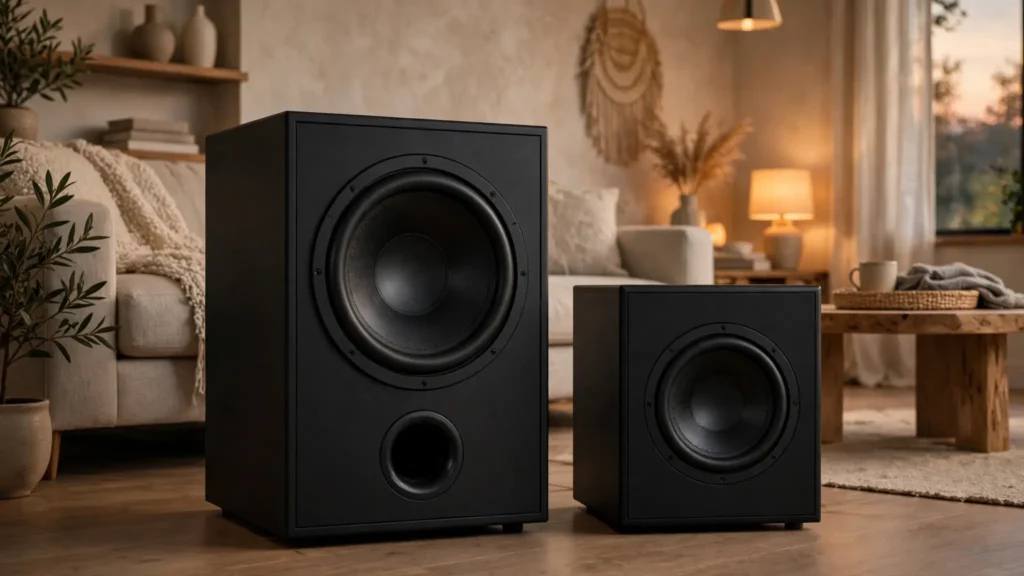
The ported vs sealed subwoofer debate comes up in nearly every home theater and car audio buying decision — and unlike most audio arguments, it has a genuinely useful answer. Ported subwoofers play louder and dig deeper with less amplifier power, while sealed subwoofers deliver tighter, more accurate bass from a smaller cabinet. Which one is better depends entirely on your room, your music and movies, and how loud you like to listen.
In this guide, SoundMavericks compares the two enclosure designs side by side: how each one works, how they sound, how much space and power they demand, and which one wins for home theater, music, and car audio. By the end, you’ll know exactly which design matches your setup.
For home theater in a medium-to-large room, ported is the better pick — it delivers the deep, room-shaking bass movie soundtracks demand, with less amplifier strain. For music-first listening in a small-to-medium room, sealed wins — the bass is tighter, faster, and easier to blend with your main speakers. For car audio, it comes down to space: big trunk and bass-heavy music means ported; limited space and punchy accuracy means sealed.
What Is a Sealed Subwoofer?
A sealed subwoofer (also called an acoustic suspension design) mounts the driver in a completely airtight cabinet. No vents, no ports — the trapped air inside the box acts like a spring, controlling the driver’s movement. Because the air cushion is always pushing back against the cone, a sealed subwoofer has excellent cone control, which is why sealed subs are famous for tight, fast, articulate bass.
The trade-off is efficiency. The sealed design wastes some of the driver’s energy fighting that internal air spring, so a sealed subwoofer needs more amplifier power to reach the same output as a ported one. Sealed subwoofers also roll off more gradually at the lowest frequencies, which can actually help them blend smoothly with a room’s natural bass reinforcement in small spaces.
What Is a Ported Subwoofer?
A ported subwoofer (also called a bass reflex design) adds a tuned vent — the port — to the cabinet. The port is tuned to a specific frequency, and at and around that frequency, the air moving in and out of the port reinforces the driver’s output. The result: significantly more bass output (roughly 3 dB or more near the tuning frequency) with the same amplifier power.
The price of that free output is cabinet size and complexity. A ported enclosure needs roughly 1.5 to 2 times the internal volume of a sealed one to house the port and let it breathe. The port also has to be tuned correctly — a poorly tuned or sloppy port can produce “chuffing” noise and one-note, boomy bass. And below the tuning frequency, the driver loses its air-spring protection, so ported subs need a subsonic filter to avoid damage at extreme levels.
Ported vs Sealed Subwoofer: Side-by-Side Comparison
Here’s how the two designs stack up across the factors that matter most:
| Feature | Sealed Subwoofer | Ported Subwoofer |
|---|---|---|
| Bass character | Tight, controlled, accurate | Deep, powerful, room-filling |
| Output (loudness) | Moderate | Higher — 3+ dB more near tuning |
| Low-frequency extension | Gradual roll-off | Deeper usable extension |
| Efficiency | Lower — needs more amp power | Higher — more output per watt |
| Cabinet size | Compact — easy to place | Large — needs room to breathe |
| Transient response | Fast and precise | Slightly slower around tuning |
| Build complexity (DIY/car) | Simple — no tuning required | Complex — port must be tuned |
| Driver protection | Better — air spring limits excursion | Needs subsonic filter below tuning |
Sound Quality: Tight vs Deep
This is where the ported vs sealed subwoofer choice becomes a personality test. A sealed subwoofer starts and stops fast. Kick drums snap, bass guitars have definition, and double bass in jazz sounds like wood and strings rather than a vague rumble. If you listen closely to acoustic music, the sealed design’s transient accuracy is hard to beat.
A ported subwoofer trades some of that precision for authority. The bass feels bigger and deeper — the kind of low end you feel in your chest during an explosion or a bass drop. A well-designed ported sub can still sound excellent on music, but the character is fuller and more dramatic. This is the sound most people picture when they imagine a home theater subwoofer, and it’s why ported designs dominate the home theater market.
Ported vs Sealed Subwoofer for Home Theater
For home theater, ported usually wins. Movie soundtracks live in the deep bass — explosions, rumble, the low-frequency effects channel — and ported subwoofers deliver that content louder, deeper, and with less strain on the amplifier. In a medium-to-large room, the extra output of a ported design is not a subtle difference; it’s the difference between hearing the bass and feeling it.
That’s not to say sealed subwoofers can’t do home theater. A quality sealed sub in a smaller room can be outstanding, and many listeners prefer its tighter integration with the rest of the system. But if maximum impact is the goal, ported is the home theater default — and most dedicated home theater subwoofers on the market reflect that.
Ported vs Sealed Subwoofer for Music
For music, the answer flips toward sealed — with a caveat. If your playlist leans toward rock, jazz, classical, country, or acoustic, a sealed subwoofer’s accuracy and speed will serve it better. The bass stays out of the way of the midrange and blends more naturally with bookshelf or floor-standing speakers.
The caveat: if your music is hip-hop, EDM, reggae, or anything built on sustained deep bass, a ported subwoofer will play that content with more authority. Ported isn’t bad for music — many music listeners prefer it — but it’s a fuller, weightier presentation rather than a surgical one. Match the design to your genre, not to a blanket rule.
Is a Ported or Sealed Subwoofer Better for Deep Bass?
If “deep bass” means maximum low-frequency output — the kind that pressurizes a room — ported is better. The port’s reinforcement gives ported subwoofers a genuine extension and output advantage in the lowest octaves, and they do it with less amplifier power. This is physics, not marketing: the port turns the back wave of the driver into useful output instead of trapping it.
What sealed subwoofers offer instead is cleaner deep bass. The gradual roll-off of a sealed design pairs well with small-room gain (the natural bass boost small rooms add at low frequencies), so in a bedroom or office, a sealed sub can sound deeper than its specs suggest. But for sheer depth at volume, ported takes it.
Size, Efficiency, and Power Requirements
Two practical realities separate the designs before you ever press play:
- Size: A ported subwoofer needs a substantially larger cabinet — typically 1.5 to 2 times the volume of a sealed design with the same driver. Sealed subs are far easier to tuck beside a media console, under a desk, or into a crowded trunk.
- Efficiency: Ported designs get roughly 3 dB of free output near their tuning frequency, which means they need roughly half the amplifier power to hit the same loudness in the deep bass. Sealed designs need a beefier amplifier (and more of the driver’s excursion) to keep up.
Room size matters too. Small rooms (under about 1,500 cubic feet) naturally reinforce deep bass, which lets a compact sealed sub punch above its weight. Large or open rooms swallow bass — that’s where a ported subwoofer’s output advantage becomes essential.
Car Audio: Ported vs Sealed Subwoofer Box
In car audio, the enclosure is usually something you buy or build separately, so the choice is even more hands-on:
- Sealed boxes are smaller, simpler to build (no port math), and give tight, punchy bass that suits rock, country, and metal. They fit where space is tight — under seats, behind truck seats, in small trunks.
- Ported boxes are louder and deeper, and they’re the go-to for hip-hop, rap, and SPL builds. But they’re bigger, the port must be tuned to the right frequency, and a mistuned port sounds boomy or causes port noise.
One more car-specific factor: the vehicle cabin itself adds enormous bass gain at low frequencies (cabin gain), which is why even a modest sealed sub can sound massive inside a car. If you’re short on space, a sealed box in a car will surprise you. Planning a bigger car audio upgrade? Our best car speakers guide covers the rest of the system.
Example Picks: Sealed and Ported Done Right
Theory only goes so far — here are concrete examples of each design done well, so you can see what the differences look like in real products.
Ported pick: SVS PB-1000 Pro

The SVS PB-1000 Pro is the textbook example of a modern ported subwoofer: a 12-inch driver in a tuned ported cabinet, built for the deep, high-output bass home theater demands. It shows exactly what the ported design is for — maximum extension and impact from a single cabinet.
Sealed pick: SVS SB-1000 Pro
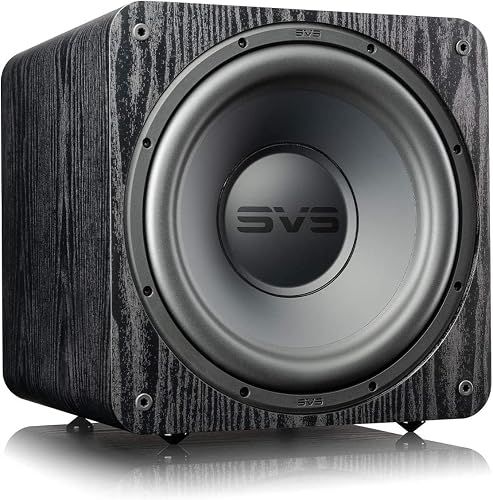
The SVS SB-1000 Pro is the sealed counterpart — the same 12-inch driver platform in a compact airtight cabinet. It’s the music-lover’s sub: tighter, faster bass in a box that’s far easier to place, and a natural fit for smaller rooms and mixed living spaces where a big ported cabinet would dominate the decor.
Budget ported pick: Klipsch R-120SW

The Klipsch R-120SW shows what a ported design looks like at a more accessible level: a 12-inch driver with a front-firing port, aimed squarely at home theater impact. It’s the kind of sub that demonstrates why ported designs dominate the budget home theater category — maximum rumble for the money. For a bigger-room speaker upgrade to match, see our best large Bluetooth speaker guide — or our full car speakers roundup if the sub is going in a vehicle.
Which Should You Buy? A Quick Decision Guide
- Choose ported if: home theater is the priority, your room is medium-to-large, you listen to hip-hop/EDM, or you want maximum bass output per dollar.
- Choose sealed if: music accuracy is the priority, your room is small-to-medium, space is tight, or you want the simplest, most placement-friendly option.
- Either works if: you’re in a medium room with mixed music-and-movie use — pick based on which trade-off (size vs output) bothers you less.
One last note from our analysis: don’t overthink the label. A great sealed subwoofer will outperform a mediocre ported one, and vice versa. Design is a tendency, not a guarantee — driver quality, amplifier design, and room setup matter just as much. If you want the manufacturer’s own take on the same question, SVS’s sealed vs ported guide walks through the same trade-offs from the engineering side.
Frequently Asked Questions
Is a ported or sealed subwoofer better?
Neither is universally better — it depends on your priorities. Ported subwoofers are louder, deeper, and more efficient, making them ideal for home theater and bass-heavy music. Sealed subwoofers are tighter, more accurate, and more compact, making them ideal for music-focused systems and smaller rooms.
Do ported subwoofers need more power than sealed?
No — it’s the opposite. Ported subwoofers are more efficient because the port reinforces output near the tuning frequency, so they produce more bass from the same amplifier power. Sealed subwoofers need more amplifier power to reach the same output levels.
Is a ported or sealed subwoofer better for home theater?
Ported is generally better for home theater. Movie soundtracks demand deep, high-impact bass, and ported subwoofers deliver more output and deeper extension with less strain — exactly what large rooms and action movies need.
Can a ported subwoofer sound good for music?
Yes. A well-designed ported subwoofer can sound excellent on music, especially hip-hop, EDM, and other bass-heavy genres. It won’t be quite as tight or precise as a sealed design on acoustic music, but many listeners prefer its fuller presentation.
What size room is best for a sealed subwoofer?
Sealed subwoofers shine in small-to-medium rooms (roughly under 1,500–2,000 cubic feet), where the room’s natural bass reinforcement helps them play deeper than their size suggests. In large or open rooms, a ported subwoofer’s output advantage becomes hard to beat.
Which subwoofer box is easier to build — ported or sealed?
Sealed boxes are much easier to build. You only need the manufacturer’s recommended box volume — there’s no port to calculate or tune. Ported boxes require precise port length and diameter calculations, and a mistuned port can sound boomy or even damage the driver over time.

I am the founder of Sound Mavericks, where I provide the polite truth about audio equipment. I started this site because consumer electronics reviews are often too technical. Instead of using a silent lab, I test headphones, earbuds, and Bluetooth speakers in the real world – like on a noisy subway or in a busy coffee shop.
To stay independent, I buy my own review units (mostly from the United States) rather than accepting free gifts from brands. Once I finish testing a product, I sell it locally to our community. My goal is to help you understand sound quality, active noise cancellation (ANC), and battery life without the marketing hype.