Tidal and Apple Music are the two streaming services that take sound quality seriously in 2026 — and for a headphone listener, they are the only two worth comparing. Both stream genuine lossless audio, both top out at studio-grade hi-res resolution, and both offer Dolby Atmos spatial audio. Spotify finally added lossless, YouTube Music still hasn’t — but the real audiophile argument is between these two.
The short version before the evidence: Apple Music is the better pick for most headphone listeners in 2026. It includes lossless and hi-res lossless on every tier at no added cost, it streams in ALAC all the way to 24-bit/192 kHz, and its ecosystem integration is seamless if you listen on Apple devices. Tidal is the open-ecosystem alternative: an open FLAC-based catalog, broader support for third-party hi-fi gear, detailed artist credits, and DJ-friendly features that Apple doesn’t touch. The two are closer on paper than they’ve ever been — the difference is what sits between the app and your ears.
Lossless and hi-res lossless included at no added cost, up to 24-bit/192 kHz ALAC, and Spatial Audio with Dolby Atmos. The strongest value in hi-fi streaming right now.
Hi-res FLAC up to 24-bit/192 kHz in an open format, broad third-party hardware support, deep credits, and DJ integrations. The pick outside the Apple ecosystem.
Side-by-Side Comparison
| Feature | Tidal | Apple Music |
|---|---|---|
| Max streaming quality | Up to 24-bit/192 kHz (HiRes FLAC) | Up to 24-bit/192 kHz (Hi-Res Lossless ALAC) |
| CD-quality lossless | 16-bit/44.1 kHz FLAC | 16-bit/44.1 kHz ALAC |
| Lossy / data-saver tier | AAC (compressed) | AAC (compressed) |
| Spatial audio | Dolby Atmos | Spatial Audio with Dolby Atmos |
| Pricing structure | Single tier covering the full hi-res catalog | Lossless and hi-res included on every plan at no added cost |
| Free tier | No ad-supported free plan | No ad-supported free plan |
| Free trial | Yes, limited trial period | Yes, limited trial period |
| Catalog size | Roughly on par, in the hundred-million-plus range | Roughly on par, in the hundred-million-plus range |
| Offline downloads | Yes, quality-selectable | Yes, quality-selectable |
| Lyrics and credits | Deep track credits — producers, engineers, songwriters | Time-synced lyrics, strong sing-along experience |
| Built-in EQ | No dedicated EQ | Limited — presets via device settings, no in-app multi-band EQ |
| Hi-fi hardware integration | Excellent — streamers, DACs, DJ software, open FLAC ecosystem | Strong in Apple ecosystem; thinner third-party support |
| Ecosystem fit | Neutral — Android, iOS, Windows, and web all first-class | Deep Apple integration; weaker on Android and Windows |
| Discovery | Solid playlists, weaker algorithmic recommendations | Strong curated and algorithmic playlists, improving yearly |
Audio Quality: A Dead Heat on Paper
This is the category that matters most to headphone listeners, and on paper it is as close as this comparison has ever been. Both services now stream CD-quality lossless (16-bit/44.1 kHz) and true hi-res lossless (up to 24-bit/192 kHz). Apple Music does it in ALAC, Tidal in FLAC — two lossless codecs that decode to bit-identical audio. Anyone telling you one codec “sounds better” than the other is selling something; the difference is container, not sound.
The bigger story is what disappeared. Tidal’s old signature format, MQA, is gone — the service moved to open HiRes FLAC, which any DAC can play. The old narrative that Tidal alone served the hi-res crowd no longer holds: both now top out at the same resolution in open, widely supported formats, and both offer Dolby Atmos for spatial mixes.
Winner: Tie on resolution. Pick based on everything else below.
The Headphone Reality Check: Bluetooth Is the Ceiling
Here’s the part most comparisons bury: none of the hi-res above reaches your ears over Bluetooth. The Bluetooth codec negotiated between your phone and your headphones — AAC, SBC, LDAC, aptX — is the final ceiling on quality, and even the best of them tops out well below lossless. Streaming 24-bit/192 kHz to LDAC headphones is like pouring a magnum into a shot glass; the service did its job and the wireless link discarded the difference.
That means the Tidal-versus-Apple-Music quality argument only becomes audible in wired listening: headphones or IEMs plugged into a phone dongle, a USB DAC, or a desktop amp. If you listen exclusively on wireless ANC headphones — which is most commuters — the two services are effectively indistinguishable on sound, and you should decide on ecosystem, discovery, and extras instead.
Takeaway: wired listeners get the full benefit; Bluetooth listeners should choose on features.
Unlocking Hi-Res: You Need a DAC
To hear either service’s top tier, your phone’s built-in audio path isn’t enough. Apple’s own documentation notes that hi-res lossless playback above 48 kHz requires an external digital-to-analog converter. The same applies to Tidal’s HiRes FLAC: a USB DAC dongle between your phone and your wired headphones is the cheapest meaningful upgrade in this entire hobby — it turns a hi-res subscription from a spec sheet into something audible. Our Bluetooth codecs explainer shows why wireless can’t do the same.
A compact USB-C DAC like the FiiO KA11 handles up to 32-bit/384 kHz decoding — comfortably beyond either service’s maximum — drives most wired headphones, and works across Android, iOS, Windows, and Mac. It’s the one accessory that turns a hi-res subscription from a spec sheet into something audible.

If you want to go further up the chain, our headphone amps roundup covers desktop DAC/amp units for dedicated listening setups.
Price and Value: Apple Music Wins the Math
No prices in this article by policy — but the structure matters more than the numbers. Apple Music folds lossless, hi-res lossless, and Spatial Audio into every plan at no added cost: one subscription, full quality. Tidal has consolidated its catalog into a single full-quality tier as well, so neither service gates hi-res behind a premium upcharge the way the old Tidal HiFi Plus did. For a headphone listener comparing quality-per-dollar, the services are functionally tied — Apple Music’s edge is that there’s no tier to think about at all.
Winner: Apple Music, on simplicity.
Catalog, Discovery, and Extras
Catalog size is effectively a draw — both libraries sit in the hundred-million-plus range, and for mainstream music you’ll rarely hit a gap on either. Tidal’s old strength in exclusives has largely faded; both catalogs now mirror each other closely.
Discovery is where Apple Music has pulled ahead of its old reputation: its curated playlists and algorithmic recommendations have improved steadily and now compete well, while Tidal’s discovery remains competent but unremarkable. Tidal’s extras play a different game — deep track credits naming producers, engineers, and songwriters; a reputation for higher artist payouts; and genuine DJ software integrations. Apple counters with time-synced lyrics and the smoothest handoff across Apple devices in the business.
Winner: Apple Music for discovery; Tidal for credits and DJ tools.
Headphones That Reveal the Difference
If this comparison has you wondering whether your current headphones could even resolve the gap between compressed and lossless, start with a wired reference. The Sennheiser HD 600 is the classic audiophile benchmark: open-back, 300-ohm impedance, and resolving enough that the difference between a compressed stream and a lossless one is plainly audible through it.

Prefer in-ears for critical listening? Our best IEMs roundup and best wired earbuds guide cover resolving options that pair well with hi-res streaming.
SoundMavericks Scores
Scored for headphone listeners — how much each service gives your headphones to work with, and how easily.
| Hi-res audio quality | 9.2 |
| Hardware & ecosystem openness | 9.0 |
| Artist credits & extras | 8.8 |
| Value | 8.4 |
| Discovery | 7.8 |
| Hi-res audio quality | 9.2 |
| Value | 9.2 |
| Discovery | 8.4 |
| Ecosystem integration | 8.6 |
| Hardware openness | 8.0 |
Verdict: Which Should a Headphone Listener Pick?
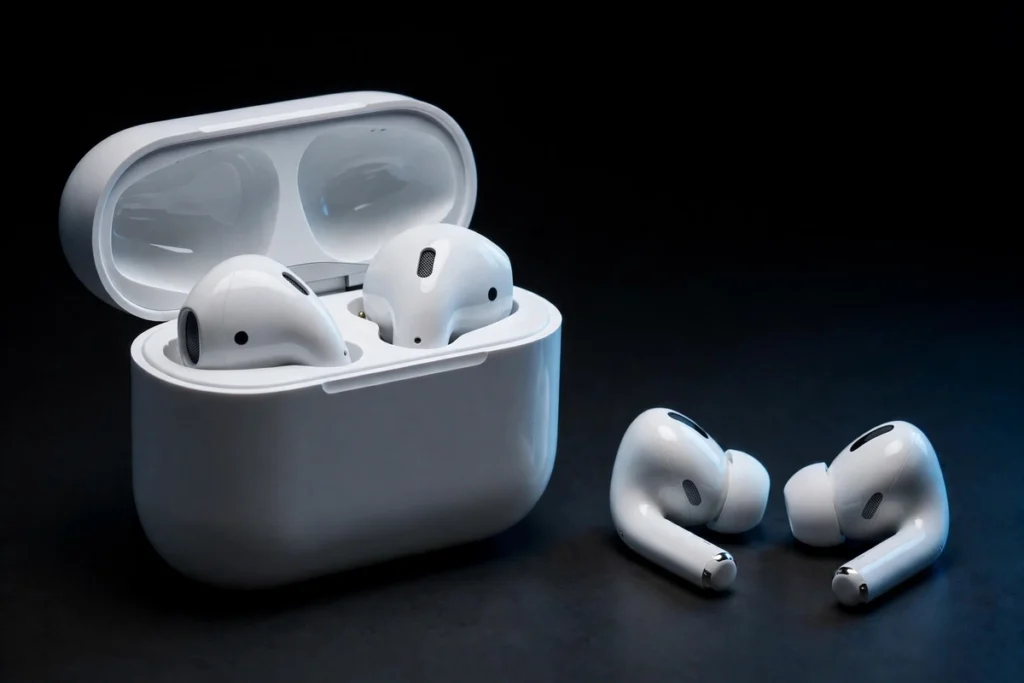
Pick Apple Music if you want the simplest path to the best sound: full hi-res lossless included at no added cost, excellent discovery, time-synced lyrics, and effortless handoff across Apple devices. If you listen on an iPhone with wired headphones and a DAC — or on AirPods with Spatial Audio — this is the service that asks the least of you while delivering the most.
Pick Tidal if you live outside the Apple ecosystem, run third-party hi-fi gear, care about deep credits and artist payouts, or DJ. Its open FLAC catalog plays nicely with streamers and DACs Apple ignores, and its extras are genuinely unique rather than me-too features.
For most headphone listeners in 2026, Apple Music wins on value and simplicity — but the honest answer is that both services now clear the bar that matters. The bottleneck stopped being the streaming service years ago; it’s the last three feet between your phone and your ears. Fix that with wired listening and a DAC, and either service will show you what your headphones can really do.
How we compared: we evaluated both services’ published audio specs, tier structures, app features, and hardware support against current 2026 reporting, then scored them specifically for headphone listening. We did not run a controlled listening test — differences at these resolutions need identical masters and level-matched gear to judge fairly, and we won’t claim ears-on results we don’t have.
Frequently Asked Questions
Which sounds better, Tidal or Apple Music?
On paper, neither — both top out at 24-bit/192 kHz lossless (FLAC on Tidal, ALAC on Apple Music), which decodes to identical audio. The audible difference comes from your headphones and DAC, not the service, and over Bluetooth the two are effectively indistinguishable.
Do Tidal and Apple Music both have hi-res lossless?
Yes. Tidal streams HiRes FLAC up to 24-bit/192 kHz, and Apple Music streams Hi-Res Lossless ALAC up to 24-bit/192 kHz. Both also offer CD-quality lossless (16-bit/44.1 kHz) and compressed data-saver tiers.
Can you hear the difference between Tidal and Apple Music on Bluetooth headphones?
Practically no. Bluetooth codecs top out well below lossless, so the wireless link discards the hi-res advantage before it reaches your ears. The quality argument between these services only becomes audible over wired headphones, ideally through a USB DAC.
Does Apple Music need a DAC for hi-res audio?
For hi-res lossless above 48 kHz, yes — Apple’s own documentation notes that an external DAC is required. A USB DAC dongle between your phone and wired headphones is the standard way to unlock either service’s top tier.
Does Tidal still use MQA?
No. Tidal moved from MQA to open HiRes FLAC, which any standard DAC can decode — no MQA-specific hardware needed.
Which is better for wired audiophile headphones?
Both serve wired listening well at identical maximum resolution. Tidal edges ahead on openness — its FLAC catalog and broad third-party hardware support fit non-Apple hi-fi stacks more naturally — while Apple Music wins on simplicity, with full hi-res included at no added cost.

I am the founder of Sound Mavericks, where I provide the polite truth about audio equipment. I started this site because consumer electronics reviews are often too technical. Instead of using a silent lab, I test headphones, earbuds, and Bluetooth speakers in the real world – like on a noisy subway or in a busy coffee shop.
To stay independent, I buy my own review units (mostly from the United States) rather than accepting free gifts from brands. Once I finish testing a product, I sell it locally to our community. My goal is to help you understand sound quality, active noise cancellation (ANC), and battery life without the marketing hype.