
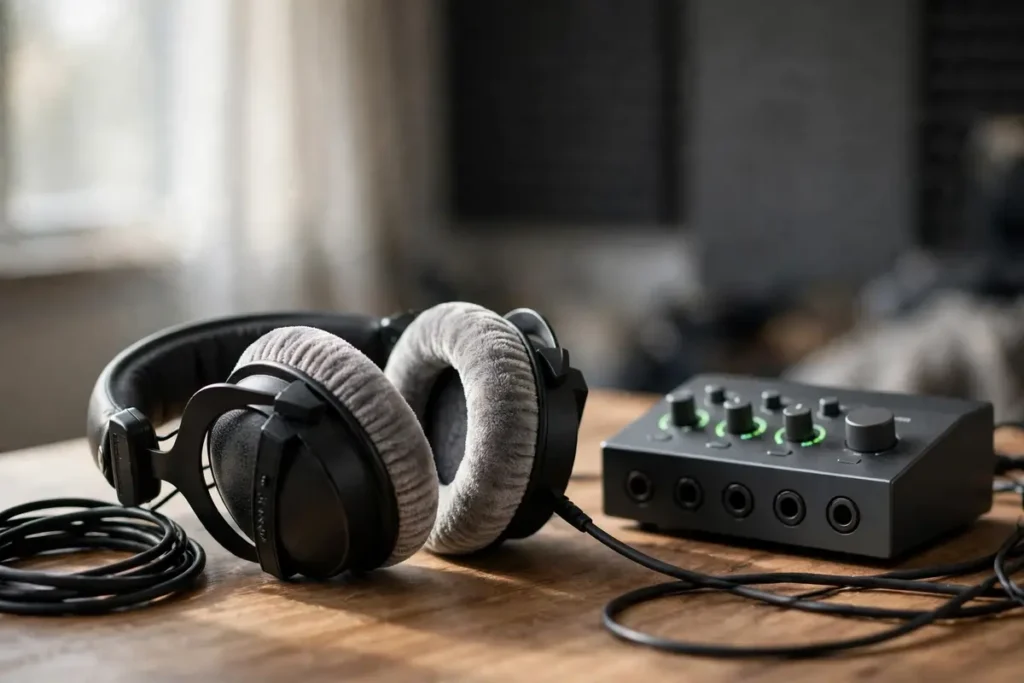
This beyerdynamic dt 700 pro x review looks at the closed-back half of Beyerdynamic’s Pro X studio pair: a wired over-ear headphone built around the STELLAR.45 driver, with deep velour pads, a detachable mini XLR cable and a tuning that aims for honest monitoring rather than excitement. Our verdict is 6.2 overall. Sound and Comfort lead the card at 8.8 each, Value follows at 8.2, and the low bars are structural: passive isolation stands in for ANC at 3.5, Calls sit at 3.0 because there is no microphone, and Battery takes the neutral 5.0 given to wired models.

Beyerdynamic DT 700 Pro X 6.2/10
Why you: you record, track or mix in a room you cannot fully quieten, and you want closed-back truth about the bottom octave. The sealed cups keep bleed out of a live microphone and keep the room out of your mix.
Trade-off: it is wired only, with no microphone and no folding frame. The bulk that makes it stable on a studio desk makes it a poor travel companion.
Over-ear closed-back · STELLAR.45 driver · 48 ohms · Detachable mini XLR cable · Velour pads · Wired only
Sound quality
Sound scores 8.8, and the shape of that score matters. Sub-bass reaches genuinely deep for a closed-back, and it stays at a controlled level instead of swelling into the mid-bass. Kick drums and synth lows have weight you can judge, which is exactly what the feed summary means by closed-back truth about the bottom octave for electronic production. The midrange is plain and uncoloured, so vocal takes and guitar parts sit where the recording puts them. Treble is the polite surprise: Beyerdynamic’s older studio models push a peak up top, and this driver files that edge down to something firm but not sharp.
MusicRadar, in its review, called the sound neutral yet powerful and put great build quality and comfort at the top of its pros list. That pairing is the honest summary of this headphone. It does not flatter a bad mix, and it does not punish a good one. Digital Camera World reached a similar place from the video side, praising the accurate, detailed presentation and the midrange clarity while wishing for more bass emotion. If emotion is the priority, a consumer tuning does it better. If confidence is the priority, this is the right kind of plain.
What the tuning means for mixing decisions
A flat-ish closed-back changes how you work. Reverb tails are easier to judge because the sealed cup removes the room you are sitting in. Low-end decisions transfer well to speakers, because the sub-bass is present but not boosted, so you will not under-mix the bottom octave the way a bass-heavy headphone tempts you to. Sibilance checks are the one place to stay careful: the softened treble can let a harsh vocal pass unnoticed, so a quick cross-check on a brighter monitor or a second headphone is worth the minute it takes.
Isolation and leakage
ANC scores 3.5, and that number needs its context. There is no active cancelling here at all. The score reflects passive isolation only: thick velour pads, a firm seal and a closed shell. In a home studio that is enough to dull a computer fan, a hallway conversation and most household noise to a level where tracking stays clean. On a vocal take, bleed from the cups into a sensitive condenser microphone is minimal at sensible monitoring levels, which is the job a closed-back studio headphone is actually hired for.
It will not do what a cancelling travel headphone does on a plane, and it is not meant to. Buyers who need silence on the move should start with our best closed-back headphones guide for context on where sealed passive designs sit, then look at active models if the commute is the main use.
Comfort and build
Comfort scores 8.8. The pads are the reason: deep, soft velour that swallows the ear instead of pressing on it, with a padded headband spreading the weight across the top. Clamp is firm on first wear and settles after a few sessions. Long tracking days are realistic without the hot spots that thinner pads create, and the velour stays cooler than leatherette across a full afternoon.
The build follows the Beyerdynamic studio pattern of replaceable parts. Pads, headband padding and cable can all be swapped by the user, which stretches the working life of the headphone well past a sealed consumer design. The frame mixes metal and sturdy plastic, the yokes feel properly engineered, and the whole thing reads as a tool rather than an accessory. The trade-off is size. Nothing folds, the cups do not swivel flat, and the supplied drawstring bag is protection against scratches, not drops.
The mini XLR cable, in daily use
One product-specific detail shapes daily life with this headphone: the single-sided cable locks into the left cup with a three-pin mini XLR plug. It clicks in with a positive action, it does not work loose when you turn your head, and it keeps the cable run on one side of the desk, away from a keyboard and a mouse hand. Two lengths come in the box, a shorter one for desk work and a longer one for standing takes at a microphone. It is a small thing that studio users notice every single day, and a detail casual listeners never think about until a fixed cable fails on them.
Driving it and daily use
At 48 ohms, the DT 700 Pro X asks little of its source. A laptop output drives it to full working volume, a phone dongle handles it without strain, and a studio interface gives it all the headroom it can use. There is no battery to manage, no pairing to repeat and no firmware to update, which is part of the appeal for a working desk. Battery scores the neutral 5.0 we give wired models, and Calls score 3.0 because there is no microphone anywhere in the package.
For readers weighing the wider studio shelf, our best studio headphones roundup sets this model against open-back rivals, and our best headphones for recording vocals guide covers the tracking job specifically. Anyone curious about the older generation can read our Beyerdynamic DT 770 Pro review for the comparison that matters most inside this brand.
Beyerdynamic DT 700 Pro X specs
| Spec | Beyerdynamic DT 700 Pro X |
|---|---|
| Form | Over-ear, closed-back |
| Driver | STELLAR.45 dynamic driver |
| Impedance | 48 ohms |
| Connection | Wired, detachable 3-pin mini XLR to 3.5mm |
| Microphone | None |
| Noise cancelling | None, passive isolation from sealed pads |
| Folding | No |
Verdict
Buy the DT 700 Pro X if you need a closed-back studio headphone you can trust at the bottom of the mix and wear through a full tracking day. Sound 8.8 and Comfort 8.8 are the headline bars, and the replaceable-parts build means the purchase is a long one.
Skip it if you need a microphone, Bluetooth or real noise cancelling, or if your listening is mostly casual and you want a tuning with more bounce. The 6.2 overall is pulled down by wired-only scores that are honest about what this tool is not. Judged as the tool it is, it is one of the most polished closed-back studio options we track.
Frequently asked questions
Is the Beyerdynamic DT 700 Pro X easy to drive?
Yes. At 48 ohms it runs happily from a laptop, a phone dongle or a basic audio interface, with no need for a powerful headphone amp. That low impedance is a deliberate part of the Pro X design, and it is one reason the headphone suits hybrid desk and studio setups.
Does the DT 700 Pro X have a microphone?
No. There is no microphone on the headphone or on either supplied cable, so Calls score 3.0 on our card. Podcasters and streamers who need a voice channel should pair it with a separate USB or XLR microphone, which most tracking setups already have.
What cables come with the DT 700 Pro X?
Two detachable cables, one shorter and one longer, each ending in a 3.5mm jack and connecting to the left earcup through a locking mini XLR plug. MusicRadar noted the same two-cable bundle in its review. The detachable design means a damaged cable is a cheap swap, not a repair bill.
How does the DT 700 Pro X differ from the DT 770 Pro?
The DT 700 Pro X is the newer design, built around the STELLAR.45 driver with a smoother treble, deeper sub-bass and a lower 48 ohm impedance. The older DT 770 Pro stays brighter up top and harder to drive. Both are closed-back studio headphones, and our DT 770 Pro review covers the classic model in full.
Is the DT 700 Pro X good for travel?
Not really. The earcups do not fold flat, the frame is bulky, and there is no Bluetooth or active cancelling. Passive isolation from the sealed pads helps on a train, but a dedicated travel headphone does the job better. This one earns its keep at a desk.

I am the founder of Sound Mavericks, where I provide the polite truth about audio equipment. I started this site because consumer electronics reviews are often too technical. Instead of using a silent lab, I test headphones, earbuds, and Bluetooth speakers in the real world – like on a noisy subway or in a busy coffee shop.
To stay independent, I buy my own review units (mostly from the United States) rather than accepting free gifts from brands. Once I finish testing a product, I sell it locally to our community. My goal is to help you understand sound quality, active noise cancellation (ANC), and battery life without the marketing hype.
