
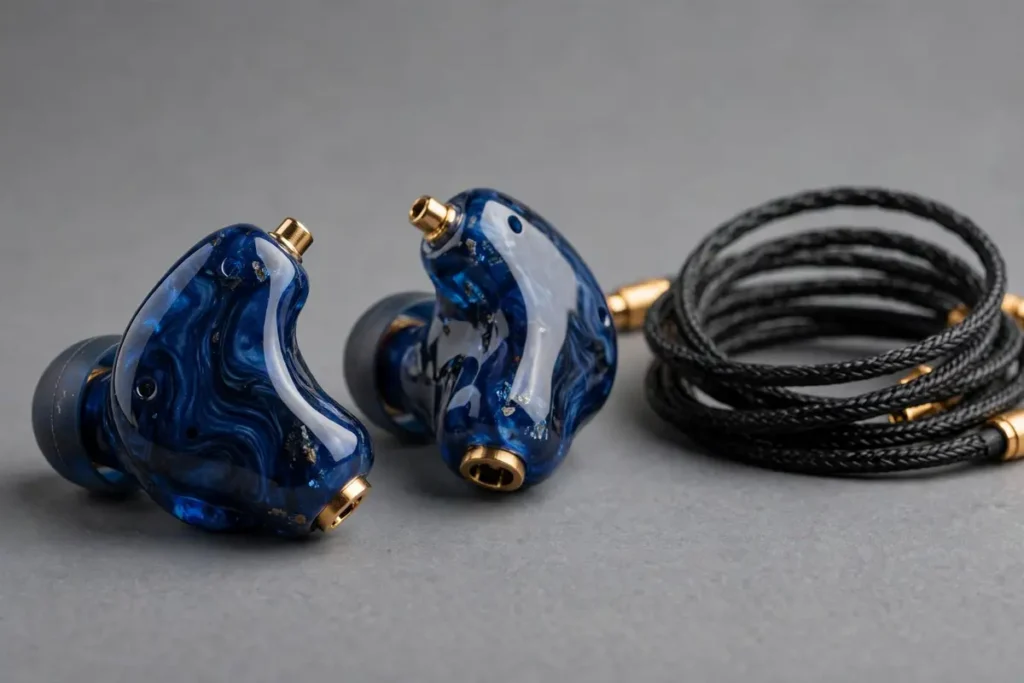
This truthear x crinacle zero review covers the original Truthear x Crinacle Zero, the blue dual-driver IEM tuned with the measurement-focused reviewer Crinacle. It is not the Zero Red, which is a retuned sibling, and it has nothing to do with the 7Hz Zero line. The original uses two dynamic drivers per side, a 10mm unit for bass and a 7.8mm unit for the rest, and it scores 7.4 overall in our provisional scoring, with Sound at 8.0 and Value at 8.8.
A note on method. This review is research-based. The scores are provisional, built from published measurements and the specialist review consensus for this exact model. Specs come from the manufacturer and the verified listing for the original blue Zero. Where the Zero Red differs, in tuning and in its impedance adapter, those details stay with the Red and are not used here.

Truthear x Crinacle Zero 7.4/10
Why you: you want a measured, monitor-style tuning on a budget. Two dynamic drivers split bass from the rest, the tuning follows a well-known target closely, and the cable detaches when it wears.
Trade-off: the nozzle is wide, so small ears can find the fit tiring, and there is no microphone on the stock cable. Calls score 3.0, and the sub-bass focus will not suit listeners who want a warm, soft sound.
Wired IEM · 10mm + 7.8mm dual dynamic drivers · Detachable 0.78mm 2-pin cable · 3.5mm plug
Sound quality
Sound scores 8.0. The Zero was tuned against a target curve with unusual care for its price, and it shows in the balance: a firm sub-bass shelf that stays out of the midrange, clean vocals, and a treble that follows the target closely enough that most listeners hear it as correct rather than exciting or dull. The dual-driver split is the mechanism: the 10mm driver handles low frequencies through a crossover, so bass weight does not smear the mids the way single-driver budget rivals often let it.
That sub-bass emphasis is the character of the set. Electronic music and film scores get real low-end foundation, while the mid-bass stays restrained, so acoustic music sounds lean rather than warm. Listeners who like a thick, cosy presentation may find it clinical. Detail and separation are strong for the class, helped by the DLP 3D-printed acoustic structure inside the resin shell.
Our Truthear Hexa review covers the brand’s hybrid step-up, and our best IEMs guide places the Zero in the wider budget field it helped define.
Fit and build
Comfort scores 7.2, the most argued part of this IEM. The shells are light resin and the shape suits medium and large ears well, but the nozzle is on the wide side, and smaller ears can feel pressure after an hour. Tip choice matters more than usual: the included sets change both the seal and the perceived treble, so new owners should try more than one size before judging the sound.
Build is sensible for the money. The cable is a four-strand silver-plated design on standard 0.78mm 2-pin connectors, so a replacement or an upgrade cable is cheap and easy, and the 3.5mm plug keeps it compatible with dongles, laptops and controllers. Isolation is passive and ordinary, scoring as an ANC equivalent of 3.5: a good seal dulls the room, but the Zero is not a commuting silencer.
Everyday use and calls
Calls score 3.0 because the stock cable carries no microphone. Owners who need calls can swap in a 2-pin cable with an inline mic, which the detachable design makes simple. At 10 ohms and 117.5dB sensitivity the Zero is easy to drive from a phone dongle, though its low impedance can pick up hiss from noisy laptop outputs, a point worth knowing before pairing it with an old desktop jack.
Battery scores the neutral 5.0 placeholder our database uses for wired models. Value scores 8.8: at its launch the Zero reset what buyers expected a budget IEM to measure like, and it remains an easy recommendation for listeners who want accuracy first.
How it compares
The comparison everyone asks about is the Zero Red. The Red softens the original’s sub-bass emphasis, adds a different supplied adapter arrangement and suits listeners who found the original too bass-forward in the lows and too lean in the mids. Neither is the upgrade of the other; they are two tunings of the same platform, and this review’s scores belong to the original blue set only.
Against single-driver budget rivals, the dual-driver split shows in cleaner bass and better separation on dense tracks. Against hybrid rivals with balanced armatures, the Zero trades a little treble sparkle for a more natural tone through the mids. It defined the measured-budget category on release, and the fact that newer rivals still launch by comparing themselves to it says most of what the 8.8 Value score means.
Ownership notes
New owners should budget ten minutes for tips. The Zero’s seal decides its bass, and the supplied sets differ enough that the wrong size can make a well-measured IEM sound thin. Once sealed, the tuning most measurements describe is the tuning you hear, which is not something every budget rival can claim.
The resin shells are light and have proven durable in owner reports, and the printed internal structure that gives the Zero its crossover accuracy is not user-serviceable, so treat drops with normal care. Cable swaps are the supported modification, and the standard connector means the thriving 2-pin aftermarket is open to you, from simple replacements to Bluetooth adapters for wireless duty.
Who it suits
The Zero suits listeners who read measurements, gamers who want precise imaging on a budget, and anyone building a first wired setup around accuracy. It suits libraries heavy in electronic, orchestral and well-produced pop. It does not suit small ears without a fit check, warmth seekers, or anyone who needs a microphone without swapping the cable.
Why it mattered
On release, the Zero landed in a budget market ruled by bass-heavy house tunings and showed that a measured target could sell. It helped shift buyer expectations: measurements in listings, published curves, and tunings defended with data rather than adjectives. Much of the current budget IEM scene, including several models reviewed on this site, exists in the space the Zero opened. That context is part of why a budget set carries an 8.0 Sound score here without apology.
Truthear x Crinacle Zero specs
| Spec | Truthear x Crinacle Zero |
|---|---|
| Design | In-ear monitor, wired, resin shell |
| Drivers | 10mm + 7.8mm dual dynamic drivers with crossover |
| Impedance | 10 ohms |
| Sensitivity | 117.5dB/Vrms at 1kHz |
| Frequency range | 20Hz to 39.5kHz (IEC61094, free field) |
| Cable | Detachable 0.78mm 2-pin, silver-plated, 3.5mm plug |
| Microphone | None on stock cable |
| Model note | Original blue Zero. Not the Zero Red, not the 7Hz Zero |
Verdict
Buy the original Zero if you want a budget IEM that measures like a monitor. An 8.0 Sound score and an 8.8 Value score describe the set that made target-curve tuning a selling point at this price.
Skip it if your ears are small, since the wide nozzle is a real fit risk, or if you want warmth over accuracy. The 7.4 overall is a provisional score for a benchmark budget IEM whose tuning still holds up.
Frequently asked questions
Is this the Zero, the Zero Red or the 7Hz Zero?
The original Truthear x Crinacle Zero, in blue, with dual dynamic drivers. The Zero Red is a retuned sibling with a different bass balance, and the 7Hz Zero is an unrelated model from another brand. This review and its scores cover the original only.
How does the Zero sound?
Measured and sub-bass focused. Sound scores 8.0 here: strong low-end foundation, a clean midrange that bass does not cloud, and treble that follows its target closely. It reads as accurate rather than warm.
Does the Truthear Zero have a microphone?
No. The stock cable has no microphone, so calls score 3.0. Because the cable detaches at standard 0.78mm 2-pin connectors, a mic cable can be fitted cheaply if you need one.
Is the Zero comfortable for small ears?
It is the main risk with this model. The nozzle is wide, and comfort scores 7.2 for that reason. Trying the smaller included tips helps, but listeners with small ear canals should consider the fit carefully before buying.
Does the Zero need an amplifier?
No. At 10 ohms and 117.5dB sensitivity a phone dongle drives it easily. Very noisy source outputs can hiss a little with such a sensitive, low-impedance IEM, which is a source issue rather than a power issue.

I am the founder of Sound Mavericks, where I provide the polite truth about audio equipment. I started this site because consumer electronics reviews are often too technical. Instead of using a silent lab, I test headphones, earbuds, and Bluetooth speakers in the real world – like on a noisy subway or in a busy coffee shop.
To stay independent, I buy my own review units (mostly from the United States) rather than accepting free gifts from brands. Once I finish testing a product, I sell it locally to our community. My goal is to help you understand sound quality, active noise cancellation (ANC), and battery life without the marketing hype.
