
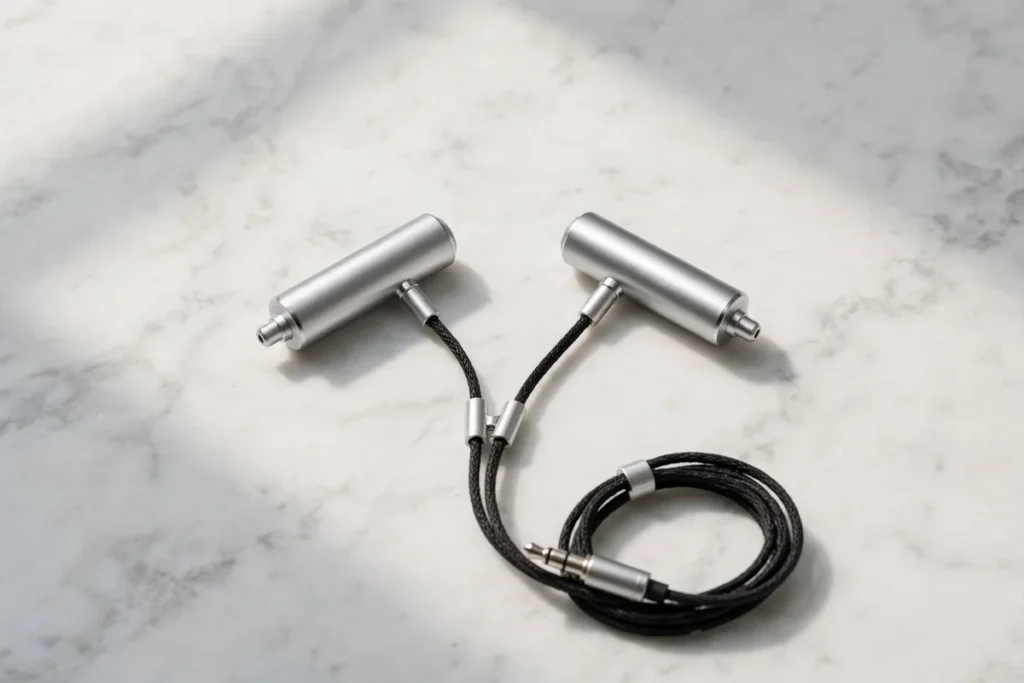
This tin audio t2 review covers the Linsoul TIN Audio T2, the dual dynamic driver in-ear monitor that taught a generation of buyers what a budget IEM could sound like. Each metal shell holds a 10mm woofer and a 6mm tweeter, the cable detaches on 2-pin connectors, and the tuning aims at neutral rather than the bass-heavy curve most cheap earphones chase. Our provisional scores, built from the published review and measurement consensus, land at 5.7 overall under the wired conventions our database applies to every wired model.
A note on method. This is a research-based review. We have not had a unit on the desk, so nothing here claims hands-on testing. The scores are provisional, translated from the consistent findings of reviewers and measurement rigs that have covered the T2, and the specifications come from the verified Amazon US listing and Linsoul published data.

Linsoul TIN Audio T2 5.7/10
Why you: you want the classic budget IEM done properly: a neutral, detailed sound from a dual-driver design, an all-metal shell and a cable you can replace when it wears out.
Trade-off: there is no microphone on the cable and no noise cancelling beyond the seal of the tips, and the wired score conventions pull the overall mark down even though the sound itself is the strong part.
Dual dynamic drivers, 10mm + 6mm · 16 ohm · Detachable 2-pin cable · Metal shells
Sound quality
Sound scores 7.4, the strongest bar on this card and the reason the T2 still gets recommended. The tuning is close to neutral with a mild lift up top. Bass is present and tidy rather than boosted, midrange vocals sit forward enough to follow lyrics easily, and the small tweeter keeps cymbals and string detail cleaner than the single-driver rivals that crowd this price. Owners coming from bundled phone earbuds hear the difference in the first track.
It is not a basshead earphone and it does not pretend to be. Kick drums land with control instead of bloom, and listeners who want a heavy low-end shelf will find it lean. The treble lift can also turn sharp on poor recordings at high volume. Within our best budget IEMs coverage the T2 remains the reference point for the neutral school, the model newer budget releases get measured against.
Drivers and tuning
The dual-driver layout is more than a spec-sheet trick. Splitting the range between a 10mm woofer and a 6mm tweeter lets each driver work where it is comfortable, and the crossover point sits high enough that vocals stay coherent. The practical result is separation: busy mixes hold apart better than they do on most single-driver designs at this level, and quiet detail survives at low volume.
Fit drives a lot of what you hear. The metal shells are small and light, the nozzle takes standard tips, and the included foam tips add bass weight and isolation at the cost of a little top-end air. Silicone tips keep the brighter stock character. Trying both sets is worth ten minutes, because the T2 effectively ships with two tunings.
Build, cable and comfort
Comfort scores 7.8. The shells are machined metal with smooth edges, they sit shallow, and the cable routes over the ear, which kills most cable noise and keeps them in place on the move. Long sessions are easy. The shells have a small vent, so wind noise shows up outdoors and isolation stays modest.
The detachable cable is the ownership win. Cables are the part of a wired earphone that dies first, and here a failure costs a cable, not a new earphone. One caution from the listing history: early T2 production used an MMCX connector while the current listing uses 0.78mm 2-pin. Match spares to the unit in your hand. The package and presentation stay plain, which is where the money was not spent.
Isolation and everyday use
There is no active noise cancelling, and the ANC bar reads 2.5 on passive seal alone. In a quiet office the T2 takes the edge off background chatter with foam tips. On a plane it will not trouble a proper ANC earbud. Calls score 3.0 because the cable carries no microphone, the standard mark in our database for a wired model with no mic.
Battery scores the neutral 5.0 placeholder our Finder applies to wired models, since there is nothing to charge. Value scores 8.6. Few earphones at this level combine metal shells, a replaceable cable and a tuning this grown-up, which is why the T2 keeps its place in our best wired earbuds coverage years into its run. Listeners who want a warmer, bass-led alternative in the same family of budgets should look at the Truthear Hexa review for a hybrid take on the formula.
How it holds up against newer budget rivals
The budget IEM field has moved fast since the T2 became the default recommendation, and most of its newer rivals chase a warmer, bass-led curve because that is what first-time buyers pick in a shop demo. The T2 has not moved. Its staying power comes from doing the unglamorous things right: a tuning that does not fatigue, shells that survive pockets and bags, and a cable standard that keeps spares cheap and easy to find.
Listeners who want more low-end weight from the same era of design should compare it with the warmer single-driver models in our budget coverage, and listeners who want a technical step up should look at hybrid designs with a separate balanced armature for the treble. The T2 sits between those poles: less drama than the bass-led crowd, less clinical than the measurement-first crowd, and honest about both trades.
Tips, fit and the two-minute setup that matters
Tip choice is the only setup decision the T2 asks for, and it is worth the two minutes. Foam tips deepen the bass slightly, add isolation and hold the shells steady on the move. Silicone tips keep the stock brightness and the airier stage. The shells are small enough that most ears get a secure fit either way, and the over-ear cable route keeps microphonics low when walking. Owners who listen at a desk often end on silicone; commuters end on foam. Both answers are in the box, which is more than many newer rivals include.
Tin Audio T2 specs
| Spec | Linsoul TIN Audio T2 |
|---|---|
| Design | In-ear monitor, wired, metal shells |
| Drivers | Dual dynamic: 10mm woofer + 6mm tweeter per side |
| Impedance | 16 ohms |
| Frequency range | 12 Hz to 40,000 Hz |
| Cable | Detachable, 0.78mm 2-pin, 3.5mm plug |
| Microphone | None on the listed cable |
| Noise cancelling | None, passive isolation from tips only |
Verdict
Buy the T2 if you want a neutral, durable first IEM and you value a replaceable cable over wireless features. The 7.4 Sound score and 8.6 Value score describe exactly what it is: a budget earphone that sounds like it was tuned by someone who cared.
Skip it if you need a microphone, real noise cancelling or a bass-heavy signature. Those jobs belong to other models, and our database scores the T2 on the job it actually does.
Frequently asked questions
What drivers does the Tin Audio T2 use?
Two dynamic drivers per side: a 10mm woofer and a 6mm tweeter. The pairing is the whole design idea, with the larger driver handling bass and lower mids and the smaller one taking the top end, which is why the T2 sounds cleaner up high than most single-driver budget rivals.
Does the Tin Audio T2 have a microphone?
The cable on the current listing has no microphone, so calls score 3.0 in our database convention for wired models without a mic. It works fine for music and monitoring. If calls matter, use your phone mic with the earphones unplugged, or pick a model with an inline mic cable.
Is the Tin Audio T2 cable replaceable?
Yes. The cable detaches at the earpieces on 0.78mm 2-pin connectors, so a damaged cable is a cheap fix rather than a dead earphone, and balanced or Bluetooth cables can be fitted later. Check the connector type before ordering spares, because early production used a different connector.
How much isolation does the Tin Audio T2 give?
Only what the fit gives. There is no active cancelling, and ANC scores 2.5 for the passive seal of the metal shells with silicone or foam tips. Foam tips block the most and are the better pick for buses and trains.
Does the Tin Audio T2 need an amplifier?
No. At 16 ohms with 102 dB sensitivity it runs happily from a phone dongle or a laptop output. A cleaner source tightens the bass a little, but an amp is optional rather than required.

I am the founder of Sound Mavericks, where I provide the polite truth about audio equipment. I started this site because consumer electronics reviews are often too technical. Instead of using a silent lab, I test headphones, earbuds, and Bluetooth speakers in the real world – like on a noisy subway or in a busy coffee shop.
To stay independent, I buy my own review units (mostly from the United States) rather than accepting free gifts from brands. Once I finish testing a product, I sell it locally to our community. My goal is to help you understand sound quality, active noise cancellation (ANC), and battery life without the marketing hype.
