This airpods max 2 vs sony wh 1000xm6 comparison puts the two flagship noise cancelling over-ears at the top of our database head to head. Both scored cards below are verbatim from our Finder database, not fresh estimates: the AirPods Max 2 at 8.2 overall with the strongest low-band cancelling we track, and the Sony WH-1000XM6 at 8.9 overall, the highest-scoring flagship in the database. The short answer is that the Sony wins more categories, and the Apple wins the ecosystem argument. The longer answer is below.

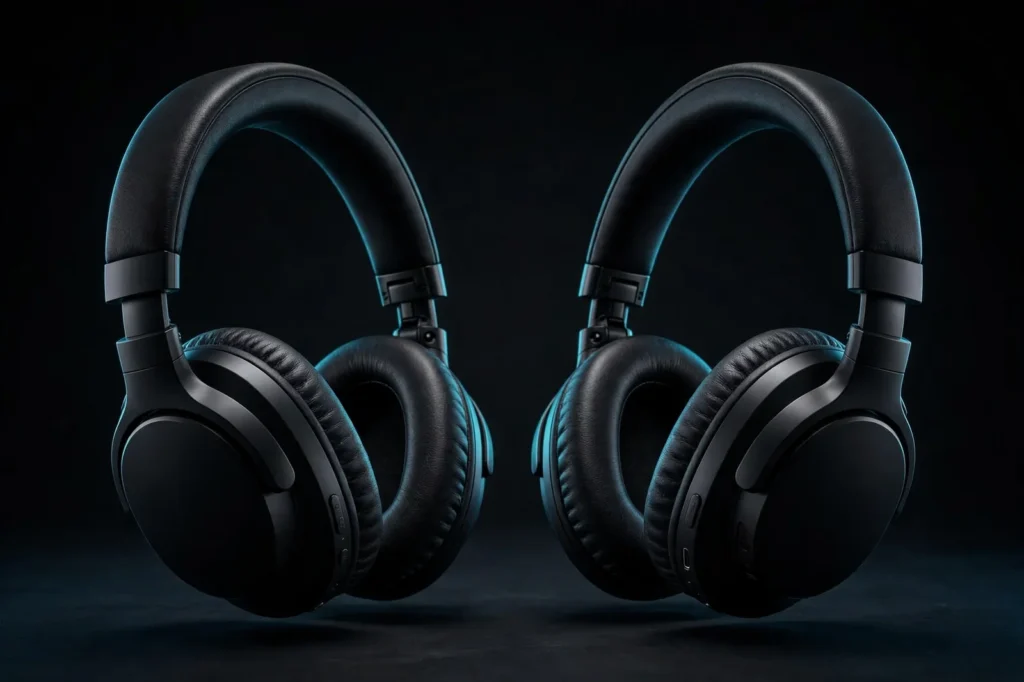
Apple AirPods Max 2 8.2/10
Why you: you are deep in the Apple ecosystem and want its strongest cancelling, with pairing and switching that feel invisible across iPhone, iPad and Mac.
Trade-off: the weight is real, comfort scores 7.6, there is no LDAC or aptX for Android hi-res, and value at 7.0 reflects full Apple flagship pricing.
Over-ear ANC · Multipoint · Apple ecosystem · Spatial audio
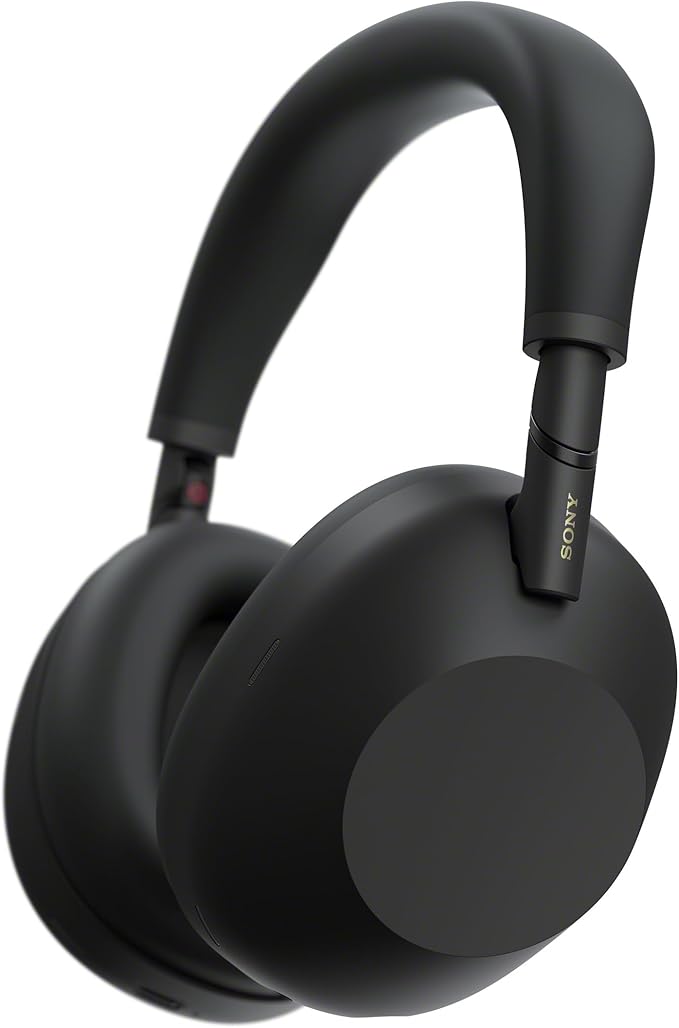
Sony WH-1000XM6 8.9/10
Why you: you want the best all-round flagship: the highest overall score in our database, top-tier cancelling, LDAC for Android and comfort that lasts a working day.
Trade-off: flagship money, and the XM5 below it in Sony own range covers most needs for less, as its database caution notes.
Over-ear ANC · LDAC, AAC, SBC, LC3 · Multipoint · 30 h rated battery
The short verdict
The WH-1000XM6 wins this comparison on the database numbers: sound 9.2 against 8.8, comfort 8.8 against 7.6, battery 8.6 against 7.8, calls 8.8 against 8.6 and value 8.2 against 7.0, for an overall of 8.9 against 8.2. The one bar the AirPods Max 2 takes is ANC, 9.7 against 9.6, and it takes it on the strength of low and mid-band cancellation. Buy the Sony unless your life runs on Apple devices, in which case the Max 2 integration is a feature no score bar captures. Full verdicts live in our AirPods Max 2 review and Sony WH-1000XM6 review.
| Category | Apple AirPods Max 2 | Sony WH-1000XM6 |
|---|---|---|
| Overall (database) | 8.2 | 8.9 |
| Sound | 8.8 | 9.2 |
| ANC | 9.7 | 9.6 |
| Calls | 8.6 | 8.8 |
| Comfort | 7.6 | 8.8 |
| Battery | 7.8 | 8.6 |
| Value | 7.0 | 8.2 |
| Best for | Apple households, strongest low-band cancelling | Everyone else; the all-round flagship |
Noise cancelling
This is the closest flagship fight in our database: 9.7 against 9.6. The AirPods Max 2 posts the strongest low and mid-band cancellation we track, the frequencies that make flights and trains tiring. The WH-1000XM6 counters with consistency: a seal that works across more head shapes, strong performance in wind, and cancelling that holds up as conditions change through a journey. On a single quiet flight the Apple can feel a touch quieter down low. Across a week of mixed travel, the Sony is the safer pair of hands. Either headphone sits at the top of our best noise cancelling headphones guide, and the real-world gap between them is smaller than the gap to everything below them.
Sound quality
Sound goes to the Sony, 9.2 against 8.8. The XM6 tuning is the more complete package: strong detail, controlled bass and an LDAC path that lets Android phones feed it properly, with LC3 support for the next wave of sources. The AirPods Max 2 sounds excellent inside its ecosystem, where spatial audio adds a dimension the Sony answers with its own processing, but it offers no LDAC or aptX, so Android owners get a reduced version of it. Apple owners comparing within the family should also read our Sony WH-1000XM5 vs WH-1000XM6 comparison to see what the newer Sony changed.
Comfort and battery
Comfort is the widest gap in the comparison: 8.8 against 7.6. The XM6 is the lighter, softer-clamping headphone, and long-session owners feel that by hour three. The AirPods Max 2 carries the familiar weight of its line. Its build feels like hi-fi hardware, and some owners prefer exactly that solidity, but the score reflects how the average head votes over a working day.
Battery follows the same direction, 8.6 against 7.8, with the XM6 rated at 30 hours with cancelling on. In practice the Sony asks for a charge roughly weekly for a commuter; the Apple asks sooner. Neither will strand you on a single long-haul day, but the Sony margin is the one that survives a forgotten charge.
Calls and ecosystems
Calls are close, 8.8 for the Sony against 8.6 for the Apple, both flagship-grade in wind and street noise. The deciding layer is the ecosystem. Inside Apple hardware the Max 2 pairs instantly, switches between devices without menus and ties into spatial audio and Find My. The XM6 is the citizen of everywhere: multipoint across any two devices, LDAC on Android, and an app that treats platforms even-handedly. Households that are Apple-only feel the Max 2 advantage daily. Mixed households never feel it at all.
Which flagship should you buy?
Buy the Sony WH-1000XM6 for the better sound, comfort, battery, calls and value in our database, and for freedom across platforms. It is the flagship we score highest, and this comparison shows why in every row except one.
Buy the AirPods Max 2 if your devices are Apple from phone to laptop and you value the strongest low-band cancelling we track plus integration that disappears. The 8.2 overall is not a weak score; it is what a specialist looks like next to the best all-rounder. Owners deciding whether the Sony step up is worth it over its predecessor will find the generational detail in the XM5 vs XM6 comparison linked above.
One more practical split: travel. The Sony case is smaller and the headphone folds flatter, so it wins the carry-on test. The Apple case and footprint ask for more room, and its owners tend to travel with it on their head rather than in the bag.
Price and value, without printing prices
We do not print prices, and both of these flagships sit at the top of the market where street prices move with seasons and sales. The database Value scores carry the standing judgement: 8.2 for the Sony against 7.0 for the Apple. The XM6 delivers more of what the score bars measure for its position in the range, while the Max 2 asks buyers to pay for materials, build and ecosystem features that the bars do not grade.
Ownership costs follow the same split. The Sony folds flatter, travels in a smaller case and sips its battery. The Apple asks for more bag space and more charges, and returns a build that feels built to be kept. Neither is the value play of its brand; the step-down models in both ranges exist for that, and our roundups track them.
Frequently asked questions
Which cancels more noise, AirPods Max 2 or Sony WH-1000XM6?
By our database scores it is close to a tie at the top: 9.7 ANC for the AirPods Max 2 against 9.6 for the WH-1000XM6. The Apple leads on low and mid-band cancellation strength; the Sony counters with a better seal for more head shapes and stronger all-round performance in wind and travel noise.
Which sounds better, AirPods Max 2 or Sony WH-1000XM6?
The Sony, on our scores: 9.2 Sound against 8.8. The XM6 also plays LDAC from Android phones, while the AirPods Max 2 is at its best inside the Apple ecosystem, where its spatial audio and device switching live. Both are flagship-grade; the gap is smaller than the score suggests.
Which is more comfortable, AirPods Max 2 or Sony WH-1000XM6?
The Sony, clearly on our numbers: 8.8 Comfort against 7.6. The XM6 is lighter with a softer clamp for long sessions. The AirPods Max 2 carries the line familiar weight, which some owners love for its build and others feel by hour two.
Which has better battery life?
The Sony. Battery scores 8.6 against 7.8, and the XM6 rated 30 hours with ANC on is the practical difference: fewer charges across a working week and more margin on long-haul travel days.
Which should iPhone owners buy?
If you live inside the Apple ecosystem, the AirPods Max 2 case is real: instant pairing, device switching and spatial audio, plus the strongest low-band cancelling we track. If you split time with Android or Windows, or you prioritise comfort and battery, the WH-1000XM6 is the better buy, and our scores make it the overall winner at 8.9 against 8.2.

I am the founder of Sound Mavericks, where I provide the polite truth about audio equipment. I started this site because consumer electronics reviews are often too technical. Instead of using a silent lab, I test headphones, earbuds, and Bluetooth speakers in the real world – like on a noisy subway or in a busy coffee shop.
To stay independent, I buy my own review units (mostly from the United States) rather than accepting free gifts from brands. Once I finish testing a product, I sell it locally to our community. My goal is to help you understand sound quality, active noise cancellation (ANC), and battery life without the marketing hype.