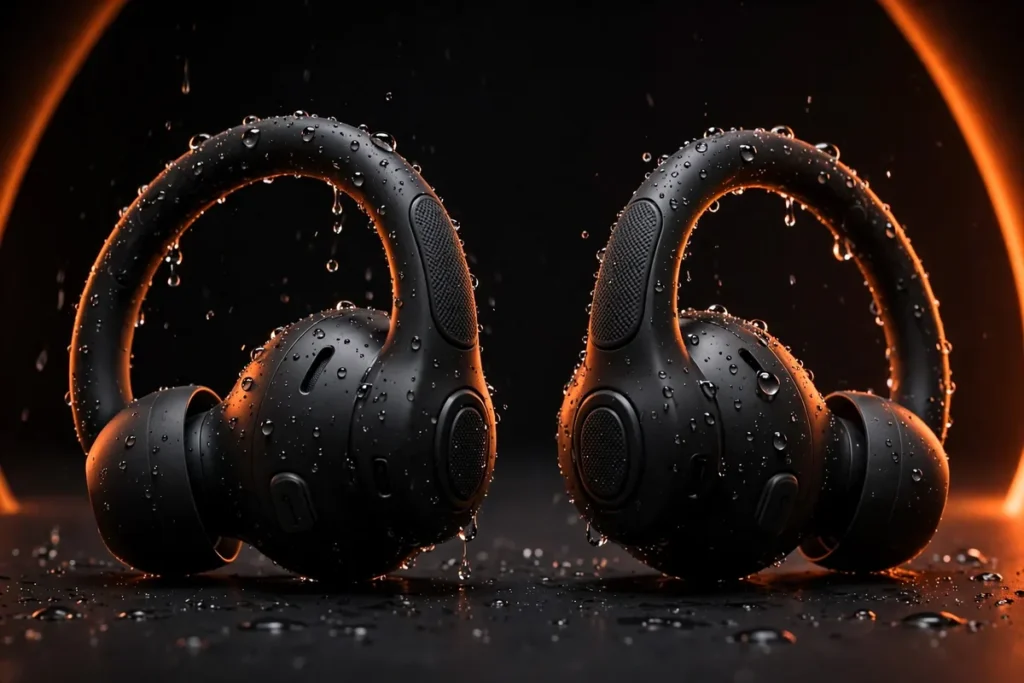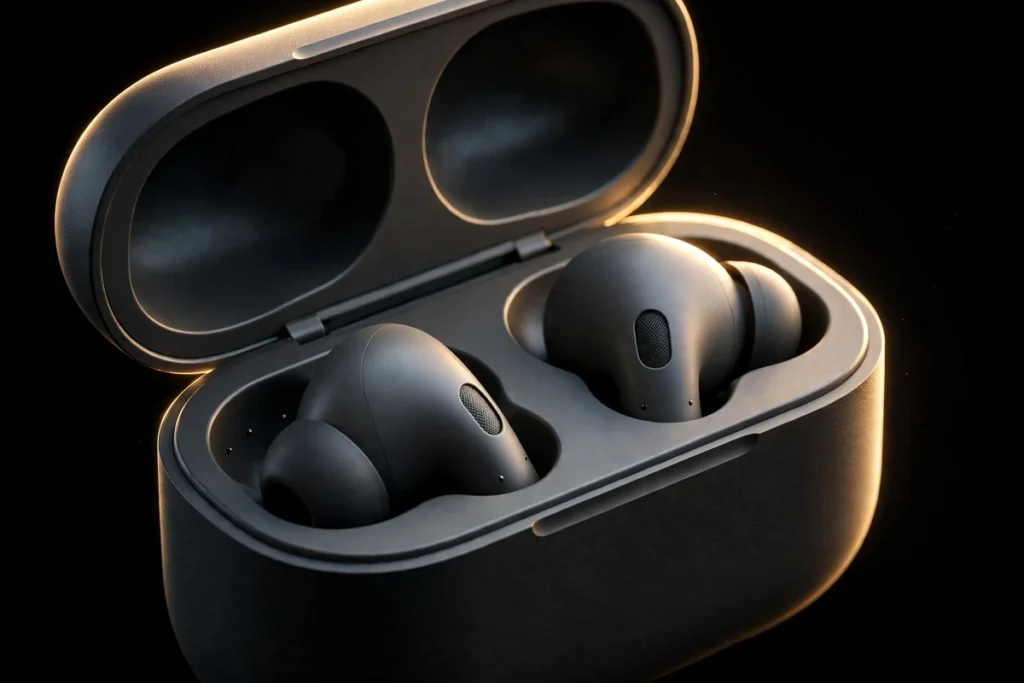
The best earbuds for phone calls of the six we compared: Sony’s WF-1000XM6 wins on the strongest independent microphone evidence — but iPhone loyalists, noisy-office workers, and bargain hunters each get a better answer below.
The most thoroughly lab-validated call mic in any true wireless earbuds — 8 mics, AI beamforming and a bone-conduction sensor.
Check Price on AmazonThe default for iPhone + Mac workdays: Voice Isolation and automatic device switching make back-to-back meetings effortless.
Check Price on AmazonSix mics, cVc 8.0 call processing, multipoint and marathon battery — the cheapest way to sound professional on calls.
Check Price on AmazonBest of the rest — for edge use-cases
- Bose QuietComfort Ultra Earbuds (2nd Gen) — best ANC for noisy offices: the deepest quiet of any earbuds here, so you hear the call, not the chatter.
- Jabra Elite 10 Gen 2 — best for marathon call days: semi-open comfort, 6-mic call tech and wind-noise detection that survives walks between meetings.
- Nothing Ear (3) — best mid-range with a wild-card trick: a “Super Mic” in the charging case that filters extreme background noise when ordinary mics give up.
Sony WF-1000XM6 — Our Pick

For calls, the decision isn’t close — and it isn’t close because of marketing. It’s close because the evidence converges. SoundGuys’ standardized microphone recordings — the same artificial-mouth test rig, in quiet, office, street and wind conditions — put the WF-1000XM6’s mic at the top of their 2026 call rankings, and RTINGS independently found it keeps speech natural and separates it from background noise in busy settings. When two independent labs land on the same flagship, that’s the one you buy.
The hardware explains the results. Sony doubled down on the uplink: eight microphones (four per bud) with AI beamforming that steers pickup toward your mouth, a bone-conduction sensor that reads your jaw’s vibrations when wind scrambles the air mics, and AI noise rejection Sony says was trained on 500 million voice samples. For back-to-back Zoom calls, what matters is exactly this combination — because the failure mode of call earbuds is always the same: your voice plus the espresso machine, and the other side hears both.
On the workday features, it checks the boxes that matter: multipoint for your phone and laptop at once, about five hours of ANC-on talk time with top-ups from the case, and 20 levels of ambient sound plus voice passthrough for quick in-office conversations. The IPX4 rating is fine for commutes; it isn’t a workout bud. For a deep dive into how Sony’s generations compare, see our Sony flagship comparison — and if you’re torn between the ecosystems, our AirPods Pro 3 vs Sony WF-1000XM6 breakdown puts the call-mic differences side by side.
- Microphone array: 8 mics (4 per bud) + AI beamforming + bone-conduction sensor
- ANC: QN3e processor, class-leading noise reduction
- Battery: 8 hours buds / 24 hours total with case (ANC on); ~5 hours ANC-on talk time
- Bluetooth: 5.3, multipoint (2 devices), LDAC, LC3, Auracast
- Water resistance: IPX4
Apple AirPods Pro 3 — Best for iPhone Work Calls

If your workday runs on an iPhone and a Mac, the call question stops being about raw mic specs and starts being about friction. The AirPods Pro 3 combine dual beamforming microphones and an inward-facing mic per bud with Apple’s Voice Isolation — computational voice processing that runs on the H2 chip — and the part that actually changes your day is automatic switching: walk from your phone to your MacBook and the buds follow the active call without a settings menu in sight. For back-to-back meeting schedules, that erases a category of “can you hear me?” entirely.
Two things to know before you commit. First, Apple’s own tuning leans on the ecosystem: RTINGS found mic performance improves noticeably when the buds are paired with an iPhone versus a PC, so Windows-heavy call days blunt some of the advantage. Second, AirPods don’t do true multipoint — automatic switching only works across Apple devices logged into the same iCloud account. If your desk is an iPhone + Windows laptop, Sony’s universal multipoint is the more honest fit. The IP57 rating (buds and case) and 8-hour ANC listening time make these the most durable and longest-running AirPods for all-day wear, though that 8-hour figure is listening time, not continuous talk.
- Microphone array: Dual beamforming mics + inward-facing mic per bud, Voice Isolation
- ANC: ~2x stronger than AirPods Pro 2, Adaptive Audio, Conversation Awareness
- Battery: 8 hours buds / 24 hours total with case (ANC listening)
- Bluetooth: 5.3, automatic switching across Apple devices (no true multipoint)
- Water resistance: IP57 (buds and case)
Bose QuietComfort Ultra Earbuds (2nd Gen) — Best ANC for Noisy Offices

Call quality is two problems, not one. The first is what they hear — your mic’s job. The second is what you hear, and in a loud open office, that’s where Bose wins this roundup. The QuietComfort Ultra Earbuds 2nd Gen deliver the deepest noise cancellation in the in-ear class — CustomTune personalizes the ANC to your ear shape every time you put them in, and RTINGS measured outstanding noise isolation. If your calls happen next to a sales floor, a humming HVAC vent, or a colleague who narrates their lunch, hearing the other person without straining is half the call-quality battle, and Bose simply deletes more of the room than anything else here.
The uplink isn’t an afterthought either: four microphones per bud with AI-based background noise suppression — Bose’s second-gen upgrade specifically targeted call clarity — and RTINGS found clean, natural speech under normal conditions, though they noted the mic works harder once noise gets extreme. The practical limit is talk time: Bose rates maximum talk time at about 4 hours, with 6 hours of music listening per charge. For a four-meetings-a-day schedule with a lunch break, that fits; for a full day of nonstop standups, you’ll be dipping into the case between calls. True multipoint covers phone + laptop, and aptX Adaptive is a genuine plus for Android users who want low-latency audio on the same buds.
- Microphone array: 4 mics per bud, AI-based background noise suppression, SpeechClarity
- ANC: World-class adaptive ANC with CustomTune personalization, Immersive Audio
- Battery: 6 hours buds (4 with Immersive Audio) / ~24 hours total; ~4 hours max talk time
- Bluetooth: 5.3, multipoint (2 devices), aptX Adaptive, Snapdragon Sound
- Water resistance: IPX4; wireless charging case
Jabra Elite 10 Gen 2 — Best for Marathon Call Days

Jabra built its reputation on call hardware — these are the descendants of office headsets — and the Elite 10 Gen 2 inherits the DNA: a six-microphone call system with improved noise-reduction algorithms, plus wind-noise detection Jabra says is twice as effective as the previous generation. For calls taken while walking — between meetings, across campus, on a breezy sidewalk — wind is the mic killer that office-focused earbuds don’t plan for, and this is the pair in this lineup that plans for it explicitly. SoundGuys’ parent-brand testing of Jabra’s call pedigree consistently rates it among the strongest uplink performers.
The case for the Elite 10 Gen 2 as a work pick goes beyond the mics. The semi-open ComfortFit design avoids the sealed-in pressure that makes some flagship buds fatiguing by hour three — for back-to-back call schedules, comfort is a call-quality feature. Multipoint handles phone + laptop, the IP57 rating shrugs off rain and sweat, and 6 hours of ANC-on listening with 27 hours total from the case covers full workdays. There’s also a genuinely useful party trick: the LE Audio smart case can plug into a plane’s or gym screen’s 3.5mm or USB-C port and stream to the buds — handy for inflight calls and entertainment alike.
One honest caveat: Jabra’s parent company GN is winding down the Elite consumer line, so these are a legacy flagship — no successor is coming. They’re still widely stocked on Amazon, and Jabra has continued pushing firmware updates, but buy them as a finished product, not a platform.
- Microphone array: 6-mic call technology with noise-reduction algorithms, enhanced wind detection
- ANC: Jabra Advanced ANC (2x stronger than Elite 10 Gen 1), semi-open comfort design
- Battery: 6 hours buds / 27 hours total with case (ANC on)
- Bluetooth: 5.3, multipoint, LE Audio smart case with 3.5mm/USB-C passthrough
- Water resistance: IP57
EarFun Air Pro 4 — Best Budget Pick

This is the pick that proves call quality stopped being a luxury spec. The Air Pro 4 packs a six-microphone array with Qualcomm cVc 8.0 call processing and an AI algorithm on top — the same generation of Qualcomm voice stack that powers far pricier buds — plus QuietSmart 3.0 ANC rated at 50dB. What makes it the budget work pick specifically is the rest of the package: multipoint for phone + laptop, and 11 hours of listening per charge stretching to 52 hours total with the case, so a week of normal call volume barely dents the battery.
Set expectations honestly: budget DSP can’t fully rescue your voice from a coffee grinder — lab testing of budget earbuds shows background chatter bleeds through more than on flagships. But for home offices, quiet coworking days, and the general “I need to sound clear on Zoom without spending flagship money” case, the Air Pro 4 covers the fundamentals — mics, multipoint, endurance — that actually determine whether calls go well. If your budget is even tighter, our earbuds under $150 roundup covers more value options.
- Microphone array: 6 mics + cVc 8.0 with AI call algorithm
- ANC: QuietSmart 3.0 hybrid ANC, 50dB
- Battery: 11 hours buds (ANC off) / 52 hours total; wireless charging
- Bluetooth: 5.4, multipoint, aptX Adaptive/Lossless, LDAC, Auracast
- Water resistance: IPX5
Nothing Ear (3) — Best Mid-Range Wild Card

The Ear (3) is here for one reason: a feature no other earbuds in this lineup have. Nothing put a dual-microphone “Super Mic” system in the charging case, activated by a TALK button — hold the case near your mouth on a call and it filters background noise up to 95dB, handing the call off from the buds’ mics to the case’s. It’s a genuinely different answer to the “call from a construction site” problem, and it doubles as a voice-memo recorder that syncs with the Nothing X app. In the earbuds themselves, three mics per bud plus a bone-conduction voice pickup unit handle ordinary calls.
Beyond the party trick, it’s a well-rounded mid-range package: 45dB Smart ANC, Bluetooth 5.4 with LDAC and LHDC for high-resolution audio (more on why that matters in our Bluetooth codec guide), dual connection for two devices, and 10 hours of ANC-off listening per charge. The tradeoffs: ANC-on battery drops to 5.5 hours, and the Super Mic only works when you’re holding the case — it’s a lifeline for extreme situations, not a daily-driver mode. But if your calls sometimes happen in places where ordinary mics surrender, nothing else here offers that escape hatch.
- Microphone array: 3 mics + VPU per bud; dual-mic Super Mic in case (filters noise up to 95dB)
- ANC: Smart ANC, 45dB, real-time adaptive
- Battery: 10 hours buds (ANC off) / 38 hours total; 5 hours talk time (ANC off)
- Bluetooth: 5.4, dual connection, LDAC, LHDC 5.0
- Water resistance: IP54 (buds and case); wireless charging
Why you should trust us
We don’t claim lab coats we don’t have. This roundup is built on published microphone test data from SoundGuys — who record every earbud on a calibrated artificial-mouth rig in quiet, office, street and wind conditions — and RTINGS, who independently score mic speech quality and noise handling. Where labs agree (as they do on the Sony WF-1000XM6), we say so; where they disagree or only one source has tested, we say that too.
Every spec in this article — mic counts, battery figures, Bluetooth versions, multipoint support, IP ratings — was cross-checked against manufacturer documentation and current Amazon listings in October 2026. We never invent specs, and we frame our reasoning around your use case (back-to-back Zooms, iPhone + Mac workflows, windy commutes) rather than fake hands-on impressions. Updated October 2026.
The competition
Three more contenders we considered and left out — worth knowing about, but not beating the six above for this job.
- Soundcore Liberty 5 Pro — TechRepublic’s best-value work-call pick, with RTINGS praising its mic and steady-noise handling. Genuinely strong, and a worthy alternative if you want a value flagship with a big feature list. It lost this lineup’s budget slot to the EarFun Air Pro 4 on battery and simplicity-per-dollar, and the top slots were already claimed by stronger mic evidence.
- CMF Buds 2 Plus — SoundGuys’ budget call pick, with a six-mic array and wind-noise reduction that punches above its tier. Excellent for the money, but the EarFun’s multipoint support and longer battery make it the more complete work package for not much more.
- Jabra Elite 8 Active Gen 2 — SoundGuys’ gym call pick, with IP68 durability and a noise-rejecting mic array. If your calls happen on runs and in the gym, look here; for desk-bound and commute calls, the Elite 10 Gen 2’s comfort and wind handling win the workday.
FAQ
Do noise-cancelling earbuds make the person I’m talking to hear me better?
Not directly. ANC cancels noise for you — it controls what comes out of the drivers into your ears. What the other person hears depends on the uplink: the microphone array, its position near your mouth, and the noise-reduction processing (beamforming, bone-conduction sensors, AI filtering like Sony’s or Qualcomm cVc). When shopping for calls, prioritize mic count and mic processing over the ANC number.
Which earbuds are best for phone calls in wind?
Wind overwhelms ordinary microphones, so look for hardware designed around it: the Sony WF-1000XM6 pairs AI noise rejection with a bone-conduction sensor that reads your voice through jaw vibration, the Jabra Elite 10 Gen 2 has dedicated wind-noise detection, and the Nothing Ear (3)’s Super Mic case system can take over entirely in extreme conditions. All three approach wind as a separate problem from generic noise — which is why they lead this category.
Are AirPods Pro 3 good for Zoom and Teams calls on Windows?
They work fine as a Bluetooth headset on Windows, but two caveats: RTINGS found their mic performance is noticeably better when paired with an iPhone (Apple’s voice processing runs on-device), and features like automatic device switching only work across Apple devices on the same iCloud account. For iPhone + Mac workflows they’re excellent; for Windows-centric call days, Sony’s universal multipoint is a better fit.
How much battery talk time do I actually need?
Check the talk time figure, not the music listening figure — they’re different. Sony rates about 5 hours of ANC-on talk time, Bose lists 4 hours maximum talk, and Nothing lists 5 hours with ANC off. Four back-to-back hour-long meetings fit comfortably; a full eight-hour call marathon means charging breaks from the case (or a headset with a boom mic, which is a different product category entirely).
Do I need multipoint for work calls?
If you regularly juggle a phone and a laptop — taking personal calls between work meetings, or joining a meeting link on your laptop while your phone rings — yes. Multipoint keeps both connected and switches the audio automatically. All six picks here offer it except the AirPods Pro 3, which instead offers automatic switching limited to Apple devices.

I am the founder of Sound Mavericks, where I provide the polite truth about audio equipment. I started this site because consumer electronics reviews are often too technical. Instead of using a silent lab, I test headphones, earbuds, and Bluetooth speakers in the real world – like on a noisy subway or in a busy coffee shop.
To stay independent, I buy my own review units (mostly from the United States) rather than accepting free gifts from brands. Once I finish testing a product, I sell it locally to our community. My goal is to help you understand sound quality, active noise cancellation (ANC), and battery life without the marketing hype.