
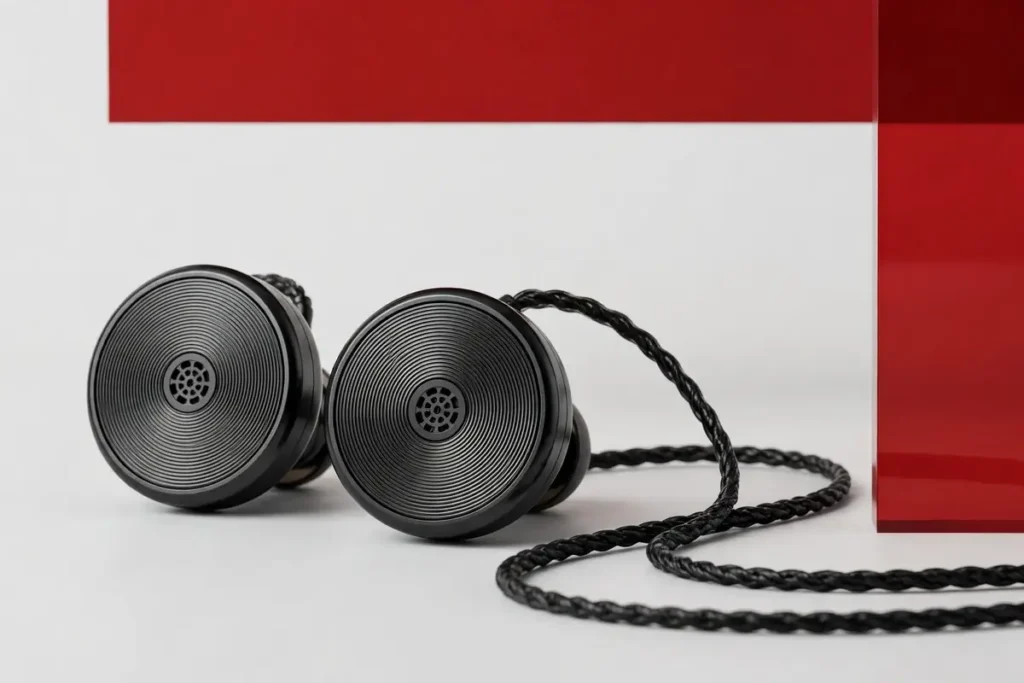
This 7hz timeless review covers the original Timeless, the wired in-ear that put a full-size planar magnetic driver into an affordable shell and started a wave of copies. Each side carries a single 14.2mm planar driver in a coin-shaped CNC aluminum housing, with a detachable MMCX cable ending in a 3.5mm plug. There is no battery, no Bluetooth and no microphone, so the overall below follows our wired conventions. The sound score is the number that matters, and it is high for the money.
A note on method, and on identity. This review is research-based, built from specialist reviewers’ measurements and verdicts together with the confirmed listing specifications. It covers the original Timeless only. The Timeless II is a different, newer model with its own listing, and nothing here should be read across to it.

7Hz Timeless 6.1/10
Why you: you want planar speed and resolution in an in-ear without paying flagship money. The Timeless resolves fine detail, punches harder than its size suggests and images well enough for music and games alike.
Trade-off: the coin-shaped shells fit some ears badly, and there is no microphone for calls. The 6.1 overall is dragged down by wired conventions; judge it on the 8.8 sound and value bars.
14.2mm planar magnetic · CNC aluminum shell · MMCX detachable · 3.5mm · 5 g per side
Sound quality
Sound scores 8.8. The Timeless earned its reputation by giving listeners the planar traits that used to cost far more: fast transients, clean separation and detail that survives busy passages. Bass has genuine texture rather than a one-note thump, and the low end digs deep for an in-ear. The midrange stays clear of the bass, and the treble extends with the air that makes cymbals and room reverb sound real.
Reviewers consistently praise the resolution at this price and the sense of space, which is wide for a sealed in-ear. Imaging is precise enough that gamers noticed it early, and the Timeless built a second following in that crowd. Set against the hybrid models in our best IEMs coverage, the Timeless sounds leaner and quicker, less lush in the mids. Which you prefer is taste; that it competes at all is the point.
The tuning rewards a closer read. Bass emphasis sits low, in the sub-bass, so kick drums and synth foundations hit with weight while the mid-bass stays clean and male vocals keep their chest. The upper midrange is present enough for clarity without the shout that thinner planars can produce, and the treble, while extended, is smoother than the model’s reputation sometimes suggests. String detail and cymbal decay are the party pieces: the planar driver starts and stops fast enough that quiet parts inside loud recordings stay audible. Owners coming from dynamic-driver in-ears usually notice the speed first and the tuning second.
Fit and comfort: the coin problem
Comfort scores 7.8, and the spread of opinion is wide. Each shell weighs just 5 grams, so weight is never the issue. Shape is. The round, coin-like housing sits against the ear rather than following its contours, and listeners with smaller ears report pressure points and a fit that works loose over time. Listeners whose ears suit the shape wear them for hours without complaint.
Tip choice matters more than usual here. The included selection changes both the seal and how deep the shell sits, and a deeper-sealing tip usually fixes the loosening problem. If your ears have rejected wide, flat shells before, treat this as the risk in the purchase. Everyone else gets a light, forgettable fit with passive isolation that does its quiet job on trains and in offices.
Everyday use
The Timeless is a wired tool in a wireless world, and the copy should be honest about what that means. There is no noise cancelling beyond the passive seal, which scores at the wired convention of 3.0. There is no microphone, so calls score 3.0 as well; an MMCX cable with an inline mic is an easy later addition if you need one. There is no battery to charge, ever, which the 5.0 battery bar records as a neutral placeholder rather than a flaw.
What you get in exchange is consistency. The Timeless sounds the same from any competent source, never needs pairing, and cannot run flat mid-journey. At 14.8 ohms and 104 dB sensitivity it runs happily from a phone dongle. Ownership is simple in a way wireless owners have forgotten.
Source pairing is undemanding but not pointless. A basic USB-C dongle drives the Timeless to full volume with headroom to spare, and stepping up to a better dongle DAC buys a quieter background and slightly firmer low end rather than a transformation. Desktop gear is wasted on it unless you already own it. The MMCX connection is the ownership detail worth knowing: cables are the wear item on any wired in-ear, and replacements are cheap and widely available, which makes the Timeless easy to keep running for years. That repairability, unglamorous as it is, forms part of the value case at 8.8.
Not the Timeless II
This needs its own section because the listings invite confusion. The Timeless II is a newer model with a revised driver arrangement and different tuning, sold under its own listing. The original reviewed here is the single-planar design with MMCX connectors and a 3.5mm plug; other terminations of the original exist under separate listings. Check the model name on the listing page before ordering, and if the listing shows a hybrid driver count, you are looking at a different product.
Owners comparing generations should also know the tuning differs. The original is the leaner, quicker listen that built the name, which is part of why it still sells alongside its successor. Our 7Hz x Crinacle Zero: 3 review covers the brand’s budget end if you want the contrast, and our best IEMs for gaming roundup shows where the Timeless style of imaging fits the gaming picture.
7Hz Timeless specs
| Spec | 7Hz Timeless |
|---|---|
| Driver | 14.2mm planar magnetic |
| Shell | CNC-machined aluminum |
| Impedance | 14.8 Ω |
| Sensitivity | 104 dB |
| Frequency response | 5 – 40,000 Hz |
| Connector | MMCX detachable cable |
| Termination | 3.5mm (this listing) |
| Weight | 5 g per side |
Verdict
Buy the Timeless if you want the planar in-ear experience at the price that made it famous. The 8.8 sound and value bars tell the real story; the 6.1 overall is the wired-convention average doing its arithmetic on a product with no battery or microphone to score. For listeners whose ears suit the shell, it remains one of the easiest recommendations in the wired IEM market.
Skip it if your ears are small or have rejected flat, wide shells before, or if you need a microphone and wireless freedom in the same product. Gamers should budget for a mic cable. Everyone else should check the listing title twice, order the original, and hear what started the planar wave.
Frequently asked questions
What is the difference between the 7Hz Timeless and the Timeless II?
They are different models. This review covers the original Timeless: a single 14.2mm planar driver per side in a coin-shaped CNC aluminum shell, with an MMCX cable. The Timeless II is a newer, separate design with a revised driver array and different tuning. Listings for the two are easy to mix up, so check the model name on the listing before ordering.
Does the 7Hz Timeless have a microphone?
No. The stock cable is a plain audio cable with no inline microphone, which is why calls sit at the wired-convention floor in our scoring. An MMCX cable with a microphone can be fitted later if you need one for calls or gaming chat.
Is the Timeless driver 14.2mm or 14.6mm?
Some Linsoul marketing cites 14.6mm, but the Amazon listing for this model and most reviewer specifications say 14.2mm, and 14.2mm is the figure we use. Either way it is a full-size planar driver, large by in-ear standards.
Does the 7Hz Timeless need an amplifier?
No dedicated amp is required. At 14.8 ohms and 104 dB sensitivity it runs well from a phone dongle or a laptop output, though planar drivers do respond to clean power and a decent dongle DAC is a sensible partner. Volume will not be a problem from ordinary sources.
Is the 7Hz Timeless good for gaming?
The imaging and stage width are strong for an in-ear at this price, which helps with directional cues. The catch is the missing microphone: you need a separate mic or a replacement cable for voice chat. Players who sort the microphone question get a very capable wired gaming IEM.

I am the founder of Sound Mavericks, where I provide the polite truth about audio equipment. I started this site because consumer electronics reviews are often too technical. Instead of using a silent lab, I test headphones, earbuds, and Bluetooth speakers in the real world – like on a noisy subway or in a busy coffee shop.
To stay independent, I buy my own review units (mostly from the United States) rather than accepting free gifts from brands. Once I finish testing a product, I sell it locally to our community. My goal is to help you understand sound quality, active noise cancellation (ANC), and battery life without the marketing hype.
