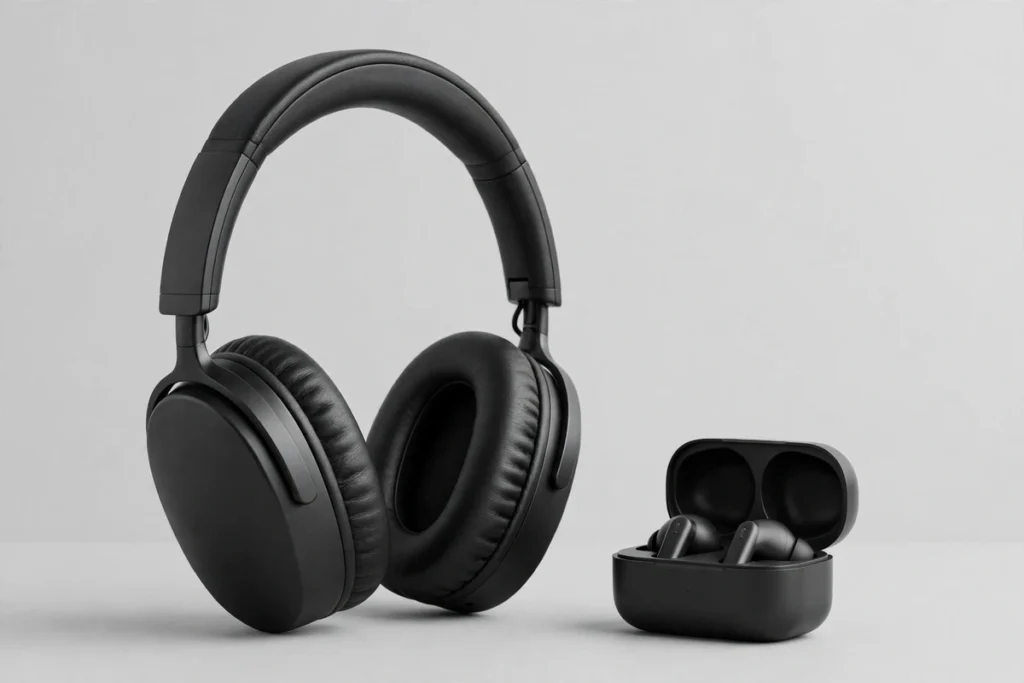
Sony sells more noise cancelling headphones than anyone, and the range runs from a wired studio staple to buds that clip onto your ear. Picking the best Sony headphones is less about finding a bad one and more about matching the model to how you actually listen. This guide ranks the current lineup the way we would buy it ourselves: flagship over-ears first, then the earbuds, then the value and specialist picks that make sense for tighter budgets and specific jobs.
Every model below is one we have scored in a SoundMavericks review or head-to-head, or a long-running Sony staple with a settled track record. Scores shown are our published ratings, pulled from those pieces, so the numbers here line up with the rest of the site.
| Sony WH-1000XM6: best overall | Check Price on Amazon |
| Sony WH-1000XM5: best value flagship | Check Price on Amazon |
| Sony WF-1000XM6: best Sony earbuds | Check Price on Amazon |
| Sony WF-1000XM5: best earbud value | Check Price on Amazon |
| Sony ULT Wear: best for bass | Check Price on Amazon |
| Sony WH-CH720N: best budget ANC | Check Price on Amazon |
| Sony LinkBuds Clip: best open-ear | Check Price on Amazon |
| Sony MDR-7506: best wired studio classic | Check Price on Amazon |
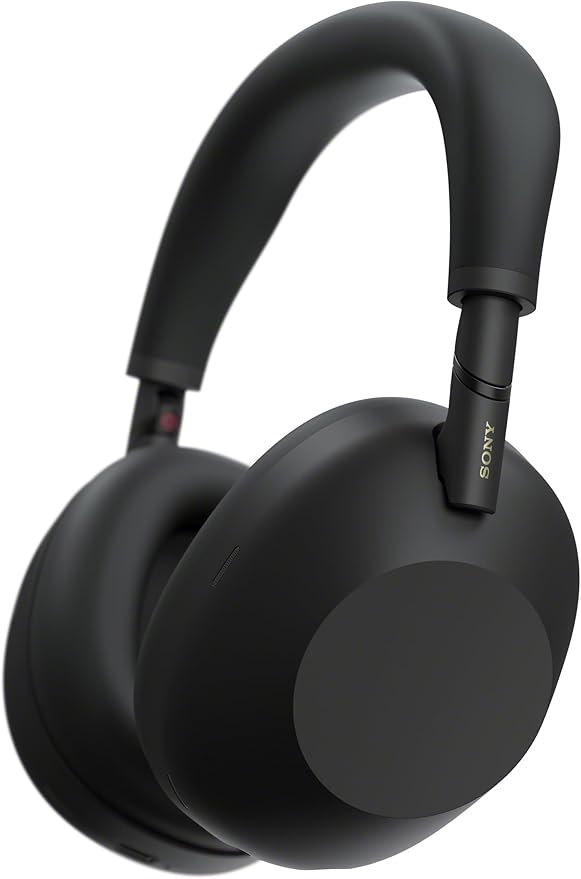
Sony WH-1000XM6: Best Sony Headphones Overall
Sony WH-1000XM6
Why you: The strongest noise cancelling Sony has shipped, a cleaner and wider sound than the XM5, and a case that finally folds down small again.
Trade-off: It costs flagship money and still does not fold inward the way the older XM4 did, and LDAC hi-res only pays off on Android.
The XM6 runs a faster noise cancelling processor feeding twelve microphones, and the result is the quietest cabin Sony has made. Plane drone drops away, office chatter turns into a murmur, and the adaptive mode adjusts the cancellation as you move between the two. Sound is a step up from the XM5 as well: bass is tighter, vocals sit forward, and the top end has more air without turning sharp.
Battery life is 30 hours with cancelling on and 40 with it off, and a three-minute top-up buys roughly three hours of playback. The headband folds flat and the earcups fold in, so the case is noticeably smaller than the XM5’s slab. Call quality is the other quiet win here, with the mic array and noise reduction keeping your voice clear on a windy street. We go deeper in our full Sony WH-1000XM6 review.
Sony WH-1000XM5: Best Value Flagship

Sony WH-1000XM5
Why you: Ninety percent of the flagship experience for a good deal less money, with the lightest and softest fit in the 1000X line.
Trade-off: The earcups only fold flat, so the case is wide, and the XM6 cancels harder and sounds a touch cleaner.
The XM5 remains an easy recommendation. Its noise cancelling sits within touching distance of the XM6, the 30-hour battery matches it, and the soft-fit leather and low weight make it the pair we reach for on long workdays. Sound is warm and full, with LDAC support for Android owners who stream hi-res.
What you give up next to the XM6 is the folding frame, a little call clarity, and a small step in cancelling strength. For most buyers that trade is worth it at the lower street price. Our Sony WH-1000XM5 vs WH-1000XM6 comparison lays the two side by side if you are torn.
Sony WF-1000XM6: Best Sony Earbuds

Sony WF-1000XM6
Why you: The best noise cancelling and call quality we have rated in a Sony bud, with a bone conduction sensor helping your voice cut through noise.
Trade-off: It is a refinement of the XM5 buds rather than a leap, and the premium is hard to justify if you already own those.
Sony’s flagship buds got a faster cancelling processor, a reshaped shell that sits deeper and seals better, and the best call pickup in the line. In our scoring they take the top earbud spot on the strength of that cancelling and a detailed, controlled sound that handles busy mixes without smearing the low end.
Battery life holds at eight hours per charge and 24 with the case, and the case charges wirelessly. If your priority list starts with quiet and call quality, this is the Sony bud to buy. Owners of the WF-1000XM5 can safely sit this round out and save the money.
Sony WF-1000XM5: Best Earbud Value

Sony WF-1000XM5
Why you: A smaller, lighter bud than the generation before it, with rich sound and cancelling that still embarrasses newer rivals.
Trade-off: Call quality trails the XM6 buds, and the glossy shell can work loose during hard workouts.
The WF-1000XM5 shrank the bud and the case, kept the battery life, and pushed sound quality up with a larger driver and better processing. The foam-tipped seal does a lot of the cancelling work before the electronics even start, which is why these still rate so high with us. See our Sony WF-1000XM5 review for the full breakdown.
At current street prices this is the sweet spot of the earbud line. You lose a little call clarity and a little cancelling against the XM6, and you keep almost everything else.
Sony ULT Wear: Best for Bass

Sony ULT Wear
Why you: A physical ULT button that piles on low-end pressure in two steps, plus honest noise cancelling and a long battery for the money.
Trade-off: With the bass boost engaged, mids take a back seat, and there is no water resistance rating for workouts or rain.
The ULT Wear is Sony aiming at the Skullcandy and Beats crowd, and it lands the punch. The first ULT press adds weight to kicks and basslines; the second turns hip-hop and EDM into a physical thing. With the boost off, the tuning settles into something close to the CH720N with more headroom.
You still get real noise cancelling, wear detection that pauses when you lift a cup, multipoint pairing, and 30 hours with cancelling on or 50 with it off. If your playlists live at the low end, this is the Sony to buy, and it undercuts the flagships by a wide margin.
Sony WH-CH720N: Best Budget ANC

Sony WH-CH720N
Why you: Featherweight comfort at 192 grams, 35 hours of battery with cancelling on, and Sony’s processing doing real work at a low price.
Trade-off: The build is plain plastic, there is no LDAC or wear detection, and the cancelling is a tier below the flagships.
The CH720N is the pair we hand to people who want quiet on a commute without flagship money. Dual noise sensor tech and the same processor family as the flagships keep train rumble and office noise down, and at 192 grams it is lighter than anything else in this guide. Long sessions are easy on the neck.
Sound is balanced out of the box, the app EQ can add bass if you want it, and a 3.5mm cable is included for flights and dead batteries. Stretch the budget and the XM5 is better. Stay at this level and nothing Sony sells makes more sense.
Sony LinkBuds Clip: Best Open-Ear

Sony LinkBuds Clip
Why you: A clip fit that never touches your ear canal, full awareness of traffic and conversation, and call quality that punches above open-ear norms.
Trade-off: There is no noise cancelling and bass is limited by the open design, so loud planes and trains overwhelm it.
The LinkBuds Clip hooks over the outer ear and leaves the canal open, so the world stays audible. Runners, cyclists, and office workers who need to hear a doorbell or a colleague get a bud they can wear for hours without pressure or that sealed-in feeling. Three sound modes shift the balance for music, voice, or leakage reduction, and a tap on the bud switches between them.
Rate it on its own terms. Our 2.0 noise cancelling score simply records that an open bud cannot block sound; the comfort and call scores are the ones that matter here, and both are strong. If you hate in-ear tips, start with this one.
Sony MDR-7506: Best Wired Studio Classic

Sony MDR-7506
Why you: The flat, honest tuning studios have trusted for decades, a folding frame, and parts you can replace instead of replacing the headphone.
Trade-off: It is wired only with a long coiled cable, there is no mic or noise cancelling, and the bright top end can fatigue casual listeners.
Every broadcast booth and tracking room seems to own a drawer of these. The MDR-7506 tells you what a recording actually sounds like, warts and all, which is why engineers reach for it when a mix has to travel. Bass is present but controlled, and detail in the upper mids is easy to hear.
For home listening it still earns a place: no battery to manage, no Bluetooth compression, and a price that undercuts every wireless pick in this guide. Podcasters, video editors, and musicians on a budget should have it on the desk.
Sony Headphones Compared
Here is the whole shortlist side by side. Battery figures are with noise cancelling on for the over-ears, and per charge plus case totals for the earbuds.
| Model | Form | Battery | Noise cancelling | Codecs | Our score | Buy |
|---|---|---|---|---|---|---|
| Sony WH-1000XM6 | Over-ear | 30 hrs | Adaptive ANC | LDAC, AAC, SBC | 9.0 | Check Price |
| Sony WH-1000XM5 | Over-ear | 30 hrs | Auto NC Optimizer | LDAC, AAC, SBC | 8.9 | Check Price |
| Sony WF-1000XM6 | In-ear buds | 8 hrs + 24 hrs case | Adaptive ANC | LDAC, AAC, SBC | 9.0 | Check Price |
| Sony WF-1000XM5 | In-ear buds | 8 hrs + 24 hrs case | ANC with foam seal | LDAC, AAC, SBC | 9.0 | Check Price |
| Sony ULT Wear | Over-ear | 30 hrs | ANC | LDAC, AAC, SBC | 8.5 | Check Price |
| Sony WH-CH720N | Over-ear | 35 hrs | ANC, dual sensor | AAC, SBC | 8.4 | Check Price |
| Sony LinkBuds Clip | Open-ear clip | 9 hrs + 37 hrs case | None, open design | AAC, SBC | 7.2 | Check Price |
| Sony MDR-7506 | Over-ear, wired | No battery | Passive only | Wired | Not scored | Check Price |
How to Choose Your Sony
Start with form factor. Over-ears give you the strongest cancelling and the longest battery. Buds disappear into a pocket and make better gym and commute companions. Open-ear models like the LinkBuds Clip trade isolation for awareness, which is the right call for running outdoors or working where you need to hear people.
Then look at codecs. If you use an Android phone and stream hi-res, LDAC support on the XM6, XM5, both WF flagships, and the ULT Wear is worth having. iPhone owners get AAC across the wireless range, which all of these support, and the Sony Sound Connect app handles EQ and settings on both platforms. Multipoint pairing on the over-ears and flagship buds lets you stay connected to a laptop and a phone at the same time, handy for desk work.
Budget last. The CH720N covers the basics so well that spending more is about better cancelling, better calls, and nicer materials, not about fixing a flaw. Bass-first listeners should skip straight to the ULT Wear, and anyone recording or editing should keep the MDR-7506 on the desk next to whatever wireless pair they travel with. For a deeper dive into the cancelling models alone, see our guide to the best Sony noise cancelling headphones.
Frequently Asked Questions
What are the best Sony headphones overall?
The Sony WH-1000XM6. It pairs the strongest noise cancelling in the range with a 9.0 overall score in our review, 30 hours of battery with cancelling on, and a case that folds down smaller than the XM5’s.
Should I buy the WH-1000XM6 or save money with the WH-1000XM5?
Buy the XM5 if you want the flagship sound and cancelling for less, or the XM6 if you travel often and value the folding case, stronger cancelling, and clearer calls. The XM5 is lighter and softer on the head; the XM6 is the better tool.
What are the best Sony earbuds?
The WF-1000XM6 is our top-rated Sony bud at 9.0 overall, with the best cancelling and calls in the line. The WF-1000XM5 scores the same overall in its review and usually costs less, which makes it the value pick.
Which Sony headphones are best on a tight budget?
The WH-CH720N. It keeps real noise cancelling, a 35-hour battery, and a 192-gram frame at the lowest price in this guide. Bass fans on a budget should look at the ULT Wear instead.
Do Sony headphones work with iPhone?
Yes. Every wireless model here pairs with an iPhone over Bluetooth and works with the Sony Sound Connect app for EQ and settings. LDAC hi-res streaming is the one feature that needs an Android phone; iPhones use AAC, which all of these models support.
Which Sony headphones are best for calls?
The WH-1000XM6 over-ears and the WF-1000XM6 earbuds. Both use large mic arrays with noise reduction tuned for voice, and both scored at the top of the range for calls in our ratings.

I am the founder of Sound Mavericks, where I provide the polite truth about audio equipment. I started this site because consumer electronics reviews are often too technical. Instead of using a silent lab, I test headphones, earbuds, and Bluetooth speakers in the real world – like on a noisy subway or in a busy coffee shop.
To stay independent, I buy my own review units (mostly from the United States) rather than accepting free gifts from brands. Once I finish testing a product, I sell it locally to our community. My goal is to help you understand sound quality, active noise cancellation (ANC), and battery life without the marketing hype.