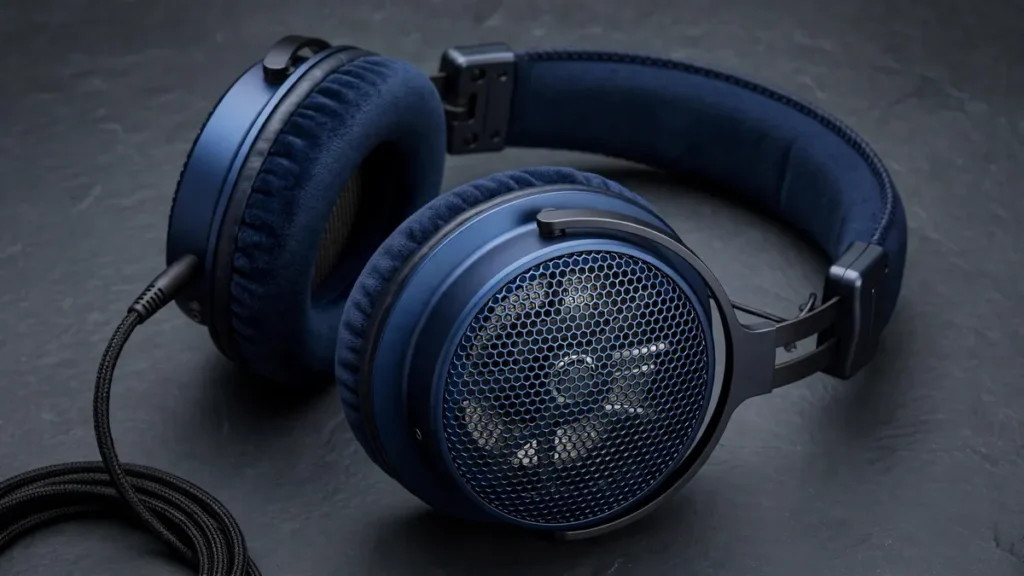
The Sonos Ace Ultra is the step-up model the original Sonos Ace always pointed toward. Sonos kept the clean, understated design that made its first headphones easy to like, then rebuilt much of what sits inside it: redesigned 40mm drivers, a ten-microphone array, adaptive noise cancelling Sonos rates at up to twice as effective as the original at low frequencies, a longer 35-hour battery, Bluetooth 6.0, proper multi-band EQ, and — the headline — a new hardware platform that lets the headphones link directly to a Sonos system over Wi-Fi, not just borrow TV sound from a soundbar.
This is a launch review, and we want to be straight about what that means: we have not tested the Ace Ultra hands-on. Our assessment is based on Sonos’s published specifications, the verified Amazon listing for this exact model, and the first wave of independent launch coverage from reviewers who have used the headphones. Where Sonos makes a claim, we say it is a claim. Where early reviewers agree — or disagree — we say that too. The picture that emerges is consistent: this is a meaningful upgrade aimed squarely at people who already live in the Sonos ecosystem, and a harder sell for everyone else.
The Sonos Ace Ultra is the Ace finished properly: Wi-Fi headphone linking makes it a true member of a Sonos system, adaptive ANC is a clear step up, sound is richer through redesigned drivers with Adaptive EQ and an 8-band equaliser, and the battery stretches to 35 hours with ANC on — and is now replaceable. If you own Sonos speakers, this is the most complete reason yet to buy Sonos headphones. If you do not, the premium buys you features you cannot use, and pure ANC rivals deserve a look first.

| Sound Quality | 9.0 |
| Noise Cancelling | 8.6 |
| Comfort & Design | 9.2 |
| Battery Life | 8.8 |
| Call Quality | 8.5 |
| Value | 8.0 |
Sonos Ace Ultra: Specifications
| Product | Sonos Ace Ultra | Check Price |
|---|---|---|
| Drivers | Custom Sonos-designed 40mm driver in each ear cup, redesigned motor structure with an additional outer ring magnet | |
| Microphones | 10 microphones for noise control, calls, Aware mode and TrueCinema | |
| Noise Control | Adaptive Active Noise Cancellation; Aware mode with Voice Boost | |
| Equalisation | Adaptive EQ, plus 3-band and 8-band EQ and Loudness in the Sonos app | |
| Wireless | Bluetooth 6.0 and Wi-Fi (Headphone Engine 2); SBC, AAC and aptX Adaptive Lossless codecs; Bluetooth multipoint | |
| Wired | USB-C audio and 3.5mm (cables included) | |
| Spatial Audio | Spatial audio and Dolby Atmos with dynamic head tracking; TrueCinema with a compatible Sonos soundbar | |
| Battery Life | Up to 35 hours with ANC or Aware mode on; rapid charge gives up to 3 hours of playback from a 3-minute charge; user-replaceable battery (kit sold separately) | |
| Weight & Dimensions | 322g (0.71 lb); 193 x 163 x 90.8mm | |
| Colours | Black, Soft White, Agave and Sand; matte finish | |
| Controls & Features | Content Key slider, physical buttons, wear detection, replaceable magnetic ear cushions | |
What’s New Versus the Original Sonos Ace
From across the room, the Ace Ultra and the original Ace look nearly identical — same clean lines, same matte finish, same tactile controls and Content Key slider instead of touch panels. Sonos clearly decided the design was not the problem. The differences are internal, and there are more of them than the shared silhouette suggests.
Start with the platform. The Ace Ultra is the first headphone built on Sonos’s Headphone Engine 2, with redesigned Wi-Fi hardware. That is what unlocks headphone linking: the headphones can join your Sonos system as a destination in their own right, pulling music from compatible Sonos speakers and handing it back with a press of the Content Key. The original Ace, for all its strengths, could only perform one party trick — TV Audio Swap from a compatible soundbar. Sonos says the original lacks the hardware for linking and will not receive the feature, which makes this the clearest dividing line between the two generations.
The audio hardware moves on too. The 40mm driver is a new design with a redesigned motor and an additional outer ring magnet, tuned with input from the Sonos Soundboard. Around it, the microphone count rises from eight to ten, Bluetooth steps from 5.4 to 6.0, and the EQ story changes completely: where the original offered basic bass and treble adjustment, the Ultra adds mids, a full 8-band equaliser, Loudness, and Adaptive EQ that compensates for fit in real time. Battery life rises from 30 to 35 hours with noise cancelling on, the ear cups swivel further so they sit flatter around your neck, the cushion materials are updated, and the palette doubles with Agave and Sand joining Black and Soft White. One change deserves special mention because it is so rare at this level: the battery is now user-replaceable with a kit from Sonos, and the magnetic ear cushions remain replaceable too — a genuine longevity upgrade for a premium purchase.
Sound Quality: New Drivers, Adaptive EQ and an 8-Band Equaliser
Sonos describes the new driver as delivering deeper bass and clearer detail than the original, and the early listening reports line up with that: launch reviewers consistently describe a presentation that keeps the original’s smooth, balanced character but with more low-end weight and control, crisp mids and a cleaner top end. Several note the bass-forward tilt will please most listeners, while the expanded EQ finally lets everyone else correct it — a 3-band control for quick adjustments, an 8-band control for proper tuning, and settings that live in the Sonos app alongside your speakers.
Adaptive EQ is the quieter innovation. It measures how the ear cups are sealing — accounting for hair, glasses, head movement and the small leaks that change what you actually hear — and balances the frequencies to compensate. It is a sensible answer to a real problem: two people wearing the same headphones can hear meaningfully different bass depending on fit alone. Lossless listening is covered two ways, over Bluetooth with aptX Adaptive Lossless on supported devices or wired over USB-C, and spatial audio with Dolby Atmos and dynamic head tracking carries over for compatible content. If you like to compare tuning philosophies across flagship brands, our best Sennheiser headphones roundup shows how the other sound-first camp approaches the same price tier.
Adaptive ANC and Aware Mode With Voice Boost
Noise cancelling is where Sonos makes its boldest claim: up to twice the cancellation of the original Ace. Read the qualifier carefully, because Sonos publishes it — that figure applies at frequencies up to 65 Hz, the low rumble band of aircraft cabins, train drone and HVAC hum, rather than across the whole audible spectrum. Even with that caveat, the direction is real. Ten microphones feed an adaptive system that adjusts as your fit changes, and early reviewers who flew with the Ace Ultra rated its suppression highly, with the low-frequency improvement the easiest to notice.
The honest context from launch coverage is that the very strongest ANC rivals still block more midrange and voice-band noise; if silencing a chatty office is your single priority, start with the flagships compared in our Bose vs Beats vs Sennheiser noise cancelling headphones comparison. Where the Ace Ultra counters is Aware mode. Reviewers singled its transparency out as unusually natural — closer to not wearing headphones at all — and the new Voice Boost option filters that mode down to voices, so announcements and conversations come through while the rest of the room stays muted. For commuters and parents, that may matter more day to day than a few extra decibels of cancellation.
Headphone Linking, TV Audio Swap and the Sonos Ecosystem
This is the section that decides the purchase. TV Audio Swap carries over and improves: press the Content Key and sound moves from a compatible Sonos soundbar — Sonos lists Arc Ultra, Arc, Beam Ultra, Beam (Gen 2), Beam and Ray — to the headphones, with Dolby Atmos, dynamic head tracking and TrueCinema room tuning for late-night viewing that does not wake the house. Our live Sonos Ace vs AirPods Max comparison covers how that soundbar trick stacked up in the first generation; the Ultra keeps it and builds on it.
Headphone linking is the new capability. Added in the Sonos app and switched on as an Early Access feature, it lets the Ace Ultra take over playback from compatible Sonos speakers and speaker groups over your home Wi-Fi — music from the Sonos app, your local library, even a turntable feeding the system — then send it back to the room with another press. No phone needs to stay in range. For a Sonos household, this is the feature the original Ace was missing: the headphones stop being a guest in the system and start behaving like another room in it.
Go in with your eyes open about Early Access, because Sonos is unusually candid about the limits. Linking is opt-in and subject to change, only one linked session can run at a time, some sources cannot be handed off, and linked listening runs in a lighter audio mode — lossless and spatial audio are not part of a linked session. None of that undermines the idea; it does mean early buyers are adopting a feature still being finished, and anyone whose speakers are older should check Sonos’s compatibility list for their exact models before assuming linking will work at home.
Design, Comfort and Controls
Sonos kept what worked. The Ace Ultra uses physical buttons and the sliding Content Key for volume, playback, calls and the Sonos swap features — controls early reviewers praise for being findable and predictable while worn, at a time when rivals are moving to fiddly touch surfaces. Updated rebound-foam ear cushions are designed to seal softly and passively block more ambient noise, wear detection pauses music when you take the headphones off, and the cups now rotate further in reverse so they rest flatter against your chest between uses.
At 322g the Ultra is slightly heavier than the original on paper, yet comfort is the point launch reviewers keep returning to: multiple long-session and long-flight reports describe hours of wear without hot spots, including over glasses, thanks to the gentle clamping force and plush padding. The case remains the slim, felt-style carry case from the original, storing the USB-C and 3.5mm cables in its magnetic pouch. Two ownership details round out the design story — the magnetic cushions pop off for replacement, and the battery can be swapped with Sonos’s kit rather than writing the headphones off when the cell ages.
Battery Life and Charging
Sonos rates the Ace Ultra at up to 35 hours of listening with ANC or Aware mode on, five hours more than the original, with longer runtimes available when noise control is off. That is a full working week of commutes or a long-haul return trip on a single charge. Rapid charging is the practical safety net: three minutes plugged in returns up to three hours of playback, enough to rescue a flat battery discovered at the gate.
Launch coverage also points to a power saver behaviour that stretches remaining charge when you are running low, and the replaceable battery changes the long-term maths entirely. Battery wear is the usual reason premium wireless headphones get replaced; a headphone whose cell, like its cushions, can be renewed is one you can plan to keep. Between the longer rating, the fast top-up and the swappable cell, battery is one of the Ultra’s least glamorous and most convincing upgrades.
Who Should Buy the Sonos Ace Ultra — and Who Should Stick With the Original Ace
Buy the Ace Ultra if Sonos speakers already fill your home. Headphone linking, TV Audio Swap with TrueCinema, and app-based control of everything from one place are features no rival headphone can copy for you, and they sit on top of better ANC, better EQ and a longer-lasting battery. Buy it, too, if you are choosing your first premium pair and want physical controls, a comfortable fit for long days, and repairable parts rather than a sealed disposable design.
Stick with the original Ace if you already own one and mainly use it the way it was designed — Bluetooth listening plus TV Audio Swap. You keep the design, the comfort and the soundbar trick; what you give up is linking, the stronger low-frequency ANC, Adaptive EQ and the extra battery hours. Skip the Ultra if you own no Sonos gear and have no plans to: stripped of its system features, it is a very good premium headphone competing against rivals that cancel more noise, and its best tricks will sit unused. And if your priority is simply the strongest noise cancelling at any cost, treat the Ace Ultra as a shortlist pair to compare, not the default answer.
Frequently Asked Questions
What is the difference between the Sonos Ace Ultra and the Sonos Ace?
The Ace Ultra adds Wi-Fi headphone linking to the Sonos system, redesigned 40mm drivers, a 10-microphone adaptive ANC system rated at up to twice the original’s low-frequency cancellation, Bluetooth 6.0, Adaptive EQ with 3-band and 8-band controls, battery life up to 35 hours with ANC on, a user-replaceable battery, and two new colours — in a design that looks almost identical.
Is the Sonos Ace Ultra worth it?
For Sonos households, yes: headphone linking makes the headphones a true part of the system, and the sound, ANC and battery all improve at the same time. Without Sonos speakers at home, the value case weakens, because the headline features need that ecosystem to work.
How long does the Sonos Ace Ultra battery last?
Sonos rates it at up to 35 hours with ANC or Aware mode on. A 3-minute rapid charge adds up to 3 hours of playback, and the battery itself is user-replaceable with a kit from Sonos when it eventually wears.
Does the Sonos Ace Ultra work with TV Audio Swap?
Yes. Pressing the Content Key swaps sound from a compatible Sonos soundbar — including Arc Ultra, Arc, Beam Ultra, Beam (Gen 2), Beam and Ray — to the headphones, with Dolby Atmos, dynamic head tracking and TrueCinema support.
What is Sonos headphone linking?
Headphone linking, launching in Early Access, connects the Ace Ultra directly to a Sonos system over Wi-Fi. You can pull playback from compatible Sonos speakers to the headphones with a press of the Content Key and send it back the same way, without keeping your phone in range.
Does the Sonos Ace Ultra support lossless audio?
Yes. Lossless playback is available over Bluetooth using Qualcomm aptX Adaptive Lossless with a supported device, or through a wired USB-C connection. Spatial audio and Dolby Atmos are supported with compatible content and devices.
Final Verdict
The original Ace was a good headphone that felt slightly separate from the company that made it. The Ace Ultra closes that gap: better drivers and far better EQ, stronger adaptive ANC with a standout Aware mode, five more hours of battery in a replaceable cell, and a Wi-Fi platform that finally treats headphones as part of the Sonos system. The caveats are visible before you buy — the best features need Sonos hardware you may not own, headphone linking is still Early Access, and the pure ANC crown stays elsewhere. For Sonos households, none of that outweighs what the Ultra adds. It earns our 8.7, and it is the Sonos headphone we would point most buyers to.

I am the founder of Sound Mavericks, where I provide the polite truth about audio equipment. I started this site because consumer electronics reviews are often too technical. Instead of using a silent lab, I test headphones, earbuds, and Bluetooth speakers in the real world – like on a noisy subway or in a busy coffee shop.
To stay independent, I buy my own review units (mostly from the United States) rather than accepting free gifts from brands. Once I finish testing a product, I sell it locally to our community. My goal is to help you understand sound quality, active noise cancellation (ANC), and battery life without the marketing hype.