If sound quality is what decides your streaming subscription, the Spotify vs Apple Music fight looks very different than it did a few years ago. Apple Music still holds the technical crown, but Spotify’s long-promised lossless tier finally launched in late 2025 — and for most listeners, that changed the answer. This is the dedicated sound-quality breakdown: the codecs, the bitrates, how to actually enable the best quality on each service, and what gear you need before any of it matters. For the broader comparison — discovery, device support, and pricing — see our general Spotify Premium vs Apple Music comparison.
The Short Answer: Apple Music Still Wins, But the Gap Is Smaller
Apple Music streams losslessly across its entire catalog up to 24-bit/192kHz (Hi-Res Lossless), plus Spatial Audio with Dolby Atmos — all included at no extra charge. Spotify’s lossless tier caps at 24-bit/44.1kHz FLAC, has no spatial audio equivalent, and isn’t yet available in every market. On paper, Apple Music wins clearly. In practice, though, the difference only appears on wired gear: if you listen on Bluetooth earbuds or phone speakers, the two services sound effectively identical, because Bluetooth re-compresses everything anyway. Spotify’s lossless is plenty for most people; Apple Music is the pick for listeners who own the hardware to hear it.
Spotify vs Apple Music Sound Quality at a Glance
| Audio feature | Spotify | Apple Music |
|---|---|---|
| Standard stream | Up to 320kbps Ogg Vorbis | Up to 256kbps AAC |
| Lossless available | Yes — 24-bit/44.1kHz FLAC | Yes — ALAC, up to 24-bit/192kHz |
| Hi-res tier (above CD quality) | No | Yes — Hi-Res Lossless, 48kHz to 192kHz |
| Spatial audio | No | Yes — Dolby Atmos included |
| Extra cost for lossless | None — included with Premium | None — included with every plan |
| Where lossless works | 50+ markets (still rolling out) | Everywhere Apple Music is sold |
Audio Codecs Compared: Ogg Vorbis vs AAC vs ALAC vs FLAC
A codec is the method a service uses to shrink a song into a streamable file. Lossy codecs (Ogg Vorbis, AAC) discard audio information to hit small file sizes; lossless codecs (ALAC, FLAC) compress without discarding anything, so the decoded file is bit-for-bit identical to the source.
- Ogg Vorbis (Spotify’s default): Spotify streams at up to 320kbps Ogg Vorbis on its Very High setting. Vorbis is an efficient, open codec — but Spotify’s 320kbps stream is still lossy, throwing away subtle detail to stay small.
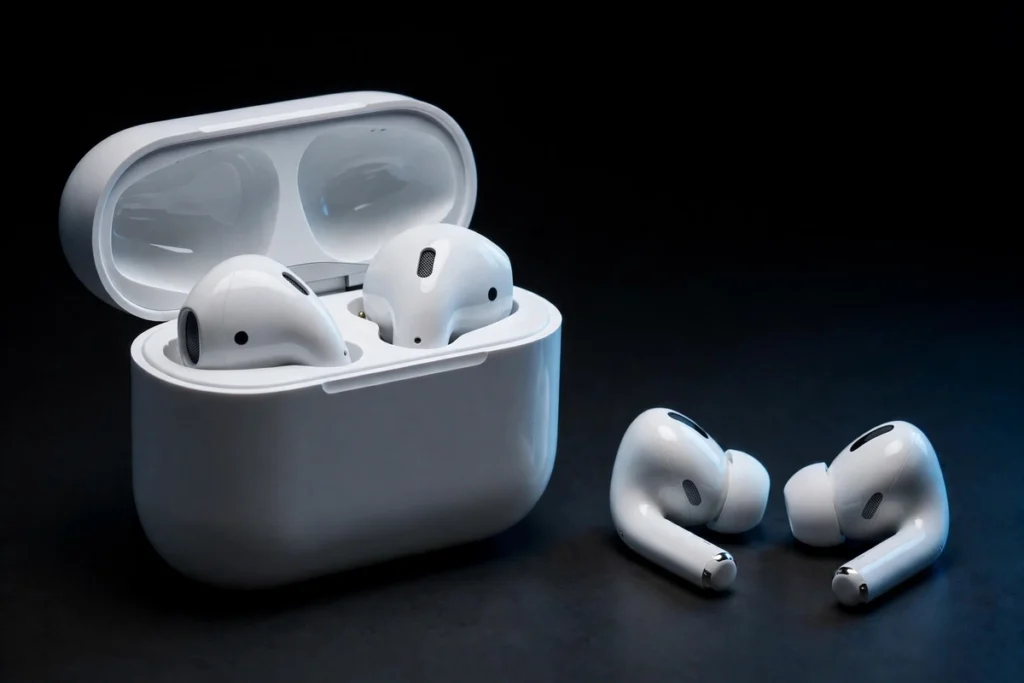
- AAC (Apple Music’s default): Apple Music’s standard stream is 256kbps AAC. On paper, Spotify’s 320kbps number looks bigger — but AAC is a more modern, more efficient encoder than Vorbis, so the two streams end up roughly comparable in practice. Apple’s choice of AAC also pairs perfectly with AirPods and iPhones, which decode AAC natively.
- ALAC (Apple’s lossless): Apple Lossless Audio Codec preserves the studio master exactly. Apple Music encodes its whole catalog in ALAC, from CD quality (16-bit/44.1kHz) up to 24-bit/192kHz.
- FLAC (Spotify’s lossless): Spotify chose FLAC — the open-standard lossless format — for its lossless tier, at up to 24-bit/44.1kHz. Same principle as ALAC: nothing discarded, just packed tighter.
The practical takeaway: above roughly 256–320kbps, lossy encoders are good enough that the jump to lossless is subtle — and the jump from CD-quality lossless to hi-res lossless is subtler still. Codec matters most at the extremes: a 96kbps stream sounds thin next to anything, while hi-res files only reveal themselves on resolving gear.
Lossless Tiers: Apple Music’s Hi-Res Ceiling vs Spotify’s Cap
This is where the two services genuinely diverge. Apple Music offers two lossless tiers, both included at no extra cost:
- Lossless: from CD quality (16-bit/44.1kHz) up to 24-bit/48kHz
- Hi-Res Lossless: from 24-bit/48kHz up to 24-bit/192kHz — four times the sample rate of a CD
Spotify’s lossless tier is a single step: up to 24-bit/44.1kHz FLAC. That’s CD quality and a hair beyond — a genuine upgrade over its old 320kbps ceiling, and audibly cleaner on good wired headphones. But it stops where Apple’s second tier begins. For listeners with high-end DACs and resolving headphones, Apple’s hi-res catalog is the only mainstream option of the two that reaches 96kHz and 192kHz masters.
One more distinction worth knowing: Apple’s catalog coverage is essentially complete — lossless is available across its 100-million-plus song catalog. Spotify’s lossless works on most music but explicitly excludes music videos, podcasts, and audiobooks.
Spotify Lossless: Rollout Status and Availability
Spotify teased lossless audio back in 2021 under the “HiFi” name, then went quiet for years. It finally launched on September 10, 2025, for Premium subscribers at no extra cost — not a new “Supremium” tier, just part of the standard Premium plan. As of 2026, the rollout has reached more than 50 markets, including the US, UK, Australia, the Netherlands, Japan, and Portugal — still well under half of Spotify’s 184 total markets, so a meaningful number of listeners are still waiting. If the Lossless option doesn’t appear in your settings, your market likely isn’t covered yet.
A few rollout details that matter in practice:
- You enable it manually, per device — it doesn’t switch on by itself, and you’ll know it’s active from the Lossless badge in the Now Playing view.
- Quality toggles are separate for Wi-Fi, cellular, and downloads, so you can run lossless at home and a lower bitrate on mobile data.
- Lossless uses far more data — plan for several times the ~150MB/hour of a 320kbps stream. Spotify recommends a stable 1.5–2 Mbps connection and Wi-Fi for lossless listening.
- It works on mobile, desktop, and tablet, plus Spotify Connect devices from Sony, Bose, Samsung, Sennheiser, Denon, Marantz, Bluesound, and Yamaha (Sonos support followed). Some Connect devices don’t support lossless playback, so check the Connect picker — it shows the file quality of the current song.
Spatial Audio: Apple Music’s Dolby Atmos Advantage
Apple Music includes Spatial Audio with Dolby Atmos on thousands of tracks at no extra charge — an immersive, three-dimensional mix that can genuinely change how a song feels, placing instruments around you rather than in a flat left-right image. It’s the single biggest audible differentiator between the two services on compatible setups: you don’t need golden ears to hear Dolby Atmos versus stereo, the way you might strain to hear 44.1kHz versus 192kHz.
Spotify has no spatial audio equivalent and none announced. For listeners who love the effect — especially on AirPods, which pair with Apple’s head-tracked spatial rendering — this is a clear, audible win for Apple Music that no bitrate setting on Spotify can match.
How to Enable Lossless on Apple Music
Apple Music doesn’t always default to its best quality. Here’s how to turn it on:
- iPhone/iPad: Settings → Music → Audio Quality → set Wi-Fi Streaming, Downloads (and Cellular, if your data plan allows) to Lossless or Hi-Res Lossless.
- Mac: Music app → Settings → Playback → Audio Quality → choose Lossless or Hi-Res Lossless for streaming and downloads.
- Android: Apple Music app → Settings → Audio Quality → set the same options.
- Dolby Atmos: Settings → Music → Dolby Atmos → Automatic or Always On.
One hardware catch: to hear Hi-Res Lossless (above 48kHz) from an iPhone, you need wired headphones plus an external DAC — Apple’s own USB dongle caps at 24-bit/48kHz, so the full 192kHz ceiling requires a third-party DAC. On a Mac, any decent USB DAC will do.
How to Enable Lossless on Spotify
Like Apple Music, Spotify keeps lossless off by default. To switch it on:
- Update the Spotify app to the latest version.
- Tap your profile icon → Settings and privacy → Media Quality.
- Under Wi-Fi streaming, Cellular streaming, and Downloads, choose Lossless — or set Wi-Fi to Lossless and cellular to a lower tier to save data.
- Play a track and look for the Lossless badge in the Now Playing bar or the Connect picker, which shows whether the current file is 16-bit or 24-bit.
- Repeat on each device — the setting is per-device, including Connect devices.
If you don’t see the Lossless option, your market hasn’t received the rollout yet, or your app needs updating. Free-tier listeners are capped at 160kbps — lossless is Premium-only.
The Bluetooth Bottleneck: Why Wireless Kills the Difference
Here’s the uncomfortable truth that makes most of this comparison academic for everyday listening: Bluetooth re-compresses your audio no matter which service you use. Your phone decodes the pristine lossless file, then re-encodes it with a Bluetooth codec before sending it to your earbuds. That re-encoding is lossy, always.
- AAC (AirPods, iPhones): ~256kbps — your 24-bit/192kHz Apple Music stream arrives as a 256kbps AAC file.
- SBC (universal fallback): ~345kbps max, and often lower in practice.
- aptX / aptX Adaptive: ~352kbps / up to ~420kbps on supported Android phones.
- LDAC (Sony and others): up to 990kbps — the best mainstream Bluetooth codec, and still a fraction of a lossless stream’s bitrate.
So on AirPods or any standard Bluetooth earbuds, enabling lossless changes essentially nothing you can hear — the bottleneck is the wireless link, not the stream. (Our Bluetooth audio codecs explainer breaks down exactly how each codec handles your music.) The lossless settings on both services only pay off over a wire.
What Gear Actually Reveals the Difference
If you want to hear what lossless is really doing, you need a chain with no weak links:
- Wired headphones or IEMs with decent resolving power — the difference between lossy and lossless lives in reverb tails, cymbal decay, and instrument separation, and budget drivers smear exactly those details.
- A DAC (digital-to-analog converter) — your phone’s built-in audio path is the limiting factor for hi-res. An external USB DAC unlocks the full 24-bit/192kHz ceiling on Apple Music and cleanly decodes Spotify’s 24/44.1 FLAC.
- A quiet room and focused listening — on a train or in traffic, ambient noise masks the very subtleties lossless preserves.
Realistic expectations help: on this kind of setup, the step from 320kbps to CD-quality lossless is audible in careful A/B listening — cleaner highs, slightly more air around instruments. The step from CD-quality to hi-res is much subtler and often inaudible even to trained ears. Our honest read: Spotify’s 24/44.1 FLAC covers everything most listeners can genuinely perceive; Apple’s 192kHz tier is headroom for the most demanding rigs.
So Which Has Better Music Quality — Spotify or Apple Music?
Apple Music wins on maximum music quality. Hi-Res Lossless to 24-bit/192kHz across the full catalog, plus Dolby Atmos, all included at no extra cost — Spotify can’t match the ceiling or the spatial catalog. But the right choice depends on how you listen:
- Commuters and Bluetooth-earbud listeners: it’s a tie. Bluetooth caps both services at the same wireless codecs, so pick based on playlists, podcasts, and price — our full Spotify vs Apple Music comparison covers those.
- Wired headphone listeners with a DAC: Apple Music, for the hi-res ceiling and Atmos catalog.
- Spotify loyalists with good wired gear: you’re no longer missing much — lossless at 24/44.1 FLAC is audibly better than the old 320kbps and covers nearly everything perceptible. No reason to switch for quality alone.
- Spatial audio fans: Apple Music, uncontested.
- Listeners outside Spotify’s 50+ lossless markets: Apple Music, until the rollout reaches you.
Music Quality Spotify vs Apple Music: FAQ
Is Spotify lossless as good as Apple Music lossless?
Not at the ceiling. Spotify’s lossless tops out at 24-bit/44.1kHz FLAC (CD quality and slightly beyond), while Apple Music’s Hi-Res Lossless reaches 24-bit/192kHz ALAC. In practice, the difference is subtle and requires wired headphones plus a DAC to hear.
Can you hear the difference between 320kbps and lossless?
Sometimes — with wired headphones or IEMs, in a quiet room, listening closely, lossless sounds slightly cleaner and more open. On Bluetooth earbuds, phone speakers, or in noisy environments, the difference is effectively inaudible because the wireless link re-compresses the audio anyway.
Does Spotify have Dolby Atmos or spatial audio?
No. Apple Music includes Spatial Audio with Dolby Atmos on thousands of tracks at no extra cost; Spotify has no spatial audio equivalent and none has been announced.
Is Spotify lossless free?
It’s included at no extra cost, but only for Premium subscribers — the free tier is capped at 160kbps. You also need to enable it manually in Settings → Media Quality, and your market needs to be part of the rollout (50+ markets as of 2026).
Does lossless use more data and battery?
Yes — significantly more data. A 320kbps stream uses roughly 150MB per hour; a lossless stream uses several times that, so Wi-Fi is the sensible choice. It also increases CPU load slightly, which can nibble battery on long sessions.
Which streaming service is best for audiophiles in 2026?
Apple Music, on specs: the highest resolution ceiling (24-bit/192kHz), full-catalog lossless, and Dolby Atmos at no extra charge. Spotify’s lossless closed the gap for CD-quality listening, and both services need wired gear to reveal their best — Bluetooth erases the advantage on either one.

I am the founder of Sound Mavericks, where I provide the polite truth about audio equipment. I started this site because consumer electronics reviews are often too technical. Instead of using a silent lab, I test headphones, earbuds, and Bluetooth speakers in the real world – like on a noisy subway or in a busy coffee shop.
To stay independent, I buy my own review units (mostly from the United States) rather than accepting free gifts from brands. Once I finish testing a product, I sell it locally to our community. My goal is to help you understand sound quality, active noise cancellation (ANC), and battery life without the marketing hype.