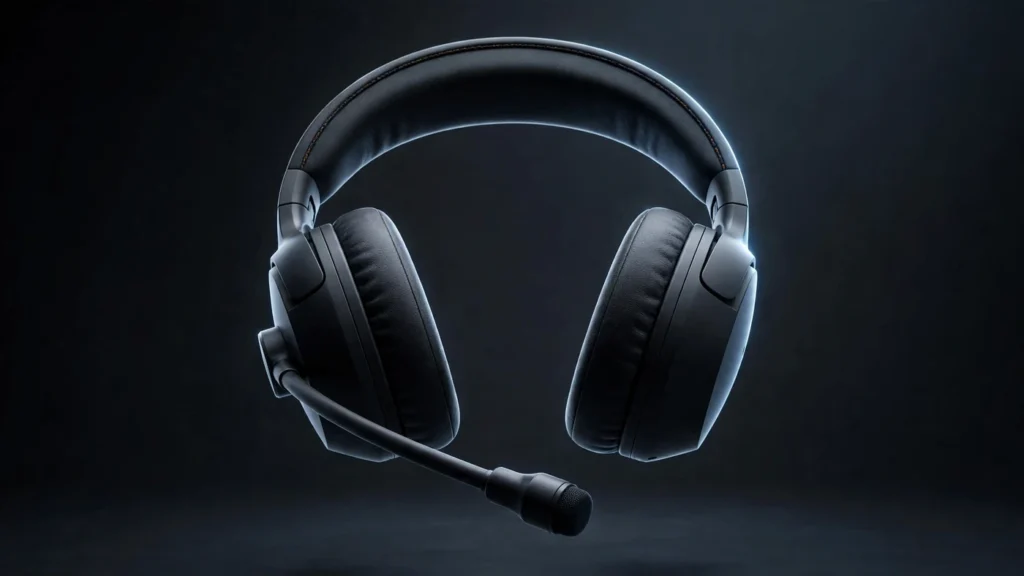
If you’re shopping for a headset with best mic quality, here’s our verdict up front: the Logitech G PRO X 2 LIGHTSPEED takes the crown for most people. Its detachable boom microphone pairs with Logitech’s BLUE VO!CE processing to deliver consistently clean, broadcast-adjacent voice across Discord, Zoom, and in-game chat — without the fiddliness of a separate desk microphone. “Best” still depends on your mission: streamers should look at the Audio-Technica ATH-M50xSTS-USB StreamSet, competitive players at the Razer BlackShark V2 Pro’s wideband mic, and remote workers at the Jabra Evolve2 75’s 8-microphone array. In this guide, SoundMavericks ranks seven headsets purely on microphone quality — mic design, pickup pattern, and noise handling — based on published specifications, owner-feedback patterns, and the critical consensus from outlets like PC Gamer and RTINGS. For more on call-focused listening, see our guide to the best noise cancelling headphones with a microphone for clear calls.
Best headset mics compared
| Headset | Mic design | Best for | Connection |
|---|---|---|---|
| Logitech G PRO X 2 LIGHTSPEED | Detachable boom + BLUE VO!CE | Best overall | 2.4GHz, Bluetooth, 3.5mm |
| Razer BlackShark V2 Pro (2023) | Detachable HyperClear Super Wideband | Competitive gaming voice | 2.4GHz, Bluetooth |
| Audio-Technica ATH-M50xSTS-USB | Cardioid condenser boom | Streaming & content creation | USB |
| Audeze Maxwell | Detachable hypercardioid boom | Wireless audiophile-grade mic | 2.4GHz, Bluetooth, USB, 3.5mm |
| HyperX Cloud II | Detachable noise-cancelling | Wired value pick | USB / 3.5mm wired |
| Jabra Evolve2 75 | Hideaway boom + 8-mic array | Work calls & remote work | Bluetooth + USB dongle |
| Sony WH-1000XM5 | 4-mic beamforming, no boom | Everyday calls without a boom | Bluetooth, multipoint |
How we ranked microphone quality
Most “best headset” roundups rank by sound quality or gaming features, with the microphone as an afterthought. We flipped that. Every pick below is judged first on its voice chain: the microphone capsule and pickup pattern, how close the mic sits to your mouth, built-in noise handling, and how consistent the voice sounds across Discord, Zoom, and Teams. Our analysis draws on published specifications, patterns across verified owner feedback, and the published conclusions of specialist outlets — PC Gamer’s hardware team rates the ATH-M50xSTS StreamSet as the streaming pick to beat, while multiple gaming publications single out the Audeze Maxwell’s microphone as the wireless benchmark. This is SoundMavericks’ own editorial analysis (no lab-testing claims); outside publishers appear only as supporting evidence. Scope note: this is the consumer ranking — gamers, streamers, creators, remote workers. Office fleets are covered separately in our best noise cancelling headphones for work and call centers guide.
1. Logitech G PRO X 2 LIGHTSPEED — Best overall headset mic

The G PRO X 2 earns our top slot as the most complete voice package: a detachable boom microphone tuned for close-talk clarity, Logitech’s BLUE VO!CE real-time processing for broadcast-style filters, and three connection modes (LIGHTSPEED 2.4GHz, Bluetooth, 3.5mm) so one headset covers ranked matches, Zoom calls, and phone audio. Owner-feedback patterns consistently praise voice consistency once filters are dialed in, and TechSith’s PC-headset analysis names it the one headset that “handles gaming + chat + daily use.” The honest caveat: the best results require a few minutes in G Hub setting levels and filters rather than relying on defaults.
- Microphone: detachable boom with BLUE VO!CE voice processing
- Drivers: 50mm graphene drivers, DTS:X 2.0 / 7.1 surround
- Connectivity: LIGHTSPEED 2.4GHz wireless, Bluetooth, 3.5mm aux
- Battery: rated up to 50 hours of wireless listening
- Platforms: PC, PS5, PS4, Switch
| Microphone Clarity | 9.4 |
| Sound Quality | 9.0 |
| Comfort & Design | 9.0 |
| Features | 9.2 |
| Value | 9.0 |
2. Razer BlackShark V2 Pro (2023) — Best mic for competitive gaming voice
If your priority is how natural your callouts sound in competitive play, the BlackShark V2 Pro’s detachable HyperClear Super Wideband microphone is the standout. Wideband capture (32 kHz sampling, per Razer’s spec materials) picks up noticeably more vocal detail than the narrowband mics still common on gaming headsets, so your voice sounds less compressed to teammates. The 2023 refresh pairs that mic with 50mm TriForce Titanium drivers, HyperSpeed 2.4GHz plus Bluetooth 5.2 with SmartSwitch dual-wireless, and a rated 70-hour battery — the longest here. Trade-offs: no active noise cancellation (passive isolation only) and no 3.5mm jack — wired audio runs over USB-C. See also our gaming noise cancelling headphones coverage for more competitive options.
- Microphone: detachable HyperClear Super Wideband mic (32 kHz sampling)
- Drivers: 50mm Razer TriForce Titanium drivers
- Connectivity: HyperSpeed 2.4GHz wireless, Bluetooth 5.2, USB-C wired audio
- Battery: rated up to 70 hours of wireless use
- Weight: approximately 320g
| Microphone Clarity | 9.3 |
| Sound Quality | 8.9 |
| Comfort & Design | 8.8 |
| Features | 8.8 |
| Value | 9.2 |
3. Audio-Technica ATH-M50xSTS-USB StreamSet — Best headset mic for streaming
This is the one pick built like a recording tool first and a headset second. Audio-Technica bolted cardioid condenser microphone technology from its 20 Series studio mics onto a bendable boom arm attached to the legendary ATH-M50x headphones, with a built-in 24-bit/96 kHz A/D converter so the USB version records straight into your PC with no interface or mixer. The result is the most articulate vocal tone of any headset here — PC Gamer’s hardware team rates the StreamSet as the streaming pick to beat, and our analysis agrees. Trade-offs: a sensitive condenser rewards good technique (keep it close, angle it slightly off-center, give your keyboard distance), and this is a wired, desk-first tool with no wireless freedom.
- Microphone: cardioid condenser boom based on AT 20 Series mics, flip-to-mute
- Drivers: 45mm large-aperture drivers with rare-earth magnets
- Connectivity: USB with built-in 24-bit/96 kHz audio interface
- Design: two swappable earpad sets for isolation or breathability
- Best for: streaming, commentary, podcasting, content creation
| Microphone Clarity | 9.6 |
| Sound Quality | 9.0 |
| Comfort & Design | 8.2 |
| Features | 8.0 |
| Value | 8.6 |
4. Audeze Maxwell — Best wireless headset mic for audiophiles
The Maxwell is the wireless benchmark several gaming publications point to when the question is microphone quality without a wire. Its detachable hypercardioid boom uses a tight pickup pattern that rejects off-axis room noise better than typical headset capsules, backed by Audeze’s FILTER noise-reduction processing and an internal beamforming mic for chat when you detach the boom. Around it sits a genuinely premium headset: 90mm planar magnetic drivers, 24-bit/96 kHz wireless audio, Bluetooth 5.3 with LDAC, and a rated 80-plus-hour battery. Trade-offs: at around 490g it’s the heaviest pick here, and Amazon availability has been inconsistent — we could not verify a stable direct listing, so the button below runs a tagged Amazon search instead.
- Microphone: detachable hypercardioid boom + FILTER noise reduction + internal chat mic
- Drivers: 90mm planar magnetic drivers, up to 24-bit/96 kHz
- Connectivity: ultra-low-latency 2.4GHz, Bluetooth 5.3 (LDAC), USB, 3.5mm
- Battery: rated 80+ hours of wireless playback
- Weight: approximately 490g — the heaviest pick here
| Microphone Clarity | 9.2 |
| Sound Quality | 9.6 |
| Comfort & Design | 8.0 |
| Features | 8.8 |
| Value | 8.4 |
5. HyperX Cloud II — Best wired headset mic for the money

Sometimes the best mic is the one with nothing to go wrong. The Cloud II is a wired classic: a detachable noise-cancelling microphone with echo cancellation handled by the included USB sound card, zero wireless interference or battery anxiety, and a mic owner-feedback patterns have praised for a decade as simply reliable — clear, consistent team chat with no software required. The 53mm drivers, aluminum frame, memory-foam pads (plus a spare velour set), and virtual 7.1 via the USB control box make it a complete package well under flagship money. It shows its age — no sidetone monitoring, and 7.1 only works over USB on PC/Mac — but as a pure “plug in and be heard” headset, it remains the wired value benchmark.
- Microphone: detachable, noise-cancelling with echo cancellation via USB sound card
- Drivers: 53mm drivers; virtual 7.1 surround via USB control box
- Connectivity: wired USB (with sound card) or 3.5mm
- Design: aluminum frame, memory-foam pads plus spare velour set
- Platforms: PC, PS5, PS4, Xbox Series X|S, Xbox One, mobile
| Microphone Clarity | 8.4 |
| Sound Quality | 8.6 |
| Comfort & Design | 9.0 |
| Features | 8.0 |
| Value | 9.4 |
6. Jabra Evolve2 75 — Best headset mic for work calls

Gaming headsets win on raw mic capsules, but if your day is back-to-back Zoom and Teams calls, the Evolve2 75 is engineered for exactly that. Its 8-microphone array combines a hideaway boom arm — deploy it for business-grade clarity, tuck it away when just listening — with beamforming tuned for speech, plus hybrid ANC and a busylight that signals “on a call.” It’s Teams and UC certified, connects over Bluetooth with a USB dongle for rock-solid PC audio, and is rated for 36 hours of music or around 24 hours of talk time. Work-headset roundups consistently rank it at or near the top for call clarity. The on-ear fit and work-first tuning mean it won’t satisfy as a music-first headphone — but that’s not its job.
- Microphone: hideaway boom arm + 8-microphone beamforming array
- Certifications: Microsoft Teams certified, UC certified
- Connectivity: Bluetooth 5.2 with USB-A/USB-C dongle, multipoint
- Battery: rated up to 36 hours music, ~24 hours talk time
- Extras: hybrid ANC, busylight, on-ear design at 197g
| Microphone Clarity | 8.8 |
| Sound Quality | 8.6 |
| Comfort & Design | 9.2 |
| Features | 9.4 |
| Value | 8.0 |
7. Sony WH-1000XM5 — Best mic without a boom

Not everyone wants a boom arm by their mouth on a client call. The WH-1000XM5 is our pick for people who refuse the boom: four beamforming microphones with AI-based noise reduction isolate your voice well enough that callers report clear audio even in busy environments, and it’s widely regarded as the call-quality leader among mainstream wireless headphones. You also get class-leading ANC, 30-hour battery, multipoint Bluetooth, and a comfortable 250g design — see our Sony WH-1000XM4C review and the XM4C vs XM5 vs XM6 comparison for the family context. The physics caveat: no integrated array beats a mic an inch from your mouth, which is why this ranks seventh on pure mic quality despite leading on everything else.
- Microphone: 4-mic beamforming array with AI noise reduction, no boom
- Noise cancelling: class-leading ANC with adaptive optimizer
- Connectivity: Bluetooth 5.2 multipoint, 3.5mm wired fallback
- Battery: rated up to 30 hours with ANC on
- Weight: approximately 250g
| Microphone Clarity | 8.2 |
| Sound Quality | 9.4 |
| Comfort & Design | 9.4 |
| Features | 9.0 |
| Value | 8.2 |
Is a boom mic better than a built-in microphone?
Yes — and it’s mostly physics, not branding. A boom microphone sits one to two inches from your mouth, so your voice arrives loud relative to everything else in the room. Integrated microphones sit six-plus inches away and rely on beamforming plus AI noise suppression to separate your voice from keyboard clatter and room echo. Processing has narrowed the gap — the WH-1000XM5 and Evolve2 75 prove it — but in a noisy room, a budget wired boom mic still out-clarifies a flagship headphone’s mic array. The hierarchy: cardioid condenser booms (StreamSet) at the top for detail, then quality boom mics (G PRO X 2, BlackShark V2 Pro, Maxwell), then multi-mic beamforming arrays (Evolve2 75, XM5), then single integrated mics. Quiet room? Skip the boom. Chaotic room? Don’t.
How to make any headset mic sound better
Before you buy a new headset, try these five fixes — most “bad mic” complaints are setup problems, not hardware problems:
- Get the mic close. A boom mic one to two finger-widths from the corner of your mouth beats a “better” mic worn too far away. Bendable booms exist to be bent.
- Angle it off-center. Aim the capsule slightly to the side of your mouth, not directly in front of it. This cuts breath noise and plosives dramatically.
- Set levels once, then stop. In Windows sound settings or Discord, set your input level so peaks hit around -12 dB and leave it. Constantly riding the gain is what makes you sound inconsistent.
- Use the software filters. BLUE VO!CE, Sonar, RTX Voice/Broadcast, or Discord’s Krisp processing are the difference between “fine” and “broadcast clean” on the same hardware. Spend ten minutes here.
- Kill the real noise source. Move the mic away from your keyboard, close the door, and point any fan away from your desk. No noise suppression beats not having noise in the first place.
Prefer earbuds for calls instead? Our best noise cancelling earbuds for phone calls guide covers the in-ear side of this same question.
Frequently asked questions
What headset has the best microphone for gaming?
For most gamers, the Logitech G PRO X 2 LIGHTSPEED: a detachable boom with BLUE VO!CE processing that stays clear across Discord and in-game chat. Competitive players wanting the most natural voice should consider the Razer BlackShark V2 Pro (2023) with its wideband HyperClear mic; the Audeze Maxwell is the wireless benchmark cited by multiple gaming publications.
What is the best headset mic for Zoom calls and remote work?
The Jabra Evolve2 75 is purpose-built for this: an 8-microphone array with a hideaway boom, Teams/UC certification, and a USB dongle for stable PC audio. If you’d rather not wear a boom on camera, the Sony WH-1000XM5’s 4-mic beamforming array is the best no-boom option among mainstream wireless headphones.
What headset has the best mic for streaming?
The Audio-Technica ATH-M50xSTS-USB StreamSet. Its cardioid condenser boom mic is derived from Audio-Technica’s 20 Series studio microphones and connects over USB with a built-in 24-bit/96 kHz interface, giving you near-desk-mic articulation without a boom arm or mixer on your desk.
Do wireless headsets have good microphones?
The best ones do. The Logitech G PRO X 2, Razer BlackShark V2 Pro, and Audeze Maxwell use 2.4GHz wireless (not Bluetooth) for the mic path, avoiding the bandwidth compromises that make Bluetooth headset mics sound thin. Rule of thumb: 2.4GHz dongle mics are excellent, Bluetooth-only mics are merely okay, wired USB mics are the most consistent.
Is the HyperX Cloud II microphone good?
Yes — it’s a proven, reliable performer. The detachable noise-cancelling mic with echo cancellation (handled by the included USB sound card) delivers clear, consistent team chat with no software or tuning required. It won’t match the detail of a wideband or condenser mic, but for a wired headset it remains the value benchmark.
Our final verdict
Ranked purely on microphone quality, the Logitech G PRO X 2 LIGHTSPEED is the headset with the best mic for most people — a genuinely strong boom capsule, effective voice processing, and the versatility to sound great in games, meetings, and calls alike. Creators should step up to the Audio-Technica ATH-M50xSTS-USB for its condenser-grade articulation, esports players to the Razer BlackShark V2 Pro for wideband voice, and remote workers to the Jabra Evolve2 75 for call-first reliability. Whatever you choose, remember the physics: a well-placed boom mic one inch from your mouth will always beat a “better” mic worn badly. Set your levels once, angle the capsule off-center, and your teammates will hear the difference immediately.

I am the founder of Sound Mavericks, where I provide the polite truth about audio equipment. I started this site because consumer electronics reviews are often too technical. Instead of using a silent lab, I test headphones, earbuds, and Bluetooth speakers in the real world – like on a noisy subway or in a busy coffee shop.
To stay independent, I buy my own review units (mostly from the United States) rather than accepting free gifts from brands. Once I finish testing a product, I sell it locally to our community. My goal is to help you understand sound quality, active noise cancellation (ANC), and battery life without the marketing hype.