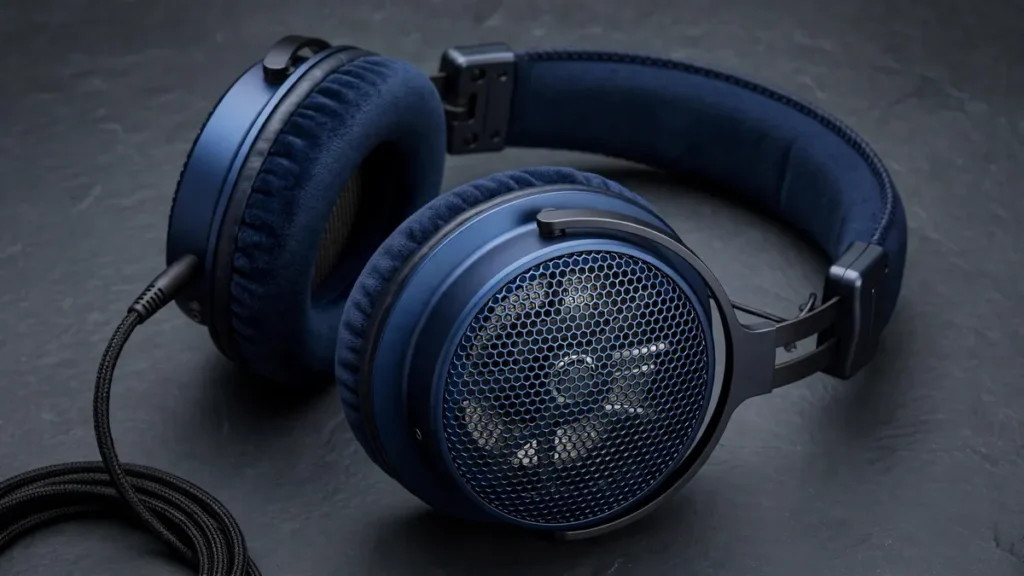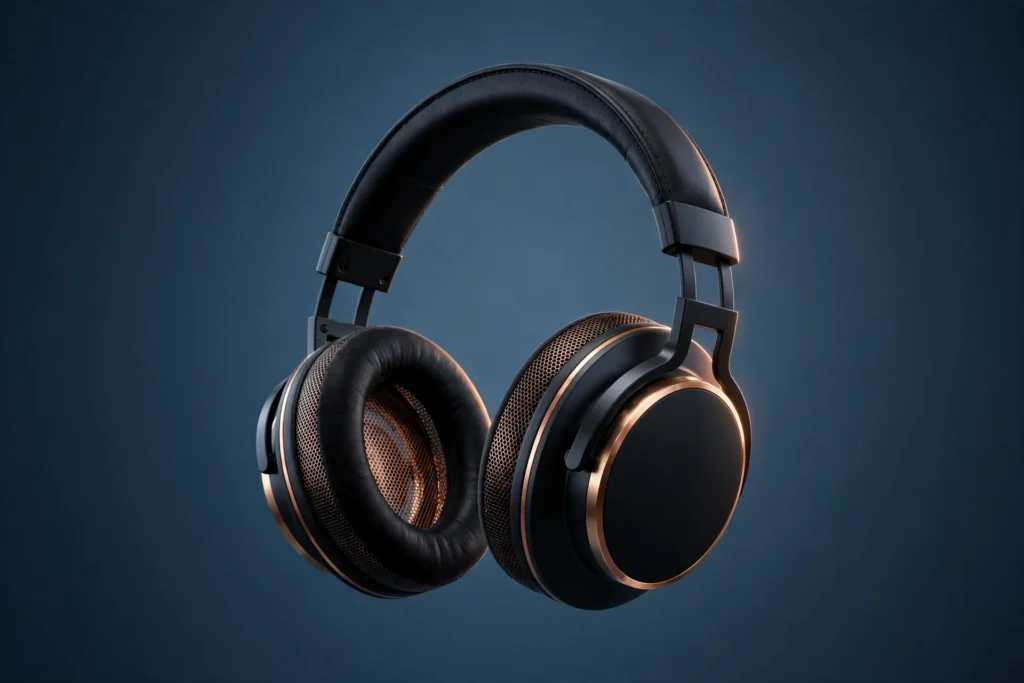
The Sennheiser HD 505 is the entry point into Sennheiser’s refreshed 500-series open-back lineup — the gateway headphone for anyone curious about the audiophile side of listening. Released in 2025 as a copper-accented sibling to the HD 550, it takes the proven 500-series chassis, tunes it for clarity and control, and aims squarely at first-time serious listeners. In this review, we’ll break down the specs, the sound signature, how it compares to its siblings, and whether it’s the right first open-back for you.
Our Verdict: The Friendly Front Door to Sennheiser’s Open-Back World
Here’s our honest take: the HD 505 is a deliberately easy headphone to love, and that is both its strength and its limit. Sennheiser positioned it one tier below the HD 550, and our analysis of the spec sheets and the critical consensus bears that out — analytic, controlled, and smooth, but less authoritative in the bass and less resolving than its silver-accented sibling. Where the HD 550 is the safe long-term pick, the HD 505 is the friendly introduction: lighter on your wallet of effort to drive, lighter in tonal character, and arguably the better choice if you want to find out what open-back listening is all about without committing to the top of the midrange.
That said, the positioning cuts both ways. Our read of the published reviews is split — Trusted Reviews’ three-week test called the HD 505 “an enticing pair of open-backed over-ears” and an enjoyable entry into audiophile listening, while enthusiast reviewers found the tuning a little too safe and preferred the HD 550’s fuller presentation. The HD 505 earns its place as a starting point, not a destination. Buy it as your first real open-back, not your last.
| Sound Quality | 8.6 |
| Comfort & Design | 8.9 |
| Build Quality | 8.2 |
| Driveability | 8.8 |
| Gaming Performance | 8.5 |
| Value | 8.4 |
How we score: our scores are editorial judgments based on the manufacturer’s published specifications, our analysis of the HD 505’s driver and design against its competition, and SoundMavericks’ cumulative research on the open-back headphone market. We do not claim lab testing or hands-on measurements unless stated — these scores reflect our independent assessment of where the headphone stands.

Sennheiser HD 505 Specs at a Glance
Before we dig into the sound and the buying decision, here’s the full spec sheet, drawn from Sennheiser’s published data:
| Transducer | 38 mm dynamic driver, open-back |
| Design | Open-back, over-ear (circumaural) |
| Frequency response | 12 Hz – 38.5 kHz |
| Impedance | 120 ohms |
| Sensitivity (SPL) | 107.9 dB (1 kHz / 1 Vrms) |
| Total harmonic distortion | <0.2% (1 kHz, 90 dB SPL) |
| Weight | 237 g (without cable) |
| Cable | 1.8 m detachable, 3.5 mm plug (left side) with screw-on 6.35 mm adapter |
| Earpads | Synthetic velour, user-replaceable |
| Finish | Black with copper accents (Copper Edition) |
| In the box | HD 505 Copper Edition headphones, 1.8 m cable, 6.35 mm adapter, drawstring storage bag |
Design & Build: The Copper Edition Look
The HD 505 wears the familiar 500-series uniform — oval open-back earcups with exposed acoustic mesh, a lightweight plastic frame, and a single-sided detachable cable — but the Copper Edition adds just enough character to stand apart from the all-black herd. Copper-colored accent rings on the earcups and subtle metallic detailing give it a slightly warmer, more distinctive appearance than its siblings, without crossing into flashy territory.
At 237 grams, it’s genuinely featherweight, and the comfort story is one of the HD 505’s strongest cards. Synthetic velour earpads, a padded headband, and moderate clamping force add up to a headphone that disappears during long sessions — consistently praised by owners as one of the most comfortable pairs they’ve worn. The all-plastic construction won’t impress anyone who equates weight with quality, but it keeps the headphone light and, more importantly, it’s part of Sennheiser’s serviceable-design philosophy: detachable cable, replaceable earpads, and available spare parts mean this is a headphone built to be maintained, not thrown away.
One honest note: the included 1.8 m cable is on the short side for living-room or studio use, and a few owners have reported the non-coiled cable can develop contact issues over time — it’s an easy, cheap replacement thanks to the detachable design, but it’s worth knowing before you buy.
Sound Quality: Analytic, Controlled, Smooth
Sennheiser describes the HD 505 as building on the HD 599’s character with deeper sub-bass reach, strong analytic mids, and brilliant treble without sibilance. Our analysis of the tuning — backed by the published review consensus — suggests a clear profile: this is the leaner, cooler-sounding sibling in the family, tuned for clarity over warmth.
Bass
The HD 505’s bass is tight, fast, and controlled — leaner than the HD 550’s fuller low end, but reaching further into the sub-bass than the older HD 599. It’s an articulate bass that suits acoustic music, rock, and well-recorded pop, with vanishingly low distortion keeping things clean at higher volumes. But if your listening revolves around hip-hop, EDM, or anything where low-end weight is the main event, the 505 will leave you wanting more body. This is a headphone that respects the bass rather than celebrates it.
Midrange
The midrange is the HD 505’s most polarizing region. Sennheiser tunes it analytic and clear, with vocals presented front and forward — and for many listeners, that’s exactly the draw. The mid-forward clarity makes acoustic instruments, strings, and vocal performances sound open and present. More critical ears, however, have noted some inconsistency in the upper mids — a touch of edge or fatigue on certain recordings that the HD 550’s warmer tuning avoids. With EQ at your disposal, it’s manageable; without it, treble-sensitive listeners should pay attention.
Treble
The treble is the safest part of the presentation: smooth, detailed, and free of sibilance, with extension out to 38.5 kHz keeping transients crisp. Sennheiser deliberately sanded off the sharper peaks that made the older HD 560S fatiguing for some, and the result is an easy, non-fatiguing top end that holds up over long sessions. If you found other analytical headphones too bright, the HD 505’s treble will likely feel like a relief.
Soundstage & Imaging
The open-back design delivers the spaciousness you’d expect — a wide, natural presentation with stable imaging that places instruments and game audio cues convincingly. It trades the pinpoint intimacy of the 600-series for a broader, more relaxed stage. For gaming, that spaciousness plus the clear midrange makes positional cues easy to follow, and multiple published reviews call it out as a strong gaming headphone.
Impedance & Amp Pairing: Easy to Drive, Better With an Amp
At 120 ohms, the HD 505 is the easiest-to-drive headphone in its immediate family — a meaningful practical advantage over the 150-ohm HD 550 and the 300-ohm 600-series models. Most modern sources — a decent laptop, a good dongle DAC, a phone with enough output — will get the HD 505 to comfortable listening levels without a dedicated amplifier. That’s part of what makes it such a good entry point: fewer barriers to enjoying it.
But “easy to drive” doesn’t mean “amp-proof.” The included screw-on 6.35 mm adapter is a clear signal that Sennheiser expects these to meet desktop gear, and our reading is that a dedicated headphone amp meaningfully improves dynamics, headroom, and low-end authority. If you’re pairing a first open-back with your first amp, our best headphone amps guide covers the options that pair well with mid-impedance Sennheisers.
HD 505 vs. the 500-Series Family
The HD 505’s biggest challenge isn’t the competition — it’s its own siblings. Here’s our honest read on where it lands:
HD 505 vs. HD 550: The central comparison. The HD 550 is the step-up pick: warmer and more full-bodied in the bass, smoother in the upper mids, and slightly harder to drive. Multiple reviewers have concluded the HD 550 is worth the extra step if your budget allows. The HD 505 counters with an easier load for portable sources, a cooler and more analytic tuning that some critical listeners will prefer, and a distinctive copper look. Our full Sennheiser HD 550 review breaks down the differences in detail — but if you can only buy one midrange Sennheiser open-back and you want the best all-rounder, the 550 is the safer bet.
HD 505 vs. HD 560S: The 560S is the older reference-tuned sibling — sharper treble, slightly more clinical presentation. The HD 505 is smoother and more forgiving, with better sub-bass extension. For most listeners, the 505 is the more pleasant listen; for pure reference work, the 560S still has its adherents.
HD 505 vs. HD 599: The 599 is the headphone the 505 was designed to succeed — warmer and “fun,” but less resolving with a narrower stage. The HD 505 is the technically superior headphone and the clear modern answer.
Who Should Buy the HD 505?
- First-time audiophiles: If you’re stepping up from mainstream headphones and want a genuine open-back reference without the 600-series demands, the HD 505 is one of the friendliest doors in.
- Portable-source listeners: The 120-ohm impedance and high sensitivity mean laptops, dongle DACs, and portable players drive the HD 505 comfortably — no amp stack required to enjoy it.
- Gamers at a desk: Spacious open-back staging, precise imaging, and all-day comfort make it a strong wired gaming headphone; pair it with a separate mic for voice chat.
- Clarity-first listeners: If you value an analytic, uncolored presentation for acoustic, classical, jazz, and vocal music, the HD 505’s tuning plays to your strengths.
Who Should Look Elsewhere?
- Bass-first listeners: The low end is controlled and articulate, not weighty. Hip-hop and EDM fans will be better served by a warmer sibling like the HD 550 or a closed-back.
- Commuters and office workers: Open-back means zero isolation and full sound leakage — these are for quiet rooms only. Our open-back vs. closed-back guide explains the tradeoff.
- Treble-sensitive buyers: While smooth overall, the analytic upper mids can show an edge on certain recordings. The HD 550’s warmer tuning is the safer pick here.
- Wireless-first buyers: The HD 505 is wired-only — no Bluetooth, no ANC, no microphone. If you need wireless freedom, look at Sennheiser’s Momentum line instead.
Frequently Asked Questions
Is the Sennheiser HD 505 good for gaming?
Yes — it’s a genuinely strong gaming headphone for desk setups. The open-back design gives a wide, natural presentation, precise imaging helps track positional audio cues like footsteps, and the lightweight comfort suits long sessions. It’s wired-only with no built-in mic, so you’ll need a separate microphone for voice chat.
Does the Sennheiser HD 505 need an amplifier?
Not strictly. At 120 ohms with 107.9 dB sensitivity, most modern laptops, dongle DACs, and portable players will drive the HD 505 to comfortable levels — it’s one of the easiest open-backs in its tier to power. But a dedicated headphone amp still improves dynamics, headroom, and low-end authority if you listen loud or want its full potential.
What’s the difference between the HD 505 and the HD 550?
The HD 550 is the step-up sibling: warmer and fuller in the bass, smoother in the upper mids, and slightly harder to drive at 150 ohms. The HD 505 is leaner and more analytic, easier to drive at 120 ohms, and carries the copper-accented design. Most reviewers rate the HD 550 as the better all-rounder, but the HD 505 is the better fit for portable sources and clarity-first listeners.
Is the HD 505 the same as the HD 505 Copper Edition?
Yes — the Copper Edition is the standard retail version of the HD 505. The copper accents on the earcups are part of the product’s identity, not a limited variant; there is no separate non-copper HD 505.
Are the earpads and cable replaceable?
Yes. The synthetic velour earpads are user-replaceable, and the 1.8 m cable detaches from the left earcup with a twist-lock connector. The modular, serviceable design is one of the HD 505’s strongest long-term value points.
Is the Sennheiser HD 505 good for beginners?
Yes — it’s arguably designed for exactly that buyer. The 120-ohm impedance means it works well without an amplifier, the tuning is smooth and non-fatiguing, the comfort is excellent, and it’s positioned as the entry point to Sennheiser’s open-back line. It’s a first audiophile headphone you can grow with, not outgrow in a month.
Final Verdict
The Sennheiser HD 505 is a well-judged entry point into serious open-back listening: genuine audiophile DNA — low distortion, honest detail, serviceable parts — packaged in a lightweight, copper-accented headphone that’s easy to drive and easy to live with. It’s not the most resolving headphone in its family, and the HD 550 looms as the tempting step up. But as a first open-back — especially for portable-source listeners, desk gamers, and clarity-first beginners — the HD 505 makes a convincing case. Start here, and if the hobby takes hold, the 600 series will be waiting.

I am the founder of Sound Mavericks, where I provide the polite truth about audio equipment. I started this site because consumer electronics reviews are often too technical. Instead of using a silent lab, I test headphones, earbuds, and Bluetooth speakers in the real world – like on a noisy subway or in a busy coffee shop.
To stay independent, I buy my own review units (mostly from the United States) rather than accepting free gifts from brands. Once I finish testing a product, I sell it locally to our community. My goal is to help you understand sound quality, active noise cancellation (ANC), and battery life without the marketing hype.