
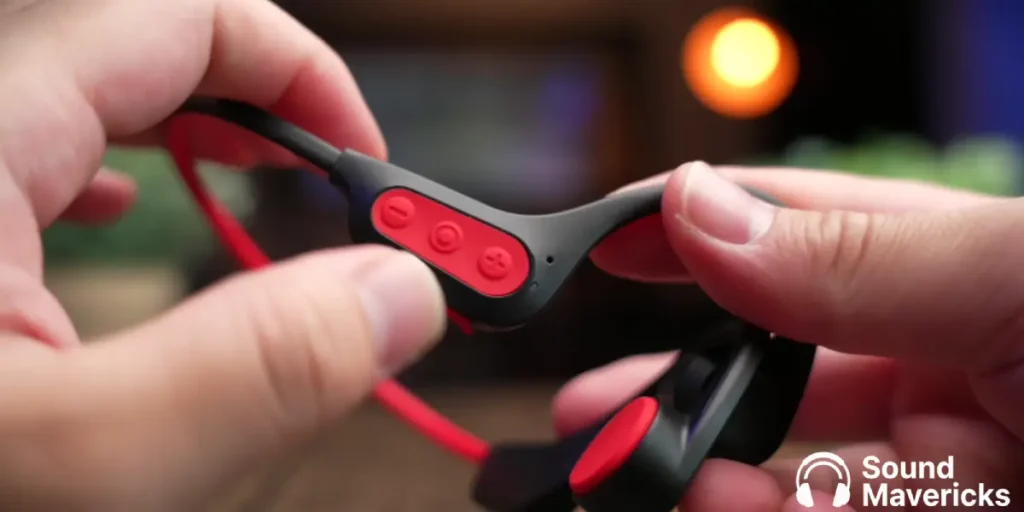
Imagine a magic trick. You plug both of your ears tightly with your fingers. You are now deaf to the world. But then, someone places a device against your cheekbone, and suddenly, you hear music. It is clear. It is crisp. And it feels like the sound is coming from inside your brain.
This is not magic. It is biology.
For decades, we have believed that the only way to listen to music is to push sound waves into our ear canals using speakers or earbuds. But there is a second way to hear, and it bypasses your eardrums entirely.
This technology is called Bone Conduction. It is the technology behind those strange-looking headphones that sit next to your ear instead of inside it. Runners swear by them. Swimmers use them underwater. But how do they actually work? Is the sound quality any good, or is it just a gimmick?
Here is the honest truth about listening through your skull.
How Do We Hear Without Eardrums?
To understand bone conduction, we first have to look at how normal hearing works.
Usually, you hear through Air Conduction. A speaker pushes air, creating a sound wave. This wave travels into your ear canal and hits your eardrum. The eardrum vibrates like the skin of a drum. These vibrations travel through three tiny bones (the ossicles) and finally reach the Cochlea (the inner ear). The cochlear nerve turns the vibrations into electrical signals for your brain.
Bone Conduction takes a shortcut.
It skips the ear canal. It skips the eardrum. Instead, the headphones vibrate against your zygomatic arch (your cheekbone). These vibrations travel through your solid skull bone directly to the Cochlea. The cochlear nerve receives the vibration and tells your brain: This is sound.
The Beethoven Hack This is not new technology. In fact, the famous composer Ludwig van Beethoven used this method centuries ago. As he went deaf, he could no longer hear the piano through the air. So, he attached a rod to his piano and clenched the other end between his teeth. When he played, the vibrations traveled from the piano, through the rod, into his teeth, through his jawbone, and directly to his inner ear. He could hear the notes through his skeleton.
Modern bone conduction headphones do the exact same thing, just without the metal rod in your mouth.
The Science of Vibration
So, if it is just vibration, why does it sound like music and not just buzzing?
Bypassing the Middleman (The Transducer)
Standard headphones use drivers. A driver is a mini speaker that pumps air. Bone conduction headphones use transducers. A transducer is a device that converts electricity into mechanical vibration.
When you wear a pair of Shokz (the most popular brand), the pads rest firmly on your cheekbones, just in front of your ears. They do not cover the hole of your ear. When you press play, the transducer vibrates at different frequencies. Fast vibrations create high notes (treble). Slow vibrations create low notes (bass). Because bone is a solid material, it conducts these low-frequency vibrations very well.
The Open-Ear Experience
The most important part of this technology is what it doesn’t do. It does not block your ear canal.
Think of standard earbuds like wearing blinders on a horse. You focus only on the music, but you lose track of what is happening around you. Bone conduction is like wearing sunglasses. You still get the benefit (the music), but your peripheral vision (your hearing) remains 100% open. You can hear a car honking, a bird singing, or a person talking to you, all while the music plays in the background.
The Tickle Effect
There is one weird side effect you should know about. Because the device works by shaking your cheekbones, you can physically feel it.
If you listen to a podcast at normal volume, you won’t notice it. But if you play a heavy rock song at maximum volume, the bass notes will cause the pads to buzz against your skin. Some people find this sensation funny or ticklish. Others find it annoying. It is a feeling you have to get used to.
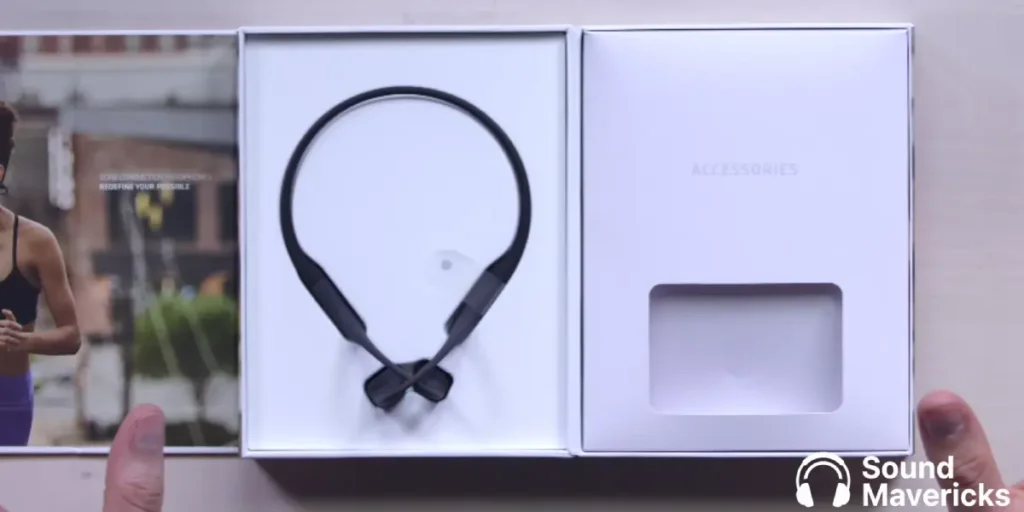
Real World Scenarios: Why Use Them?
If standard headphones sound better (and they do), why would anyone choose bone conduction? The answer is safety and comfort.
The Runner & Cyclist (Safety First)
This is the number one reason these headphones exist. Scenario: You are cycling on a busy road. You are wearing noise-canceling earbuds. A car comes up behind you, speeding. You don’t hear the engine. You don’t hear the tires. You turn left, and… crash.
With bone conduction, your ears are open. You hear the wind, the traffic, and that car approaching from behind. You also hear your music. It mixes the two worlds together safely. For outdoor athletes, this situational awareness is non-negotiable. It keeps you alive.
The Office Worker (Collaboration)
Scenario: You work in an open office. You want to listen to a podcast to focus, but you are afraid of missing a question from your boss. If you wear big over-ear headphones, you look unapproachable. People have to wave their hands to get your attention.
With bone conduction, you can hear your podcast and your boss calling your name. You don’t have to constantly take your headphones off and put them back on. You remain present in the room while enjoying your private audio.
Hearing Issues & Comfort
Scenario: You have a history of ear infections. Every time you wear in-ear buds for an hour, your ears get itchy, hot, or painful. Or perhaps you have a damaged eardrum.
Since bone conduction sits outside the ear, it keeps the ear canal dry and clean. It is the most hygienic way to listen to audio. For people with specific types of hearing loss (Conductive Hearing Loss), these headphones can actually restore the ability to hear music clearly, because they bypass the damaged parts of the ear.
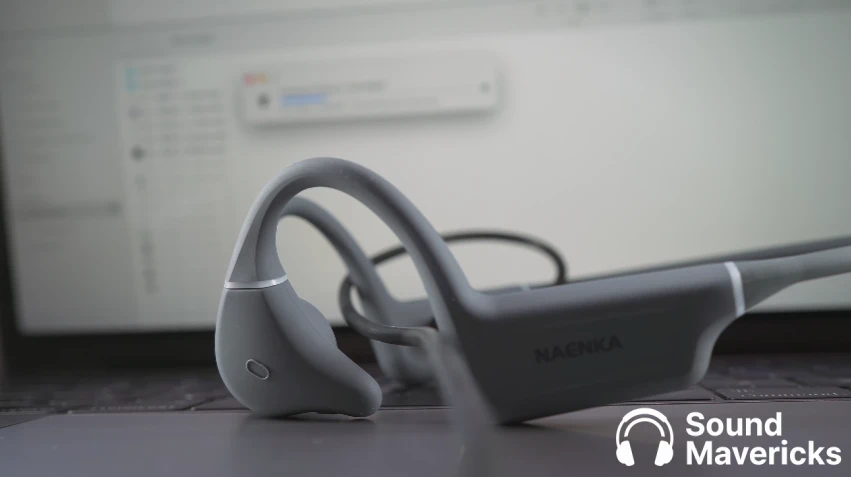
The Downsides (The Reality Check)
We have to be honest. Bone conduction is not perfect.
Where is the Bass? Physics is the enemy here. To create deep, thumping bass, you need to move a lot of air. Bone conduction does not move air. Therefore, the sound is very mid-range focused. Vocals, guitars, and podcasts sound great. But if you listen to Hip-Hop or EDM, you will be disappointed. You will hear the beat, but you won’t feel the drop.
Sound Leakage Because the entire headset vibrates, some sound does escape into the air. If you are sitting on a quiet bus or in a library and you blast your music at 100%, the person sitting next to you will hear a tinny, whispering version of your song. They are not ideal for silent environments.
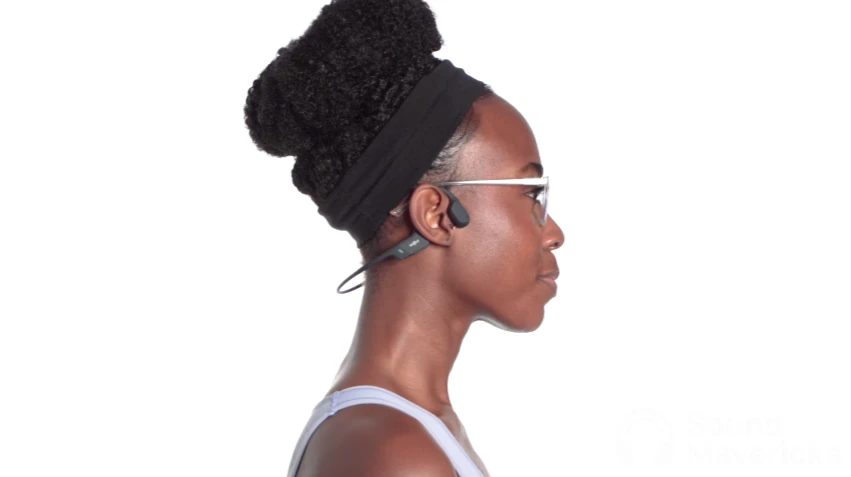
Buying Guide: Shokz vs. The Rest
The market for these headphones is small.
The King: The brand Shokz (formerly AfterShokz) basically owns this category. Their OpenRun model is the gold standard. The Challengers: Brands like Philips and Mojawa are making good alternatives, often for a lower price.
Who Should Buy This?
- Runners/Cyclists: This is mandatory gear for you.
- Swimmers: Look for the OpenSwim models (IP68 rated). They store music internally because Bluetooth doesn’t work underwater.
- Podcast Listeners: The vocal clarity is excellent.
- People with Ear Pain: If earbuds hurt you, this is your solution.
Who Should Skip This?
- Audiophiles: If you care about soundstage and sub-bass, you will hate these.
- Commuters: If you want to block out the noise of the train engine, these are useless. They let noise in; they don’t block it out.
Frequently Asked Questions (FAQ)
It depends on the type of deafness. If the deafness is caused by damage to the eardrum or middle ear (Conductive Hearing Loss), then yes! These headphones will bypass the damage and allow the person to hear clearly. However, if the damage is to the auditory nerve or the cochlea itself (Sensorineural Hearing Loss), these will not work.
Yes. Most modern designs (especially from Shokz) feature a thin titanium band that goes around the back of the head. It is designed to sit comfortably under the arms of your glasses or the strap of a helmet.
Most are water-resistant (IP55 or IP67), meaning they can handle heavy sweat and rain. Some specific models are fully waterproof (IP68) and designed for swimming. Always check the rating before you dunk them.
Yes, in one specific way: they keep your ear canal clean. Earbuds trap moisture and bacteria, which can cause infections. Bone conduction leaves your ear open to the air, which is much healthier. However, loud volume is still dangerous. If you blast bone conduction headphones at max volume, you can still damage your cochlea (inner ear) just like with normal headphones.
Surprisingly good. Most modern models (especially from Shokz) have excellent noise-canceling microphones. They are great for taking work calls while walking the dog or driving. However, because the microphone is further away from your mouth than on a wired headset, they might struggle in very windy conditions.

I am the founder of Sound Mavericks, where I provide the polite truth about audio equipment. I started this site because consumer electronics reviews are often too technical. Instead of using a silent lab, I test headphones, earbuds, and Bluetooth speakers in the real world – like on a noisy subway or in a busy coffee shop.
To stay independent, I buy my own review units (mostly from the United States) rather than accepting free gifts from brands. Once I finish testing a product, I sell it locally to our community. My goal is to help you understand sound quality, active noise cancellation (ANC), and battery life without the marketing hype.