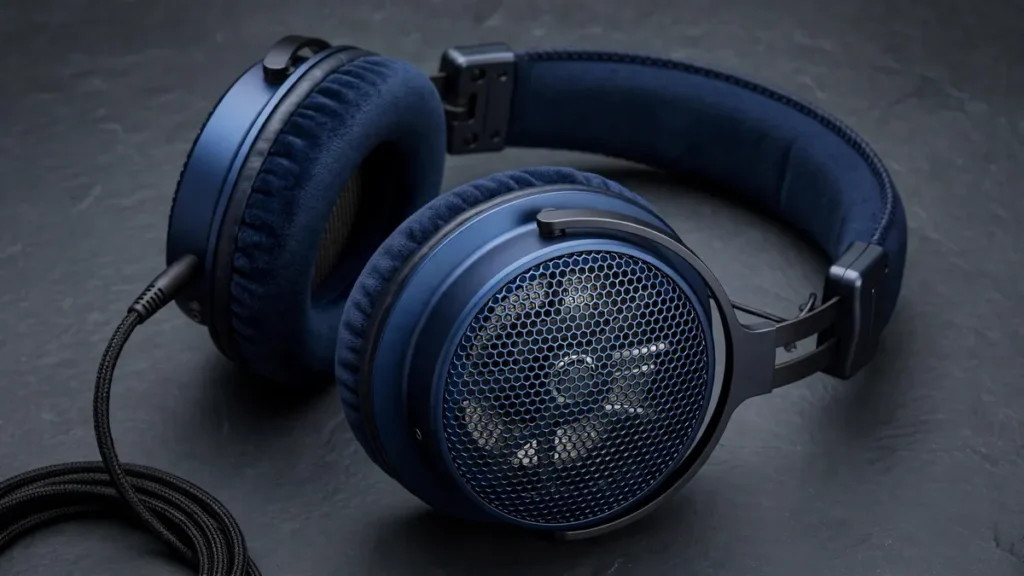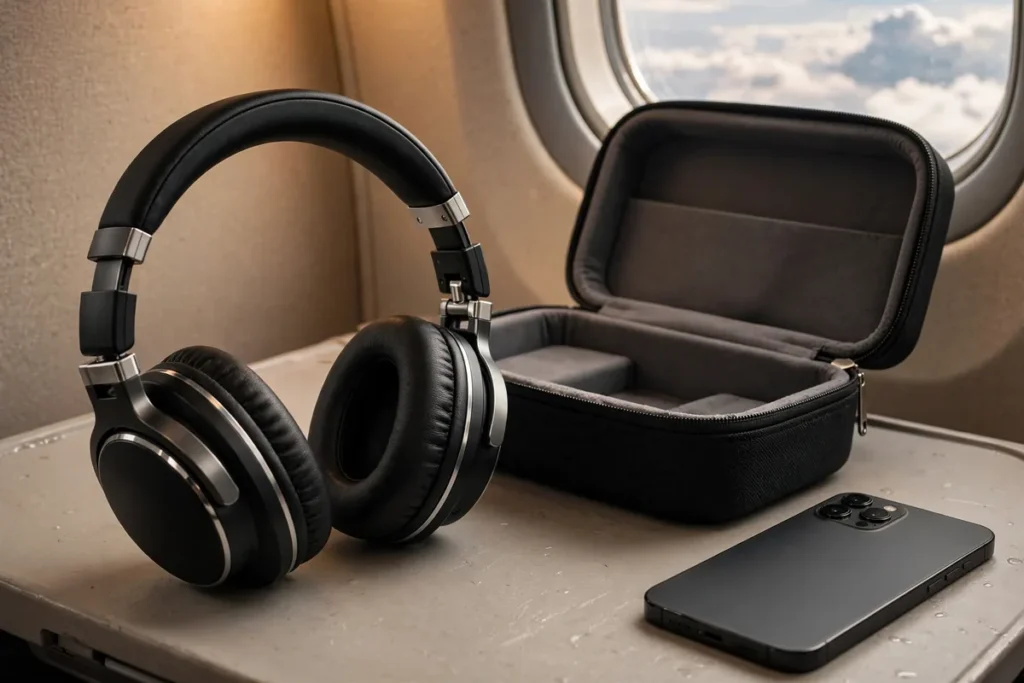
The Sennheiser PXC 550 is the original wireless noise-cancelling flagship that launched in 2016 — and it has been discontinued for years. Sennheiser replaced it with the PXC 550-II in 2019, so there is no retail stock, no manufacturer warranty on new units, and no current product page. What exists is a used market of marketplace listings, where a well-kept pair is still a genuinely good headphone — and a tired one is a money pit of dead batteries and flaking ear pads. Our verdict, after analyzing period reviews, the official spec sheet, and current owner demand: the PXC 550 is worth hunting down in 2026 only as a used buy for classic Sennheiser sound and travel comfort, and only after you check the battery and the ear cushions.
⚠️ Availability status: discontinued
The Sennheiser PXC 550 was discontinued around 2019 when the PXC 550-II took its place. Verified October 2026: Amazon has no live product listing for the original PXC 550 headphones — search results return only replacement ear pads, cables, and other accessories. Expect used or old-stock condition from marketplace sellers, and always check condition notes, seller ratings, and return policies.
Our Verdict
The PXC 550 was Sennheiser’s answer to the Bose QuietComfort 35, and on sound quality it arguably won: period reviews consistently rated its tuning above the Bose of the era — rich but controlled bass, detailed mids with a touch of warmth, and clean treble — wrapped in adaptive NoiseGard noise cancelling and a 30-hour battery. The irritations were real too: fiddly touch controls that reviewers found unresponsive for anything beyond play/pause, and noise cancelling that lagged the best rivals in variable environments.
In 2026, the calculus is simple. Buy a used PXC 550 if you want that classic Sennheiser signature for travel, calls, and long sessions at a fraction of flagship money — and you can live with Bluetooth 4.2, aptX-only codec support, and micro-USB charging. Skip it if you are an iPhone user who cares about wireless fidelity (the original has no AAC, so iPhones fall back to SBC), or if you need modern conveniences like multipoint or USB-C. In that case, our Sennheiser PXC 550-II review covers the successor, which fixed the codecs and the ANC.
| Sound Quality | 8.8 |
| Noise Cancelling | 7.8 |
| Comfort & Design | 8.6 |
| Battery Life | 8.2 |
| Call Quality | 8.4 |
| Used-Market Value | 8.6 |
Search Amazon for current used and marketplace listings — no new-unit retail stock exists for the original PXC 550.
Sennheiser PXC 550 Specs at a Glance
Specs below come from Sennheiser’s official spec sheet and the product manual. Nothing here is estimated — these are the manufacturer’s published figures for the original PXC 550 (model 506514).
| Form factor | Over-ear (circumaural), closed-back, dynamic drivers |
| Frequency response | 17 – 23,000 Hz |
| Impedance | Active 490 Ω / Passive 46 Ω |
| Sensitivity / THD | 110 dB SPL / <0.5% (1 kHz, 100 dB) |
| Noise cancelling | NoiseGard adaptive ANC with Talk-Through mode |
| Bluetooth | 4.2 with NFC tap-to-pair; profiles HSP, HFP, A2DP, DIP |
| Codecs | SBC + aptX (no AAC — iPhones fall back to SBC) |
| Battery | Up to 30 hours (ANC on); 3-hour full charge via micro-USB |
| Wired options | 3.5 mm cable included; doubles as a USB DAC when plugged into a computer |
| Microphone | 3-mic beamforming array for calls and voice prompts |
| Controls | Touch panel on right earcup + twist-to-power rotating earcups |
| App | CapTune (Club / Movie / Speech DSP sound modes, EQ) |
| Weight | 227 g (8 oz) — light for a wireless ANC over-ear |
| In the box | PXC 550 headset, travel case, USB charging cable, 3.5 mm audio cable, manual |
| Availability | Discontinued — used and marketplace listings only |
Sound Quality: Classic Sennheiser Tuning
Sound was always the PXC 550’s strongest card, and it is the main reason the used market still wants it. The tuning is unmistakably Sennheiser: rich but controlled bass, detailed mids with a measured drop of warmth, and a clean, clear upper register. Period reviews at TechRadar and Digital Trends both singled out the audio as the headphone’s greatest strength, with one noting no rival wireless noise-canceller quite matched its sound quality.
The CapTune app adds three DSP listening modes that genuinely change the presentation: Club boosts bass significantly with deeper resonance, Movie digs deeper still and widens the stereo image slightly, and Speech pushes dialogue to the front while reining in bass — reviewers found the Speech mode dramatically improved podcast listenability. One honest caveat for 2026 buyers: the original PXC 550 supports aptX and SBC only. Android users with aptX get the good stuff; iPhone owners are stuck on SBC, which is a real fidelity ceiling compared with the PXC 550-II’s AAC support.
Noise Cancelling: NoiseGard Adaptive ANC
Sennheiser’s NoiseGard system continuously samples ambient noise and adapts the cancellation level to the environment — genuinely adaptive ANC, not a fixed on/off circuit. On steady drone like airplane cabins and office HVAC, it performs well; in acoustically variable environments with sudden noise spikes, period reviews found it a step behind the Bose QC35 it was built to fight.
The standout practical feature is Talk-Through: double-tap the right earcup and the triple-microphone array pipes your surroundings in, so you can hear gate announcements or talk to cabin crew without taking the headset off. For calls, that same 3-mic beamforming array delivers the business-class voice clarity the headphone was marketed on. If ANC is your top priority, be aware the PXC 550-II meaningfully improved cancellation performance — see the comparison below.
Comfort & Design: Built for the Long Haul
At 227 grams the PXC 550 was light for its class, and the design was aimed squarely at business travelers: black earcups with silver trim that blends with formal attire, leatherette pads that seal well, and earcups that rotate flat for the included travel case. Owners consistently praised long-session comfort, and the headphone folds into a genuinely compact package for an over-ear.
The signature party trick is twist-to-power: there is no power button. Unfold the earcups into wearing position and the headphones switch on; fold them flat and they switch off. It is clever and genuinely convenient — until it isn’t. The control scheme was the most criticized part of the headphone: a touch panel on the right earcup handles taps and swipes for playback, volume, and calls, and reviewers found it unresponsive for anything more complex than play/pause, with a learning curve on the gesture vocabulary. Used buyers should test every gesture in person when possible.
Battery Life & Connectivity
Sennheiser rated the PXC 550 at up to 30 hours with ANC on, and period testing landed in the 20–30 hour range depending on volume and codec — still respectable a decade later, and enough for a full week of commuting or several long-haul flights. A full charge takes about 3 hours over micro-USB. Yes, micro-USB in 2026: keep a cable handy, because your USB-C everything else won’t help.
Wireless is Bluetooth 4.2 with NFC tap-to-pair, multipoint-style dual-device handling through the app, and — worth repeating — SBC and aptX only. The sleeper feature is wired flexibility: the included 3.5 mm cable works passively, and plugging the micro-USB cable into a computer turns the PXC 550 into an external USB sound card (USB DAC mode), bypassing your laptop’s onboard audio. That also answers the common Windows driver question: in USB DAC mode it presents as a standard USB audio device, so no special Sennheiser driver is needed.
Sennheiser PXC 550 vs PXC 550-II: What’s Different
This is the question behind most “sennheiser pxc 550” searches, so here is the straight answer. The two headphones share the same driver, the same 30-hour battery rating, and nearly identical styling. The PXC 550-II is a refinement, not a redesign:
| PXC 550 (this review) | PXC 550-II | |
| Bluetooth | 4.2 + NFC tap-to-pair | 5.0 (NFC dropped) |
| Codecs | SBC, aptX | SBC, aptX, aptX Low Latency, AAC |
| Voice assistant | Multi-step access only | Dedicated voice-assistant button |
| Listening modes | Physical button on earcup | Moved to Smart Control app |
| ANC performance | Good, adaptive NoiseGard | Improved, with ANC level slider |
| Driver / battery | Same | Same |
| Status | Discontinued (replaced 2019) | Discontinued — used market only |
Bottom line on the pair: if you find both used at similar money, the II is the better buy for iPhone users and ANC-first buyers. If the original is meaningfully cheaper and you are on Android (aptX), the sound-per-dollar case for the PXC 550 is strong. Read our full Sennheiser PXC 550-II review for the successor’s complete buying guide.
Buying a Sennheiser PXC 550 in 2026: The Used-Market Checklist
Every PXC 550 on the market is at least six years old, so condition matters more than the listing title. Run through this checklist before paying:
- Battery health first. Ask the seller for a real-world runtime, or test it yourself: play at moderate volume with ANC on and see how far it gets toward the 30-hour rating. A unit that dies in a few hours needs a battery the manufacturer no longer replaces — the cell is internal, not user-serviceable, and third-party battery services are hit-or-miss.
- Inspect the ear pads. The leatherette cushions are the number-one wear item; flaking or flattened pads are normal at this age and fixable (see below), but factor the replacement into your offer.
- Check the twist mechanism. Fold and unfold the earcups several times — power should toggle cleanly with the rotation. A loose or intermittent twist switch is the classic failure on well-traveled units.
- Test every touch gesture. Tap, swipe up/down for volume, swipe forward/back for tracks, double-tap for Talk-Through. The touch panel was finicky even when new; make sure yours actually responds.
- Confirm what’s in the box. Originals shipped with a travel case, USB cable, 3.5 mm cable, and manual. Missing cables are cheap to replace; a missing case suggests rough handling.
- Verify the return policy. With no manufacturer warranty available, the seller’s return window is your only safety net.
Amazon marketplace and third-party sellers — filter by condition and check seller feedback before buying.
Sennheiser PXC 550 replacement ear pads
This is the single most-searched owner query for the PXC 550, and for good reason: the stock pads wear out. The good news is that compatible third-party cushions are readily available and inexpensive, and they fit both the original PXC 550 and the PXC 550-II (the earcup dimensions are shared). We verified a Geekria replacement set on Amazon whose listing explicitly names PXC 550 compatibility:

Third-party replacement ear pads with verified PXC 550 compatibility. Image via Amazon.
Geekria replacement ear pads — listing confirms compatibility with the Sennheiser PXC 550.
Replacing them is a simple pull-off, snap-on job that takes minutes and transforms both comfort and noise isolation. If listing photos show flaking pads, treat the pads as a consumable and negotiate accordingly — the headphone underneath is usually fine.
How to pair the Sennheiser PXC 550
Sennheiser PXC 550 pairing mode works differently from most headphones because there is no power button. To pair for the first time:
- Unfold the earcups from the flat position into the wearing position. The headphones power on automatically — this is the twist-to-power mechanism.
- On first power-up (or when no previously paired device is in range), the PXC 550 enters Bluetooth pairing mode automatically. You will hear a voice prompt confirming it is ready to pair.
- Open Bluetooth settings on your phone or computer and select “PXC 550” from the device list.
- Alternatively, tap an NFC-enabled phone against the headphones to pair instantly.
To pair a second device later, make sure the headphones are not connected to the first device (turn its Bluetooth off or move out of range), then power the PXC 550 on fresh — it will enter pairing mode again. The CapTune app can also manage connections and lets you customize the touch controls and sound modes once paired.
Sennheiser PXC 550 manual
Sennheiser published a 52-page official instruction manual for the PXC 550 covering the full touch-gesture vocabulary, NoiseGard settings, CapTune app pairing, and troubleshooting. If you bought used without paperwork, search Sennheiser’s support archive for the PXC 550 manual — it is still hosted there and worth the read, because several features (effect modes, voice prompts, auto-pause behavior) are only documented in the manual, not on the headphones themselves.
Frequently Asked Questions
Is the Sennheiser PXC 550 discontinued?
Yes. The original PXC 550 launched in 2016 and was replaced by the PXC 550-II in 2019. Sennheiser no longer manufactures or sells it, and there is no new-unit retail stock — every unit on the market today is used, old new-stock, or a marketplace listing.
What is the difference between the Sennheiser PXC 550 and PXC 550-II?
The PXC 550-II upgrades Bluetooth from 4.2 to 5.0, adds AAC and aptX Low Latency codec support, adds a dedicated voice-assistant button, improves ANC, and drops NFC pairing. The driver, 30-hour battery rating, and overall design are essentially unchanged. See our PXC 550-II review for the full successor guide.
How long does the Sennheiser PXC 550 battery last?
Sennheiser rated it at up to 30 hours with noise cancelling on, and period reviews measured roughly 20–30 hours of real wireless use depending on volume. A full recharge takes about 3 hours over micro-USB. On a used unit, expect less — always verify actual runtime before buying.
Does the Sennheiser PXC 550 support aptX and AAC?
It supports aptX and SBC, but not AAC. That is fine for Android users (aptX delivers the better wireless quality), but iPhones — which need AAC for their best Bluetooth quality — fall back to SBC. If you are an iPhone user, the PXC 550-II’s AAC support is a meaningful upgrade.
Can you use the Sennheiser PXC 550 wired?
Yes, two ways. The included 3.5 mm cable works for passive wired listening, and plugging the micro-USB charging cable into a computer turns the headphones into a USB DAC (external sound card), bypassing your laptop’s onboard audio. In USB DAC mode it appears as a standard USB audio device, so no special driver is needed on Windows.
Are replacement ear pads available for the Sennheiser PXC 550?
Yes. Third-party replacement cushions with explicit PXC 550 compatibility are sold on Amazon and install in minutes with a simple snap fit. Worn pads are the most common issue on used units, so budget for a set when the listing photos show wear.
Is the Sennheiser PXC 550 worth buying in 2026?
As a used buy at the right condition — yes, for the right buyer. The classic Sennheiser sound, adaptive ANC, 30-hour battery, and travel-friendly design still hold up, and nothing about great tuning expires. It is not the pick for iPhone users who want the best wireless fidelity, or for anyone who needs USB-C, multipoint, or a warranty. Check our best noise cancelling headphones roundup for current alternatives with full manufacturer support.
The Bottom Line
The Sennheiser PXC 550 earned its reputation the hard way — by out-sounding the Bose it was built to beat — and a well-kept used pair still delivers that signature in 2026. Go in with eyes open: verify the battery, budget for ear pads, test the twist switch and touch gestures, and buy from a seller with a real return policy. Do that, and this discontinued classic remains one of the smartest used headphone buys in its class.
Used and marketplace listings — compare condition, seller feedback, and return terms.
Related Posts
- Sennheiser PXC 550-II: Specs, Features & Buying Guide — the successor’s complete review and used-market guide
- Best Noise Cancelling Headphones — current models with full manufacturer support

I am the founder of Sound Mavericks, where I provide the polite truth about audio equipment. I started this site because consumer electronics reviews are often too technical. Instead of using a silent lab, I test headphones, earbuds, and Bluetooth speakers in the real world – like on a noisy subway or in a busy coffee shop.
To stay independent, I buy my own review units (mostly from the United States) rather than accepting free gifts from brands. Once I finish testing a product, I sell it locally to our community. My goal is to help you understand sound quality, active noise cancellation (ANC), and battery life without the marketing hype.